Female Yokai
Snow women, snake women, a woman with two mouths, a neck that stretches at night. Here are the women of Japanese folklore, sorted by what they do.
People often search for these yokai by what they saw, not by name. A snake woman. A snow woman. A woman with a mouth on the back of her head. This page is built for that kind of search. Find the group that fits, then open the card.
Many people expect these women to be ghosts. Most of them are not. Only a few are clearly the spirits of dead women. More look like ordinary women, with one thing wrong. Others belong to a place: the mountains, the snow, or the sea.
Many are old women. The artist Toriyama Sekien drew a set of them in 1779 and 1781. Six are modern urban legends, from about 1950 to 2008.
The last group is different. A fox, a spider or a cat can take a woman's shape. Underneath, it is still a fox, a spider or a cat. We list those apart, so you can tell which is which.
We only list a yokai here if its own page describes it as a woman, or in a woman's shape. Each page names the oldest source we found.
Ghosts of dead women
Women who died, and came back as a ghost, a skeleton, a fire or a doll.
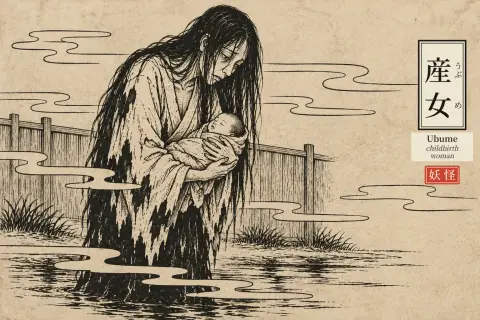
Ubume
産女The ghost of a woman who died in childbirth, begging you to hold her baby.
sorrowful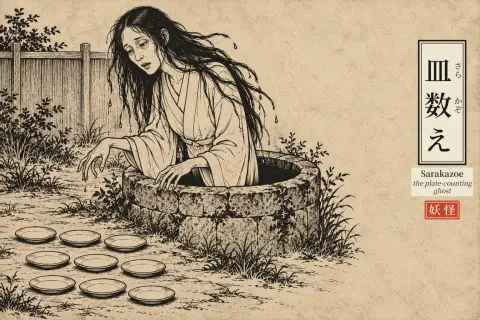
Sarakazoe (Okiku)
皿数えOkiku's ghost rising from the well, counting nine plates and never once reaching ten.
vengeful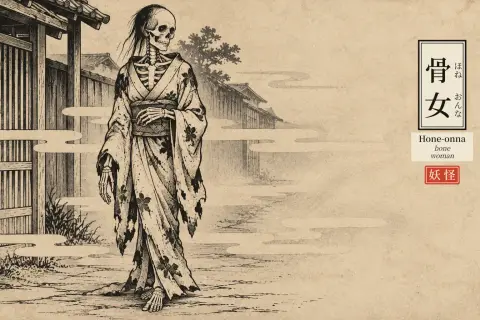
Hone-onna
骨女A skeletal woman who, seen as beautiful only by her lover, visits him each night.
sorrowful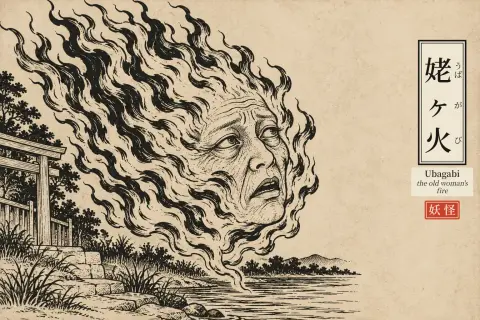
Ubagabi
姥ヶ火A ball of flame with an old woman's face, born from a woman who stole lamp oil from a shrine.
vengeful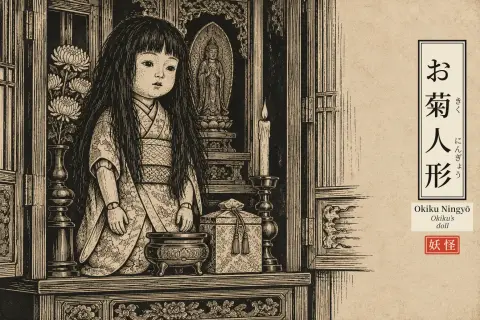
Okiku Doll
お菊人形A bobbed Japanese doll at a Hokkaido temple whose short hair is said to have grown down to its shoulders after the little girl who loved it died.
eerieDemon women and serpent women
Women who turn into an oni or a snake, or appear as one.
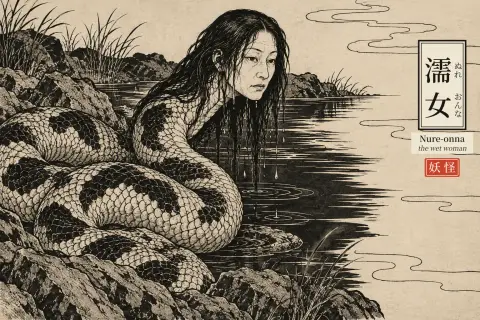
Nure-onna
濡女A serpent-bodied woman by the water who lures victims to their doom.
sinister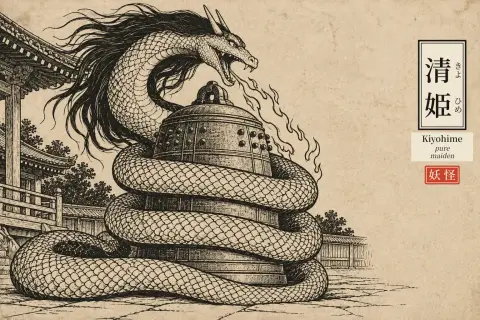
Kiyohime
清姫A spurned woman whose rage transforms her into a fire-breathing serpent to hunt down a fleeing monk.
vengeful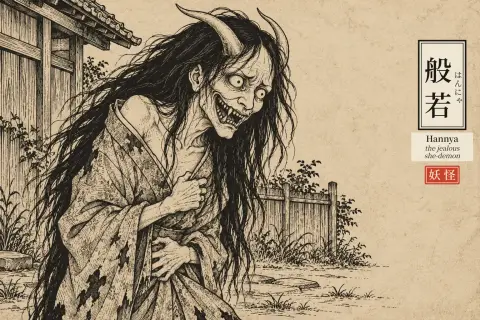
Hannya
般若The horned, grimacing visage of a woman consumed by jealousy and turned into a demon.
vengeful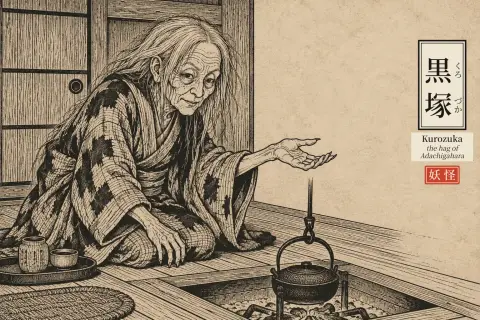
Kurozuka
黒塚The hag of Adachigahara, who offered travellers a bed and kept a room they must not open.
menacing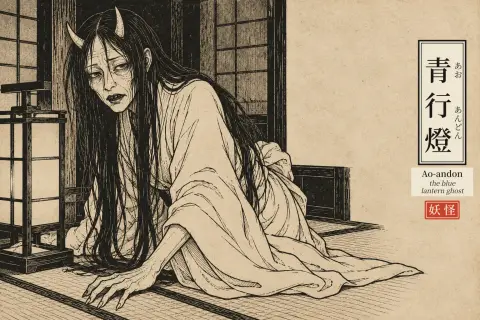
Ao-andon
青行燈A blue-lit specter that appears when the hundredth ghost story is told by lantern light.
ominous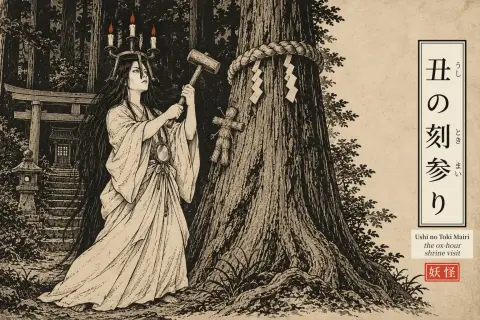
Ushi no Toki Mairi
丑の刻参りThe hour-of-the-ox curse: white robes, an iron crown of candles, and a straw doll nailed to a sacred tree.
vengefulWomen of the mountains, snow and sea
Each belongs to a place: a mountain, a snowfield or a shore.
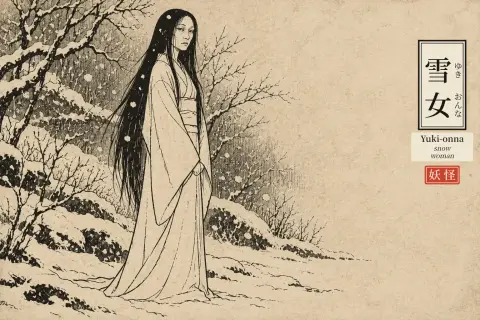
Yuki-onna
雪女A pale, beautiful woman of the snowstorm who freezes travelers to death.
mysterious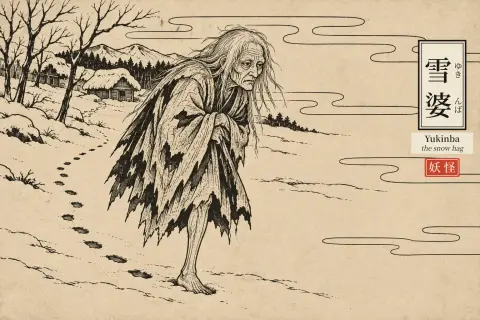
Snow Hag
雪婆A one-legged old woman in the snow. You can follow her prints, and there is only ever one line.
menacing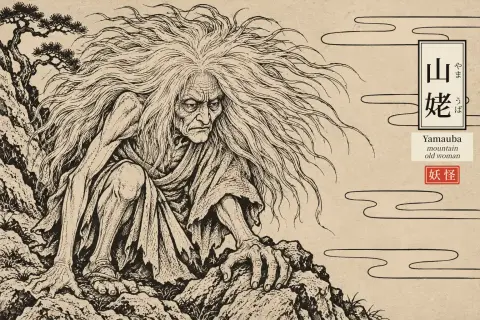
Yamauba
山姥A mountain crone who shelters travelers—then may devour them.
ambiguous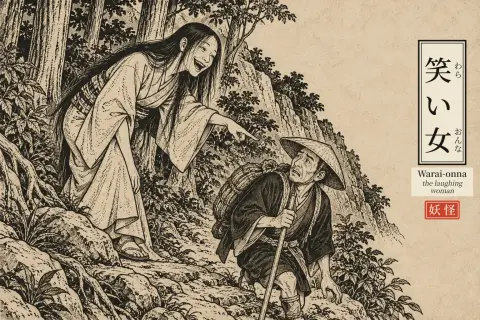
Laughing Woman
笑い女Enter the mountain on the 1st, 9th or 17th and a young woman points at you and laughs; you come down half dead.
eerie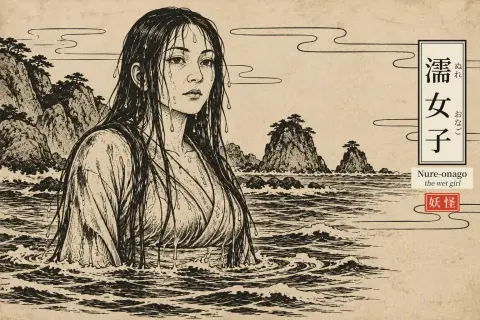
Wet Girl
濡女子Her hair is always wet. Smile back at her, and she stays with you for life.
sinister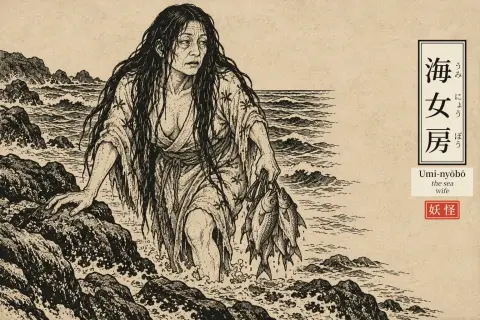
Sea Wife
海女房A sea woman who comes ashore for the night's catch, close kin to the iso-onna of the western coasts.
sinisterWomen with something wrong
She looks ordinary. Then her neck, mouth, eyes, height or hair gives her away.
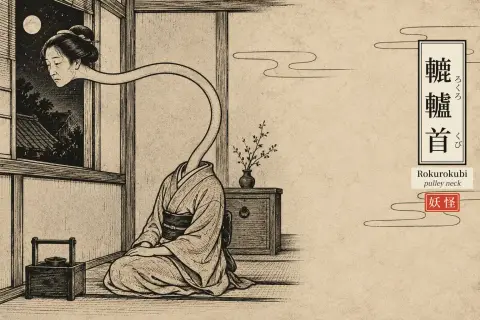
Rokurokubi
轆轤首A woman whose neck stretches to impossible lengths at night.
eerie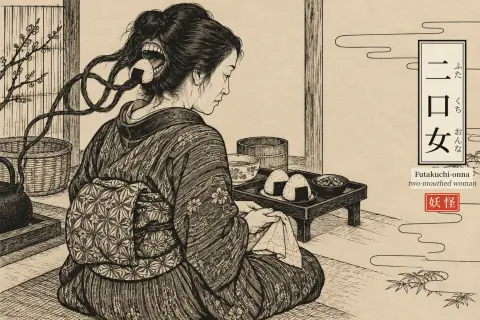
Futakuchi-onna
二口女A woman with a second, ravenous mouth hidden at the back of her head.
eerie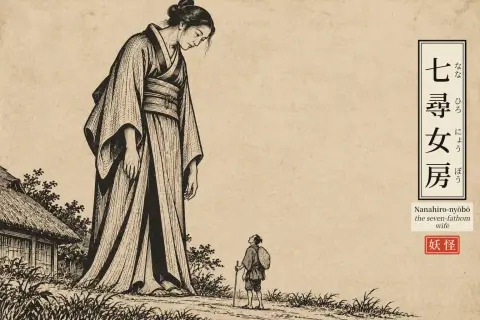
Seven-Fathom Wife
七尋女房A woman whose body or neck runs out to seven fathoms—about 12.6 metres—before she looks down at you.
eerie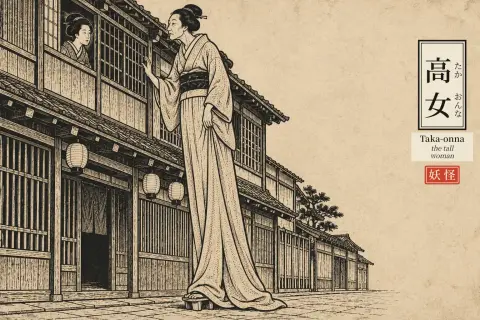
Taka-onna
高女A woman stretched impossibly tall beside a brothel. Modern writers made her an envious peeper.
envious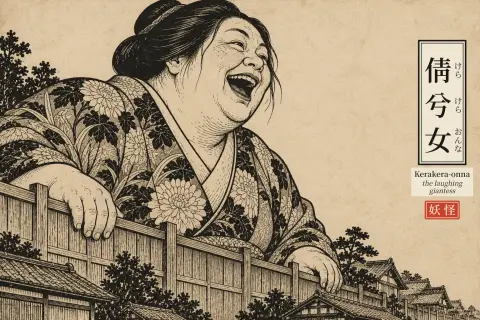
Kerakera-onna
倩兮女A giant woman's laughter rolling down over a fence, and never stopping.
menacing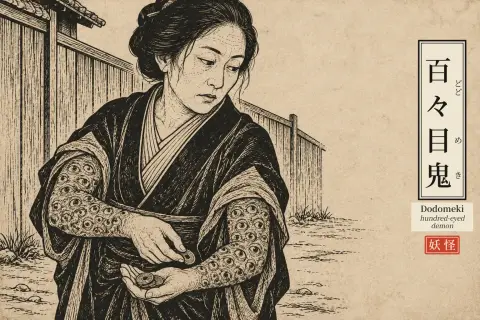
Dodomeki
百々目鬼A thieving woman whose arms sprout countless bird-eyes as punishment for stealing coins.
cunning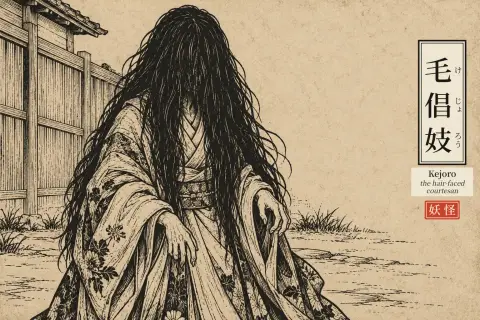
Kejoro
毛倡妓A courtesan whose face and body are entirely hidden by cascading hair.
eerie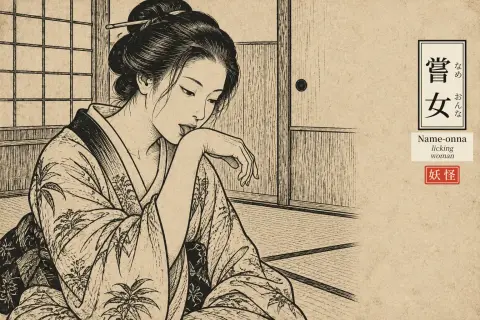
Licking Woman
嘗女A woman who licks. Her famous story calls her a cat girl; the kanji we spell her name with today is a modern choice.
eerie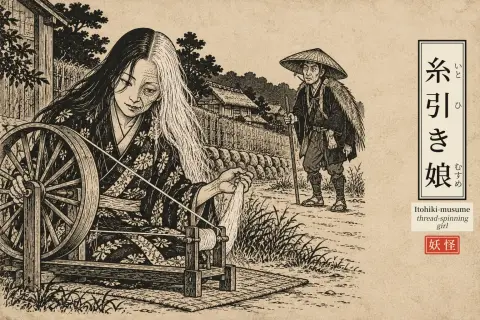
Thread-Spinning Girl
糸引き娘A beautiful girl at a spinning wheel by the road. Stop to watch and she turns white-haired and laughs.
mischievous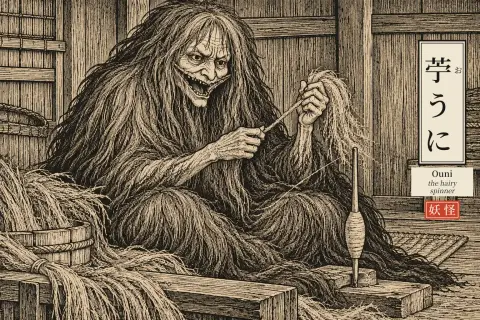
Ouni
苧うにA hairy hag from a 1776 picture, later linked to a mountain woman who spins hemp at superhuman speed.
eerieOld women and court ladies from Sekien's prints
Each appears in a picture book by Toriyama Sekien, from 1779 or 1781.
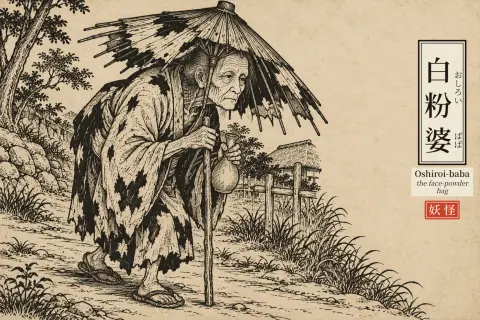
Oshiroi-baba
白粉婆A crooked old woman tied to white face powder, with a sake jug, a stick and a broken umbrella for a hat.
eerie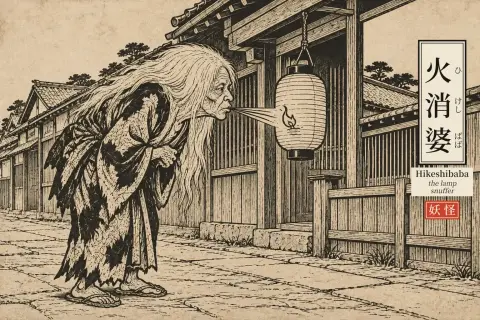
Hikeshibaba
火消婆An old woman who blows out the lantern in your hand and leaves you standing in the dark.
menacing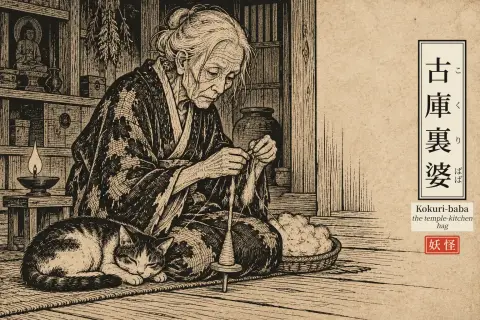
Kokuri-baba
古庫裏婆The widow in a mountain temple's back rooms, who digs up the graveyard's dead and strips their skin.
sinister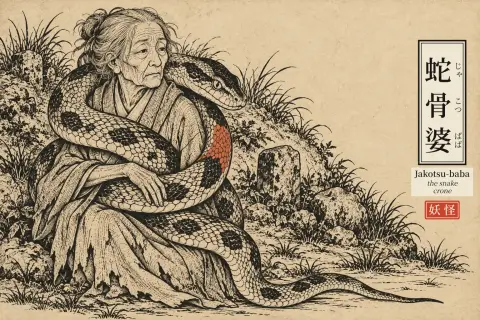
Jakotsu-baba
蛇骨婆An old woman with a great snake wrapped around her body, said to be the wife of Jagoemon of the snake mound.
menacing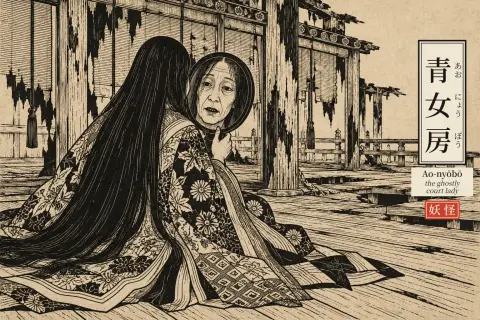
Ao-nyobo
青女房A ghostly court lady in a ruined palace, teeth blackened, watching for anyone who comes by.
sorrowfulGoddesses and spirits
Not human women, but described as female.
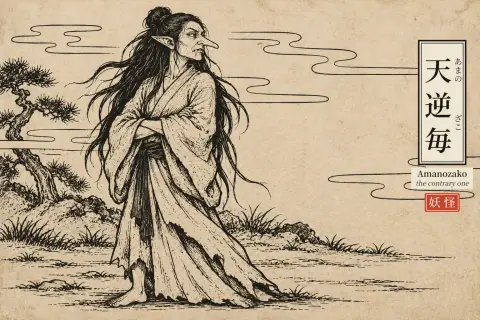
Amanozako
天逆毎A goddess born from Susanoo's spat-out rage: high-nosed, fanged, and contrary to everything.
fierce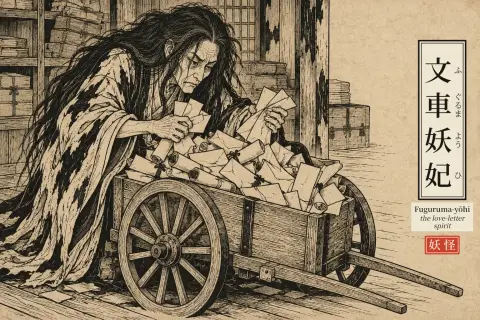
Fuguruma-yohi
文車妖妃A cart of old love letters, and the woman shaped from the longing that was never sent.
sorrowful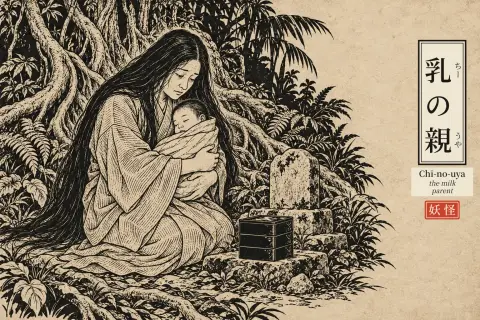
Milk Parent
乳の親She waits at the children's graves and nurses the ones buried there.
sorrowful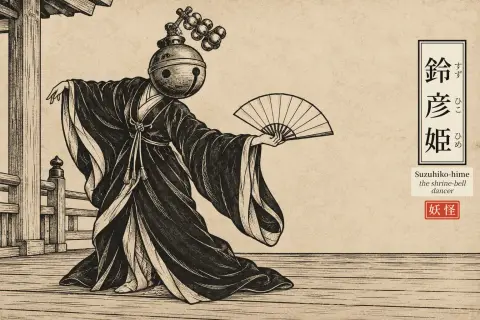
Suzuhiko-hime
鈴彦姫A shrine bell grown into a dancing woman—the sound of kagura, finally given a face.
benevolentUrban legend women
Rumors from schools, roads and the internet, from about 1950 to 2008.
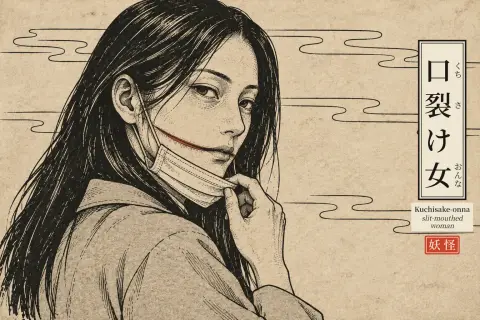
Kuchisake-onna
口裂け女A masked woman who asks 'Am I pretty?'—then removes the mask to reveal a mouth slit ear to ear.
menacing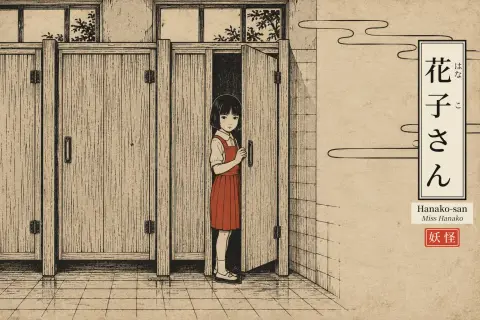
Hanako-san of the Toilet
花子さんKnock three times on the third stall of the third floor, ask for her by name, and a small voice answers yes.
eerie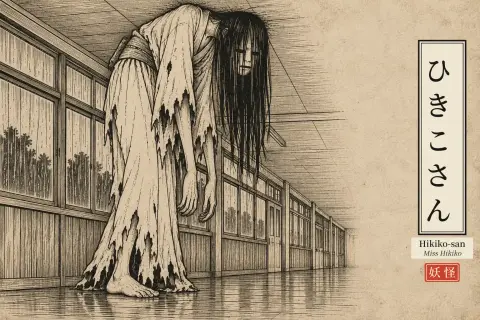
Hikiko-san
ひきこさんA tall woman in a tattered white kimono who drags children away on rainy days, said to have once been a bullied girl herself.
vengeful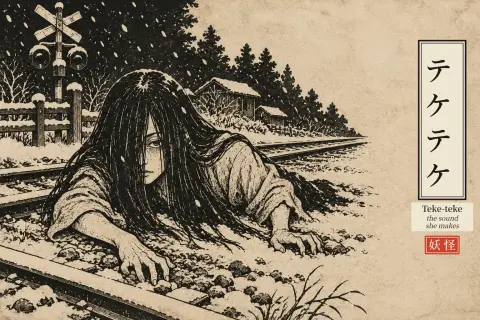
Teke-teke
テケテケThe ghost of a woman cut in two by a train, who drags herself on her arms with a 'teke teke' sound.
menacing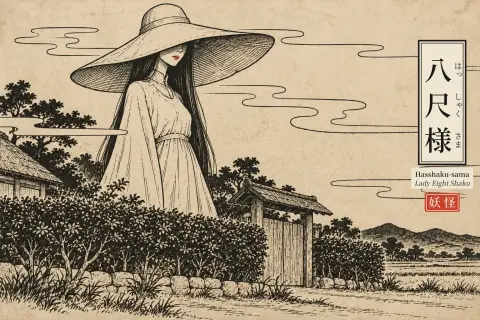
Hasshaku-sama
八尺様A woman about eight feet tall stands on the other side of the hedge, and the sound she makes is po, po, po.
ominous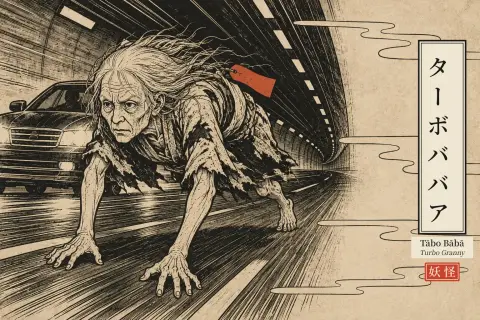
Turbo Granny
ターボババアAn old woman who runs alongside speeding cars on all fours, a paper reading 'Turbo' taped to her back.
swiftCreatures that take a woman's shape
Not women underneath. A fox, a spider, a cat, an otter, a snail or a plant wearing a woman's form.
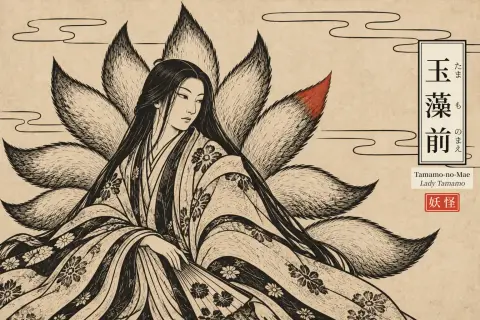
Tamamo-no-Mae
玉藻前A nine-tailed fox disguised as a beautiful court lady who bewitches an emperor.
cunning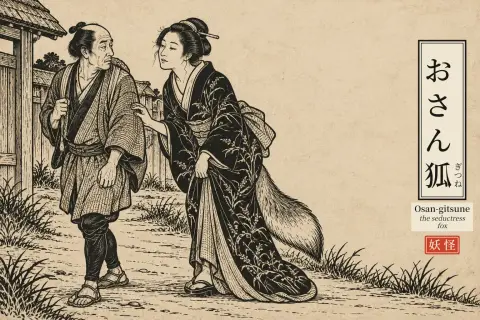
Osan Fox
おさん狐A fox that takes the shape of a beautiful woman and goes after men who are already spoken for.
cunning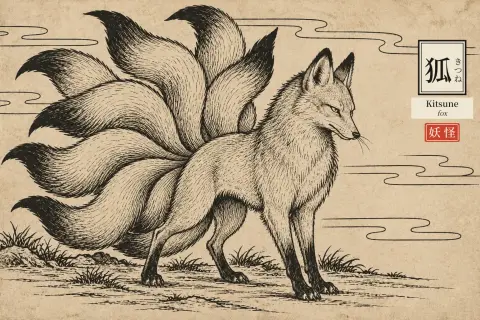
Kitsune
狐A shapeshifting fox spirit that gains tails and wisdom with age.
cunning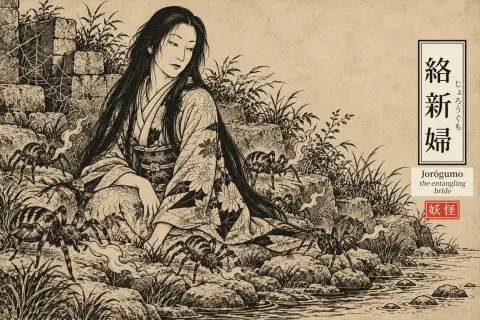
Jorogumo
絡新婦A giant spider that takes the form of a seductive woman to ensnare men.
cunning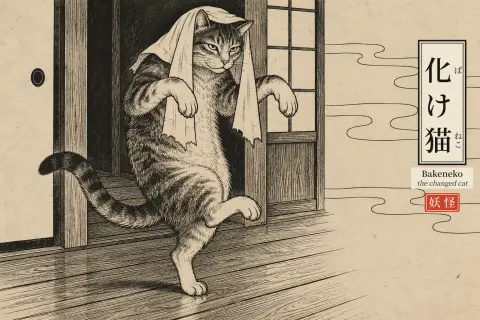
Bakeneko
化け猫A cat that gains supernatural powers with age and walks on two legs.
vengeful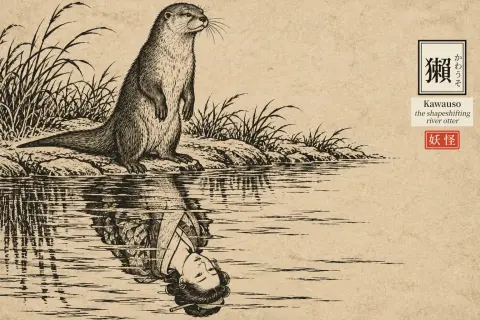
Kawauso
獺A river otter that shapeshifts and plays tricks, a smaller cousin of the kappa.
playful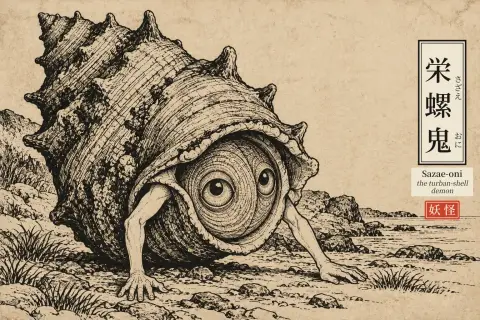
Sazae-oni
栄螺鬼A turban-snail that lives long enough to become a shapeshifting sea demon.
cunning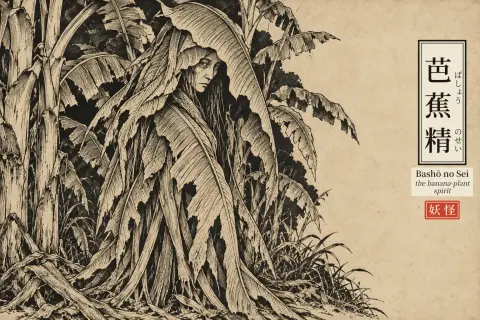
Basho no Sei
芭蕉精The spirit of a banana plant that takes a woman's shape at night and speaks to whoever answers.
mysteriousWhy are so many yokai women?
Picture a Japanese ghost. You probably see a woman in a white kimono. Her long black hair hangs loose. Most pages explain her in one line. Women were wronged, and society gave them no other way to fight back. That answer is not wrong. But it skips a thousand years of history.
For centuries, the most feared ghosts were men
Japan's oldest famous grudge spirits are men, with real names and dates. They are called onryō. The court blamed them for lightning, fire and disease.
In 930, lightning struck a hall inside the imperial palace. It killed three people. People said the exiled minister Sugawara no Michizane had become a thunder god. Kyoto built him a shrine. Today he is the god of learning.
Taira no Masakado rebelled against the court and died in 940. His grave mound in Tokyo was said to bring trouble for centuries. Emperor Sutoku lost a war to his brother and died in exile in 1164. From 1177, courtiers blamed his grudge for fires and unrest in Kyoto.
Today these three are called the "three great onryō". That grouping is modern, not ancient. But each man was feared on his own, long before Edo.
The woman in white is much younger
The ghost we picture now was built step by step. A footless ghost was first printed in Kyoto in 1673. The full look, with white robe, loose hair and no feet, settled in the late 1700s. Why Japanese ghosts have no feet tells that story. Michizane's lightning came about 750 years earlier.
The most famous ghost woman was played by a man
Her name is Oiwa. She is the ghost of the kabuki play Tōkaidō Yotsuya Kaidan. It opened in Edo in 1825. In the play, her husband poisons her to get ahead. Her ghost ruins him.
The first Oiwa on stage was the actor Onoe Kikugorō III. He was a man. Women had been banned from the kabuki stage since 1629. Men played every woman's role. So the most famous woman ghost was first played by a man. He was also known for plays about everyday town life.
One way to read this
Look at what each ghost attacks. The men's grudges hit the state. Lightning struck the palace. Fires and unrest shook the capital. The women's ghosts hit a home. Oiwa haunts the husband who poisoned her. Okiku was a maid in a samurai house. In many tellings, she was killed and thrown into its well. Now she counts plates there every night.
So a grudge seems to be as big as its owner's world. A minister's world was the court. An Edo wife's world was her house. The stories of Oiwa and Okiku are tragedies inside a home. In stories like these, the ghost is a woman. This is our reading, not a proven fact.
Outside ghosts and rumors, men lead
We read every yokai page on this site. For each one, we noted what the page says about gender. Most yokai have none. They are animals, objects, fires or sounds.
| Women | Men | Both or varies | No gender | |
|---|---|---|---|---|
| All 218 yokai on this site | 42 | 31 | 13 | 132 |
| Ghosts and modern rumors (64) | 31 | 5 | 5 | 23 |
| Everything else (154) | 11 | 26 | 8 | 109 |
Overall, women lead men, 42 to 31. But that lead comes only from ghosts and modern rumors. Everywhere else, men lead, 26 to 11. Oni and mountain spirits are mostly men. Many men are named as monks or boys: nyūdō, bōzu, kozō.
Most female yokai are not victims, either. Only 9 of the 42 come from a death or a wrong done to them. Many are alive and strong. Yuki-onna freezes travelers in the snow. Yamauba can overpower grown men. Others are animals, like a fox, wearing a woman's shape.
Then the women came back in schools
Women return in modern rumors. Hanako-san lives in a school toilet, from about 1950. Kuchisake-onna spread through schools in Gifu in 1978. Seven of our 16 modern legends are women. Only two are men. One way to read it: the school is the next small world after the home. Again, this is a reading, not a proof.
What we can't say
These are the 218 yokai on our site, not every yokai in Japan. Gender comes from our own pages, and some calls are close. The "ways to read this" are ours. The numbers show where the women are. They cannot prove why.
Outside sources
- Onoe Kikugorō III premiered the role of Oiwa: Nihon Kokugo Daijiten and Nihon Daihyakka Zensho, via Kotobank (尾上菊五郎)
- Tōkaidō Yotsuya Kaidan premiered at the Nakamura-za, Edo, in 1825; plot: Daijisen, via Kotobank (東海道四谷怪談)
- Women's kabuki banned in 1629; onnagata are male actors in women's roles: Nihon Daihyakka Zensho and Mypaedia, via Kotobank (女方)