Few animals in Japanese folklore carry as much weight, or as much ambiguity, as the kitsune — the fox. Depending on the story, it is a sacred messenger bowing at the gates of a shrine, a trickster spirit disguised as a beautiful stranger, or a devoted wife hiding a secret that can never survive daylight. The character itself, 狐, simply means "fox," but centuries of belief have made that one animal one of the most powerful shapeshifters in the country's imagination.
What does a kitsune look like?
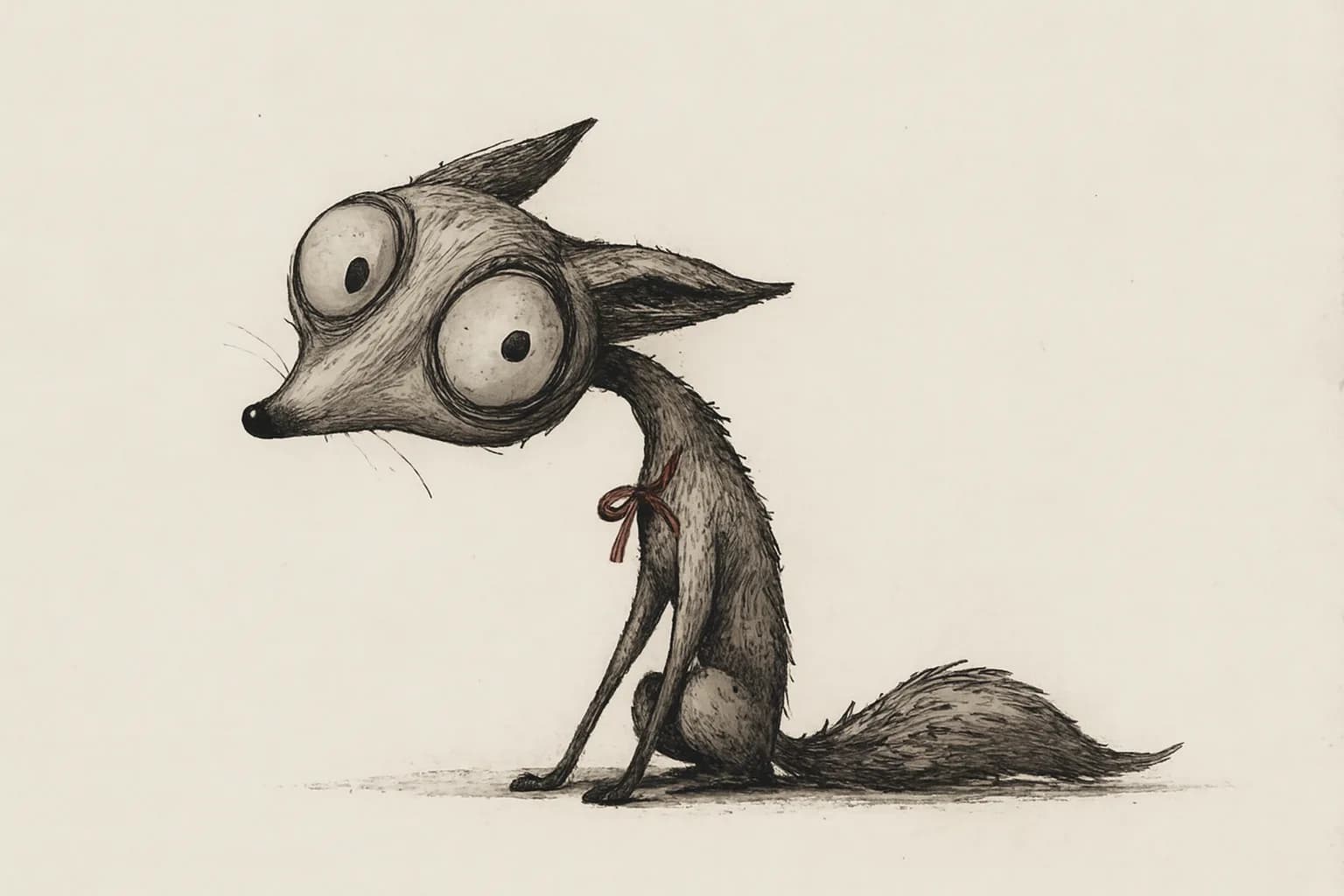
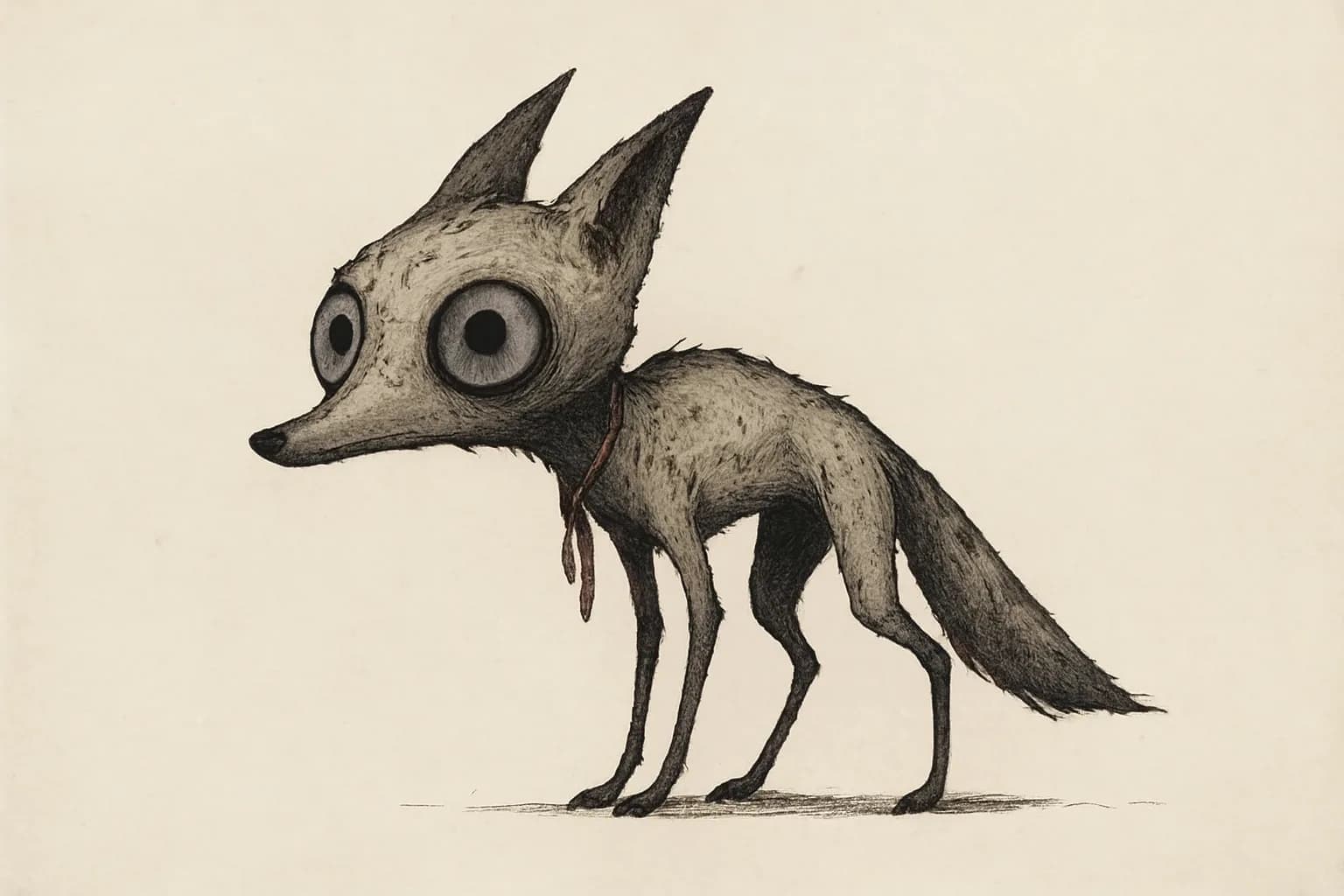
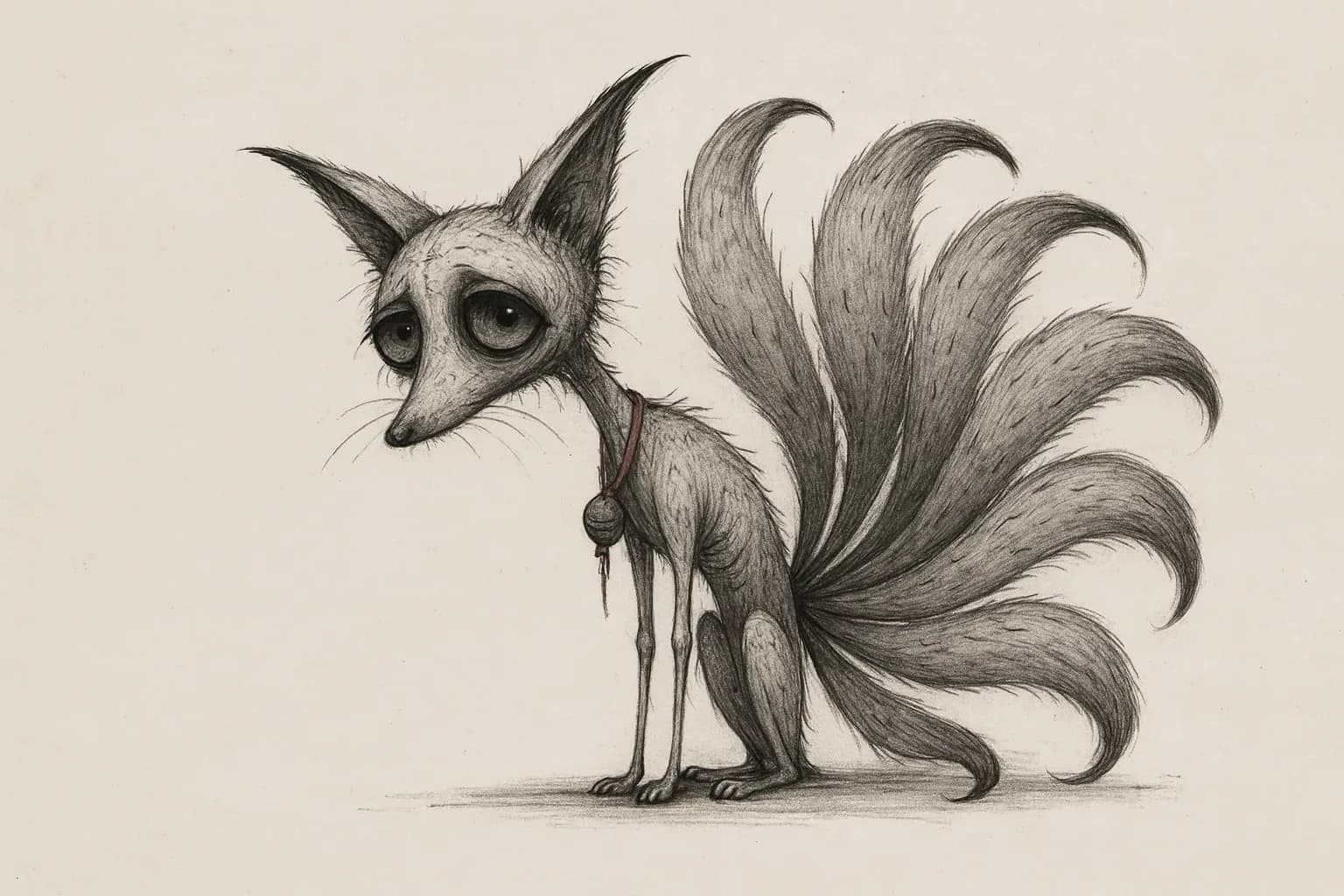
In its natural form, a kitsune is an ordinary-looking red fox, distinguished from a mundane animal mainly by its behavior and, in the oldest tales, by its tail. Folklore holds that a fox grows more powerful and wise with age, and part of that power is physical: a kitsune may sprout additional tails as it matures, up to a legendary maximum of nine. A kyubi no kitsune, the nine-tailed fox, is depicted as ancient, dangerously intelligent, and often glowing or radiant, a being closer to a minor deity than an animal.
Kitsune are also masters of transformation. The classic disguise is a beautiful young woman, though a kitsune might just as easily appear as an old man, a monk, or even an object. Storytellers offer a few tells for a fox in disguise: a shadow that keeps its animal shape, a reflection that shows fur instead of skin, or a tail that refuses to stay hidden under a kimono.
Two faces: sacred messenger and cunning trickster
Kitsune occupy an unusually wide moral range for a single folkloric creature.
On the sacred side, the fox is inseparable from Inari, the Shinto deity of rice, agriculture, and prosperity. Stone fox statues, often holding a key or a jewel in their mouths, guard the entrances of Inari shrines across the country, most famously the thousands of vermilion torii gates at Fushimi Inari Taisha in Kyoto. These are not the god itself but its messengers and servants, and offerings of fried tofu, said to be a favorite food of foxes, are still left at Inari shrines today.
On the trickster side, kitsune are notorious for kitsune-tsuki, fox possession, in which a fox spirit was believed to enter a person's body and cause strange behavior, illness, or ravenous hunger, sometimes requiring an exorcism to remove. Kitsune are also blamed for elaborate illusions: leading travelers astray on familiar roads, conjuring phantom banquets that turn out to be leaves and mud, or tricking greedy or dishonest people as a form of moral punishment. Unlike many yokai, a kitsune's mischief was often understood as deserved, aimed at people who had already behaved badly.
The fox-wife: love, secrecy, and the story of Kuzunoha
Among the many kitsune legends, one recurring shape stands out: the fox who marries a human, usually in the form of a devoted and loving wife, only for the truth to come out and force a heartbreaking separation. The best-known version is the legend of Kuzunoha, a fox who took human form, married a man named Abe no Yasuna after he saved her from hunters, and bore him a son. Years later, her true nature was accidentally revealed, and she was forced to leave her family forever, leaving behind a farewell poem. That son, in the legend, grew up to become Abe no Seimei, one of the most famous onmyoji (diviners) in Japanese history — meaning the fox-wife story doubles as an origin tale for real practices of divination and magic.
These stories give the kitsune a tenderness rare among Japanese monsters: capable of genuine love and grief, undone not by malice but by the impossibility of living permanently between two worlds.
Where the kitsune comes from
Fox worship and fox-fear both run deep in East Asian belief, and Japan inherited and reshaped continental fox-spirit traditions alongside its own native reverence for foxes as messengers of the harvest god. The result is a creature that never fully settled into "good" or "evil": the same animal that guards a shrine gate can, in the next story, be the reason a man's dinner turned out to be dead leaves. Scholars generally read this duality as reflecting the fox's real behavior in the wild, clever, elusive, and often seen at the edges of farmland, mapped onto a supernatural register of both providence and danger.
Kitsune in Japan today
The kitsune remains one of Japan's most visible yokai. Fox statues and torii-lined paths at Inari shrines draw millions of visitors every year, foremost among them Fushimi Inari's iconic tunnels of gates. Kitsune udon, topped with fried tofu, is named directly for the fox's favorite offering, and fox imagery appears constantly in festivals, masks, and popular fiction, almost always carrying some trace of its old duality: beautiful or unsettling, helpful or scheming, never quite fully tame.
From temple guardian to trickster to tragic wife, the kitsune has endured for centuries by refusing to be only one thing, a fitting fate for a creature whose defining talent is never staying in one shape for long.
Why is the fox in Naruto a nine-tailed kitsune?
It is the yokai most people outside Japan meet first, usually without being told. The fox sealed inside the hero of Naruto is a nine-tailed kitsune, and Pokémon's Ninetales is built from the same material. Both borrow the tail count. In later retellings it marks age rather than power: a fox grows tails as it grows older. A nine-tailed fox is often said to be a thousand years old.
The choice of animal is less arbitrary than it looks. Japanese folklore is not short of dangerous creatures, but nearly all of them end their stories the way monsters are expected to: the oni is driven off, the tsuchigumo is cut down, the tengu withdraws to its mountain. One strand of the tradition produces something else — a power that is defeated and keeps working anyway. Tamamo-no-Mae is unmasked at the Heian court, hunted down on the moor at Nasu, and then goes on killing for centuries as the poisonous Killing Stone, until the priest Gennō finally shatters it. That is an unusual shape in the folklore, and it reads as the shape a sealed beast needs.
The vocabulary runs along the same track. The term the series uses for a person carrying such a beast, jinchuriki, is written with the characters 人柱力 — built on hitobashira, the "human pillar," the old and grim practice of burying a living person in the foundations of a bridge or embankment so that the structure would hold. Whatever was intended by the coinage, the word is made out of the idea that a human body can be the thing that keeps a dangerous force in its place.
And then the detail that tends to surprise people: the nine tails are not ancient. In Tamamo no Soshi, the medieval telling, the fox has two. Nine arrived around 1800, when late-Edo popular fiction fused the Japanese court legend with the Chinese story of the consort Daji, and the fox gained nine tails. The nine-tail count that fans quote comes from Edo-period bookselling, not from antiquity — which means a modern manga inheriting it is not reaching back a thousand years to a sacred beast. It is inheriting a bestseller.
What the modern versions genuinely add is the idea that such a fox is a weapon to be contained. The old stories have no interest in containing it — their kitsune marries you, keeps house for years, and leaves when you finally notice the tail.