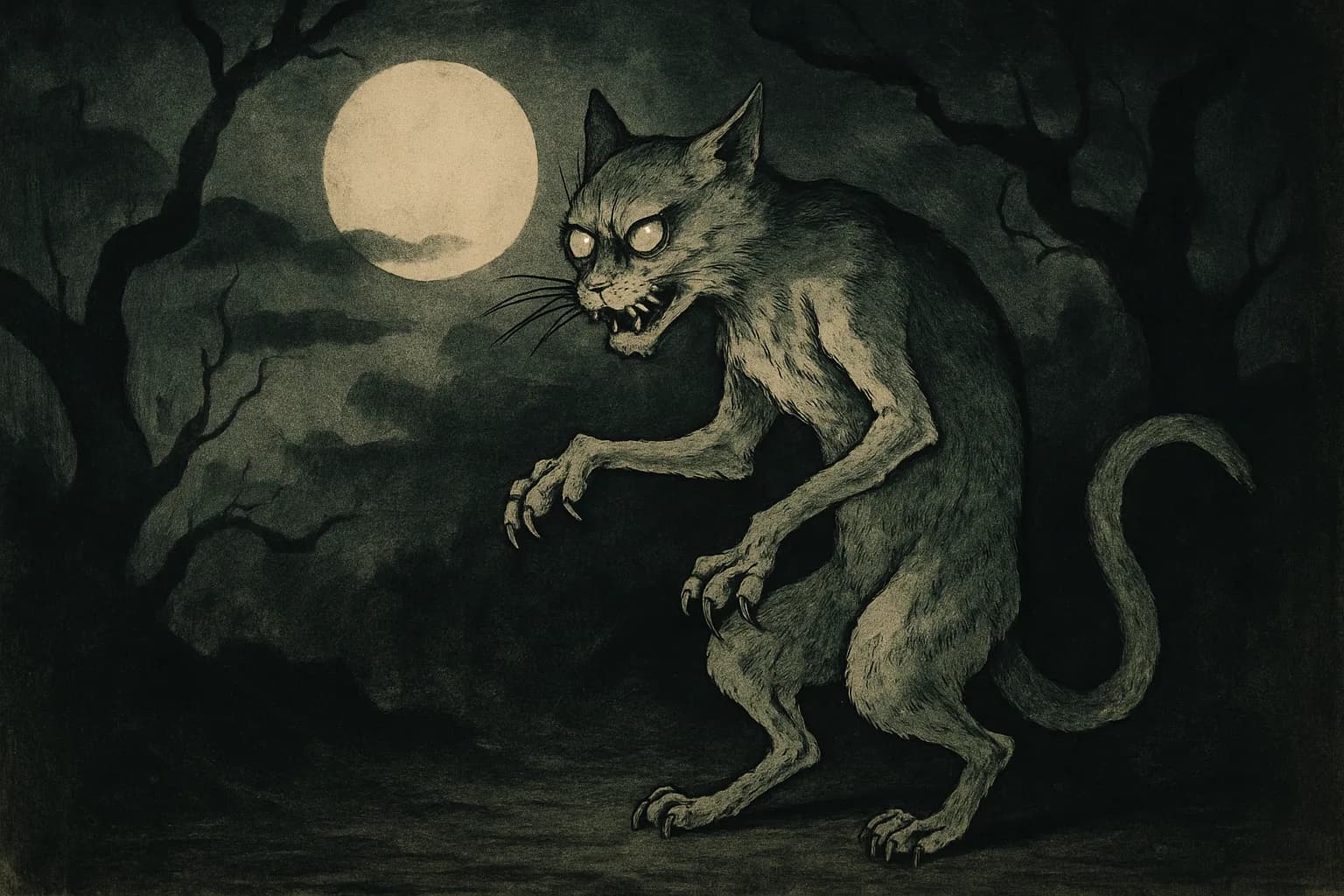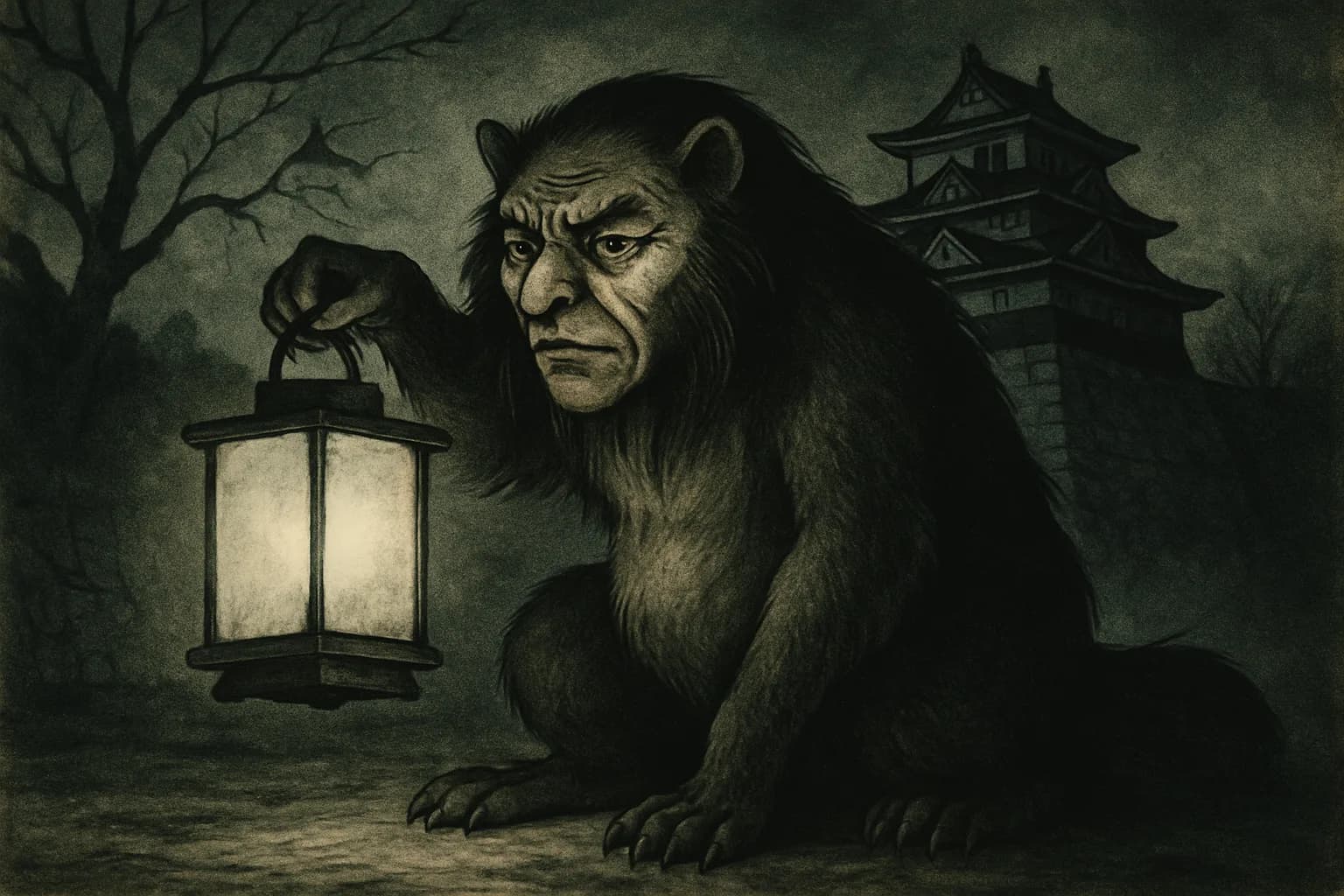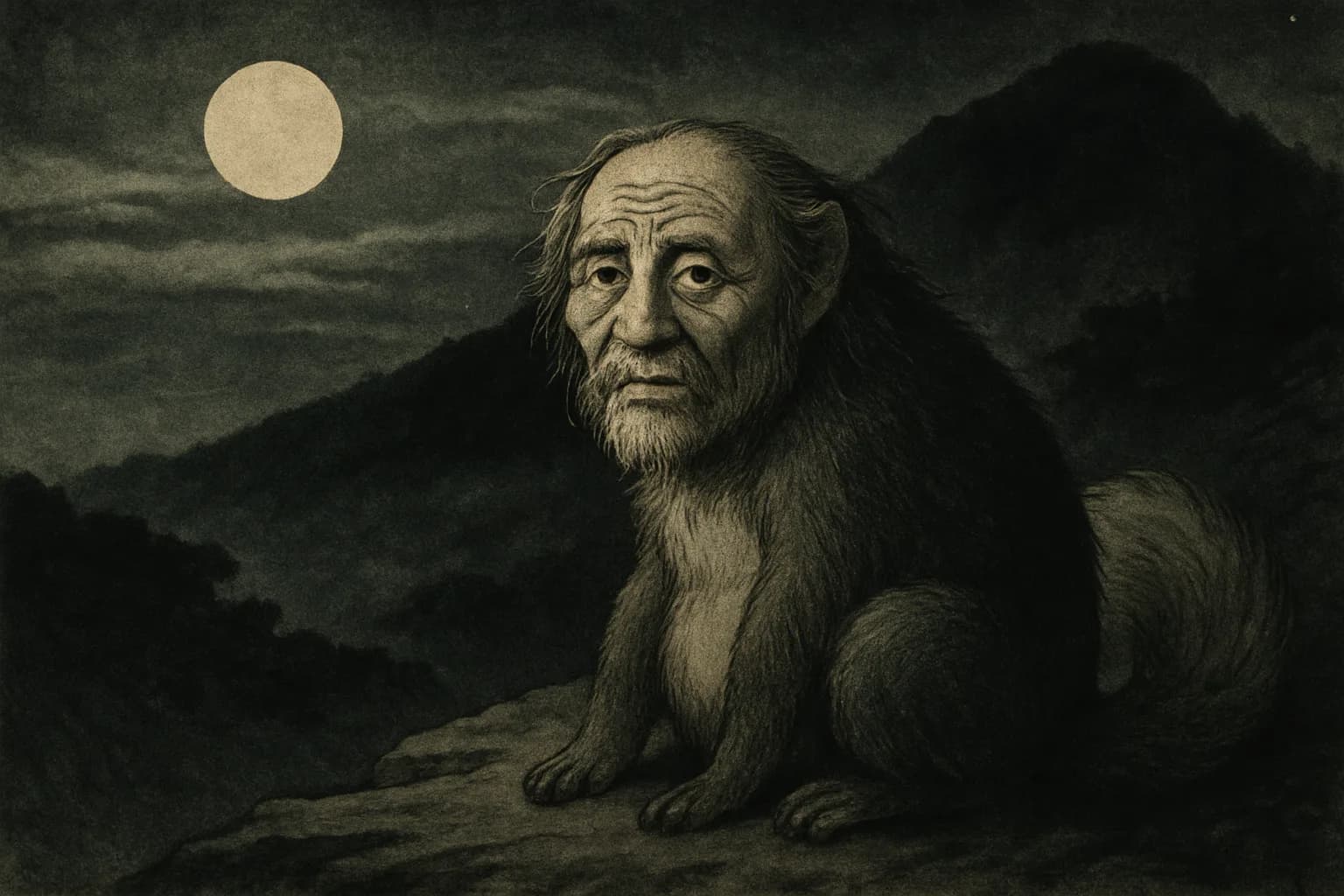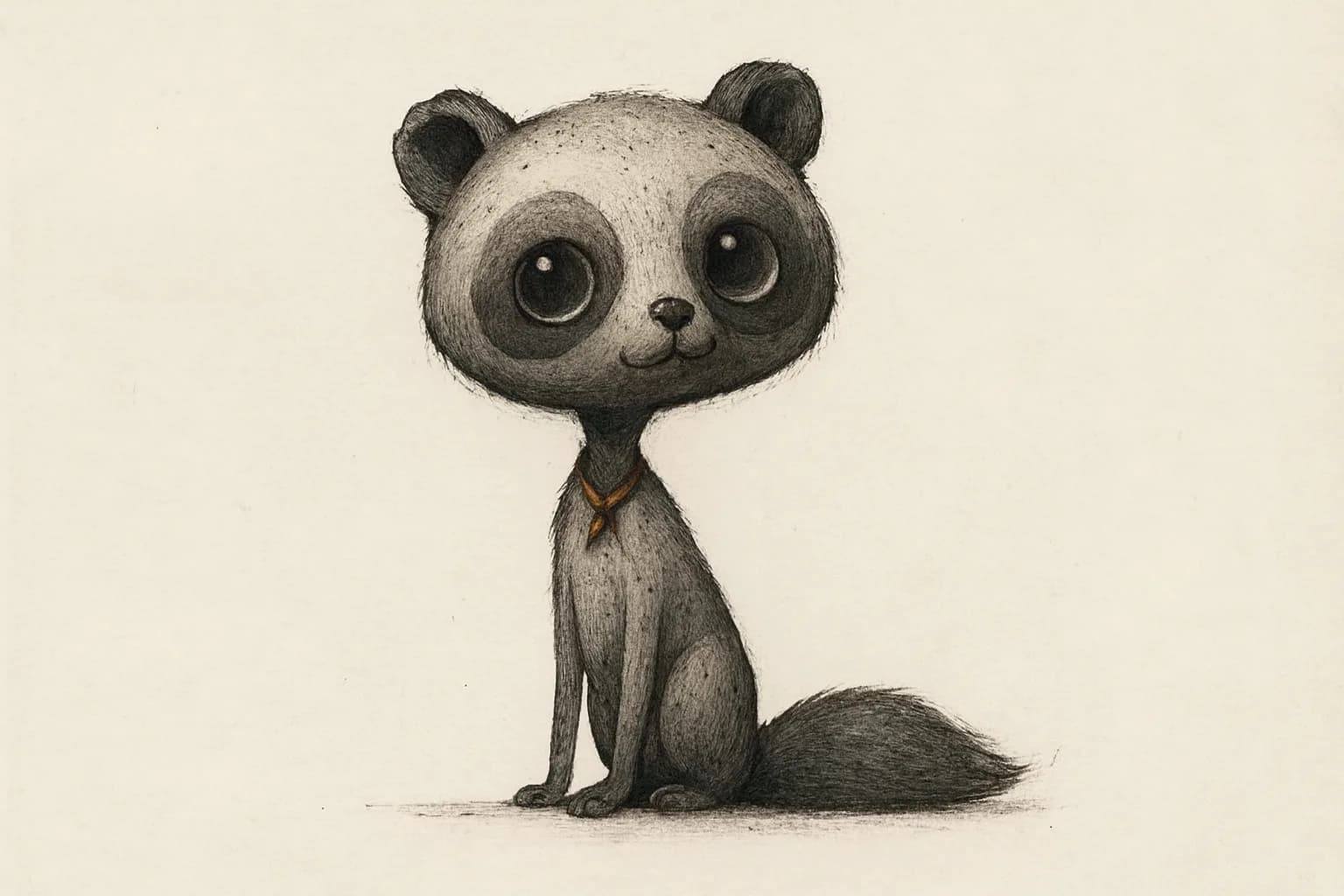
Walk up to almost any Japanese restaurant or sake shop and you may find a round-bellied statue grinning back at you, straw hat cocked to one side, sake flask in hand. That is the bake-danuki — the shapeshifting tanuki of folklore — Japan's other great trickster animal, forever living in the shadow of its rival, the fox. Where the kitsune is elegant and dangerous, the tanuki (狸) is round, greedy, a little foolish, and almost impossible to stay angry at.
What does it look like?
The tanuki is based on a real animal, the Japanese raccoon dog, a stocky, dark-masked canid that has nothing to do with raccoons despite the English name. Folklore exaggerates every feature: the belly swells into a great drum-tight paunch, the tail thickens, and the eyes turn round and mischievous. In its most famous artistic tradition — captured again and again in Edo-period ukiyo-e, including prints by Utagawa Kuniyoshi — the bake-danuki is drawn with absurdly oversized testicles, said in folk sayings to be large enough to be stretched, flattened, and used as everything from a drum to a fisherman's net to a roof to shelter travelers from the rain. It is a comic exaggeration, not a modern joke; it appears throughout Edo-era art and continues in the ceramic statues seen today.
The belly-drumming trickster
Like the kitsune, the tanuki is a master of transformation (henge), able to take human shape or turn ordinary objects into decoys. But its magic has always been considered a notch clumsier and more good-natured than the fox's. A tanuki's disguise might slip at the worst moment, or it might get so absorbed in a prank that it forgets to keep up the act.
Its signature trick is sound rather than sight: travelers in the mountains at night sometimes reported a rhythmic, drum-like thumping with no source, known as tanuki-bayashi, "tanuki music." Folklore explained it as tanuki drumming on their own bellies (tanuki-bayashi or pompoko), luring or simply amusing themselves at a passerby's expense. Other tricks include leaving fake gold coins (konohasen, coins made of leaves) that turn back into leaves after a purchase, and mimicking the sounds of festivals or funerals to lead a traveler astray.
Unlike the fox, which folklore often frames as genuinely sinister, the tanuki's mischief rarely turns cruel. It is greedy, vain, and easily fooled in return — the yokai equivalent of a lovable con man rather than a true villain.
The Bunbuku Chagama
The tanuki's best-known story is Bunbuku Chagama ("the lucky teakettle"), tied to Morin-ji temple in Tatebayashi. In the tale, a tanuki repays a kindness by transforming into a tea kettle for a poor priest or tinker to sell. All goes well until the kettle grows warm on the fire and the tanuki, unable to bear the heat, sprouts legs, a tail, and a startled face mid-transformation. In the Meiji-era fairy-tale version, the best-loved today, rather than fleeing, the tanuki turns the mishap into an opportunity: it performs as a tightrope-walking, drum-playing kettle-creature in a traveling show, making its owner's fortune before the two part as friends. It is one of the rare yokai tales where the "monster" ends the story with a smile.
Shikoku, especially the old province of Awa (modern Tokushima), developed its own rich strand of tanuki legend, including tales of rival tanuki clans waging elaborate "wars" against one another using their shapeshifting powers — stories still retold locally and echoed in modern popular culture.
Where it comes from
The tanuki grew out of real encounters with the raccoon dog, an animal genuinely known for a startled, wide-eyed expression and a habit of freezing rather than fleeing — traits easy to read as either foolishness or hidden cunning. As with the kappa and much of Japan's animal folklore, a real creature's odd behavior was elaborated over centuries into a supernatural double: an animal that could take human form, work small (mostly harmless) mischief, and occasionally repay a kindness. Its rivalry with the kitsune in folklore reflects the two animals' overlapping ranges and reputations as Japan's premier shapeshifters, one clever and cool, the other warm and bumbling.
The tanuki in Japan today
The bake-danuki may be the most visible yokai in the country, just not always recognized as one. Squat ceramic tanuki statues, especially the glazed figures from Shigaraki, sit outside countless bars, restaurants, and shops, traditionally holding a sake flask and a promissory note as a wish for prosperity and good credit. Since the twentieth century, the image has softened from folk trickster into an outright symbol of hospitality and good fortune, welcoming customers rather than warning them off. Even the phrase tanuki soba/udon, a noodle dish topped with crunchy tempura scraps, is often said to borrow the animal's reputation for getting something for nothing. Few yokai have made as comfortable a home in modern daily life as this round-bellied prankster.
Studio Ghibli's Pom Poko (1994) takes its title from the sound the folklore gives them: tanuki are said to drum on their own bellies, pom poko, pon pon. The film keeps the two things the old tales care about — the shapeshifting, and the habitat being taken away — and turns the second into its whole plot. Nintendo borrowed a narrower piece: the Tanooki suit in the Super Mario games grants transformation, and its statue trick is a joke about the ceramic figures above, standing motionless outside every bar in Japan.
Naruto's One-Tail is a specific tanuki, not a generic one
The first of the nine tailed beasts in Naruto is called Shukaku, and the name is not an invention. Shukaku is the tanuki of the Bunbuku Chagama story above: the one who lived at Morin-ji disguised as a priest for years, left the temple its inexhaustible tea kettle, and was finally given away by the tail he forgot to hide while dozing. The temple still tells the story with a date on it — a monk is said to have caught him asleep in the spring of 1587.
The borrowing goes past the name. The manga's Shukaku is described as having been sealed inside a tea kettle before he was ever sealed inside a person, which is the kettle from the temple doing exactly what it does in the legend, and Gaara describes him as the spirit of an old Sand priest — echoing the disguise the original wore for decades.
So the One-Tail sits with the Eight-Tail in a category the other seven are not in. Most of the set resembles a yokai. These two are named after one.