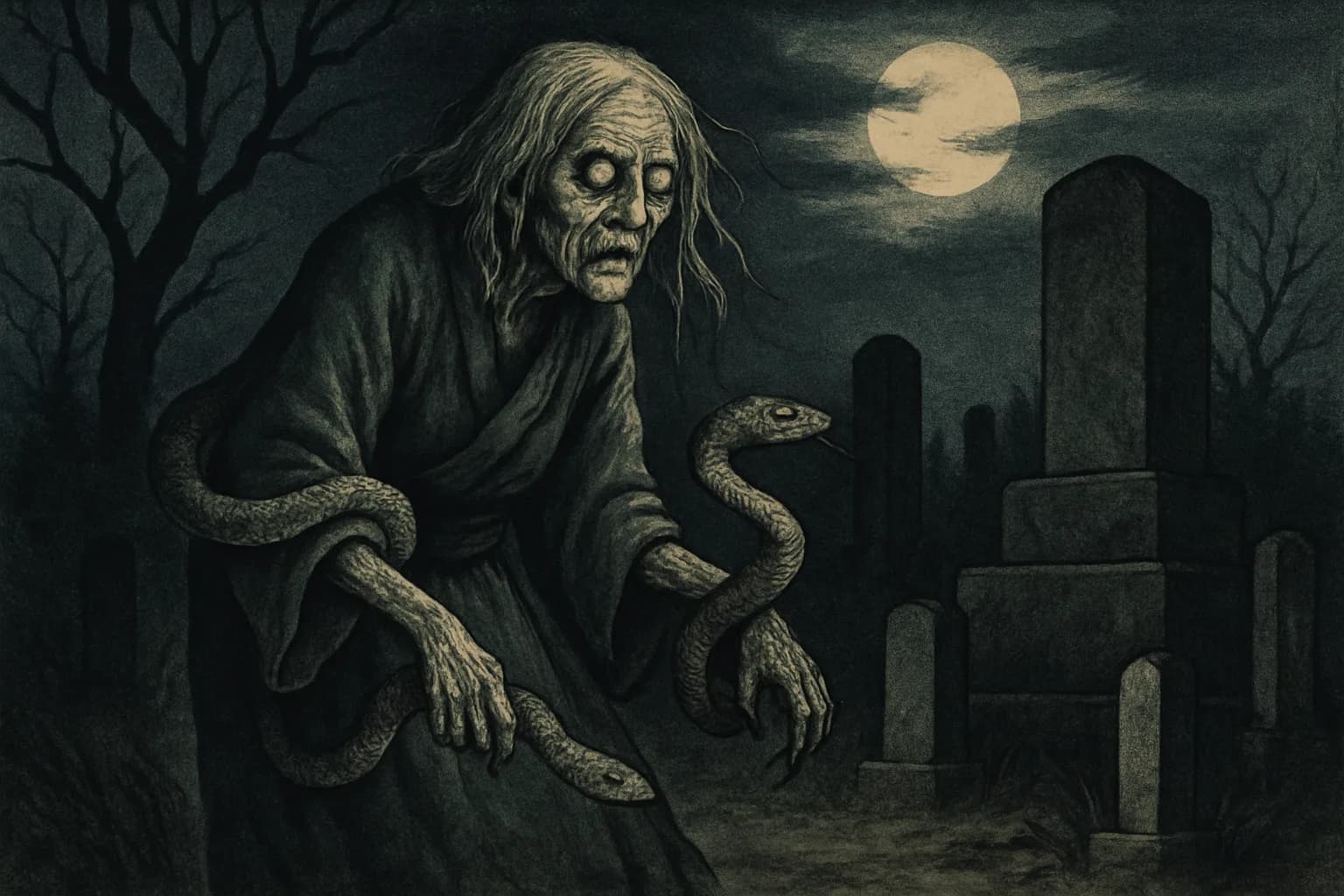
Adachigahara is flat, empty moorland in Fukushima. Nightfall there was once something to fear. Old stories say a lone woman lived on that moor, in a hut with one fire and one back room. She took in lost travellers and fed them by the fire. Some of them she also killed. Her name, kurozuka (黒塚), means "black mound" — the grave where she is said to lie today. Villagers also called her Adachigahara no Onibaba, the demon hag of Adachigahara, and the old Noh play about her still runs under both names.
What does the hag look like?
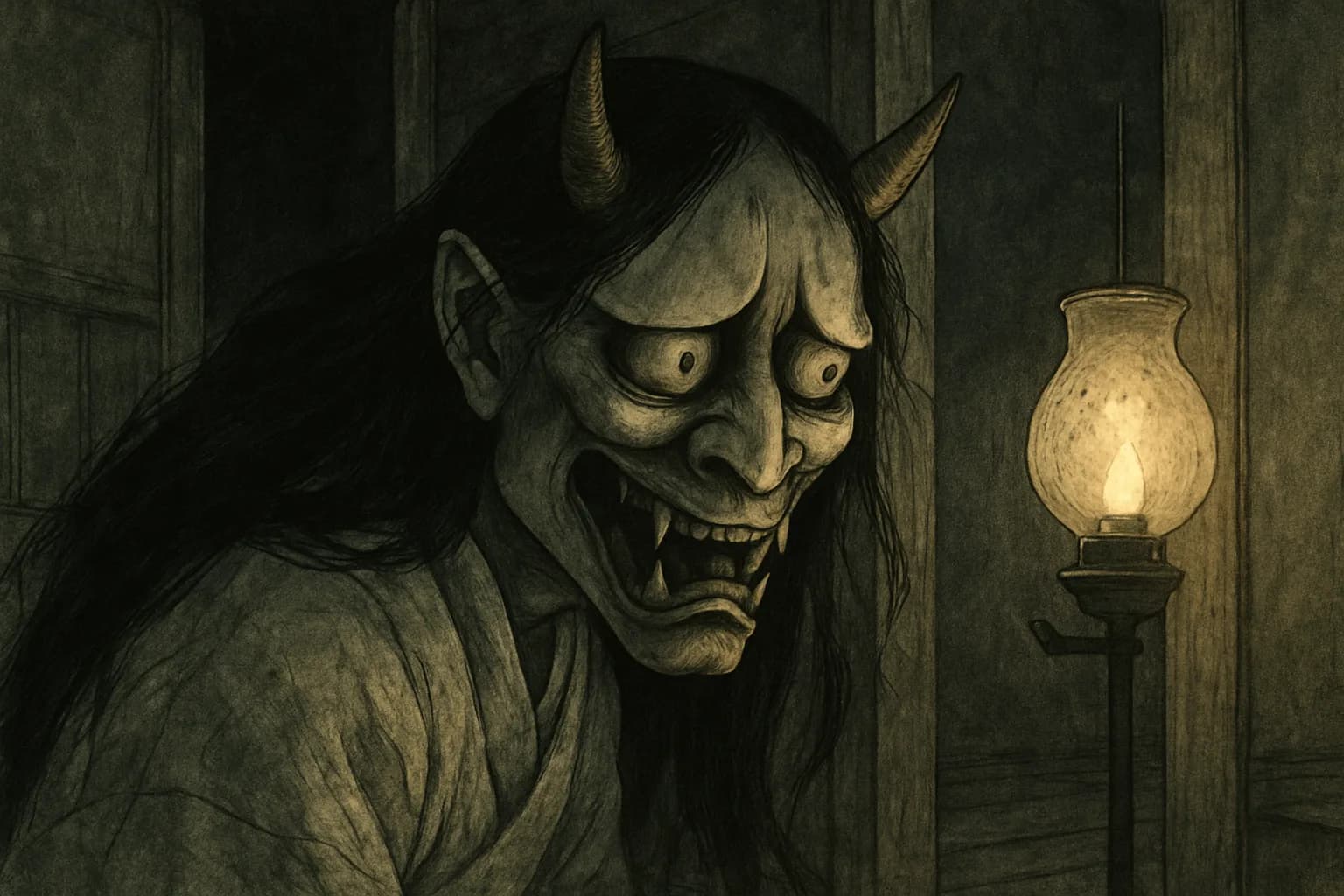
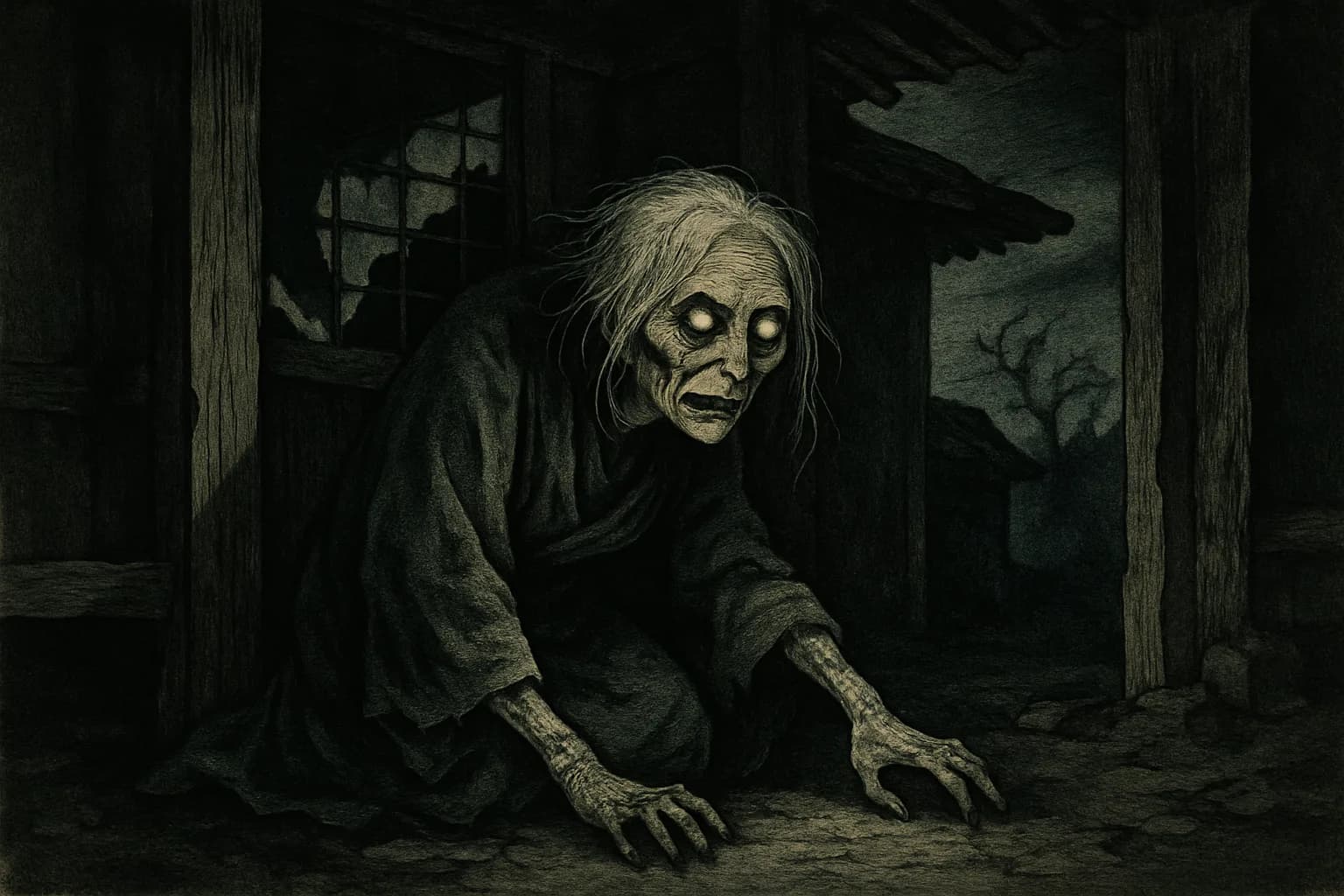
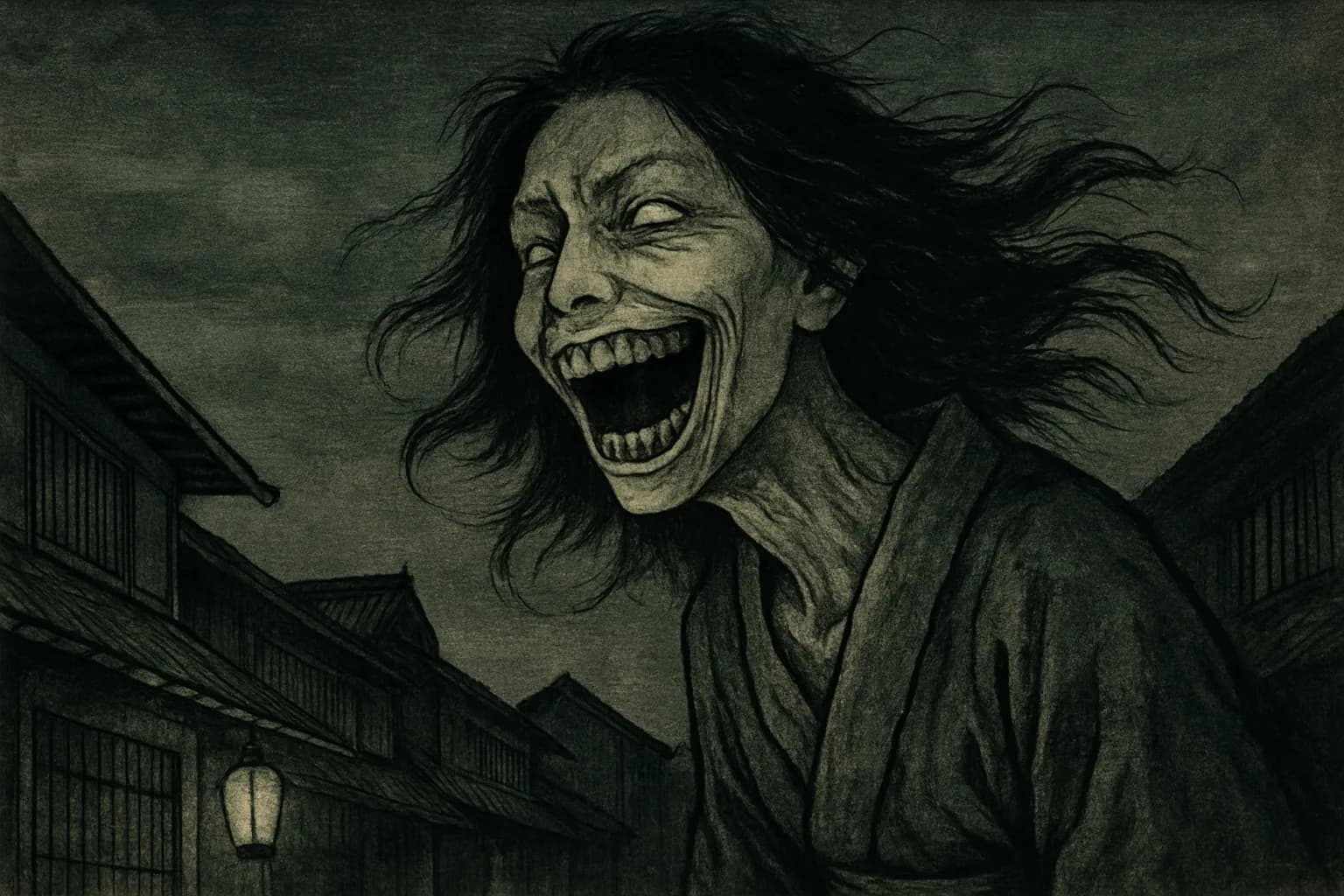
She has two faces, and that is really the whole story. By firelight she looks like any old woman: bent back, grey hair, a low and welcoming voice. Travellers trust her on sight. The second face only shows once her secret is found. Her hair goes wild, her eyes sink and burn, and her mouth splits into a fanged grin. Noh theatre gives this second face a name of its own: the hannya (般若) mask, horned and grimacing. Actors have worn that mask for her role for centuries.
The hut on the moor
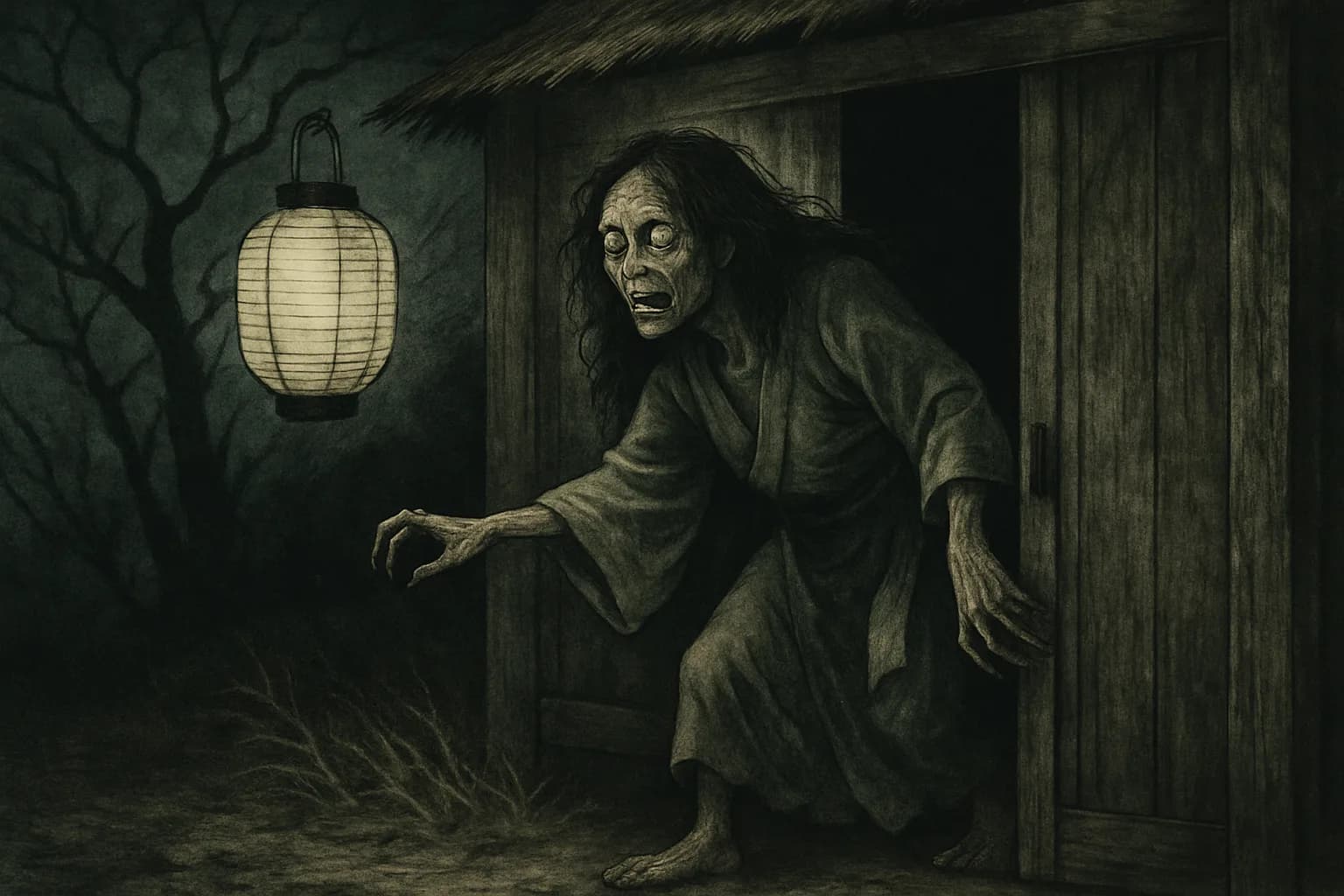
The best-known version of her story comes from the Noh play, performed under the titles Kurozuka and Adachigahara. A travelling priest and his companions are caught by nightfall on the moor. They ask the old woman for shelter, and she takes them in. She builds up the fire and offers to gather more wood herself. Before she leaves, she gives one order: do not look into the back room. Left alone, one of the group cannot resist. Behind the door is a mountain of human bones. The travellers realise their host has been killing guests for years, and they run. The old woman comes home to an empty hut and a broken promise. She turns into a demon and chases them across the moor, screaming into the dark.
Prayer against a demon
Noh plays rarely settle things with a sword, and this one does not either. The priest turns to face her instead of running. He begins to chant sacred Buddhist verses, over and over. Each verse pushes her back a step. He chants through the night until dawn breaks over the moor. The light, together with the prayer, drains her strength. She finally gives up the chase and the play ends. Some regional retellings swap in a warrior for the priest, but the version still staged today ends in prayer, not violence.
Where it comes from
The Noh play gives the hag a longer, sadder history before she becomes a demon. In it, she once worked as a nurse for a nobleman's sick daughter. Doctors said only one medicine could cure the girl: the liver of an unborn child. The nurse left home to find it. She waited years in a hut on the moor for a pregnant traveller to take shelter with her. When one finally did, she killed her for the liver. Only afterward, going through the dead woman's belongings, did she find a keepsake. It proved the traveller was her own daughter, lost to her years before. That is the point most tellings mark as her turn into a killer of anyone who came near.
Folklorists trace the bones of the story to local Fukushima legend, which the Noh stage and later illustrated books carried nationwide. Toriyama Sekien drew the hag in Gazu Hyakki Yagyo (1776), one of the earliest illustrated catalogues of yokai, cementing her alongside creatures like the yamauba, the mountain hag she is often grouped with.
Kurozuka today
The moor itself is a real place, inside modern Nihonmatsu, Fukushima. Local tradition still points to a stone and a cave said to mark her home and her grave. Kurozuka remains part of the professional Noh repertoire, one of a handful of demon-woman plays built around the hannya mask. Mask carvers and actors alike treat the role as a test piece. It asks for a gentle old woman and a screaming demon, carved from the same face.