Ghosts & Yūrei
Picture a Japanese ghost and you see a woman in white. For centuries, Japan's most feared ghosts were men. Here are Japan's ghosts, its grudges, and the women of its strangest stories.
What is a yūrei?
A yūrei (幽霊) is the ghost of a person. It was someone once. It often has a name. It usually has a reason to come back: a grudge, a debt, a child, a lover.
The folklorist Yanagita Kunio offered a simple test. A bakemono, he said, belongs to a place and meets whoever passes by. A yūrei belongs to a person and comes for that one person. Bakemono like the dim light of dusk and dawn. Yūrei come late, around two in the morning. Many stories break his rule, but it is a good start.
The look you know took a long time to form. The white robe is a burial kimono. The small white triangle on the forehead is funeral gear too. The long loose hair is how it was worn in the coffin. A ghost with no feet already appears in a play-book printed in Kyoto in 1673. The full look was in place only by the late 1700s. The painter Maruyama Ōkyo often gets the credit. He did not invent it, but his painting made it famous.
The best-known ghosts are women. Okiku counts plates at the old well where she died. Otsuyu starts visiting her lover at Obon, and a peony lantern lights the way each night. Oiwa is the poisoned wife of the 1825 kabuki play Tōkaidō Yotsuya Kaidan. She is perhaps the most famous ghost on the kabuki stage.
Each page below lists its sources.
Why are Japanese ghosts women?
Most pages answer in one line: women were wronged, and had no other way to fight back. That is not wrong. But it skips a thousand years.
For centuries, Japan's most feared grudge spirits were men. In 930, lightning struck the imperial palace. People blamed the exiled minister Sugawara no Michizane. Kyoto built him a shrine, and today he is the god of learning.
The woman in white came much later. A footless ghost was first printed in Kyoto in 1673. And the most famous ghost woman, Oiwa, was first played on stage in 1825 by a man. Women had been banned from kabuki since 1629.
One way to read it: a man's grudge shook the whole country. A woman's ghost haunts one house.
The full story, with a count of every yokai on this site, is on Female Yokai.
Ghosts, grudges and haunted women
Ghosts of the dead
People who died and came back: for a grudge, a child, a lover or ten plates.
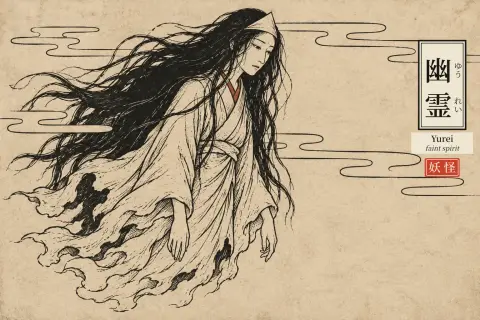
Yurei
幽霊The classic Japanese ghost: white burial robe, black hair unbound, no feet below the knee.
sorrowful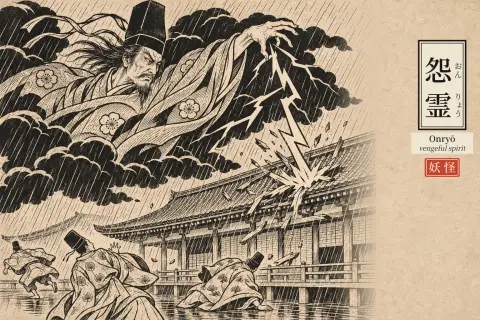
Onryo
怨霊A grudge that outlives the person who held it, and keeps settling the account.
vengeful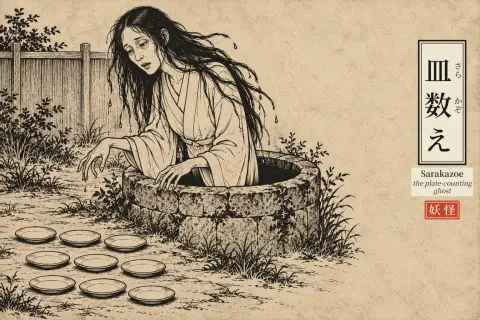
Sarakazoe (Okiku)
皿数えOkiku's ghost rising from the well, counting nine plates and never once reaching ten.
vengeful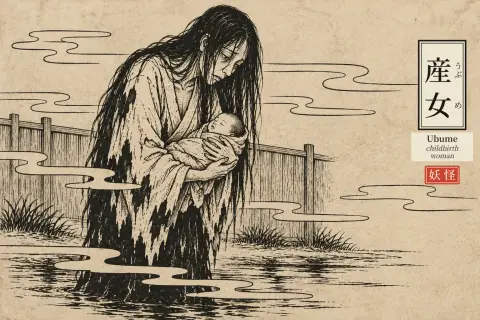
Ubume
産女The ghost of a woman who died in childbirth, begging you to hold her baby.
sorrowful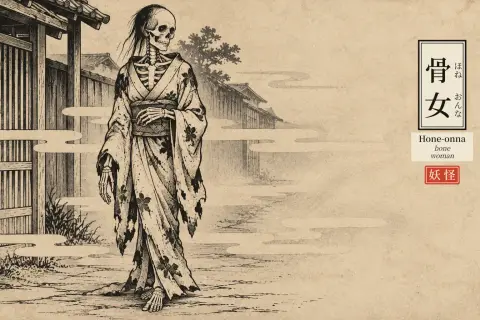
Hone-onna
骨女A skeletal woman who, seen as beautiful only by her lover, visits him each night.
sorrowful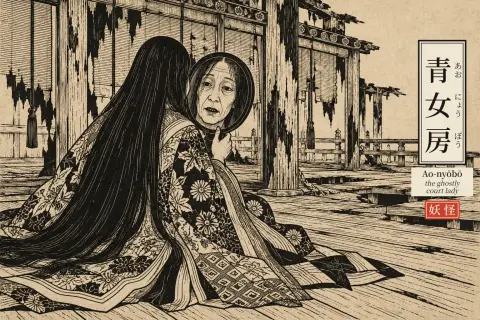
Ao-nyobo
青女房A ghostly court lady in a ruined palace, teeth blackened, watching for anyone who comes by.
sorrowful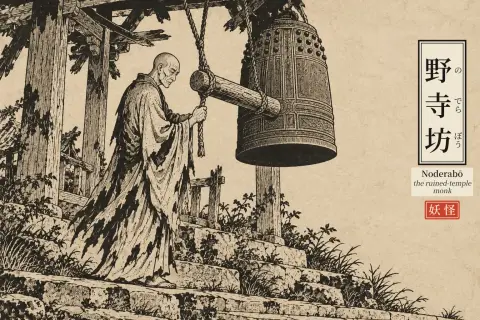
Noderabo
野寺坊The ghost monk of a ruined temple, still ringing an evening bell that no one comes to hear.
sorrowful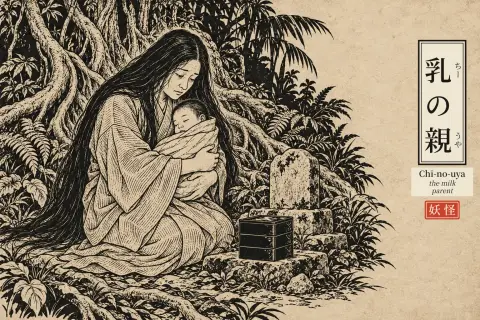
Milk Parent
乳の親She waits at the children's graves and nurses the ones buried there.
sorrowful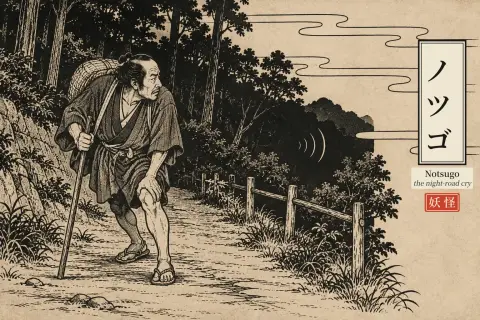
Notsugo
ノツゴA cry or a sudden heavy leg on a night road, said in some villages to be a child who died too soon.
sorrowful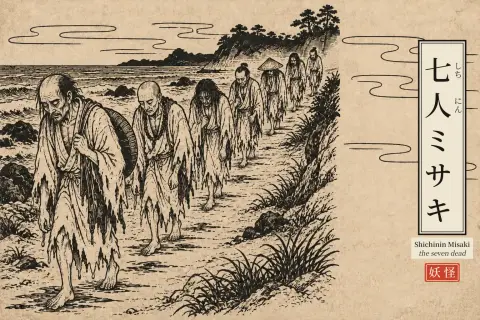
Seven Misaki
七人ミサキSeven dead who travel together, mostly by the sea and rivers. They take one living person, and the one they take joins them.
vengefulReborn as something else
A monk reborn as rats, an oil thief as a baby, a burned horse, the bird of the death mountain.
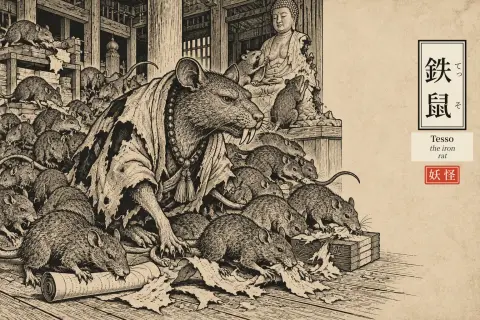
Tesso
鉄鼠The vengeful monk Raigo reborn as a swarm of iron-toothed rats that devour scriptures.
vengeful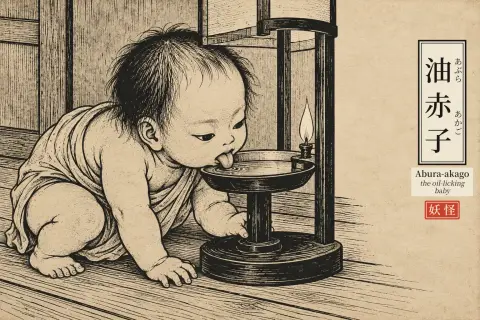
Abura-akago
油赤子An infant that licks the oil from lamps—perhaps, Sekien wondered, the reborn ghost of an oil thief.
eerie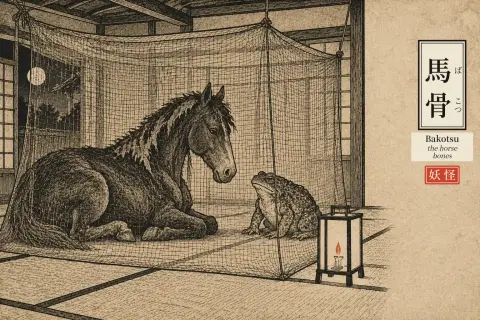
Horse Bone
馬骨A horse that burned to death in a fire and turned into a yokai, sitting face to face with a toad inside a mosquito net.
eerie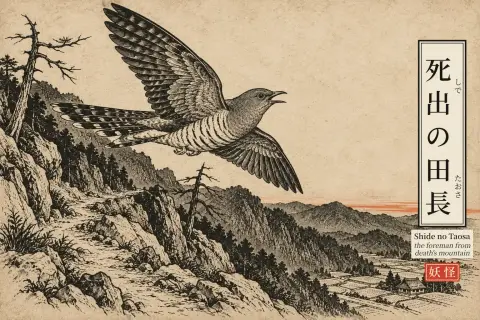
Shide no Taosa
死出の田長The cuckoo that crosses the mountain of death and comes back calling — which is why its cry was never just a bird's.
sorrowfulCurses and possession
A curse nailed to a tree, a corpse that sits up, and spirits a family keeps.
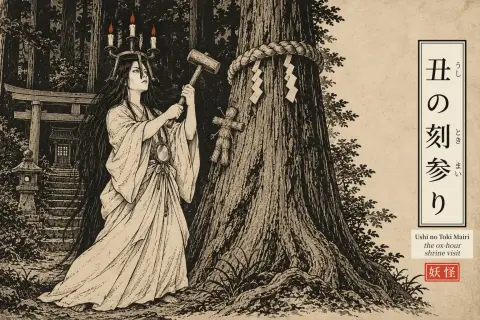
Ushi no Toki Mairi
丑の刻参りThe hour-of-the-ox curse: white robes, an iron crown of candles, and a straw doll nailed to a sacred tree.
vengeful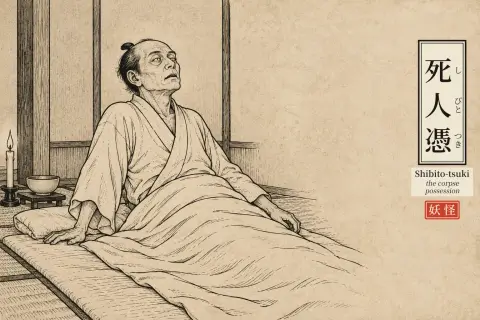
Corpse Possession
死人憑Something else moves into a body already dead, and the corpse sits up.
eerie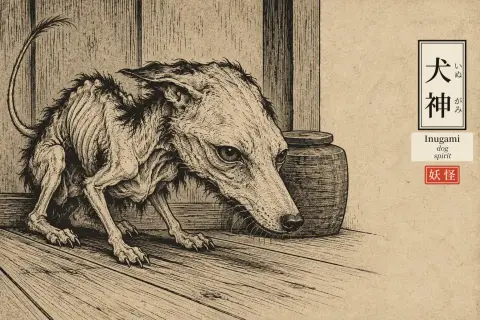
Inugami
犬神A dog-spirit familiar that serves a family but can be sent to curse their enemies.
sinister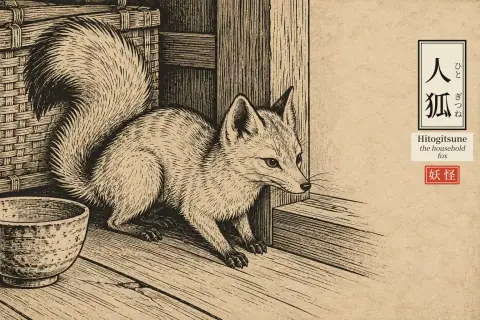
Person-Fox
人狐Not a fox that haunts a house but one a household is said to keep, passed down the family line.
cunning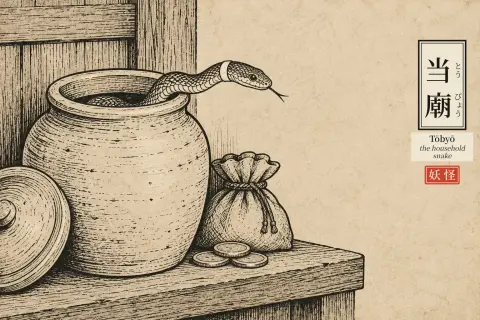
Tōbyō
当廟A small snake kept in a jar by a household, which brings wealth and cannot be got rid of.
sinister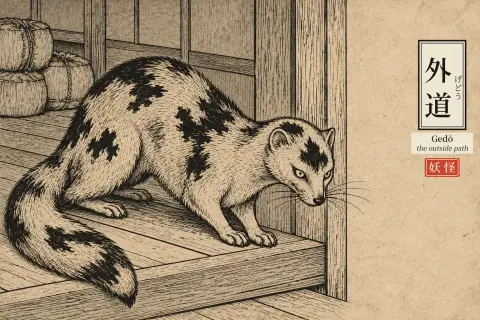
Gedō
外道A possessing spirit neighbours blame when a household grows rich fast — and fear once that household's luck turns.
sinisterDemon women and serpent women
Jealousy that grows horns or scales, and hags who keep a room you must not open.
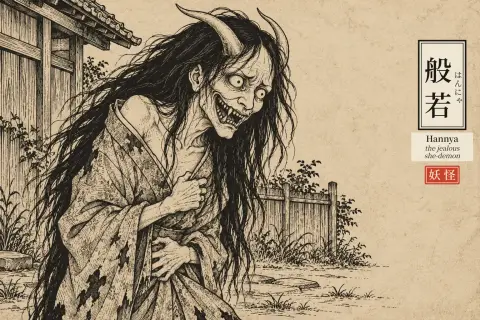
Hannya
般若The horned, grimacing visage of a woman consumed by jealousy and turned into a demon.
vengeful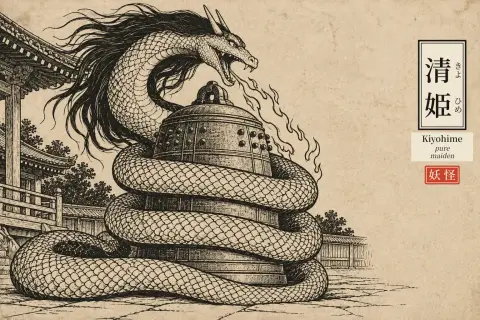
Kiyohime
清姫A spurned woman whose rage transforms her into a fire-breathing serpent to hunt down a fleeing monk.
vengeful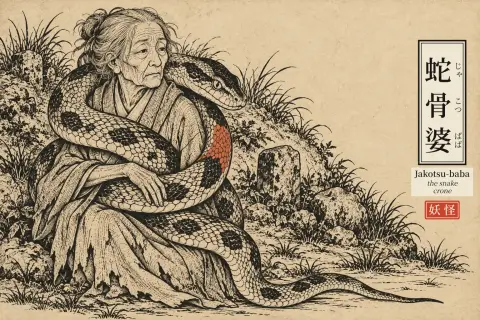
Jakotsu-baba
蛇骨婆An old woman with a great snake wrapped around her body, said to be the wife of Jagoemon of the snake mound.
menacing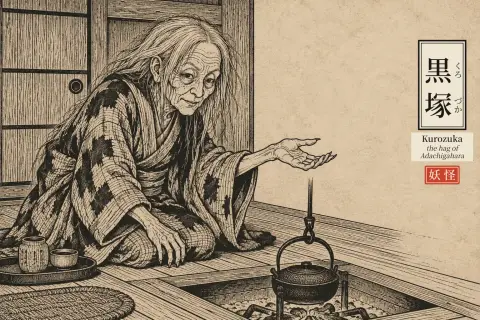
Kurozuka
黒塚The hag of Adachigahara, who offered travellers a bed and kept a room they must not open.
menacing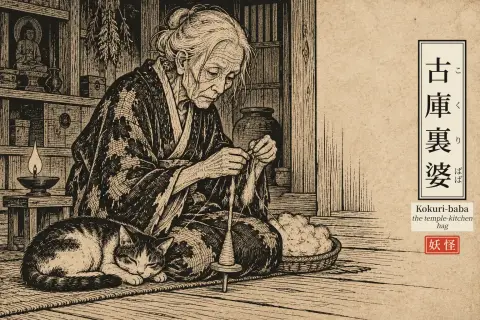
Kokuri-baba
古庫裏婆The widow in a mountain temple's back rooms, who digs up the graveyard's dead and strips their skin.
sinisterWomen with a strange body
A neck that stretches, a second mouth, eyes on the arms, hair that hides everything.
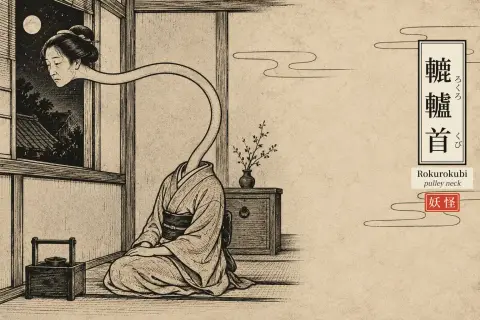
Rokurokubi
轆轤首A woman whose neck stretches to impossible lengths at night.
eerie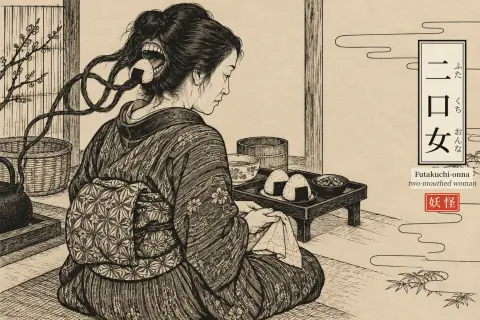
Futakuchi-onna
二口女A woman with a second, ravenous mouth hidden at the back of her head.
eerie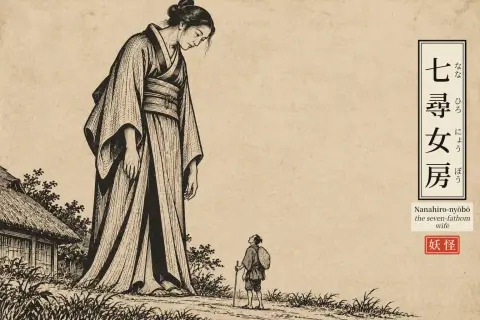
Seven-Fathom Wife
七尋女房A woman whose body or neck runs out to seven fathoms—about 12.6 metres—before she looks down at you.
eerie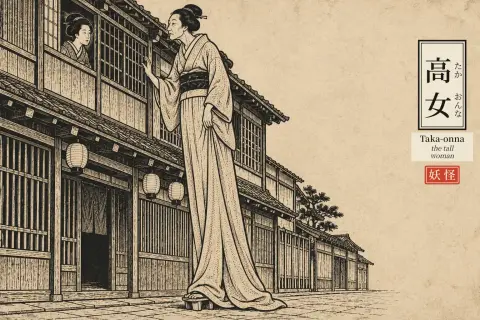
Taka-onna
高女A woman stretched impossibly tall beside a brothel. Modern writers made her an envious peeper.
envious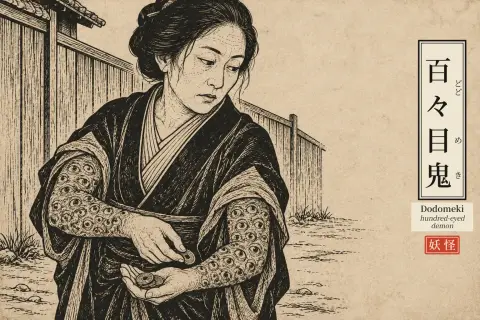
Dodomeki
百々目鬼A thieving woman whose arms sprout countless bird-eyes as punishment for stealing coins.
cunning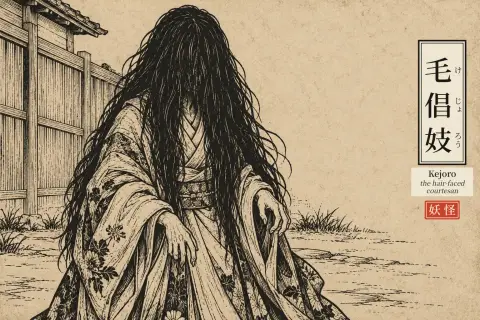
Kejoro
毛倡妓A courtesan whose face and body are entirely hidden by cascading hair.
eerie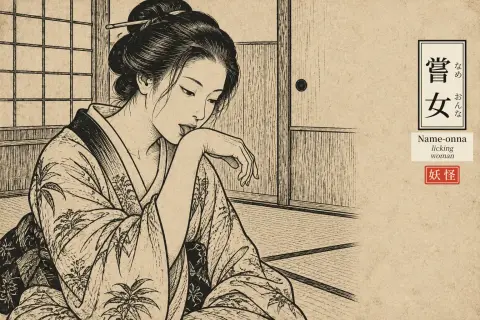
Licking Woman
嘗女A woman who licks. Her famous story calls her a cat girl; the kanji we spell her name with today is a modern choice.
eerieWomen of the road and the mountain
A snow woman, a laughing woman, a girl at a spinning wheel.
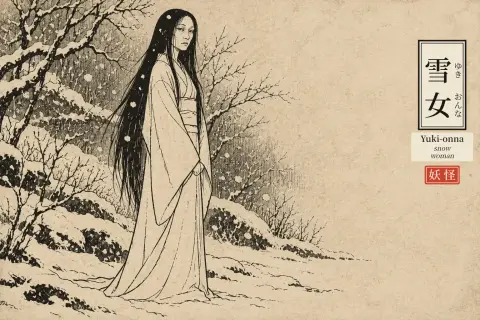
Yuki-onna
雪女A pale, beautiful woman of the snowstorm who freezes travelers to death.
mysterious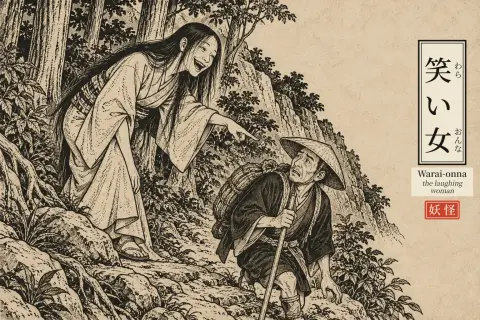
Laughing Woman
笑い女Enter the mountain on the 1st, 9th or 17th and a young woman points at you and laughs; you come down half dead.
eerie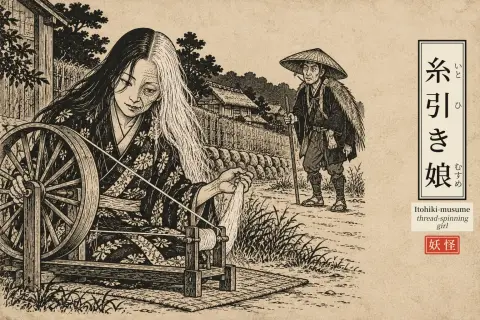
Thread-Spinning Girl
糸引き娘A beautiful girl at a spinning wheel by the road. Stop to watch and she turns white-haired and laughs.
mischievous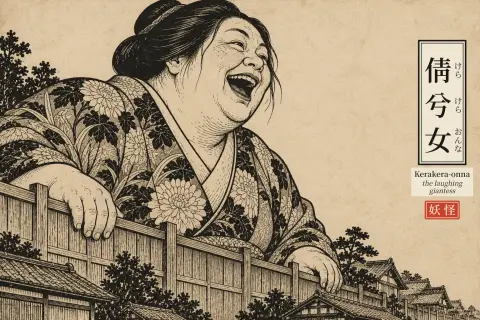
Kerakera-onna
倩兮女A giant woman's laughter rolling down over a fence, and never stopping.
menacing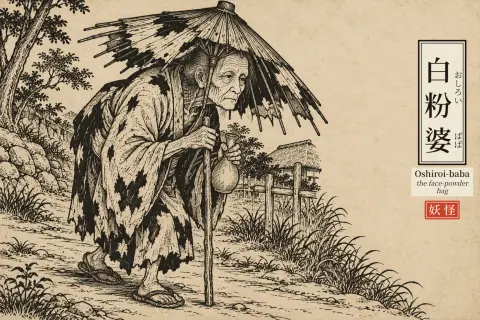
Oshiroi-baba
白粉婆A crooked old woman tied to white face powder, with a sake jug, a stick and a broken umbrella for a hat.
eerieChildren of the house
Small house spirits. Some bring luck, some sit on your chest.
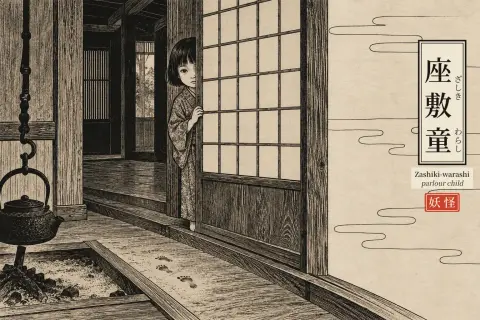
Zashiki-warashi
座敷童A childlike house spirit whose presence brings a family fortune.
benevolent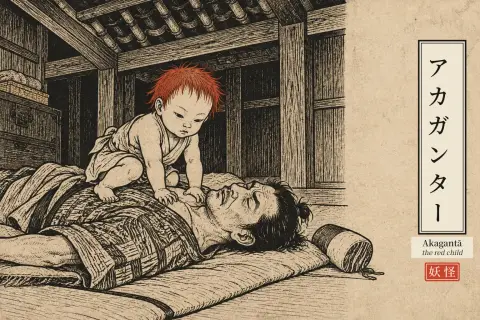
Akagantā
アカガンターA red-haired baby that slips into old houses at night to flip sleepers' pillows and press down on their chests.
mischievous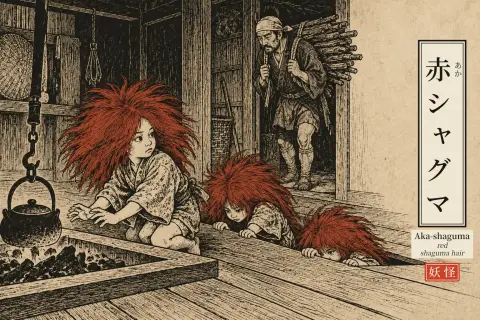
Red Shaguma
赤シャグマA red-haired child yokai that moves into houses, sometimes called kin to the zashiki-warashi.
playful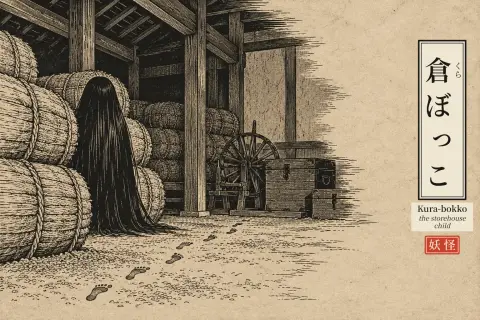
Storehouse Child
倉ぼっこIt lives in the storehouse rather than the parlour, and guards what is kept there.
benevolentLamps, smoke and hair
A blue lantern after the hundredth story, a shape in the smoke, and more.
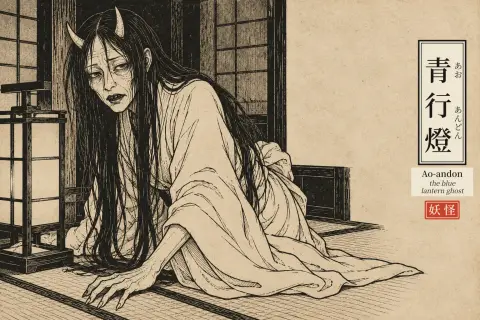
Ao-andon
青行燈A blue-lit specter that appears when the hundredth ghost story is told by lantern light.
ominous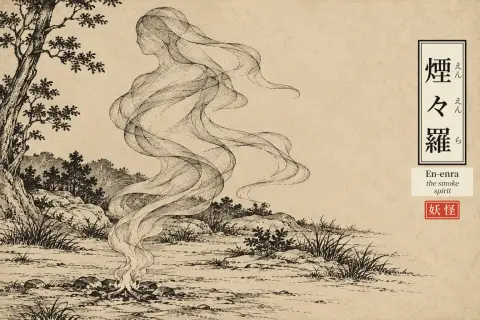
En-enra
煙々羅Smoke that gathers into a human shape—seen, modern retellings say, only by the pure of heart.
elusive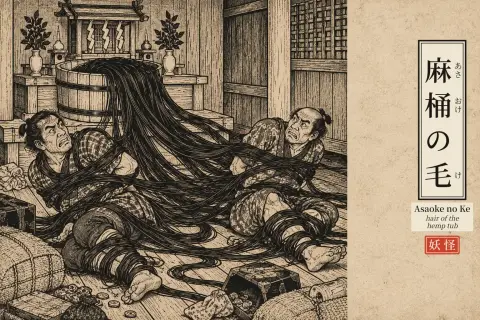
Hair of the Hemp Tub
麻桶の毛Hair kept in a hemp tub as a shrine's sacred object, which grows long and binds intruders when the enshrined kami's mood turns unsettled.
eerie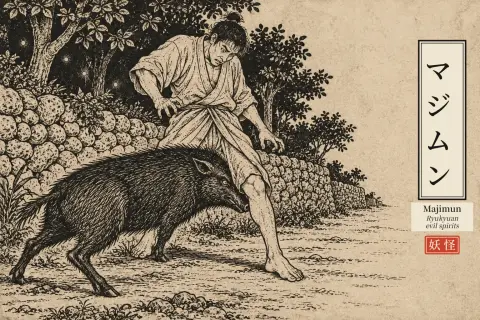
Majimun
マジムンThe Ryukyuan word for all of them at once. Let one crawl between your legs and you die.
ominous