Most yokai are things you meet. Shibito-tsuki is something that meets a body someone else already stopped using. The name is blunt: 死 (shi, "death") + 人 (bito, "person") + 憑 (tsuki, "possession") — a dead person, possessed. The case that put the name on the map comes from Inaba Province, in what is now Tottori Prefecture, and it does not read like a ghost story. It reads like a report.
What does it look like?
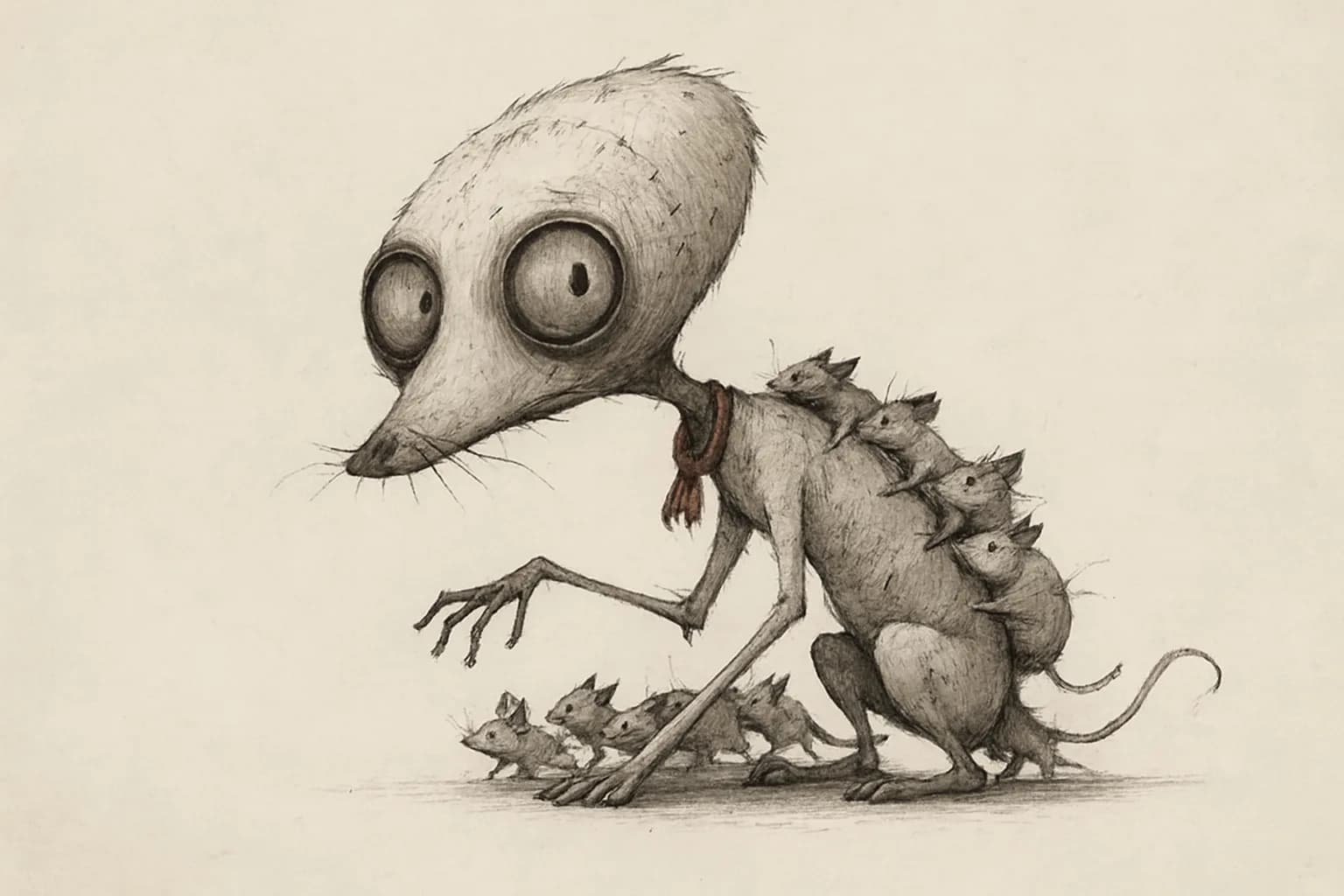
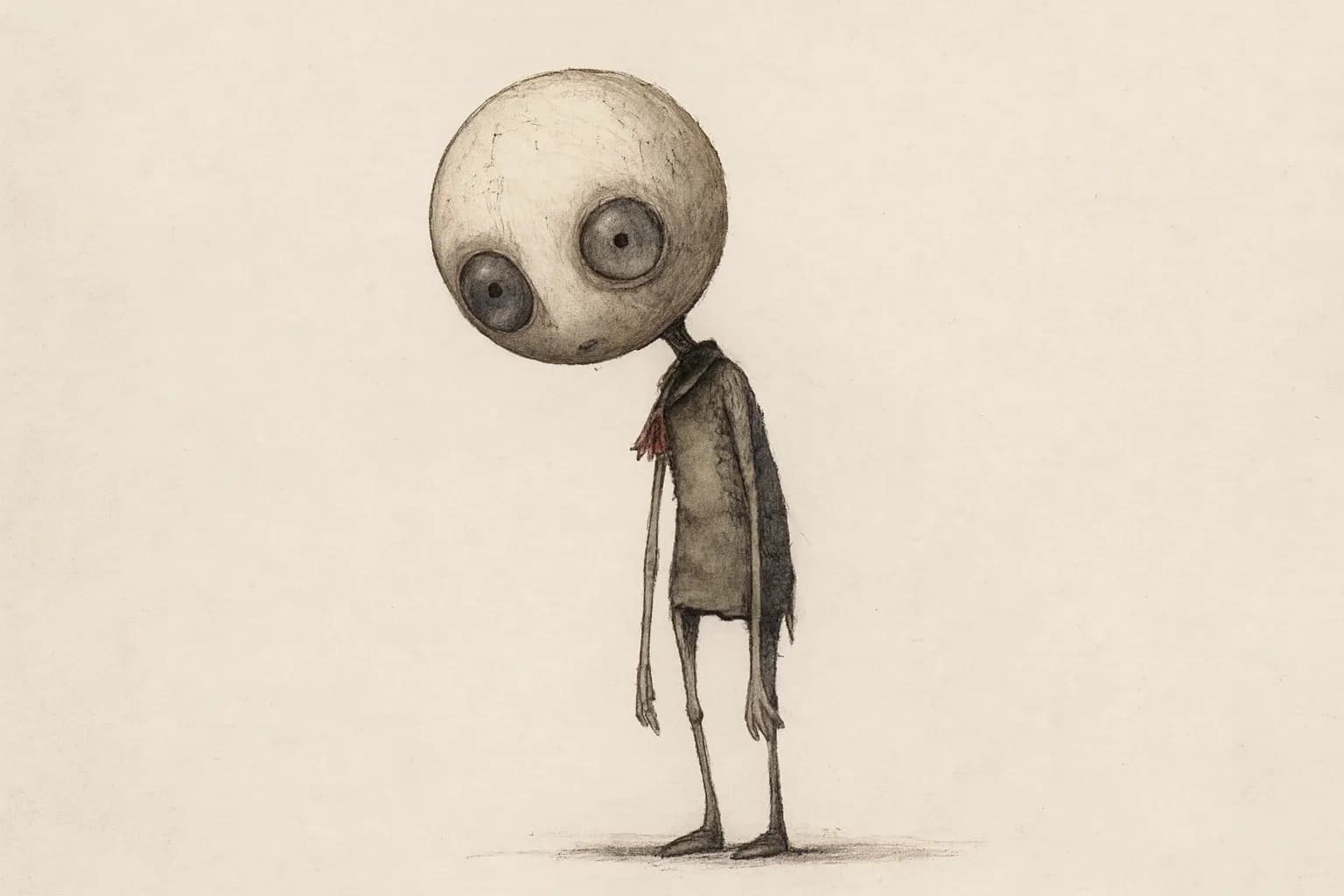
That is the wrong question, and the wrong question is the point. Shibito-tsuki has no fixed face, no drawn form in an old picture scroll, because it wears someone else's. At first it looks exactly like the person who just died. That is what makes it worse. The wrongness only shows later, in what the body does and, eventually, in what happens to it in the heat.
The night in Iwai District
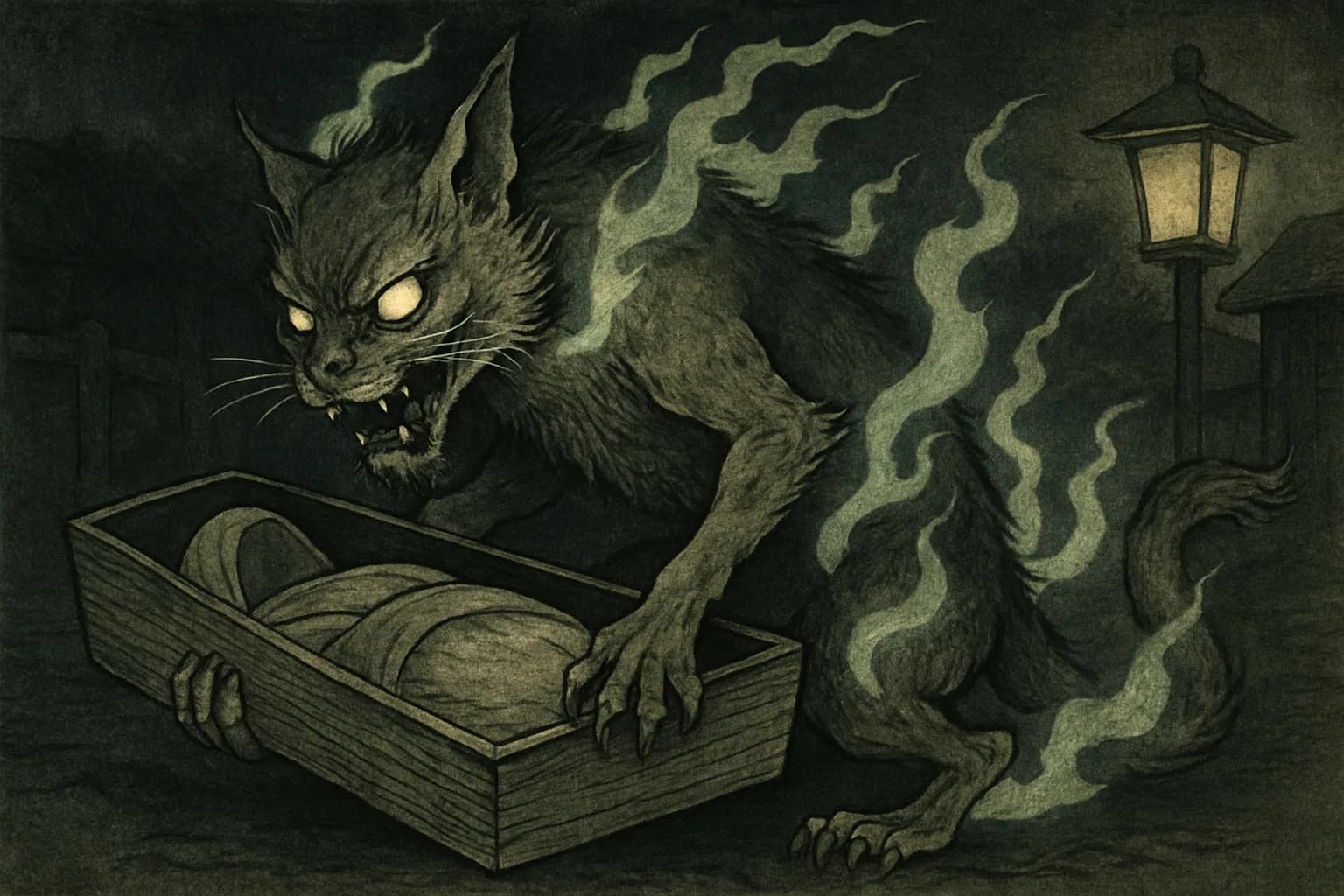
A farmer in Iwai District, Inaba Province, died after a long illness. His family began the wake, the customary watch kept over a body before burial. A priest had been sent for but had not yet arrived. Before he came, the corpse sat up.
It stood with a strength no sick, dead man should have had. Several grown men tried to hold it down and could not; it dragged them across the room. It ate. It drank. It did not sleep, for days running, while the household tried everything it knew. It was summer, and the body was still a corpse under whatever had taken hold of it — the heat did its usual work regardless. The accounts describe fluid running from the eyes and mouth, and a smell no one could stand.
Mountain ascetics were brought in to pray over it. Nothing worked. In the end the family gave up trying to drive the thing out. They sealed it inside the house and left.
Not a ghost, and not the person
Japanese folklore is careful about which kind of dead thing it is dealing with. A yūrei is the person's own spirit, unable to leave. An ikiryō is a living person's grudge, wandering loose from a body that is still breathing. Shibito-tsuki is neither. The man in Iwai District was already gone. What answered instead of him was a tsukimono — a possessing thing, from the same 憑 that gives the yokai its name — that found an empty house and moved in. The eating and the strength and the refusal to sleep are not human habits pushed to an extreme. They read as something inhuman trying to run a body it does not know how to operate.
Where it comes from
A wake exists to keep watch over a body until it can be properly buried, with someone present the whole time. Shibito-tsuki is the fear built into that custom made explicit: leave a corpse alone, even for the time it takes a priest to arrive, and something can get in first. It sits in the same broad folk category as kitsune-tsuki, fox possession, and other tsukimono beliefs, but turned toward the one moment those beliefs rarely dwell on — the gap between death and burial, when a body is still there and still, technically, unclaimed.
The earliest record is an Edo-period collection of night tales, the Sessō Yawa-shō. It survived into the twentieth century because the folklorist Ogihara Naomasa copied the account into his 1915 regional survey, Inpaku Densetsu-shū — "Tales of Inaba and Hōki" — the same book that preserved much of what we now know about Tottori's older folklore. Without that transcription, the Iwai District case might well have stayed a single unread page.
Shibito-tsuki today
Shibito-tsuki never picked up a standard look the way the kappa or the tengu did, and that is probably why it stayed a regional footnote rather than a household name. It owes its modern visibility mostly to one source: Mizuki Shigeru, who catalogued the Iwai District account in his 1984 yokai encyclopedia and kept a very obscure piece of Tottori folklore from disappearing outright. No drawing from the original telling survives to compare it to. What is left is the report itself — a family that did everything the customs told them to do, and a house they finally just walked away from.