神 · Kami
The small gods of Japan
A yokai is something a village feared. A kami is something it fed. Many sit side by side. The god of the river and the kappa live in the same water. This shelf is for the household and village gods: of the well, the privy, the field and the hearth.
Each entry says what people actually did for the god, in which province, and when. It also says plainly why the god is not a yokai.
Kompira
金毘羅The sailors' god on the Shikoku hill, whose name came from a crocodile deity in the Ganges.
benevolent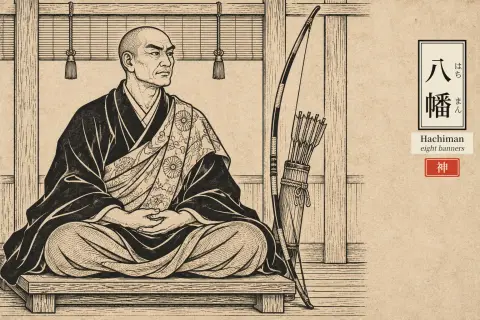
Hachiman
八幡The god of archers and samurai, who was also given a Buddhist title and shown as a monk.
proud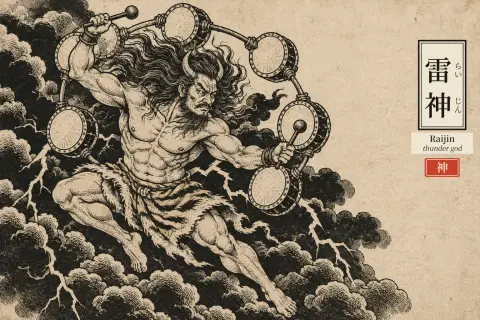
Raijin
雷神The thunder god who beats a ring of drums, and who was once caught by a man and carried to the emperor.
fierce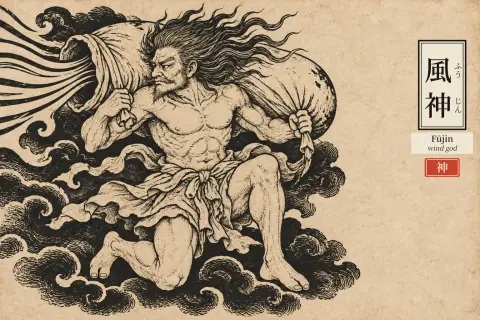
Fujin
風神The wind god who carries the wind in a bag on his back, a pose some scholars trace all the way back to Greece.
swift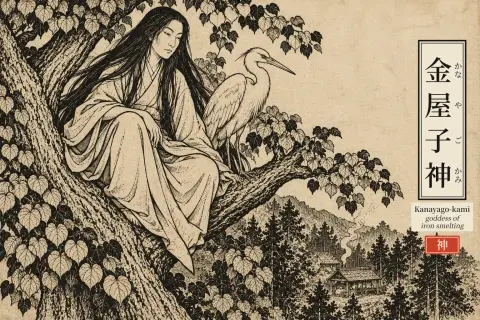
Kanayago-kami
金屋子神The smelting goddess of the iron country, who dislikes women, dogs and hemp but welcomes the dead at her furnace.
fierce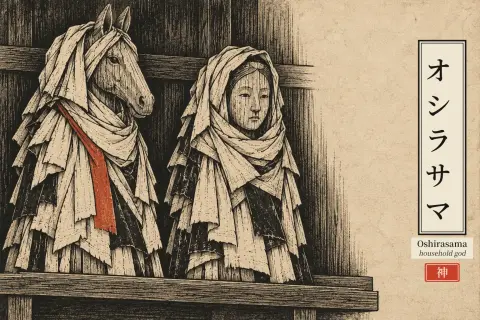
Oshirasama
オシラサマA pair of cloth-wrapped mulberry sticks, often read as a horse and the girl who married him, and tied to the start of silkworm farming.
sorrowful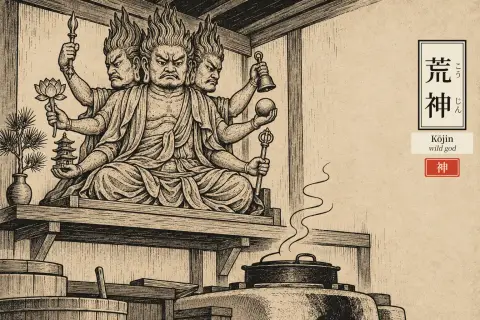
Kojin
荒神The fierce fire god of the Japanese kitchen shelf, and of the sacred trees of western Japan’s hamlets.
fierce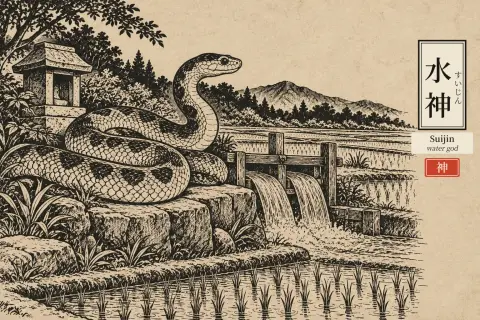
Suijin
水神The god of the water a village drinks and farms with, worshipped at the well, the spring and the paddy weir.
ambiguous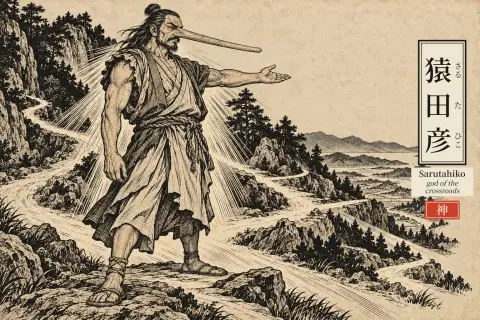
Sarutahiko
猿田彦The god who was already standing at the crossroads when the heavenly party came down, and went out to guide them.
proud