Yokai of the House
A child who brings luck, a creature that licks the bath, a face at the toilet window. Here are the yokai of the Japanese house, room by room.
People often search for these spirits by the room, not by name. Something in the bath. Something in the ceiling. A child who lives in the house. This page is built for that kind of search. Find the room, then open the card.
Why do so many yokai live indoors? One way to read them: each room had its own small danger. The bath was dirty. The hearth could burn a child. The toilet was dark and often outside. A yokai gave that danger a face, and gave people a reason to be careful.
Some are about luck, not danger. A zashiki-warashi brings a family good fortune. When it leaves, the luck leaves too. Other families were said to keep a spirit under the floor. It made them rich, and it harmed their neighbours.
The two groups come from different places. Most of the bath, ceiling and toilet yokai were first drawn in Edo picture books, between 1737 and 1784. Most of the house children were written down much later, in the 1900s, from stories told in farm villages.
Old objects that come alive, like umbrellas and lanterns, have their own page: tsukumogami. We only list a yokai here if its own page puts it inside a house, or at its door. Each page names the oldest source we found.
Children who live in the house
Small house spirits. Most bring luck, and the luck leaves with them.
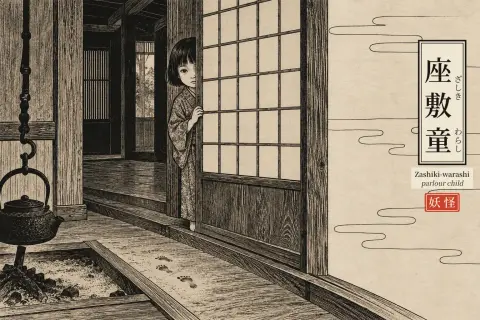
Zashiki-warashi
座敷童A childlike house spirit whose presence brings a family fortune.
benevolent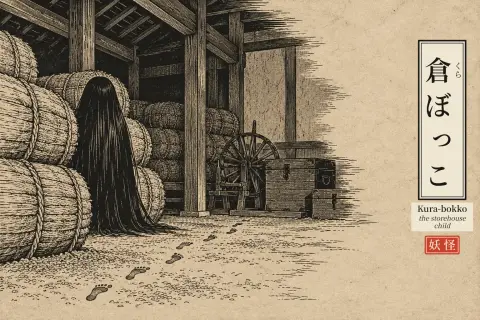
Storehouse Child
倉ぼっこIt lives in the storehouse rather than the parlour, and guards what is kept there.
benevolent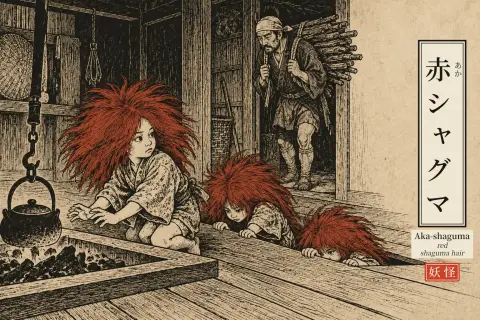
Red Shaguma
赤シャグマA red-haired child yokai that moves into houses, sometimes called kin to the zashiki-warashi.
playful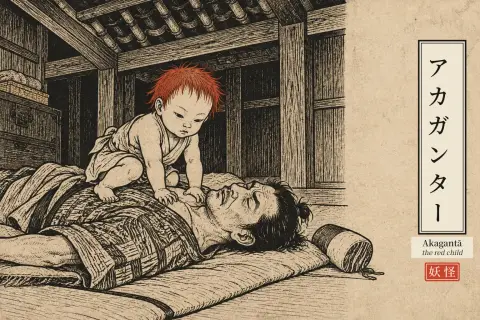
Akagantā
アカガンターA red-haired baby that slips into old houses at night to flip sleepers' pillows and press down on their chests.
mischievousSpirits a family keeps
Kept under the floor or in a jar. They make one house rich and harm the others.
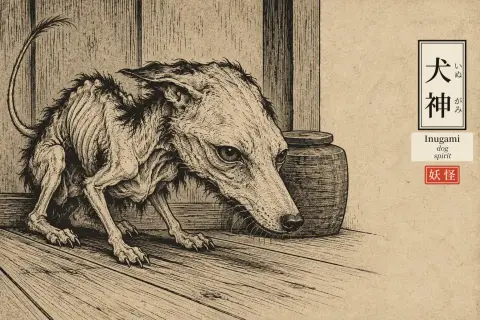
Inugami
犬神A dog-spirit familiar that serves a family but can be sent to curse their enemies.
sinister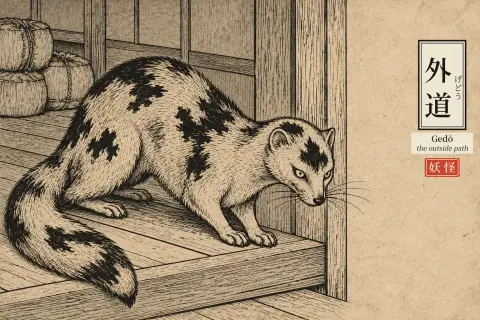
Gedō
外道A possessing spirit neighbours blame when a household grows rich fast — and fear once that household's luck turns.
sinister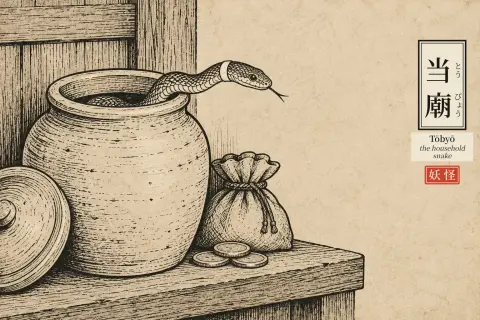
Tōbyō
当廟A small snake kept in a jar by a household, which brings wealth and cannot be got rid of.
sinister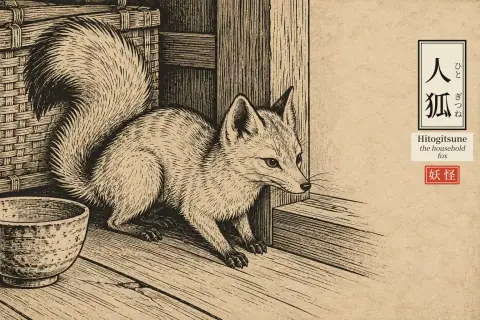
Person-Fox
人狐Not a fox that haunts a house but one a household is said to keep, passed down the family line.
cunningThe bath, the toilet and the ceiling
The dirty, dark corners of the house, each with its own creature.
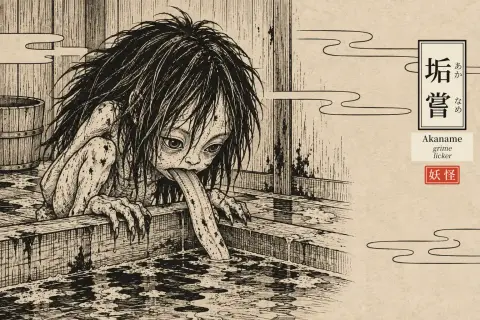
Akaname
垢嘗A small yokai that creeps into dirty bathhouses at night to lick up the grime.
harmless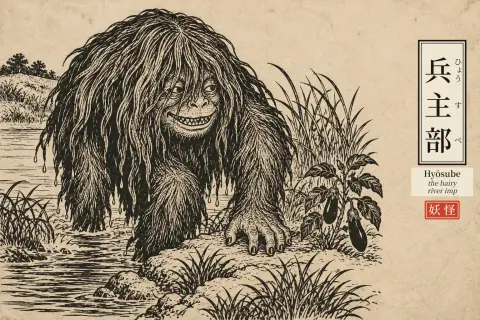
Hyosube
兵主部A hairy, grinning river yokai—cousin of the kappa—that loves eggplants and startles bathers.
mischievous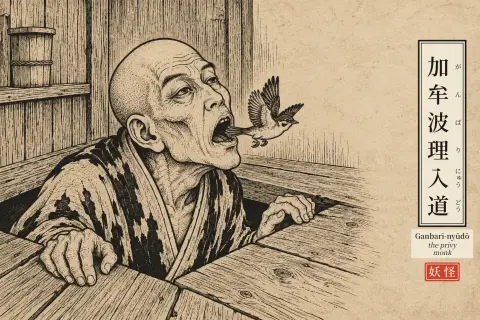
Ganbari-nyudo
加牟波理入道A monk who peers up through the privy floor on New Year's Eve—unless you say his name first.
eerie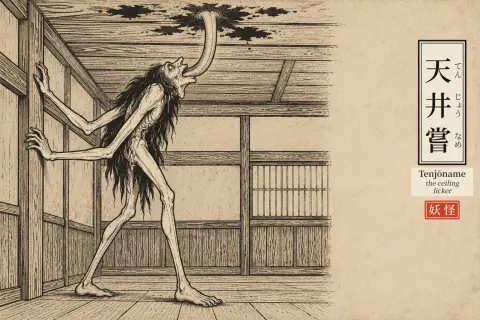
Tenjoname
天井嘗A long-tongued yokai that licks ceilings; later books blame it for the dark stains overhead.
harmless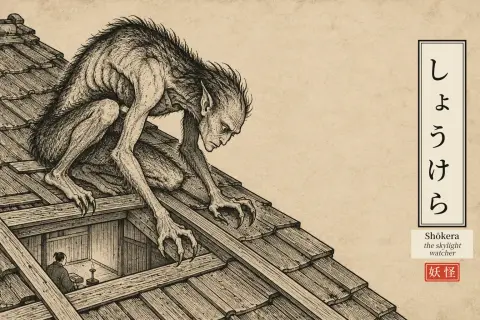
Shokera
しょうけらA clawed thing that peers down through the skylight on the one night you are required to stay awake.
eerieThe hearth, the lamp and the smoke
Fire was the most useful and most dangerous thing in the house.
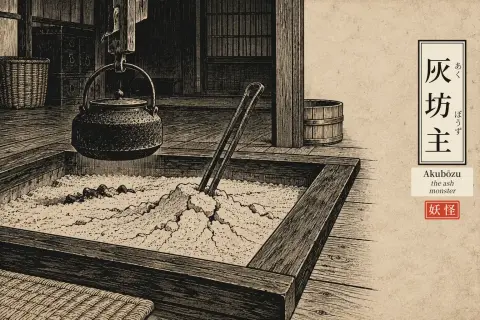
Ash Priest
灰坊主It lives in the hearth ash. Poke the ash and it comes out — which was the point of saying so.
menacing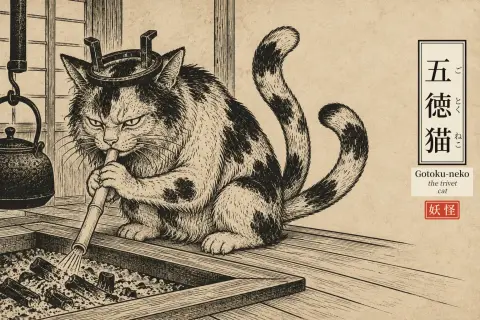
Gotoku-neko
五徳猫A two-tailed cat wearing a hearth trivet as a crown, puffing the embers back to life.
playful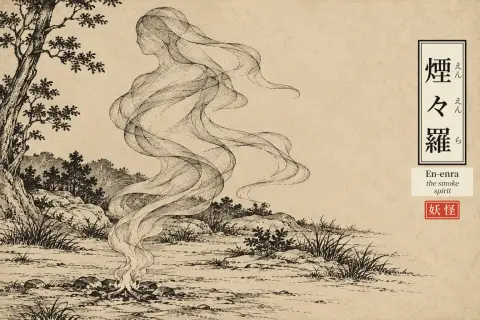
En-enra
煙々羅Smoke that gathers into a human shape—seen, modern retellings say, only by the pure of heart.
elusive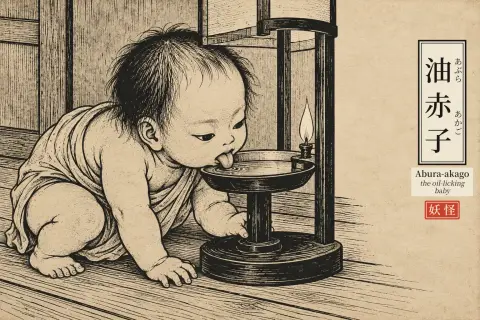
Abura-akago
油赤子An infant that licks the oil from lamps—perhaps, Sekien wondered, the reborn ghost of an oil thief.
eerie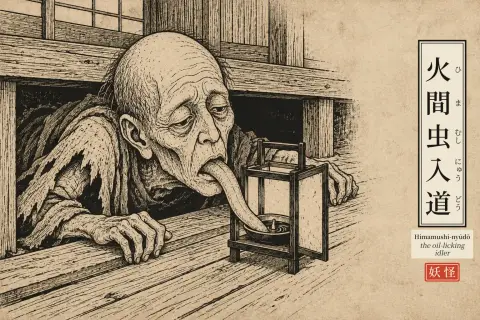
Himamushi-nyudo
火間虫入道The idler's yokai: a man who did nothing with his life, reborn as a thing that licks lamp oil and does nothing still.
harmlessUninvited guests
They walk in, sit down, haunt one house, or make the family sick.
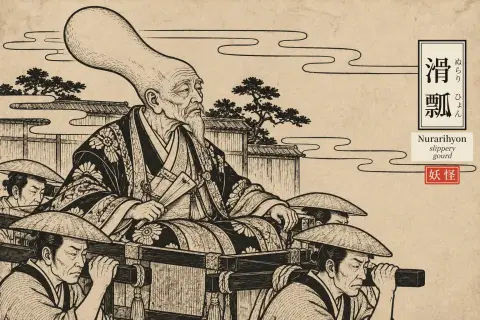
Nurarihyon
滑瓢A gourd-headed old yokai who slips into homes and acts like the master.
mysterious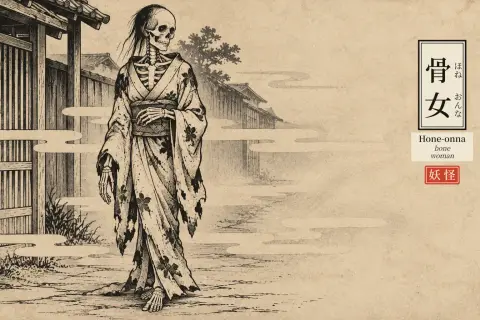
Hone-onna
骨女A skeletal woman who, seen as beautiful only by her lover, visits him each night.
sorrowful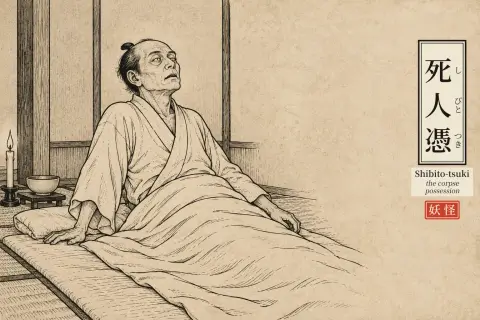
Corpse Possession
死人憑Something else moves into a body already dead, and the corpse sits up.
eerie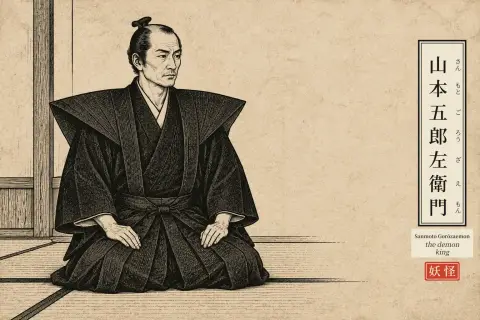
Sanmoto Gorōzaemon
山本五郎左衛門A demon king who spent thirty nights trying to frighten one sixteen-year-old, and lost the wager.
proud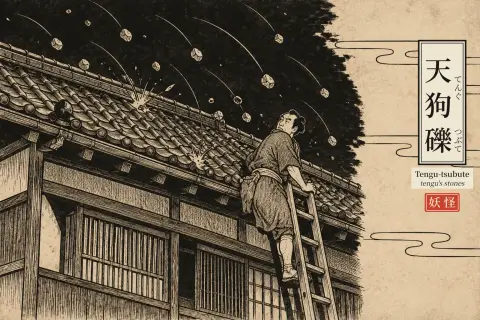
Tengu-tsubute
天狗礫Stones fall from the sky with no thrower ever seen, blamed on a tengu.
menacing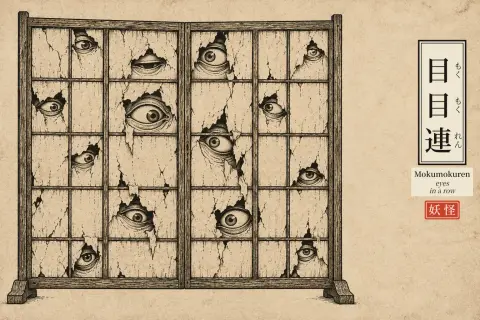
Mokumokuren
目目連Countless eyes that appear on the paper sliding screens (shoji) of a ruined house.
eerie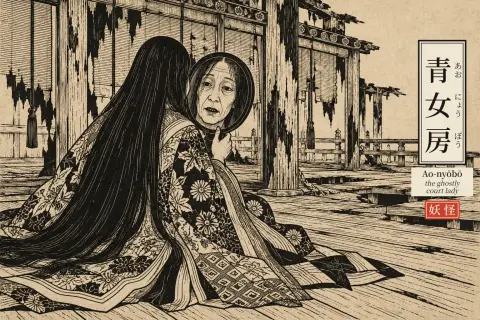
Ao-nyobo
青女房A ghostly court lady in a ruined palace, teeth blackened, watching for anyone who comes by.
sorrowful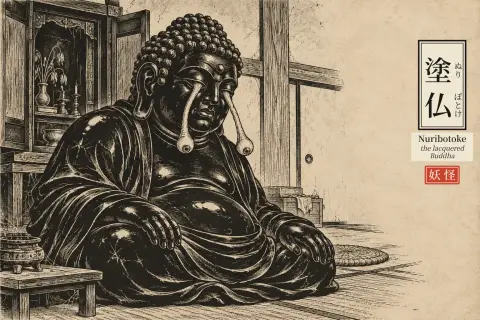
Nuribotoke
塗仏A black, Buddha-like figure climbing out of a family altar, its eyes dangling on their stalks.
eerie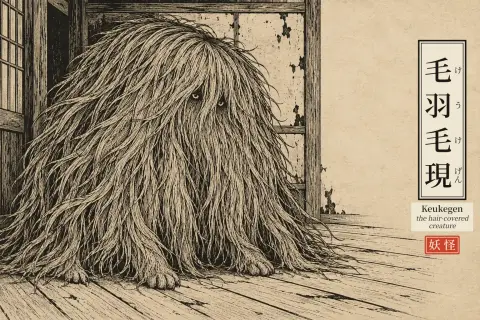
Keukegen
毛羽毛現A creature covered in hair all over, like the hairy immortal woman of Chinese legend; its name can also be written to mean 'seen only rarely.'
sinisterAt the door and the well
Visitors who knock, a one-eyed boy kept off by a basket, and a ghost in the well.
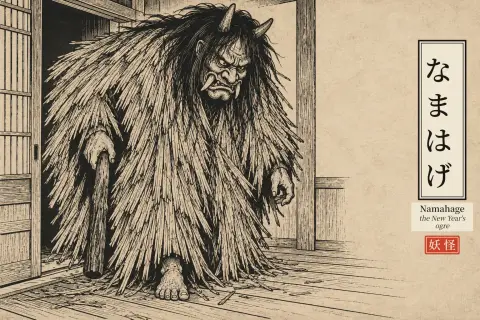
Namahage
なまはげOgre-masked visiting deities who storm into homes at New Year roaring 'Any crybabies here?'
fierce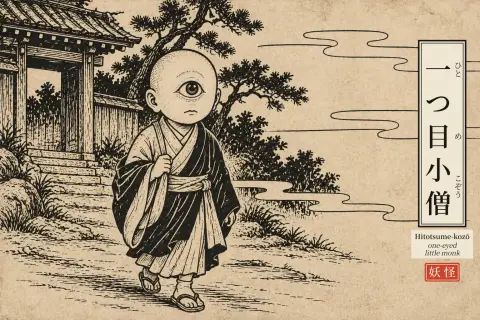
Hitotsume-kozo
一つ目小僧A childlike, one-eyed monk yokai that startles people on lonely roads.
harmless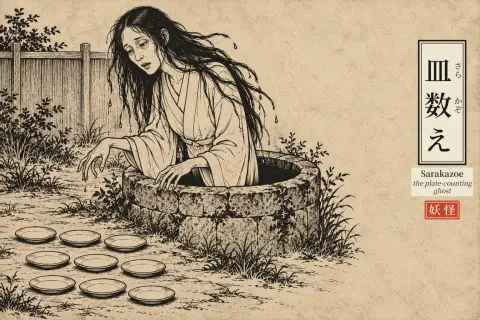
Sarakazoe (Okiku)
皿数えOkiku's ghost rising from the well, counting nine plates and never once reaching ten.
vengeful