Picture a baby with hair the color of a sunset, left alone in a dark room. That is akagantā, and the house it has chosen is yours. Its name opens with アカ (aka, "red"), and ガンター (gantā) follows, as part of the creature's own name. What ガンター means is not explained in the sources we found.
What does it look like?
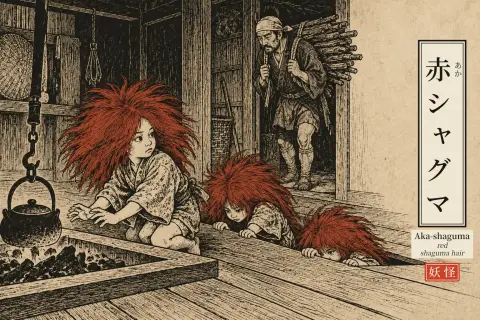
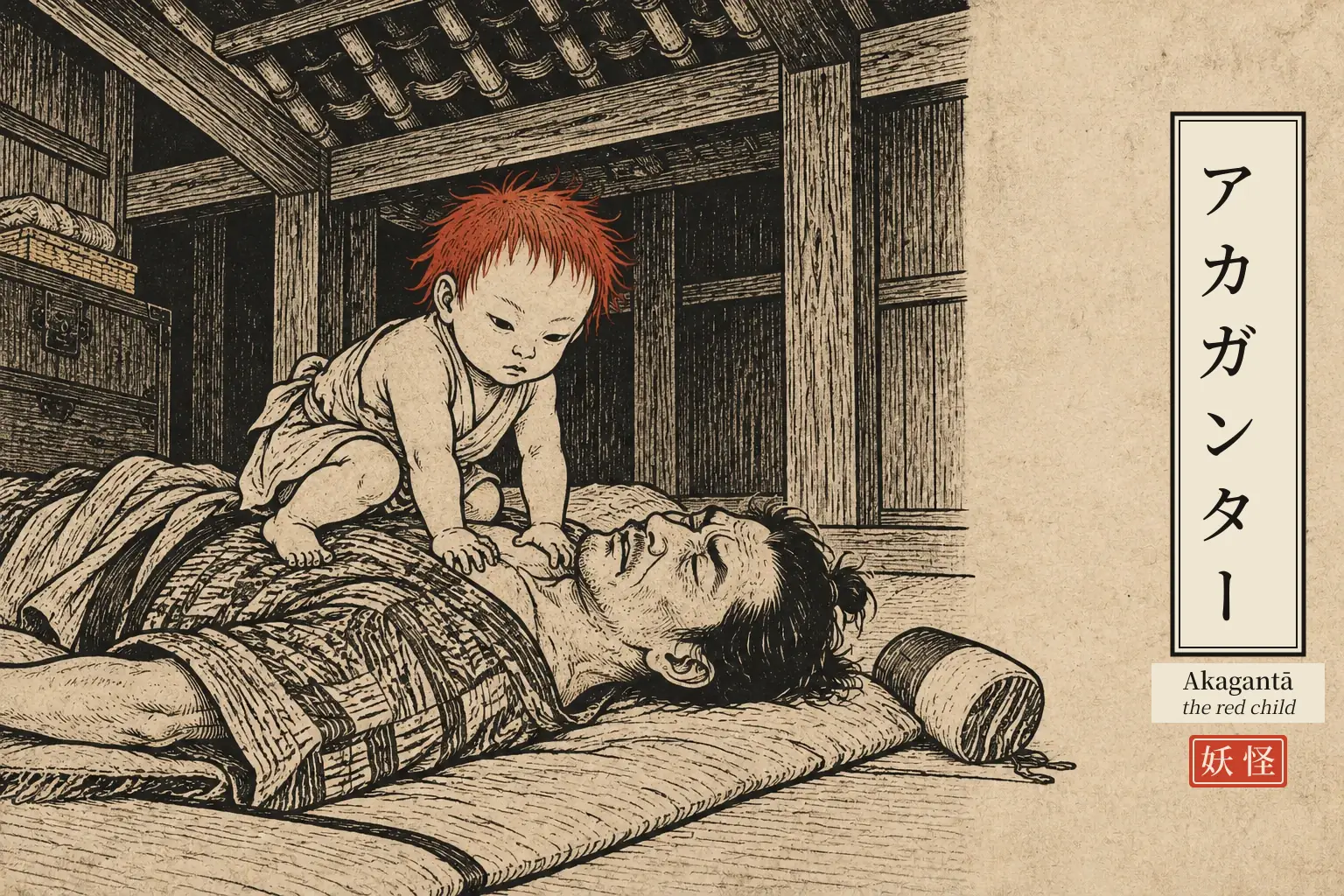
The old record is short but specific. Akagantā looks like a red-haired infant, and some tellings dress it in red clothes to match. It is a shape glimpsed at the edge of sleep, not a creature anyone painted in full.
A night visitor in an old house
Akagantā is a house yokai. It is said to appear inside old homes, favoring the main room where a family sleeps at night. Two things are told about what it does once it is in.
One version has it flip over a sleeper's pillow. Wake up and your pillow has turned, pointed the wrong way, with no one around who could have done it. The other has it press down on a person's body while they sleep — a weight on the chest that will not let the sleeper move. Akagantā does not choose between them. It is simply credited with both.
A cousin, or just a rumor?
Okinawan yokai scholarship has never settled what akagantā actually is.
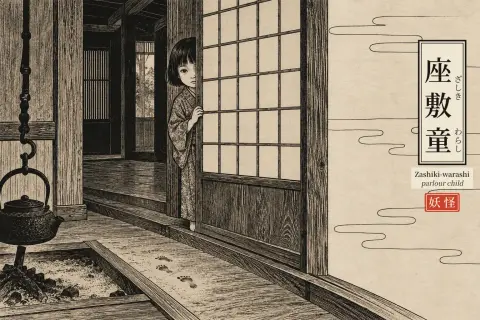
The yokai researcher Tada Katsumi points to how closely it resembles kijimuna, the red-haired tree spirit of the Okinawa Islands — right down to the hair color and the habit of pressing down on sleepers — and counts akagantā among kijimuna's kind. The folklorist Murakami Kenji records a stronger view still: that akagantā may be another name for kijimuna, not a separate creature at all. Tada elsewhere groups it a different way too, as the same kind of yokai as zashiki-warashi, the child-shaped house spirit of the Tōhoku region — a fellow small, half-seen figure who turns up uninvited in a sleeping household.
A third thread exists under a different name. The folklorist Hino Iwao's record of yokai vocabulary describes a red-haired child apparition called akagantā warabā — "warabā" meaning child. Whether that is the same spirit under a fuller name, or a cousin tradition folded into akagantā later, is not settled either.
Where it comes from
No single written source anchors akagantā the way an Edo print anchors a mainland yokai. It survives in Okinawan oral folk belief, passed down rather than drawn. What the disputes over its identity show is less confusion than closeness: the Ryukyu Islands' spirit world holds several small, red-haired figures that slip into human spaces and resist being filed into one neat category. Akagantā may simply be the name a household gives to that half-seen weight on the pillow when kijimuna or zashiki-warashi don't quite fit.
Go deeper
Where Japanese ghosts come from.
- Yūrei: The Japanese Ghost →Zack DavissonWhere Japanese ghosts come from, told through old paintings, kabuki and ghost stories.
- Kwaidan: Stories and Studies of Strange Things →Lafcadio HearnThe classic 1904 collection of Japanese ghost stories that shaped how the West first met kaidan.
Some links are affiliate links; if you buy through them we may earn a small commission at no extra cost to you.
Akagantā today
Akagantā has stayed a local name rather than a national one. It turns up in Okinawan yokai compendiums and folklore glossaries as a minor, specific entry — the red child who flips your pillow — rather than as a mascot with its own media footprint, as far as we could find. That smallness is its own kind of evidence: a detail this specific, tied to no bigger story, is the sort of thing that gets remembered only because someone really did wake up once to a pillow turned the wrong way.