In the old farmhouses of Iwate Prefecture, families used to keep an ear out for footsteps in empty rooms — small ones, the kind a five- or six-year-old would make crossing a tatami floor at night. Hearing them was not a bad sign. Losing them was. The zashiki-warashi is a house spirit that takes the form of a child, and the households of northern Tohoku have long believed that a home is only as prosperous as the invisible child living in its best guest room.
What does it look like?
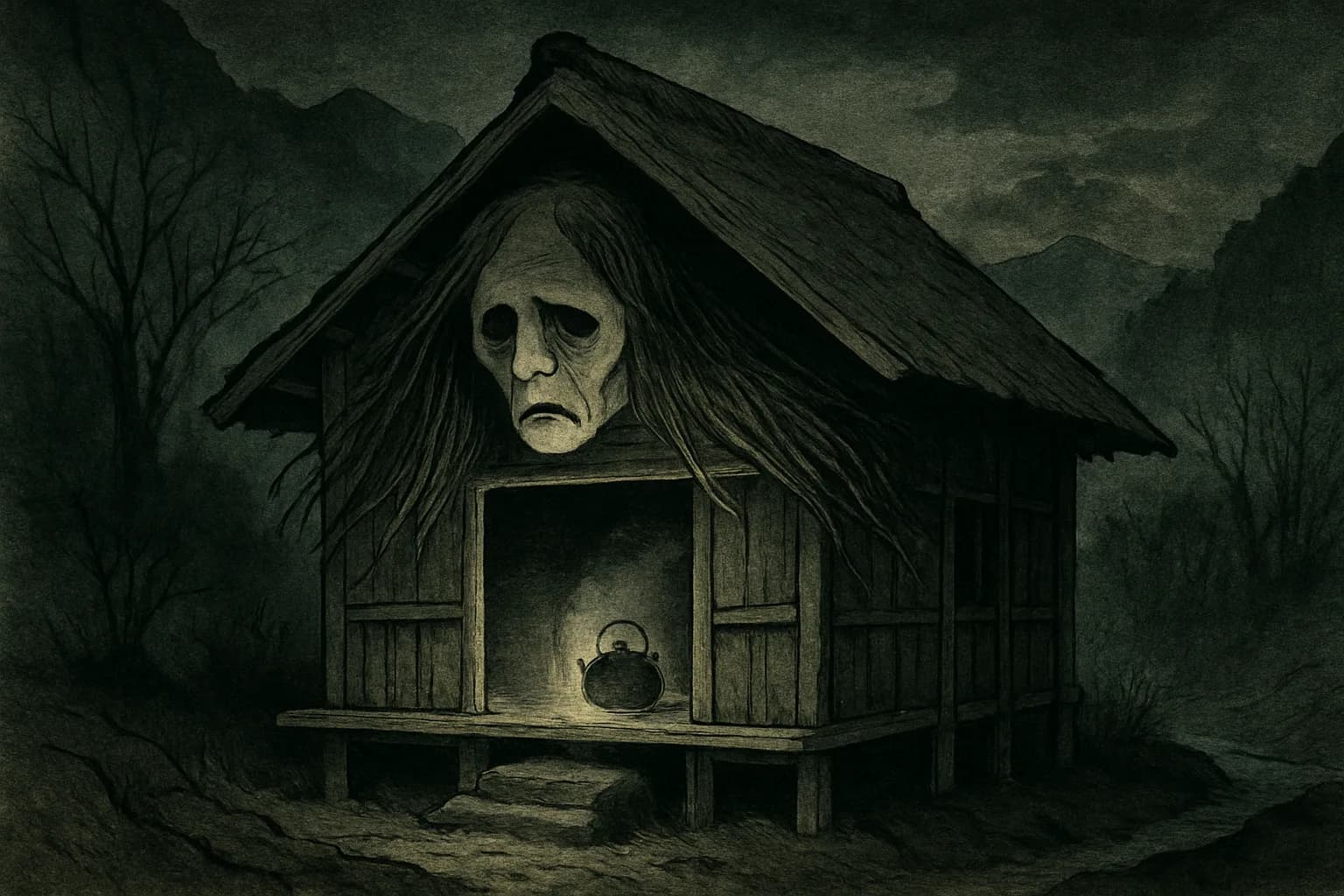
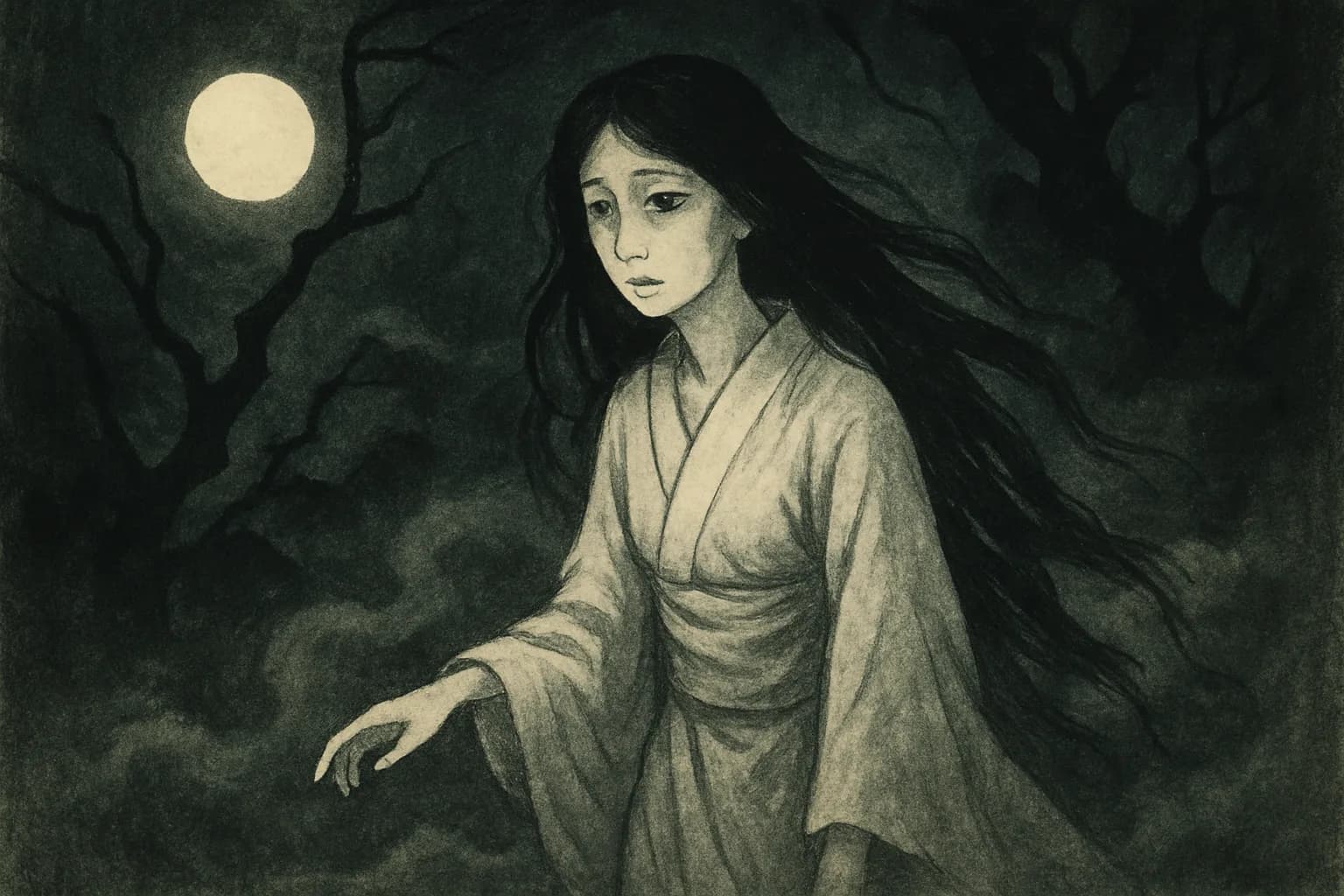
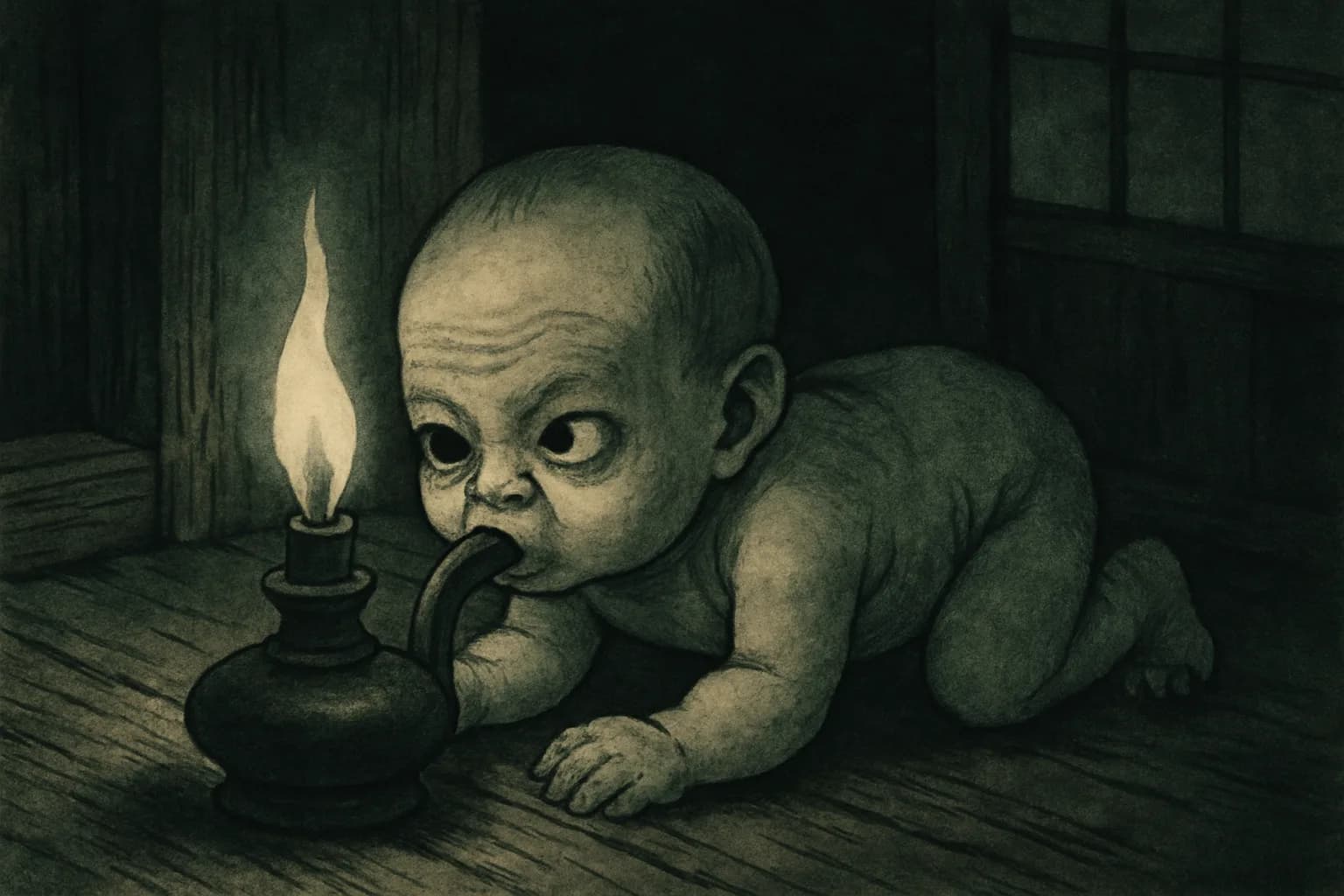
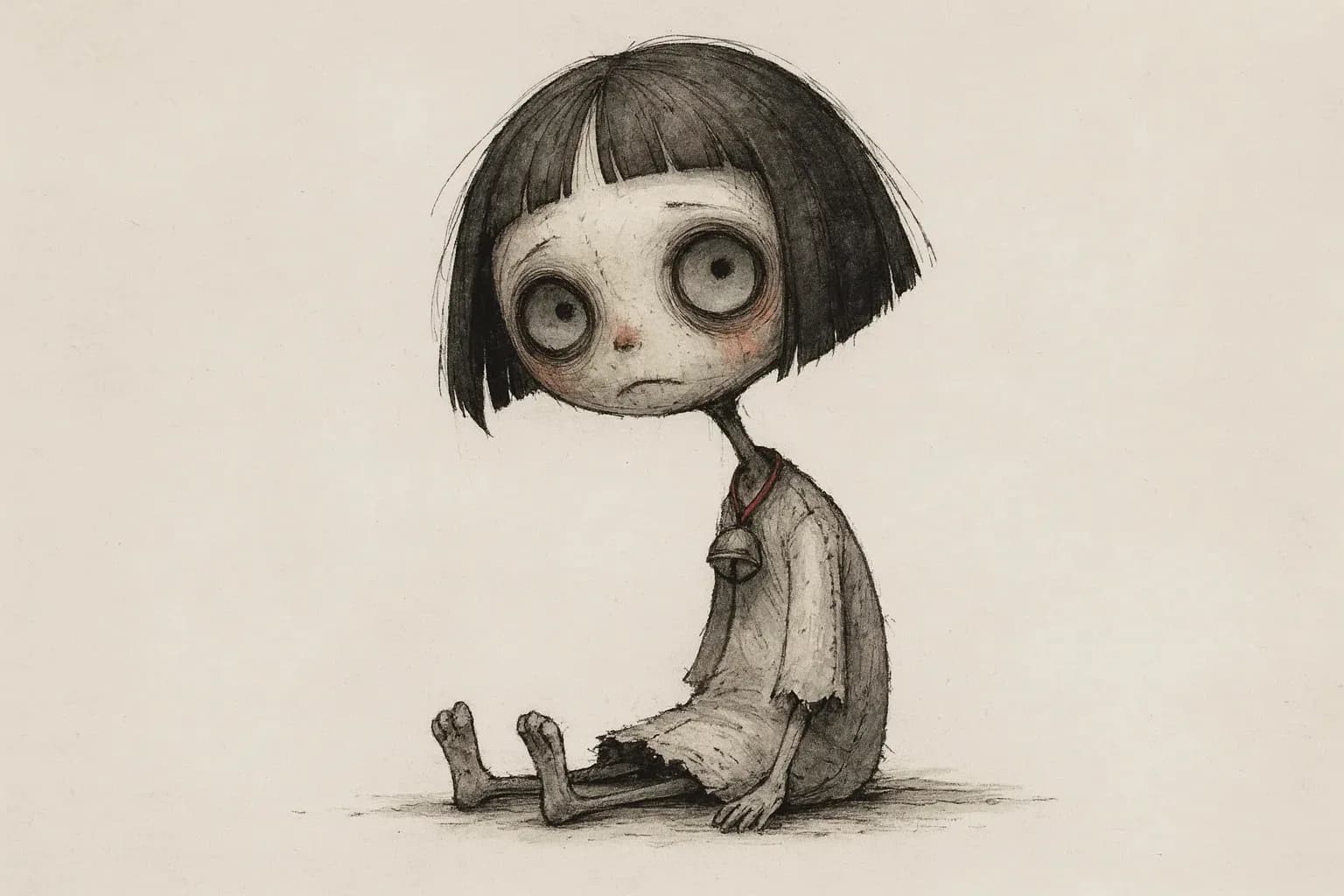
Descriptions collected from Iwate households describe a child of about five to twelve years old, sometimes a boy, sometimes a girl, occasionally with a reddish face or an old-fashioned bobbed haircut. It rarely shows itself in full. Most encounters are partial and fleeting: a shape glimpsed at the end of a hallway, a small handprint or footprint pressed into ash left out on the floor overnight, the sound of someone sliding a paper door, a child's laughter from a room that was empty a moment before. The zashiki-warashi's usual territory is the zashiki — the formal tatami reception room reserved for guests — and the disused inner rooms of a large old house, exactly the parts of a rambling farmhouse a family would visit least.
A spirit that carries the household's luck
What sets the zashiki-warashi apart from other yokai is what its presence is said to control. A house with a zashiki-warashi living in it prospers: the harvests hold, the family grows, money does not run out. The spirit is notoriously changeable about which house it favors, and folklore holds that it can move on, sometimes seen leaving one home for another down the road. When it goes, the household's fortune is said to go with it. The luck is not a blessing bestowed once — it is contingent on the spirit choosing, for its own unknowable reasons, to keep living there.
This is the detail that gives the legend its bite. A creaking floorboard or an unexplained draft in a wealthy old house was not just strange, it was news — a sign the family might want to watch its accounts.
The Kikuchi house, as recorded by Yanagita Kunio
The zashiki-warashi's most famous appearance in print comes from Yanagita Kunio's Tono Monogatari (1910), the pioneering collection of oral folklore gathered from storytellers around Tono, Iwate. Among its short numbered tales is an account of a large, wealthy farmhouse where two zashiki-warashi, described as young girls, were seen by a visitor peering into an inner room. Not long after, the family that owned the house suffered a sudden, drastic decline — Yanagita's telling links their misfortune directly to the spirits having been seen, and by implication, to their departure. The tale doesn't moralize or explain; it simply reports the sighting and the ruin that followed, in the flat, matter-of-fact register that makes Tono Monogatari still unsettling more than a century later.
Where it comes from
Yanagita's informants treated the zashiki-warashi as an old, established belief rather than a new invention, but there is no Edo-period print or scroll of it comparable to Toriyama Sekien's kappa or tengu — the "child in the guest room" seems to be a Tohoku farmhouse tradition that folklorists only began writing down in the early twentieth century. One interpretation, discussed by later folklore scholars, ties the spirit to the harsh economics of old Tohoku farming communities: in years of famine, some rural households resorted to infanticide, and infants who died in this way were sometimes buried within the house itself, under a floor or near a hearth, rather than in a family grave. Read this way, the zashiki-warashi is a guardian built out of grief and guilt — a dead child folded back into the household as a source of protection rather than left as an accusation.
Regional cousins carry the same idea under different names: kura-bokko haunts the storehouse instead of the guest room, and notabariko appears in nearby prefectures with similar habits. All of them tie a household's fortune to a small, half-seen resident nobody quite dares to evict.
Zashiki-warashi today
The legend still draws visitors to Iwate. Ryokufuso, a hot-spring inn in the prefecture, is known nationally as "the inn with a zashiki-warashi," and guests have long requested its named guest room specifically hoping to catch a glimpse of the resident spirit — a rare case of a yokai legend functioning as an actual tourism draw rather than just a story. The character has also crossed into mainstream media as a friendly, luck-bringing yokai, including as a collectible spirit in Level-5's Yōkai Watch games, which introduced the concept to a generation of players who had never opened a copy of Tono Monogatari. In Tohoku itself, older residents still sometimes mention, half joking and half not, that a house that seems to do unusually well must have one living in the back room.