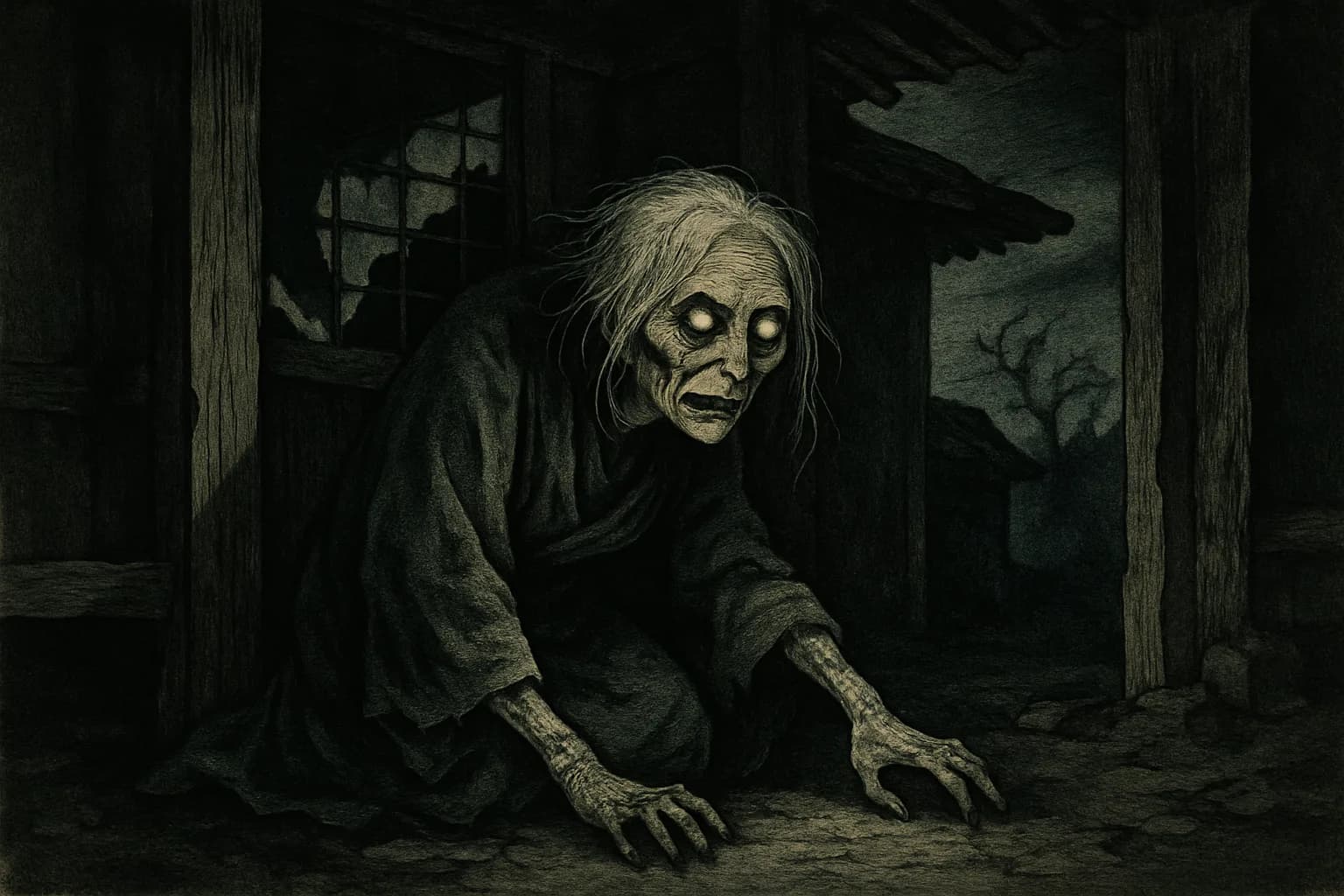
In the hill villages of Shimane and Hiroshima, a family's sudden good fortune rarely went unquestioned. If a neighbour prospered too quickly, people had a name ready for the reason. They called it a gedō (外道), a small spirit kept secretly under the floor. It worked for that household alone. Only the family itself was ever said to see it.
What does a gedō look like?
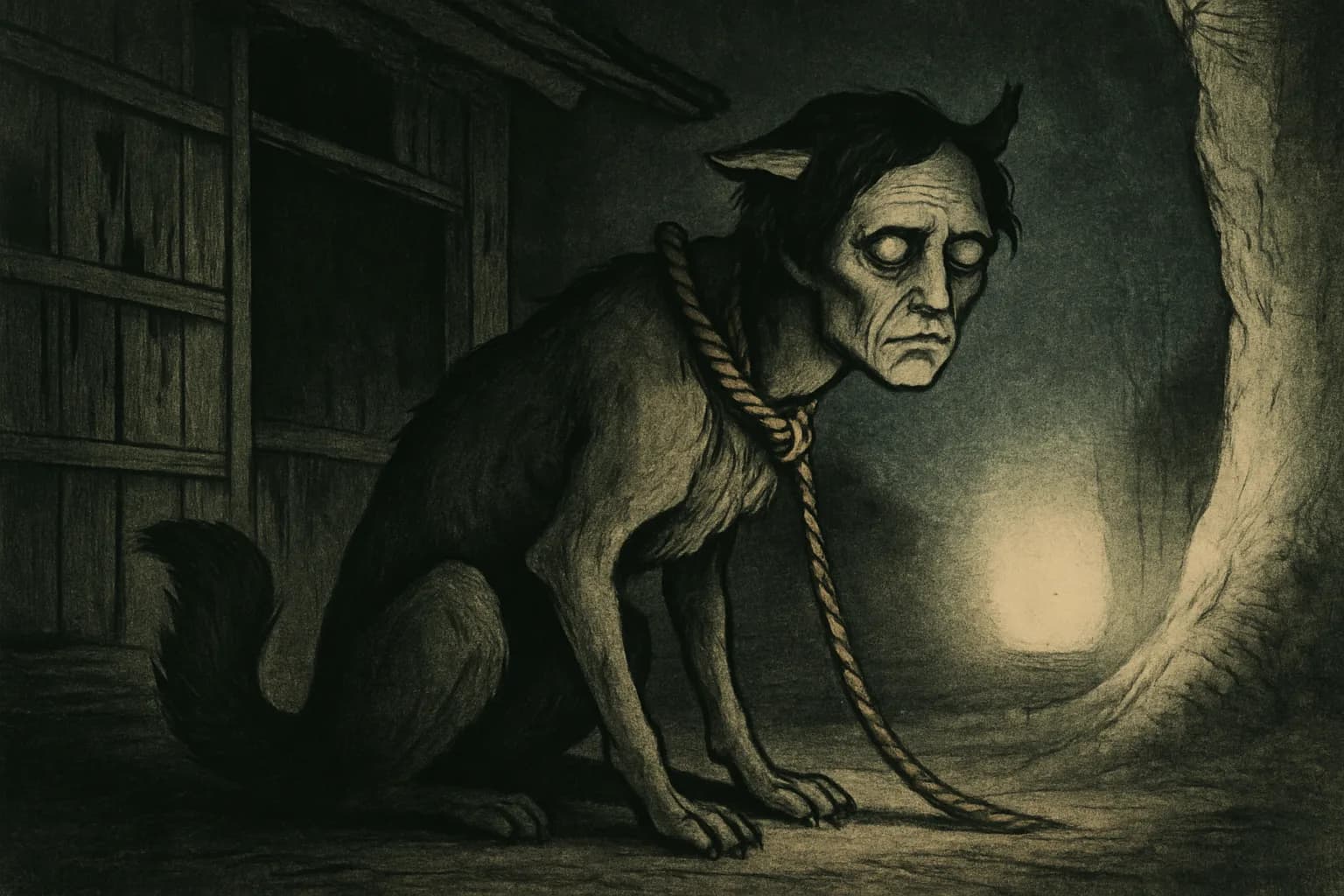
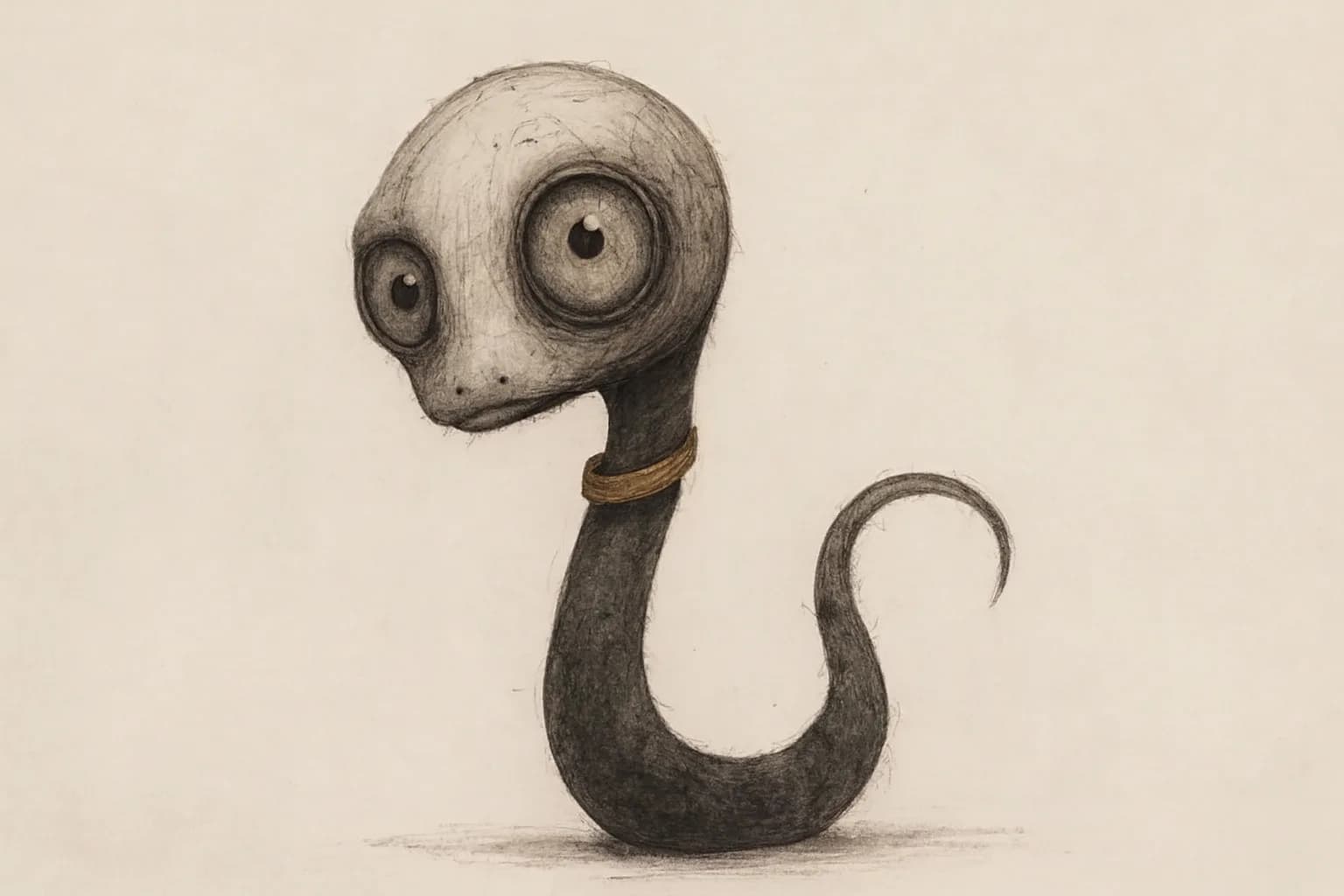
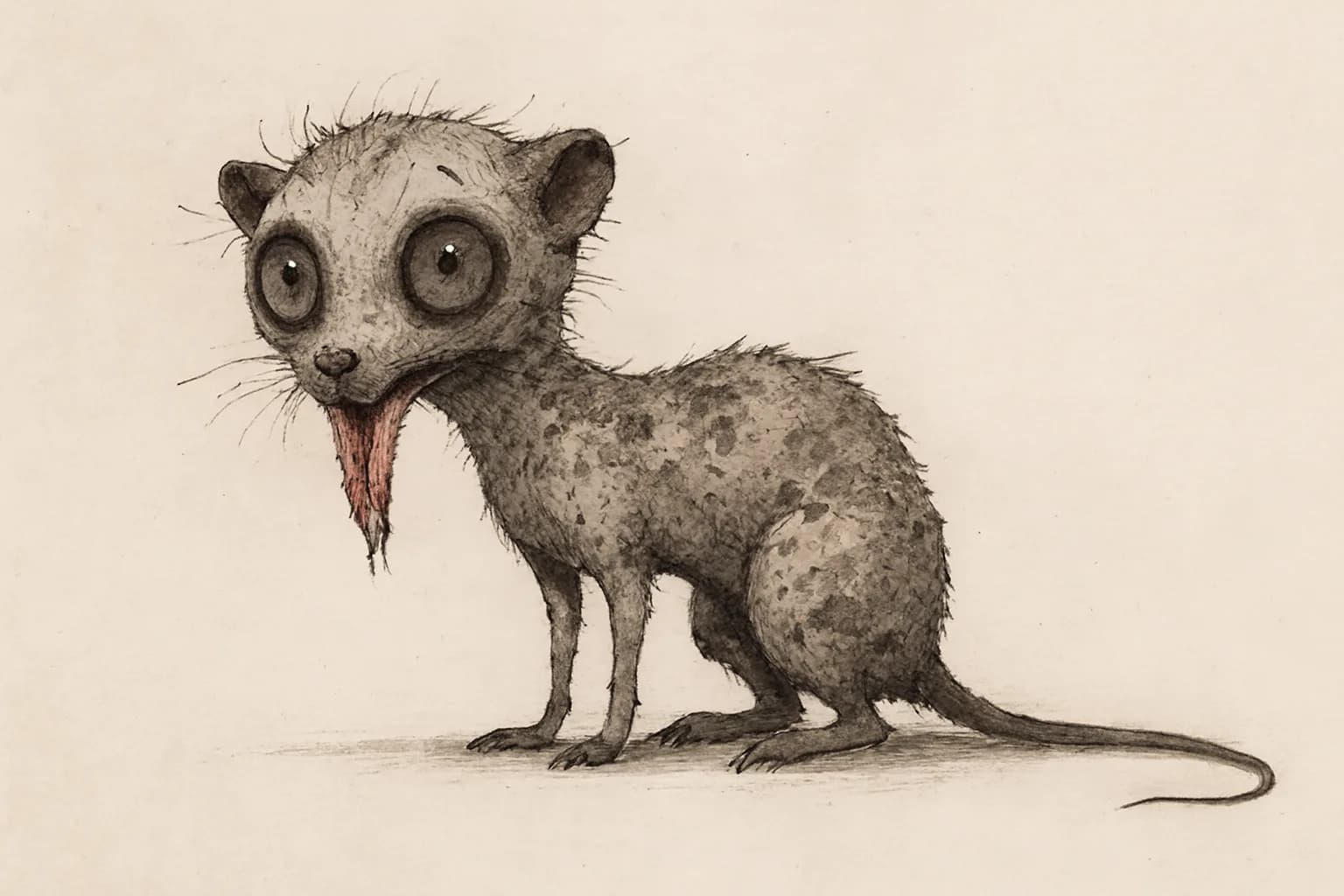
Descriptions vary by village, which is itself telling — almost no one agreed on what they had supposedly seen. Most accounts call it weasel-like, but smaller, with grey or mottled fur. Around Nichihara, in Shimane (now part of Tsuwano), villagers instead described something mole-shaped with a mouth split wide open. In Miyoshi, Hiroshima, it became a short-legged, brown animal entirely. It is said to call out like a frog, a rough "utt-utt" or "gutt-gutt" in the dark. In some tellings it was a snake spirit instead, the same shape as the tōbyō of neighbouring folklore.
Gedō-mochi: a family that feeds a secret
A household believed to harbor one was called gedō-mochi, "gedō-keeping." The spirit lived under the kitchen floor or in the barn, and the family fed it red-bean rice there, quietly, the way they might feed a pet no visitor was meant to notice. Feeding it this way is exactly why a gedō-mochi family drew suspicion. Any household that got rich fast, without an obvious cause, became a candidate for the rumor.
A fortune that spreads through marriage
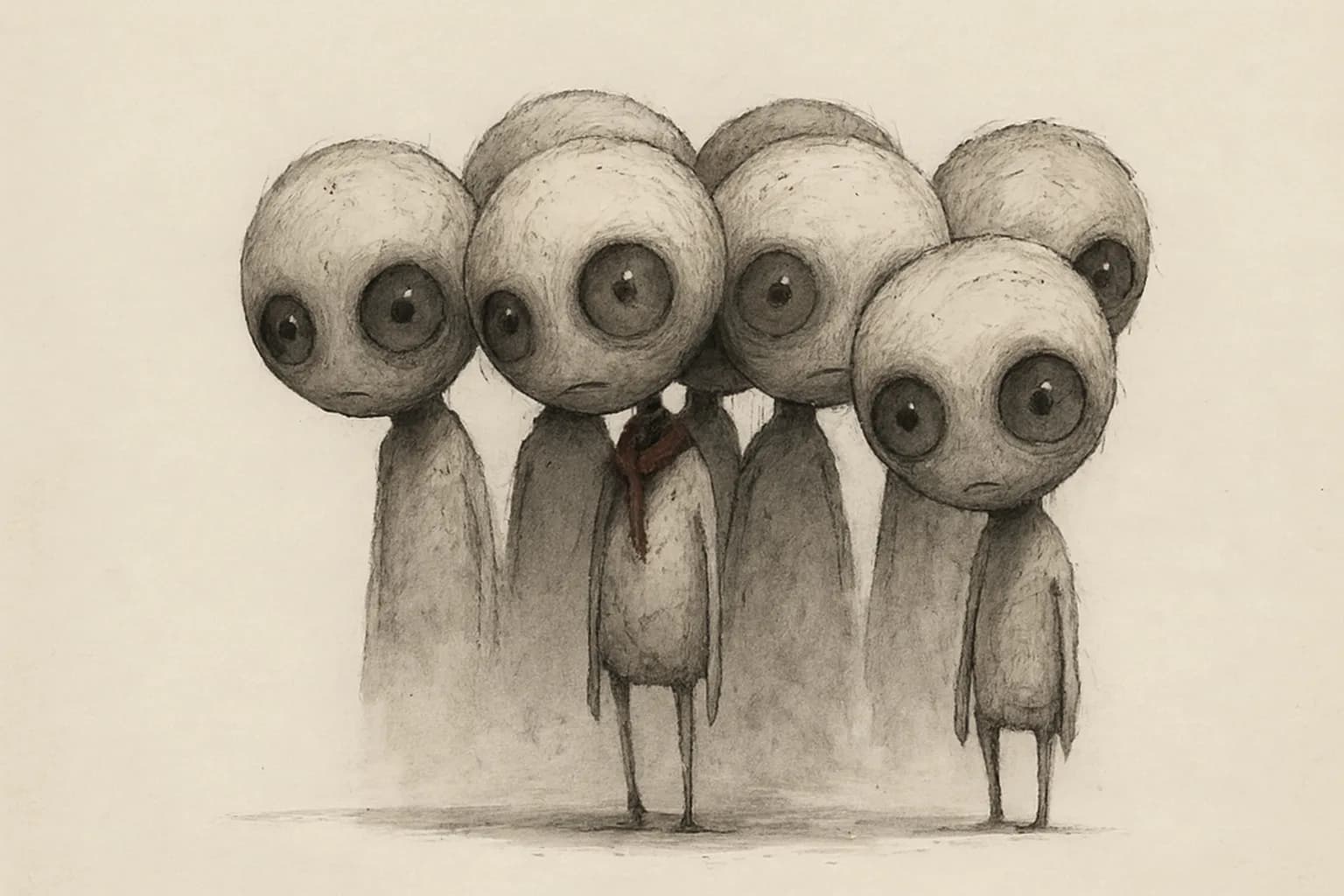
The gedō was not thought to live alone. Villagers said it moved in a group of seventy-five. Each time a daughter was born into a gedō-mochi family, the group grew by one. When that daughter married, the newly added share of the group was said to leave with her. It settled into her husband's house. That marriage alone was enough to turn an unrelated family into gedō-mochi too.
Because of this belief, marrying into a known gedō-mochi family was something people actively tried to avoid. The suspicion did not stay confined to one house; it followed a bloodline, out into any family willing to marry in.
When the luck runs out
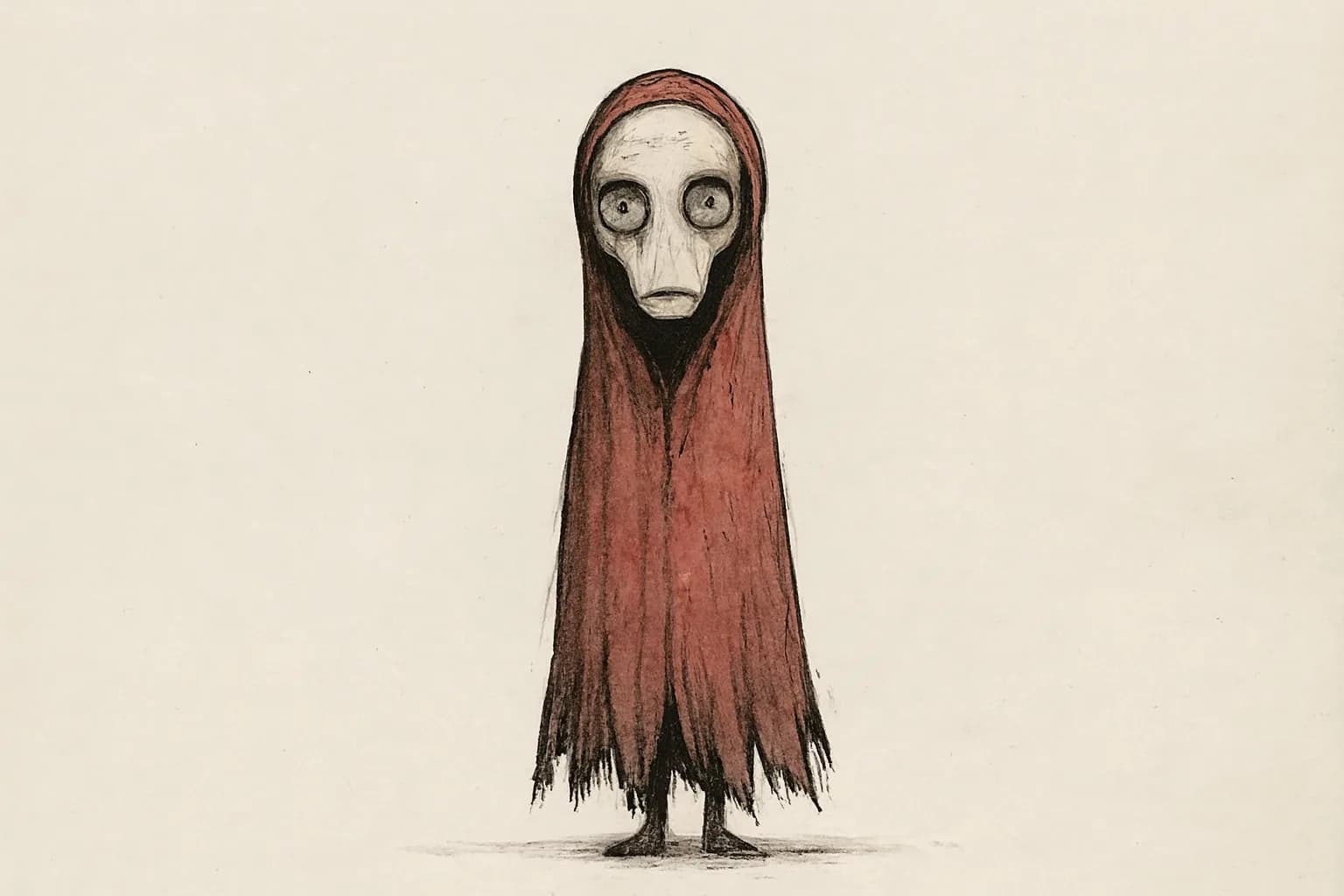
One story, recorded from villagers in the early twentieth century, tells of a man who stole from a gedō-mochi household. Afterward he lost his senses. He ran from room to room, crying that "the gedō is biting at me from that house." He squeezed himself into narrow spaces in the house. When the family found him, he could only say that something cat-sized and blackish-brown had attacked him.
The belief had a harder edge beyond single incidents like this. As long as a gedō-mochi family prospered, their gedō was said to possess no one at all. The trouble began when the family's fortunes turned. Once a gedō-mochi house started to decline, villagers said, the spirit stopped staying quiet. It began possessing people, and the family's ruin soon followed. The same spirit blamed for a family's rise was blamed for its fall.
The same fear, several names
Gedō was rarely treated as a fixed, singular creature. In Toyoura, a district of Yamaguchi, the vengeful spirit of a dog was itself called inu-gedō, "dog gedō." The Genroku-era text Honchō Koji Innen Shū goes further, treating gedō as simply another name for inugami, the dog-possession belief. In Tokushima, people instead described gedō as the vengeful spirit of someone who had died a violent or unnatural death. Furthest from the Chūgoku heartland, in Miyagi, the name was borrowed again. There it named a different possessing fox, the kuda-gitsune, or "tube fox."
That spread led some folklorists to a stronger claim. Gedō was never one specific animal at all, they argue. The word may simply be a slur. It was stretched to cover fox-possession, dog-possession, and anything else blamed on an invisible household spirit.
Where the name comes from
That slur reading lines up with where the word gedō came from in the first place. Read apart, the two characters mean "outside" and "the path." Put together in Buddhist use, they named a heretic — someone who had strayed from the correct path entirely, an unbeliever. Over time the term drifted into ordinary speech as a general insult for anyone contemptible. Applying that same word to a possessing spirit may say less about a creature than about a family. A household that got rich, fast, drew an accusation it could not easily answer. That accusation got dressed up as the name of something living under the floor.
Gedō today
Gedō never settled into one fixed picture the way the kappa or the tengu did. No Edo-period print is known to depict a gedō itself. Even the Japanese Wikipedia entry for gedō illustrates the page with a different creature. It uses a kuda-gitsune from Miyoshi Shōzan's Sōzan Chomon Kishū, a possessing fox from a separate tradition, borrowed only because nothing else exists to put beside the word. A rumor about a neighbour's house, in the end, was never going to leave behind a portrait.