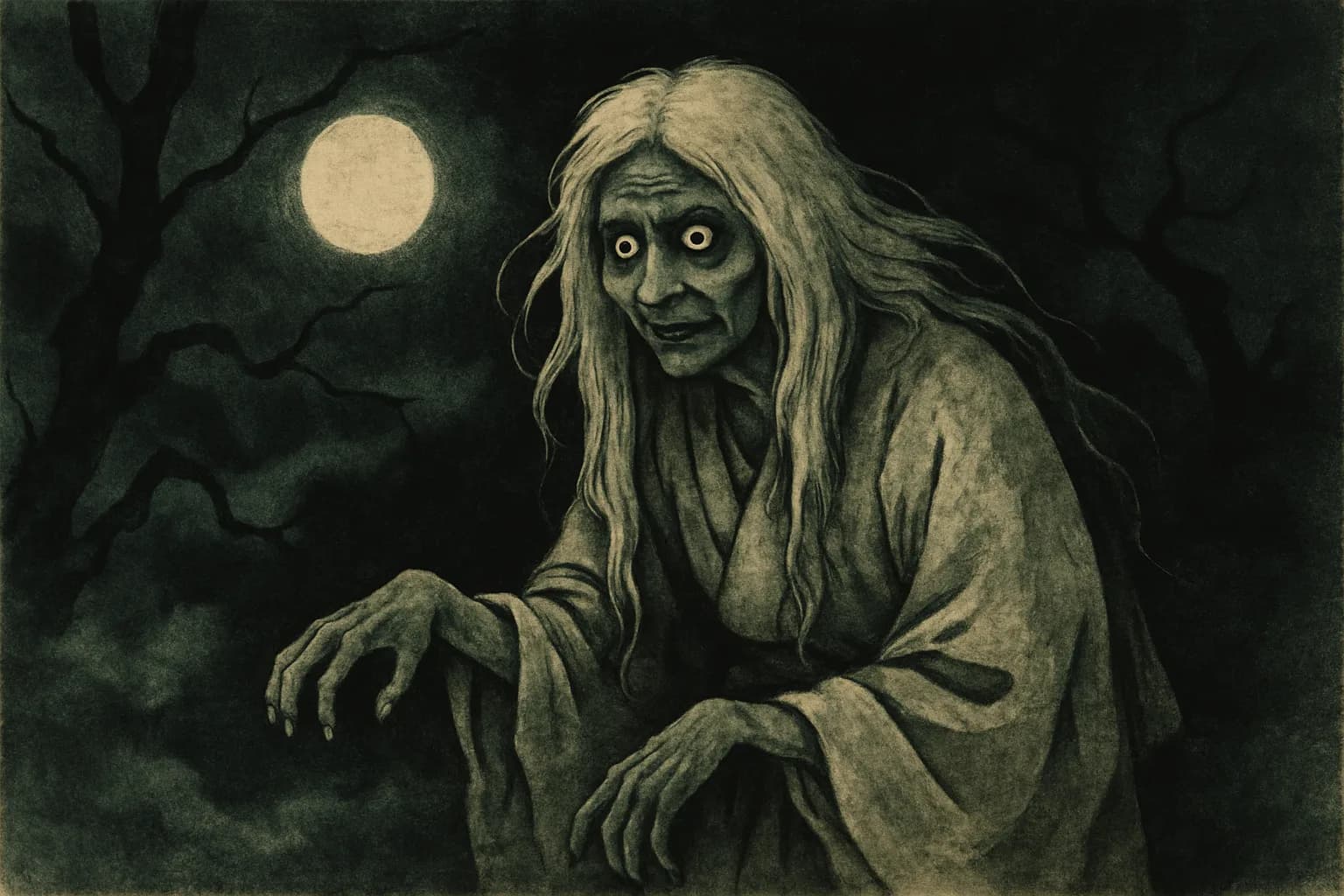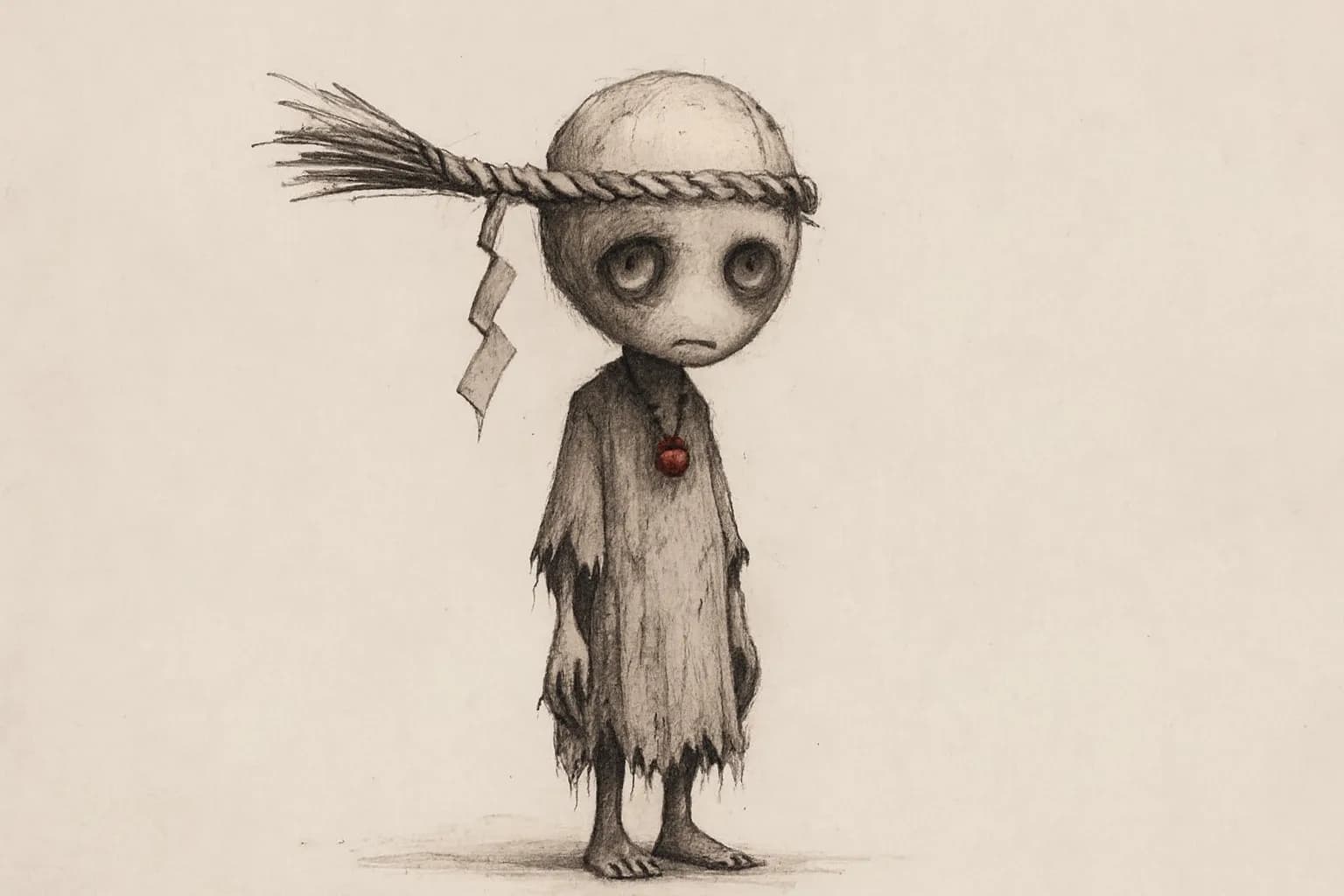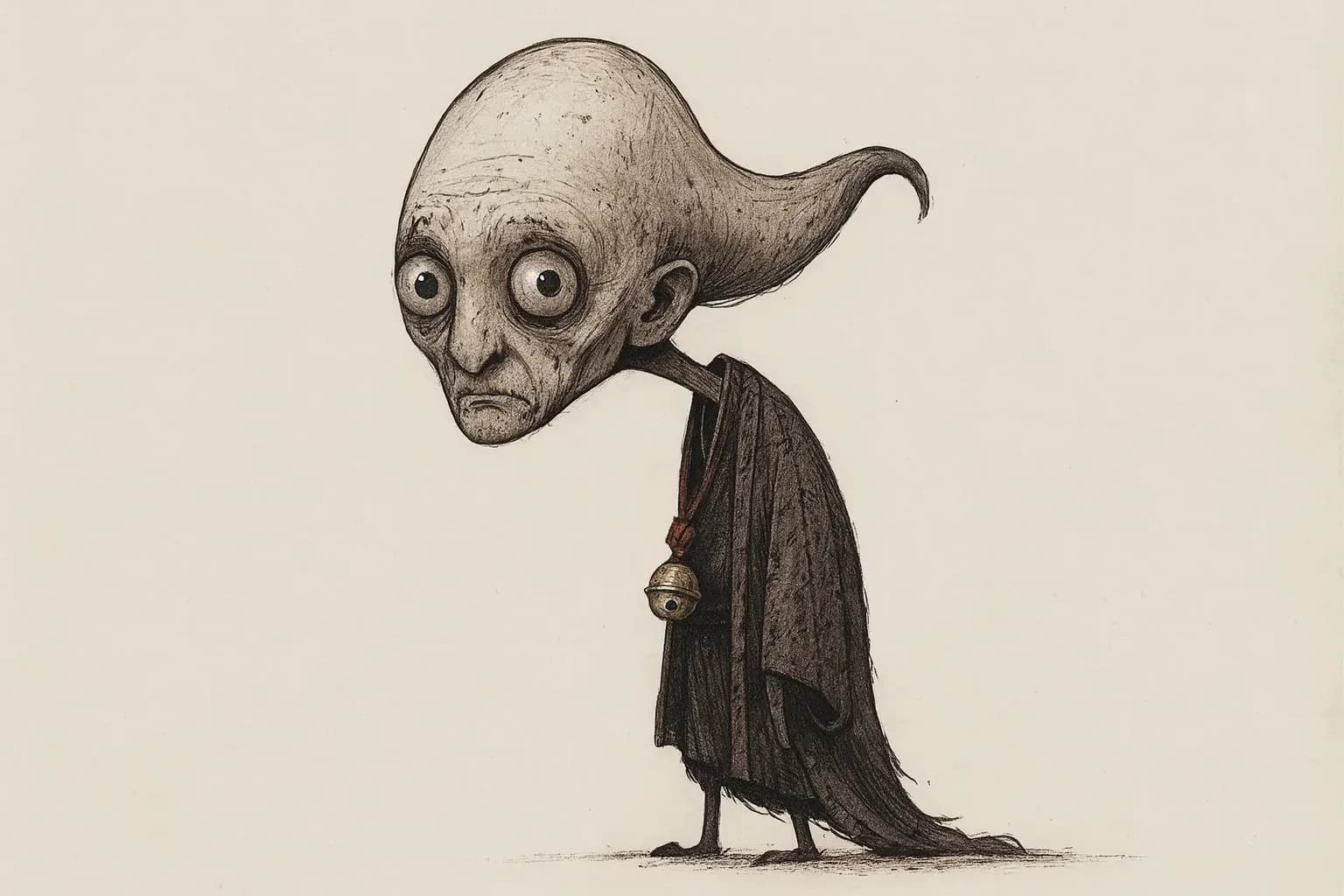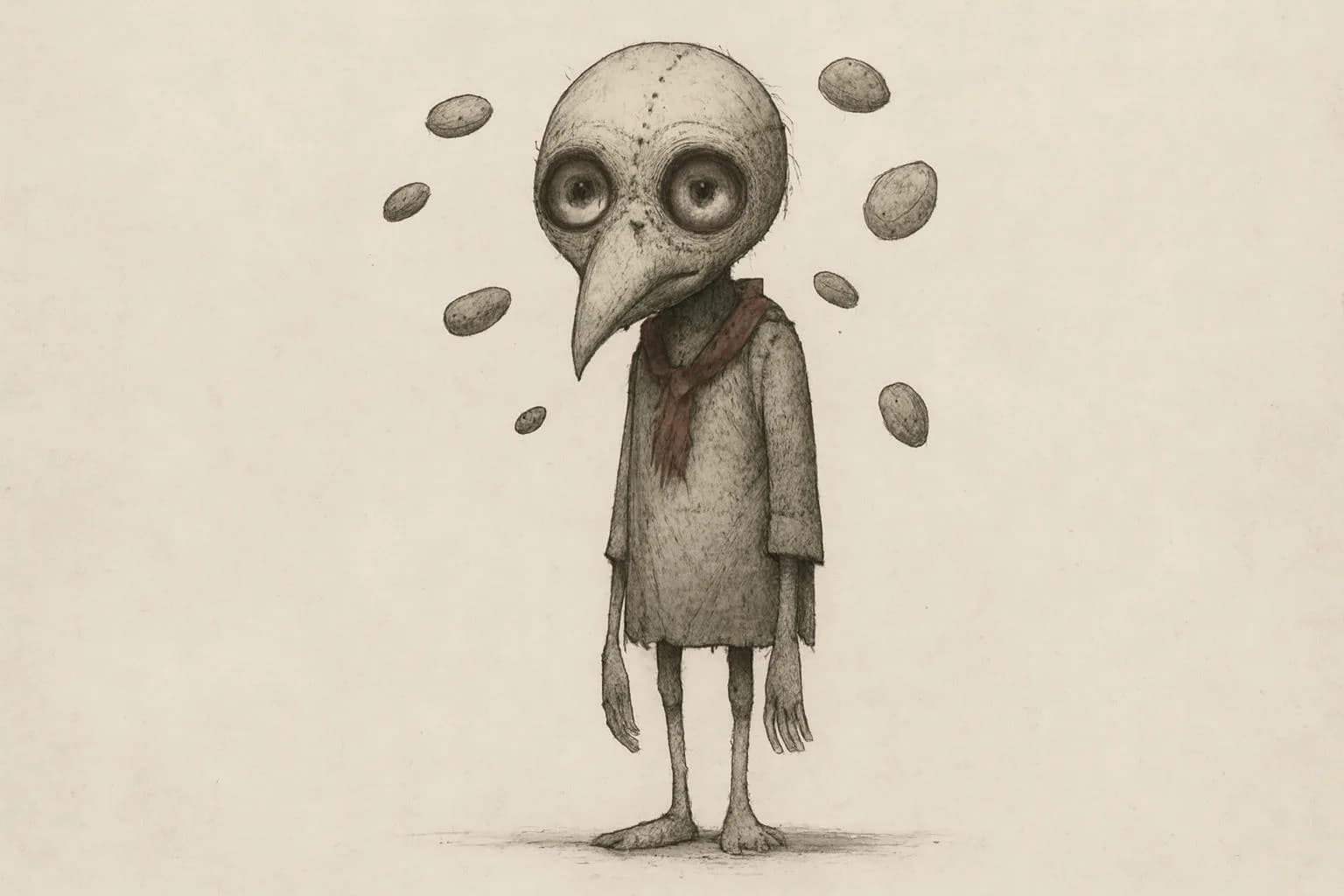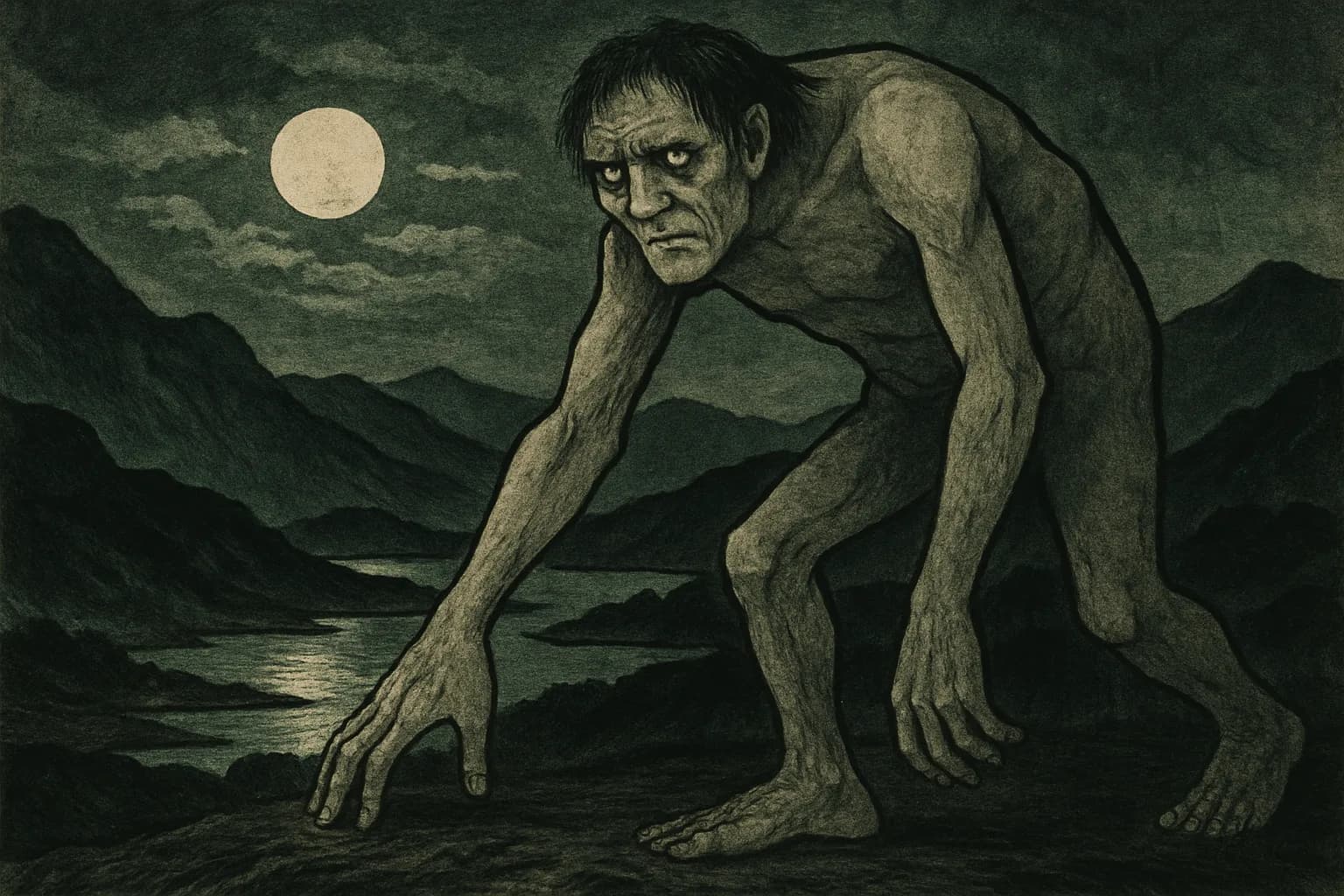
High on Japan's sacred peaks lives a spirit too proud to be a demon and too dangerous to be a god: the tengu. Red-faced, long-nosed, and armed with supernatural martial skill, tengu have haunted the mountains of Japanese belief for over a thousand years — first as sinister omens of war and religious corruption, later as stern but honorable guardians of the wild places humans rarely dare to enter.
What does a tengu look like?
The tengu's appearance has shifted dramatically over the centuries, and the two dominant forms still coexist in art and festival masks today.
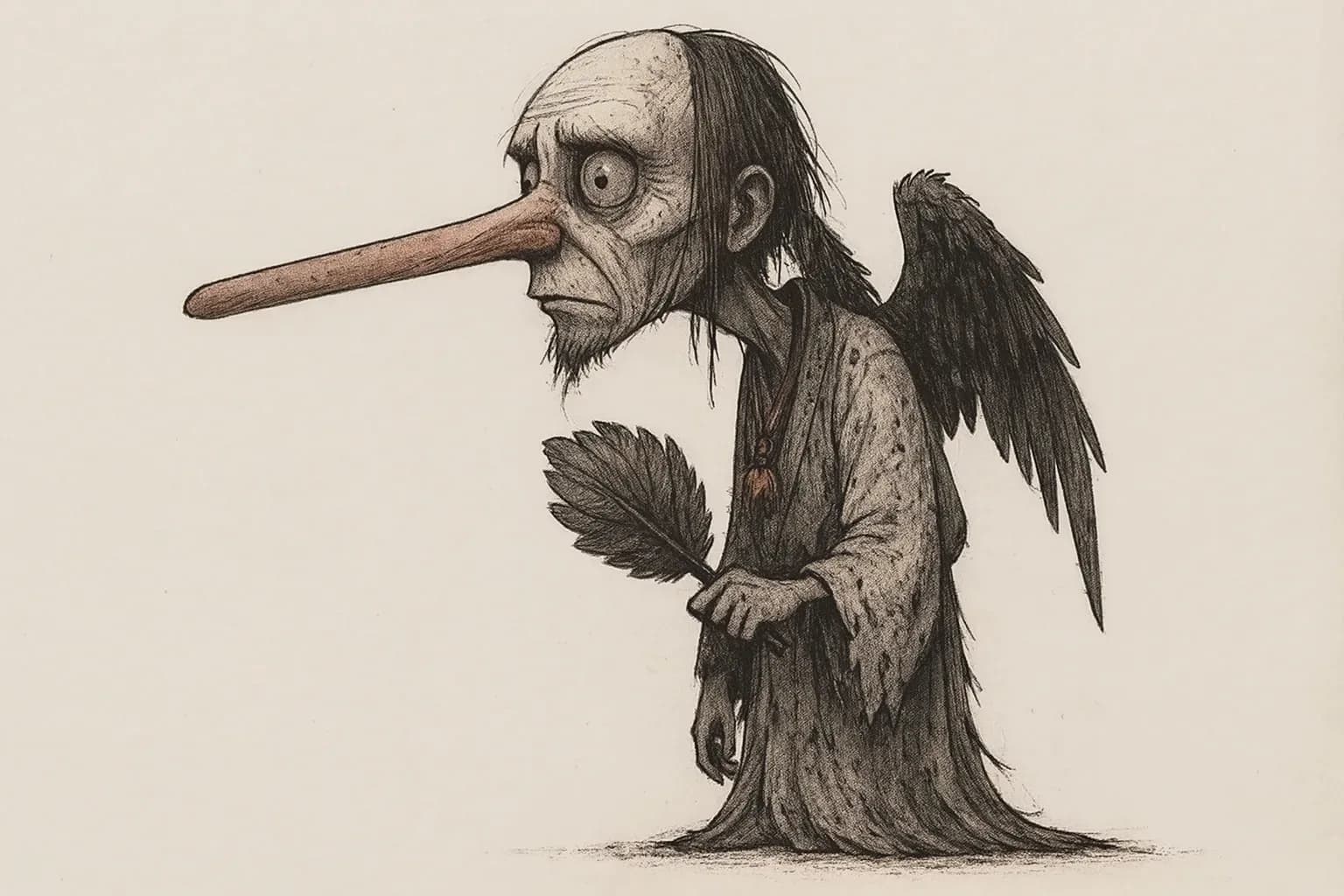
The oldest depictions show the karasu-tengu ("crow tengu"): a bird-like creature with a beak, wings, and taloned feet, closer to a monstrous bird of prey than a man. Over time this beak softened into something more human, and by the Edo period the image most people now picture had taken over — the daitengu ("great tengu"), a red-faced, impossibly long-nosed figure in the robes of a yamabushi (mountain ascetic monk), carrying a feathered fan and often a staff or sword. Both forms are said to fly, whipping up sudden violent winds wherever they land.
Tengu hold a feather fan, the hauchiwa (羽団扇). They wear tall one-tooth sandals called tengu-geta. This full costume is fairly late. It only came together in the early modern period.
Types of tengu: long-nosed, crow and leaf
Tengu are sorted by the shape of the face. Three names come up most often.
- Hanataka-tengu (鼻高天狗, "high-nose tengu"). The red-faced, long-nosed figure on most masks.
- Karasu-tengu (烏天狗, "crow tengu"). A beaked, winged tengu that looks more like a bird than a man.
- Konoha-tengu (木の葉天狗, "leaf tengu"). Another bird-like tengu with a pointed face. The Edo book Shokoku Rijindan has them catching fish over the Ōi River at night.
Tengu also have ranks. A daitengu (大天狗) is a "great tengu", a named leader. A kotengu (小天狗) is a "small tengu", a follower. There were female tengu too: a proud nun could be reborn as an ama-tengu.
Why does the tengu have a long nose?
The folklorist Gorai Shigeru linked it to a long-nosed mask from gigaku, an ancient masked dance.
Other scholars disagree. Katsumata Takashi (2005) and Sugihara Takuya (2007) found no written evidence for the mask link. They argue the long nose began as a bird's beak. In the Heian period, tengu were usually imagined as kites, a kind of hawk. One scroll, the Zegaibō-e, shows a disguised tengu turning back into a kite. Its nose stretches out and becomes the top half of a beak.
So the long nose may simply be a beak that slowly turned human.
A creature of pride and punishment
The name itself, written with the characters for "heaven" (天) and "dog" (狗), was borrowed from a Chinese term for an ominous meteor or comet — an ill-omened thing falling from the sky. Early Japanese tengu inherited that reputation: Buddhist tradition held that tengu were the corrupted spirits of arrogant monks and vain, power-hungry priests, doomed after death to become mountain demons who tormented the living out of spite and reveled in leading travelers astray. Getting lost on a mountain trail, hearing a tree fall with no one around, or a sudden inexplicable gale were all once blamed on tengu mischief. The sound of a great tree crashing down, with nothing broken in the morning, even has its own name: tengu-daoshi, "tengu felling".
The Konjaku Monogatarishū, a late Heian story collection, is full of these tengu. In 1296 a picture scroll, the Tengu Zōshi, went further. It drew monks of seven great temples, such as Tōdaiji and Enryakuji, as tengu. It was satire aimed at their pride.
The mountains had other suspects too. A voice answering from an empty ridge was the yamabiko's work. A traveller who never came home might have met the yamauba instead. A walker led in circles all night usually blamed a kitsune.
Yet tengu were never simple villains. As guardians of remote peaks, they were also credited with punishing genuine wrongdoers — arrogant swordsmen, disrespectful hunters, and monks who had strayed from their vows — making them a kind of wilderness justice as much as a wilderness threat.
Master of the sword: the legend of Sōjōbō
The most famous tengu story in Japan doesn't cast the creature as a villain at all. As a boy, the future general Minamoto no Yoshitsune — then known as Ushiwaka-maru — was sent to train at a temple on Mount Kurama, north of Kyoto. There, according to legend, he secretly left his lessons at night to study swordsmanship in the forest under Sōjōbō, the great tengu king of Kurama, said to be the most powerful of all tengu. Sōjōbō taught the boy techniques no human master possessed, and Yoshitsune grew into one of the most celebrated warriors in Japanese history.
The tale cemented tengu as supreme masters of swordsmanship and martial arts in the popular imagination — dangerous to cross, but capable of transforming a worthy student into a legend. It's a rare case in Japanese folklore of a fearsome yokai serving as teacher rather than tormentor.
Sōjōbō is not the only great tengu with a name. The Edo scholar Hayashi Razan named three as the greatest. They were Sōjōbō of Kurama, Tarōbō of Mount Atago, and Jirōbō of Hira. Each great tengu is tied to one peak, much like a local god.
Where the tengu comes from
The word came first, and it came from China. There, tiangou (天狗) meant a fireball meteor. People pictured a howling dog running down from the sky. Chinese histories such as the Shiji record it as an omen of disaster.
The first tengu in Japan appears in the Nihon Shoki, a chronicle finished in 720. Its entry for the year 637 describes a huge star. It crossed the sky over the capital from east to west, roaring like thunder. The monk Min, newly back from Tang China, spoke up. He said it was no shooting star but a tengu, and its bark sounded like thunder. Oddly, the text glosses the word as amatsu-kitsune, "heavenly fox", not heavenly dog.
Then the word vanishes from Japanese writing for centuries. It returns in the Heian period as a mountain spirit, not a star.
Tengu belief grew directly out of Japan's mountain religions, particularly Shugendō, the ascetic tradition of the yamabushi who trained in remote peaks believed to be thresholds between the human world and the divine. Tengu were a natural expression of how those mountains felt to outsiders: beautiful, dangerous, and ruled by something proud and inhuman that did not welcome trespassers. Their association with disgraced monks reflects a very real anxiety in Buddhist institutions of the time — that spiritual pride and ambition, left unchecked, curdled into something monstrous.
Certain mountains remain closely tied to tengu today. Mount Kurama has its named tengu king, Sōjōbō. Mount Takao has the tengu who serve its Yakuōin temple.
The tengu mask and Sarutahiko
The red, long-nosed mask has a second owner. Sarutahiko is a kami in the Kojiki and the Nihon Shoki. He guided the sun goddess's grandson down from heaven. The texts describe him as very tall, with a long nose. Because of that nose, people often mix him up with the tengu.
At shrine festivals, the person playing Sarutahiko usually wears a tengu mask. The Menkake Gyōretsu parade at Goryō Shrine in Kamakura is one example. So a "tengu mask" at a festival may really be a god's face.
Tengu in Japan today
Tengu remain one of the most visually recognizable yokai in the country. Their red, long-nosed masks are a fixture of festivals, souvenir shops, and kagura dance, instantly identifiable even to visitors who know nothing else about Japanese folklore. Mount Takao, just outside Tokyo, still markets itself around its resident tengu, with statues and mask shops lining the trail to its summit. The Japanese idiom tengu ni naru ("to become a tengu") is still used today to describe someone who has grown insufferably conceited — a small, everyday echo of the monk whose pride turned him into a mountain demon.
From cautionary spirit of clerical arrogance to swordsmanship's most famous teacher, the tengu endures as a reminder that Japan's mountains have always belonged to something older and prouder than the people who climb them.
The long-nosed mask has travelled further than the stories attached to it. In Demon Slayer the swordsman Sakonji Urokodaki wears one throughout, and the choice reads correctly: it is the later, protective tengu being invoked — mountain guardian and teacher of swordsmen — not the arrogant monk of the earlier tradition. That teaching role has a specific address. Mount Kurama, north of Kyoto, is where the boy who became Minamoto no Yoshitsune is said to have been trained in swordsmanship by the tengu of the mountain, which is why searches for "Kurama" and "tengu" keep arriving together, and why the same syllables turn up on a fox in an unrelated manga.