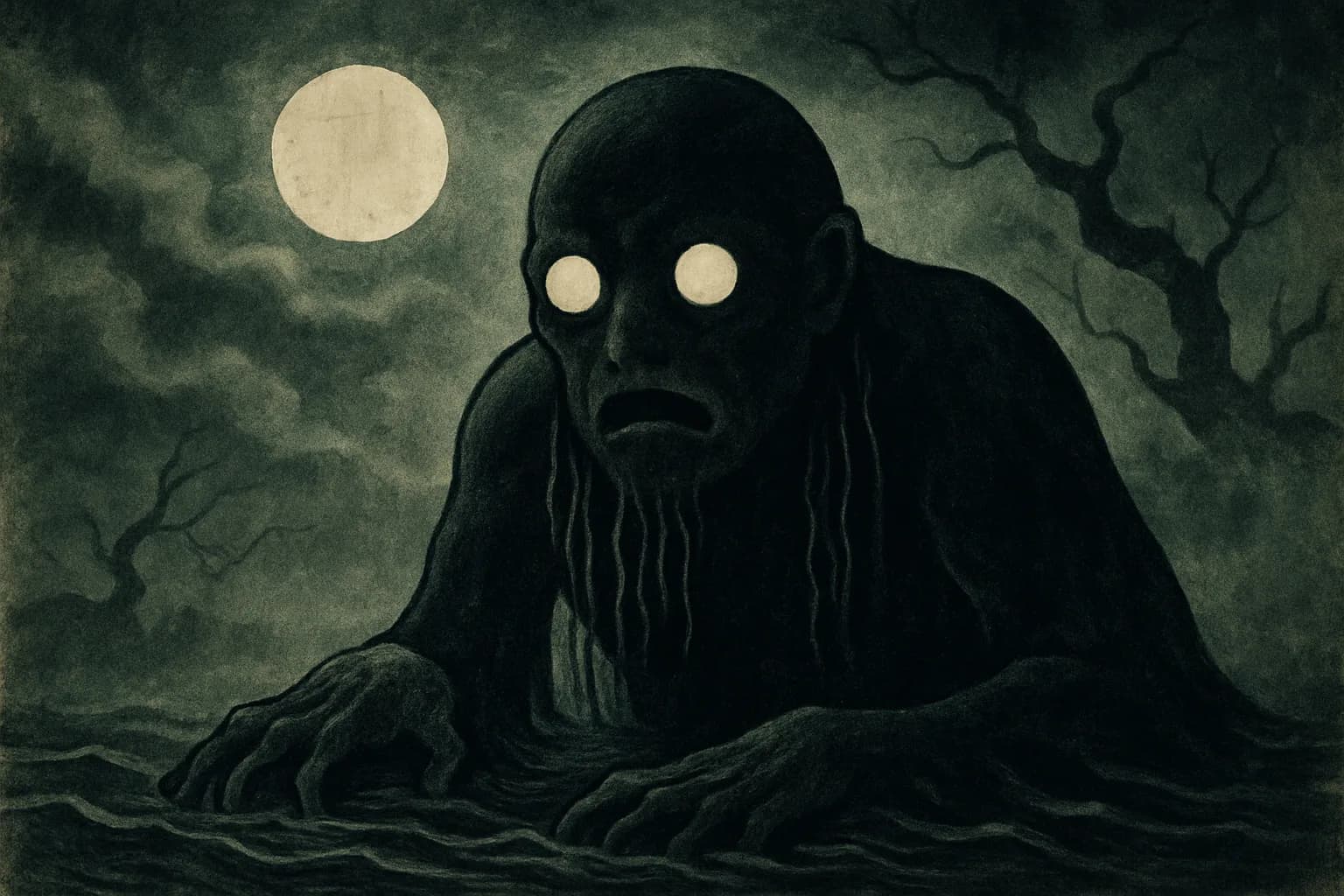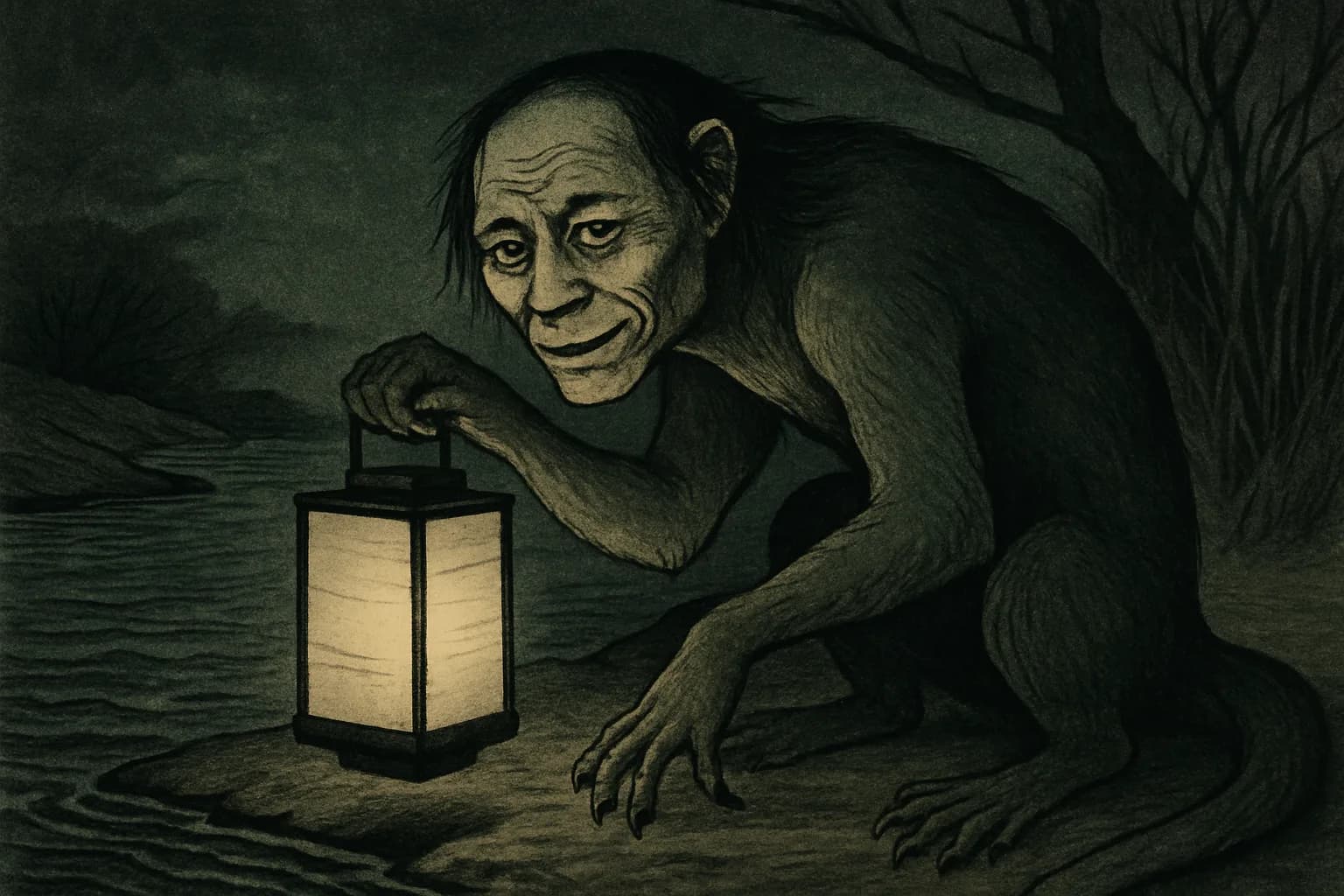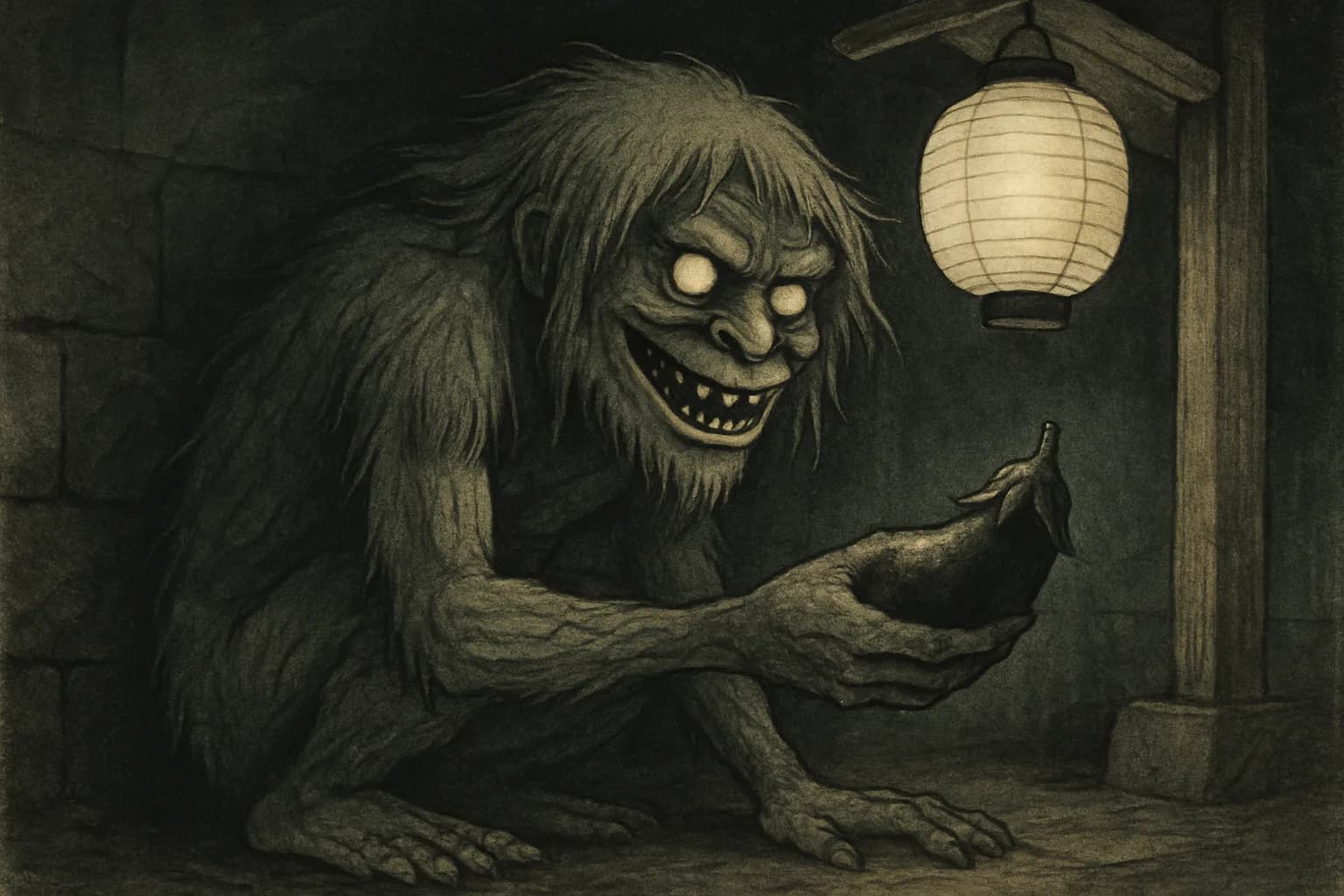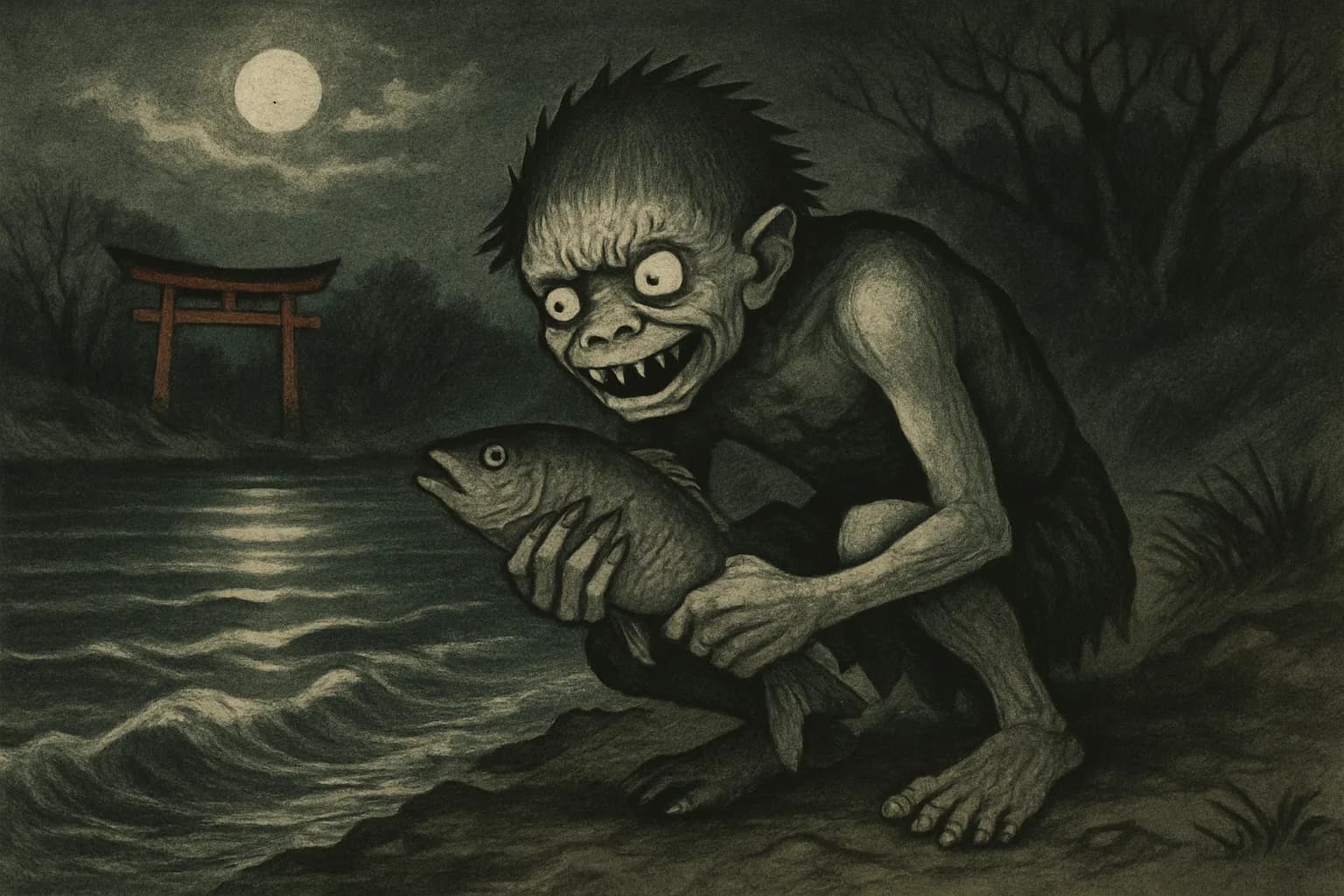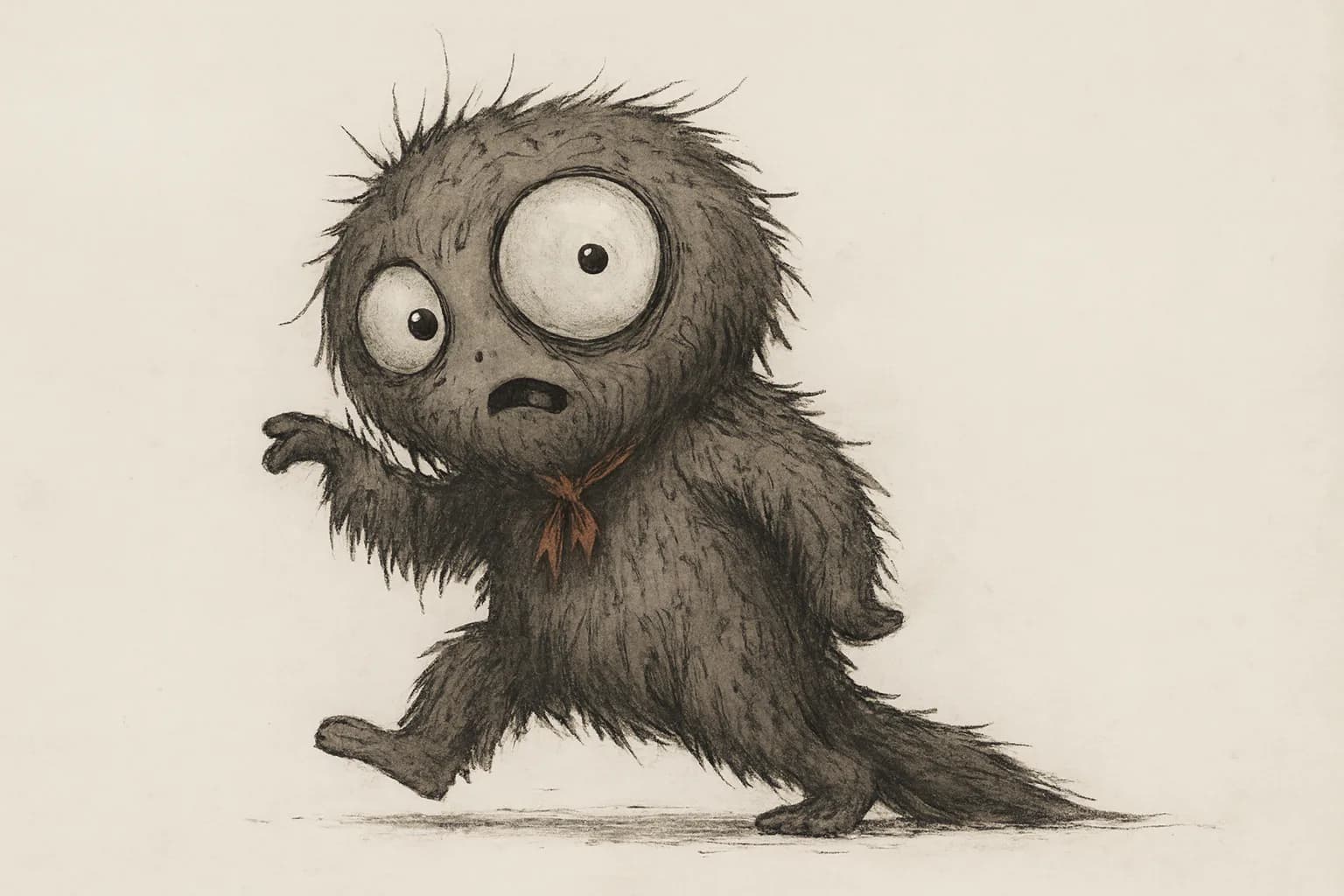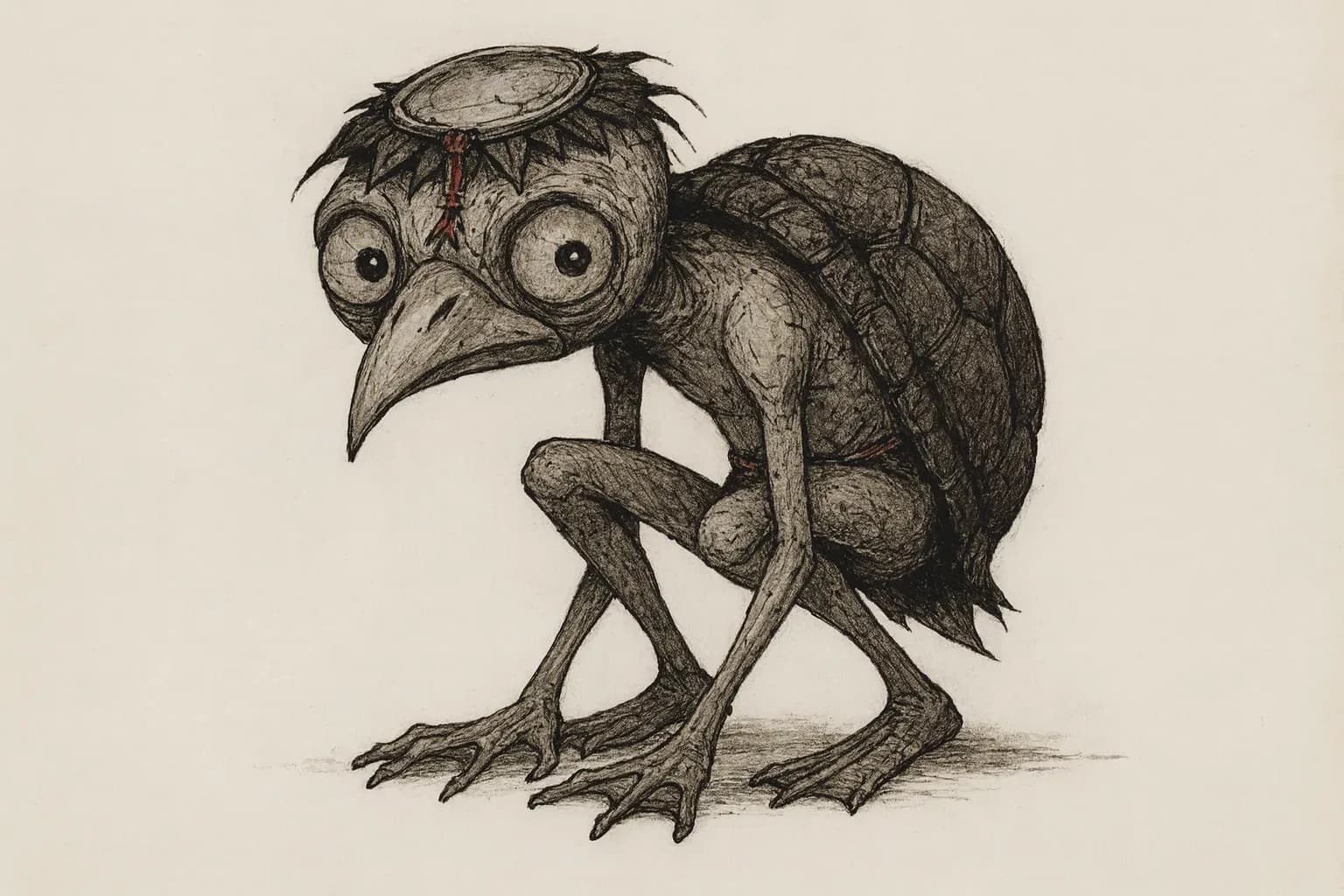
If Japan has a single most beloved monster, it is the kappa — a green, child-sized creature that lurks in rivers and ponds, equal parts prankster and menace. Its name says exactly what it is: 河 (ka, "river") + 童 (ppa, "child"), the river child. For more than five hundred years the kappa has been blamed for drownings, credited with strange favours, and, more recently, turned into one of the friendliest mascots in the country.
What does a kappa look like?
Descriptions vary from village to village, but the classic kappa is about the size of a young child, with greenish or blue-grey skin, a turtle-like shell on its back, webbed hands and feet, and a beak-like mouth. It smells of fish. Older Edo pictures, though, often show a more ape-like creature. It is a genuine amphibian of the folk imagination — clumsy and comical on land, frighteningly strong in the water.
The best-known feature sits on top of its head.
The dish on its head
A kappa carries a shallow, water-filled dish called a sara (皿) on the crown of its head. This dish is the source of all its power. As long as the water stays put, the kappa is dangerously strong; if the water spills or dries out, it becomes weak and helpless and must return to the river to refill.
This single detail drives almost every kappa story — and, as we'll see, the cleverest way to survive an encounter with one.
Mischief and danger by the water
The kappa's reputation is genuinely two-faced.
On the mischievous end, it passes gas loudly, peeks up kimonos, steals crops, and challenges passers-by to sumo wrestling — a match the kappa almost always wins, thanks to that dish of water.
On the darker end, the kappa was long used to explain drownings. It was said to drag horses, cattle, and children into the water, and in the grislier tellings it reaches into its victims to pull out the shirikodama (尻子玉), a mythical ball inside the body, sometimes said to hold the soul. Warnings to children not to swim alone in deep or fast water very often took the shape of a kappa.
How to defeat — or befriend — a kappa
Japanese folklore is unusually generous with survival tips for this monster:
- Bow to it. The kappa is compulsively polite. Bow deeply and it will bow back — tipping the dish, spilling its water, and draining its strength. It is a monster undone by good manners.
- Give it a cucumber. The kappa adores cucumbers above all else. Toss one in and it may leave you in peace. This is the origin of kappamaki, the cucumber sushi roll still named after the creature today.
- Keep a promise going. In many tales a captured kappa will beg for its life and, in exchange, offer a gift: teaching a family the art of bone-setting and medicine, or delivering fresh fish each day. Treat a kappa well and it can become a loyal, if odd, neighbour.
Where the kappa comes from
Scholars generally read the kappa as a suijin — a water deity — that shrank over the centuries from an object of worship into a monster. As reverence for river gods faded, the awe curdled into fear, and the fear became a cautionary tale you could tell a child. The kappa is what happens when a god is remembered mostly through its dangers.
The creature is nationwide, but especially strong in the folklore of Kyushu and Tohoku, where it goes by regional names such as Gataro, Enko, and Hyosube.
The kappa in Japan today
Few yokai have aged as cheerfully. The kappa is now a friendly cartoon fixture — the mascot of towns, rivers, and shops, the star of the Tokyo kitchenware district Kappabashi, and the namesake of that cucumber roll. There is even a common proverb, kappa no kawa-nagare ("a kappa swept away by the river"), meaning that even an expert can slip up in their own element.
From feared water god to lovable prankster, the river child has survived every century by doing what it does best: adapting to the current.