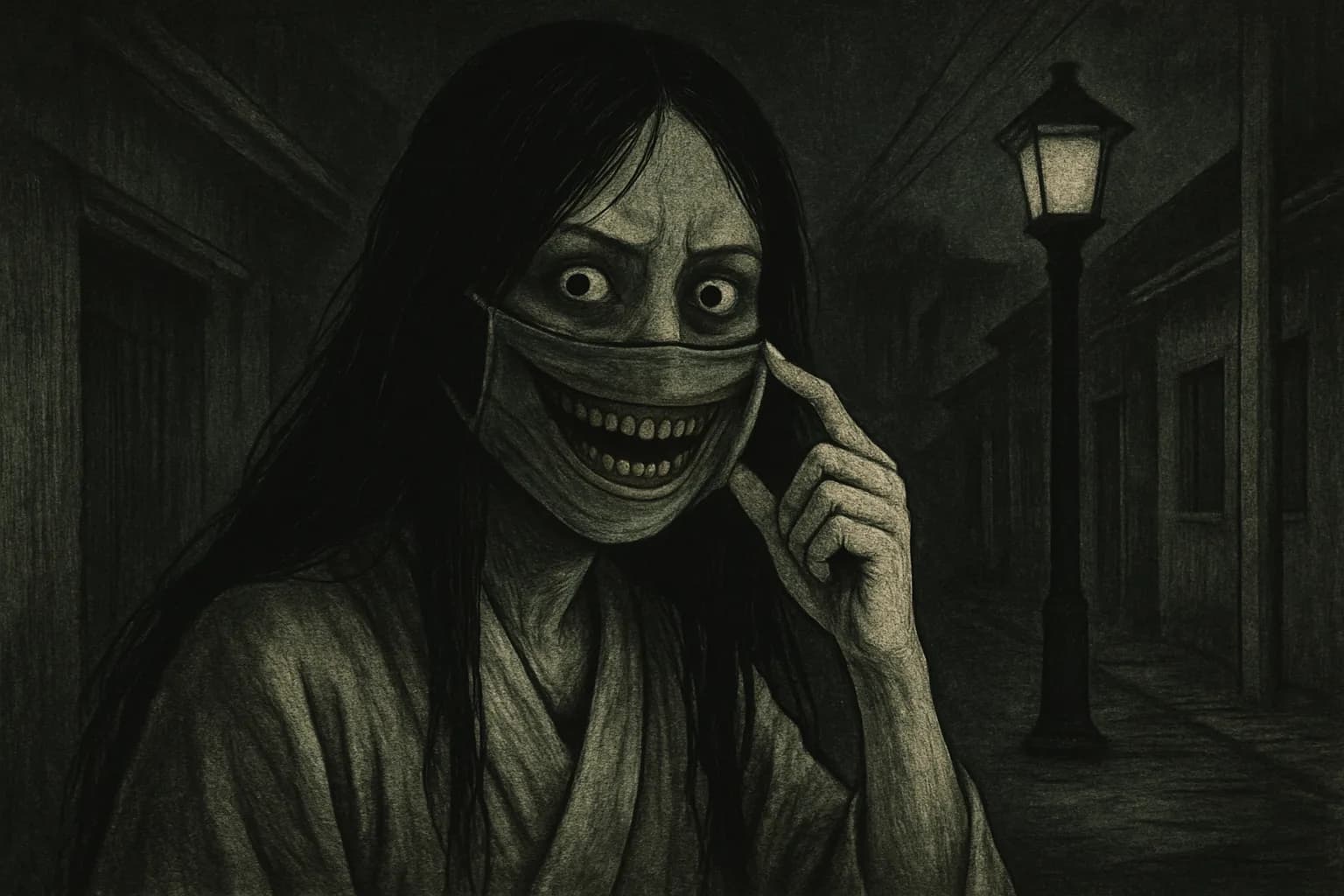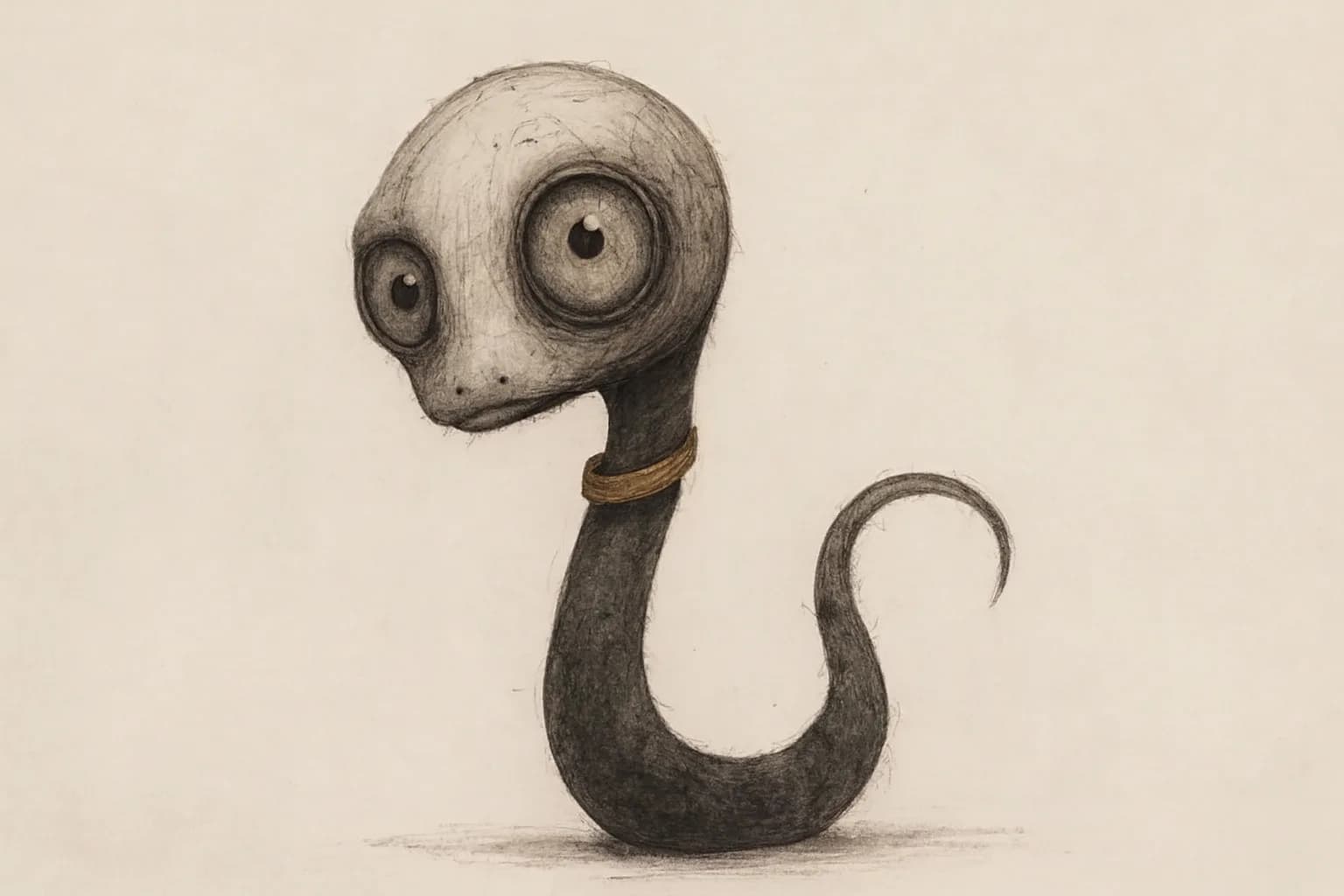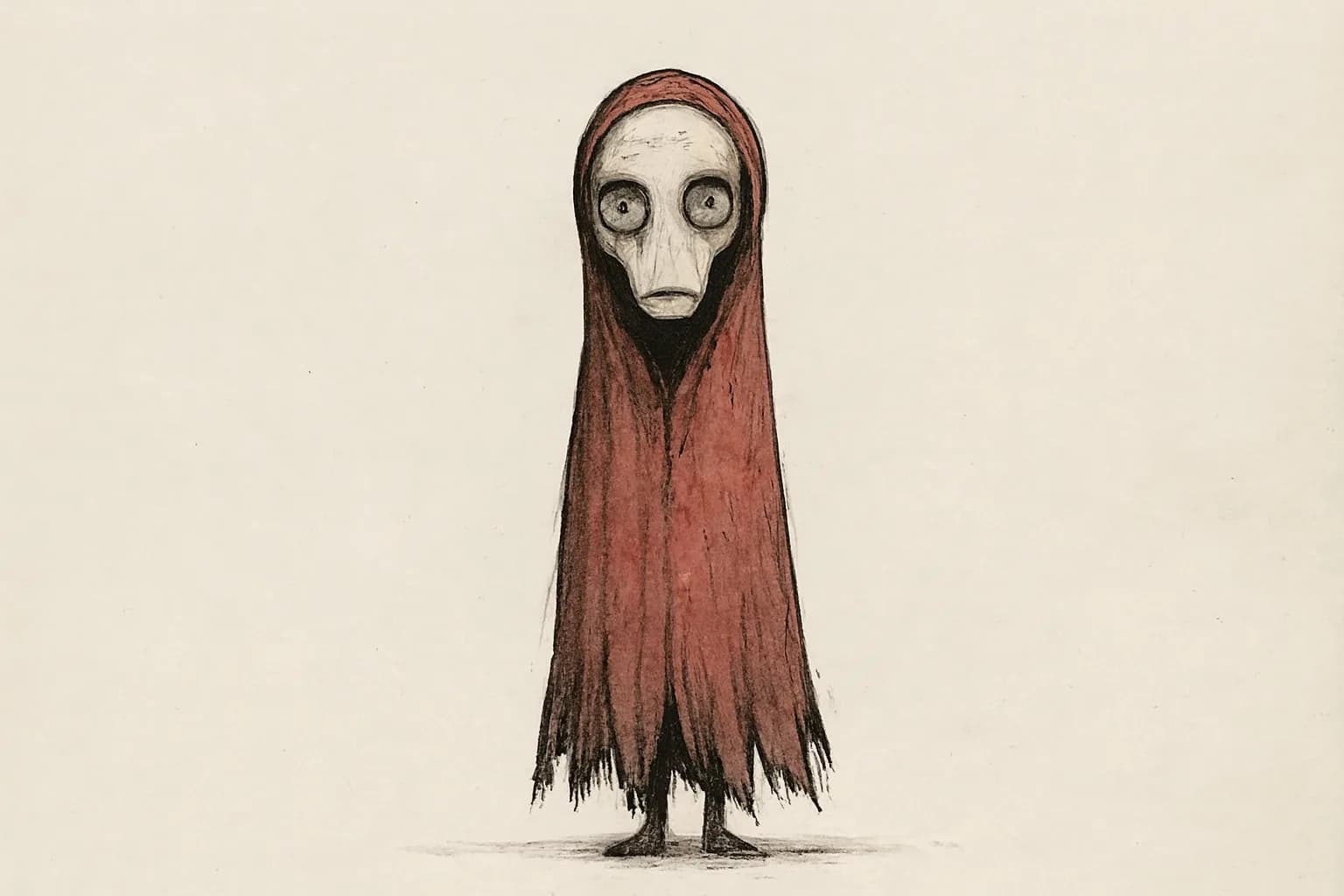
A child goes to the school toilet after the other students have gone home. There is no paper left on the roll. Before any teacher can be found, a voice asks a question from nowhere in particular: akai manto, hoshii ka? aoi manto, hoshii ka? — do you want the red cloak, or the blue one? There is no right answer. Choose red, and something inside the body gives way in a burst of blood. Choose blue, and the blood leaves slowly instead, until the chooser turns the color they picked. The story has been told in Japanese schools, in one costume or another, since before most of their grandparents were born.
A question with no good answer
Akai Manto is one name for a much older game of this kind, usually called akai kami, aoi kami — red paper, blue paper. A student alone in a stall, caught without toilet paper, hears the choice offered by a voice with no visible source. Most tellings never show a face at all; the terror is entirely in the asking. In a few collected versions a man does appear in person to pose the question — tall and pale-faced — but he is the exception, not the rule.
Whichever color is picked, the outcome barely differs. One answer bursts the body open from within. The other drains it empty. Folklorists who collected these stories noted plainly that the two choices come out "to no great difference" — the game was never designed to be won.
Red paper, blue hand, red cloak
The color-and-object pairing changes from telling to telling, and every version is a cousin of every other. Some schools tell it as red paper or white paper, the oldest form on record. Others swap in a red hand or a blue hand reaching for the chooser, or a red tongue and a blue tongue. The "cloak" version that gives this entry its name — akai manto, red cloak, against aoi manto, blue cloak — is sometimes called by a third name instead: chanchanko, an old word for a sleeveless padded vest, the kind a grandparent might wear indoors in winter.
Regional schools add their own twists. At one Osaka elementary school, choosing red brings blood from the ceiling, while choosing white brings a white hand up through the floor. At a school in western Tokyo's Higashikurume area, the choice is red or purple, and purple is the only safe answer. In a Yamagata version, a greedy student who keeps asking for more colors after being given one simply disappears.
Where the question comes from
Nobody wrote this legend down as fiction; it was collected the way folklorists collect any oral rumor, from children repeating what other children told them. One scholarly theory traces it to a much older Kyoto custom. On the night of Setsubun, the day marking the start of spring on the old calendar, anyone who used the outhouse risked a yokai called Kainade reaching up to grope them. Reciting "red paper or white paper?" out loud was said to be a charm that kept Kainade away. Over time, the theory goes, the warding phrase and the household rite behind it were forgotten, and the protective chant survived only as the threat itself — asked now by the thing it once protected against.
A second theory points to an old custom in Ibaraki's Makabe district, where families left paper dolls, colored red and white or red and blue, as offerings to a household toilet god. An offering meant to keep the god well-disposed may have curdled, generations later, into a god-shaped voice that demands an answer and punishes it either way.
An older, unrelated Akai Manto
A second, separate legend shares almost the same name and nothing else. In the 1930s, a rumor spread through Japanese schools about a man-shaped stranger in a red cloak who abducted and killed children in the street — no toilets, no paper, no riddle. Researchers disagree on where it began and how it spread. One account ties it to a real unsolved attack in Tokyo, later mixed up with an unrelated, harmless children's paper-theater play that happened to share the title "Akai Manto," with the rumor then moving from Tokyo to Osaka around 1940. A rival account instead traces it to a 1935 rumor at an Osaka school, spreading outward to Tokyo over the next year or two. A third theory skips both cities and blames wartime censorship, which hid real news and let rumor reshape it into a monster story instead. By 1940, whichever way it had traveled, it had reached the city of Kitakyushu and Japanese schoolchildren as far away as colonial Korea.
One theory, offered by a novelist researching the subject, holds that this older street-abductor story is the real ancestor of the toilet version — that "akai manto, aoi manto" first split off from it, and only later settled into the paper-and-color form told today. It is a tidy chain, but it rests on a single source, not a documented one.
Akai Manto today
The toilet legend still shows up in the media built around Japan's school-ghost genre. A 2000 Japanese television anime devoted an entire episode to a hand rising from a toilet bowl to ask the red-paper-or-blue-paper question, and the long-running horror manga Jigoku Sensei Nube adapted the cloak version directly, under the title "Akai Chanchanko." Neither production had to invent anything. The question was already waiting in every school building with working plumbing, for any student unlucky enough to run out of paper at the wrong moment.