In December 1978, in Gifu Prefecture, rumors began moving through elementary and middle schools faster than any teacher could contain them: a woman in a surgical mask was stopping children on the street after dark and asking one question — Watashi, kirei? ("Am I pretty?") — before doing something to them that no two versions of the story agreed on. By the summer of 1979 the rumor had jumped prefectures, reached national newspapers, and rattled enough parents that some schools sent teachers to walk students home in groups. There was no woman ever caught. There was no verified attack. The story simply would not stop moving.
What does she look like?
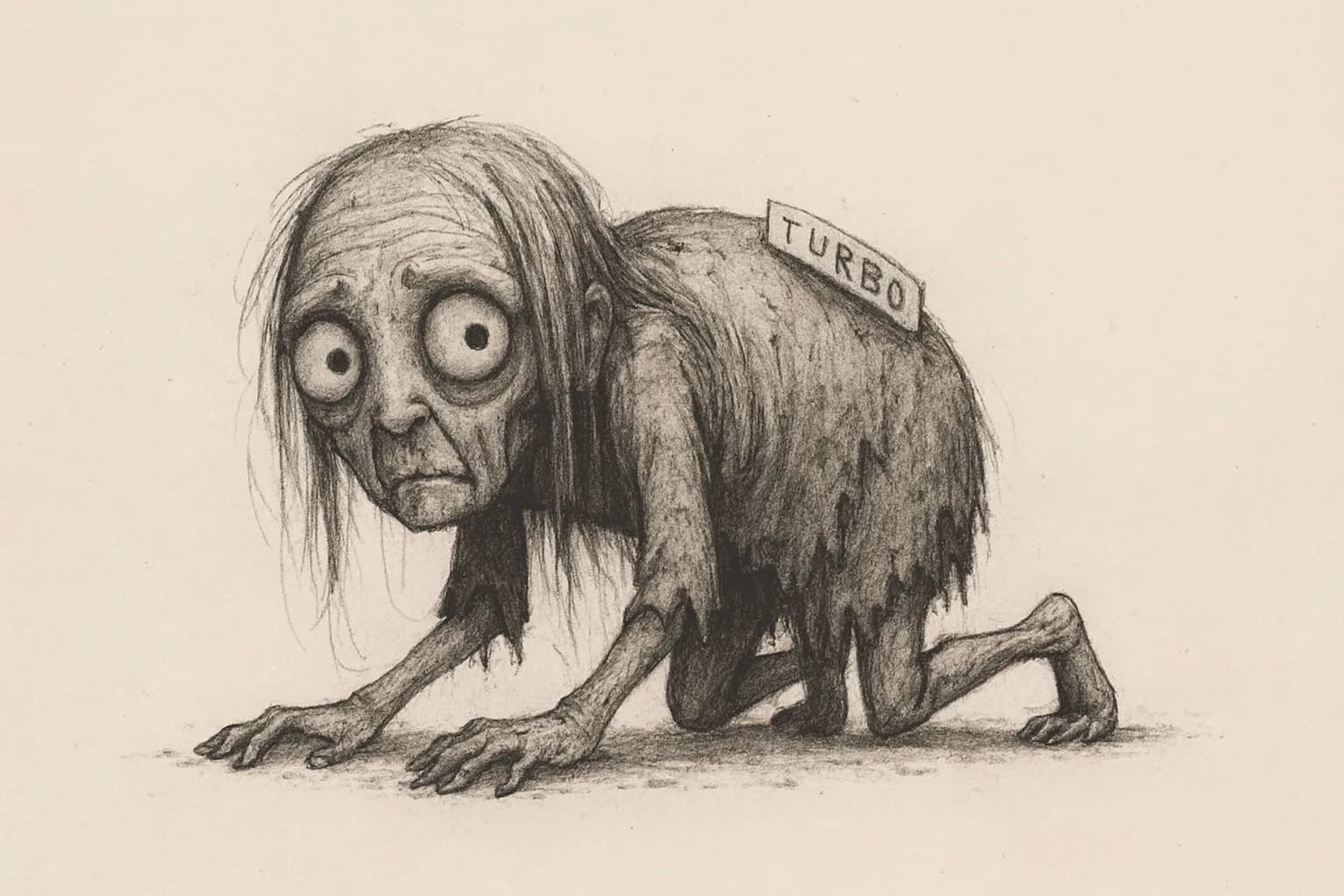
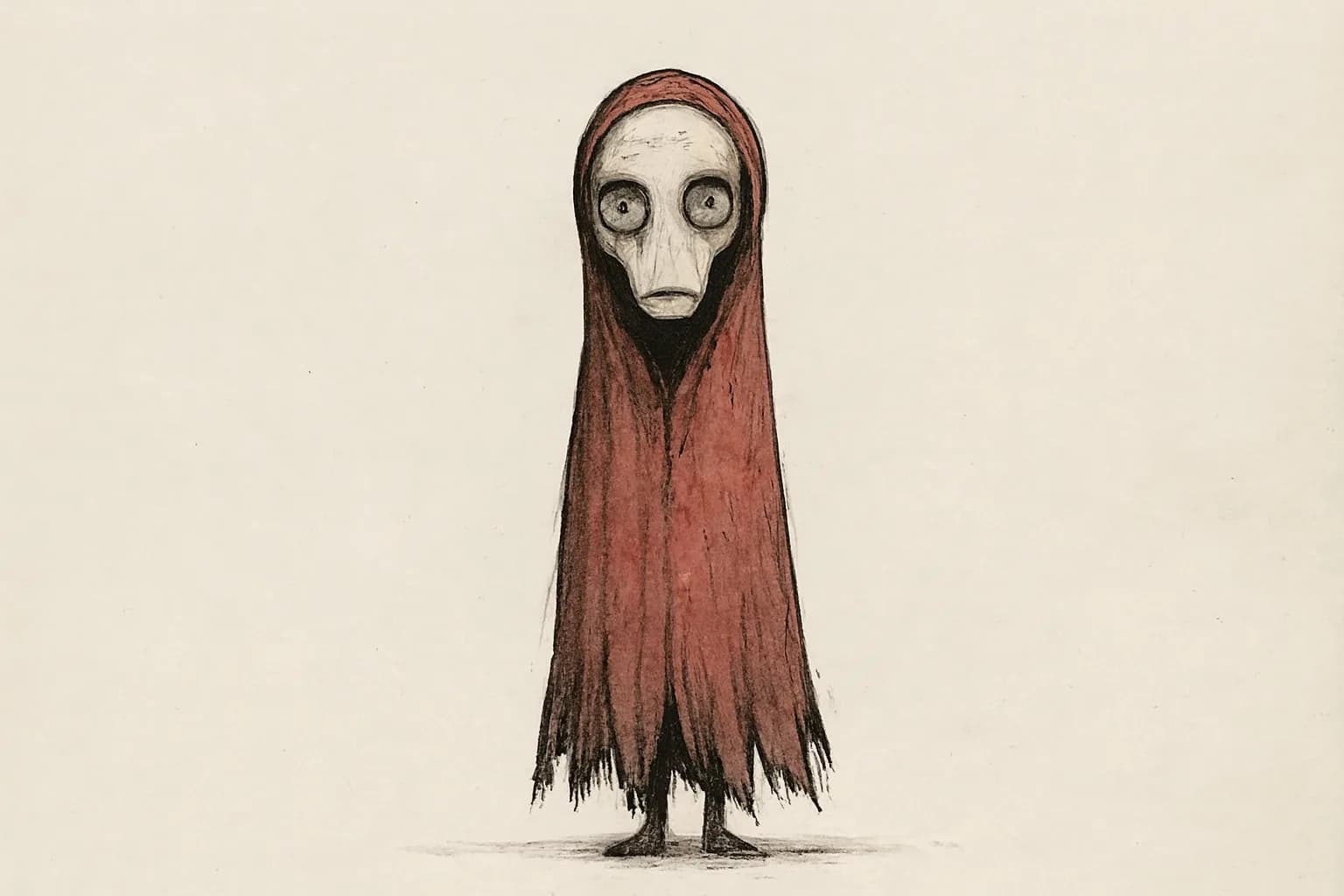
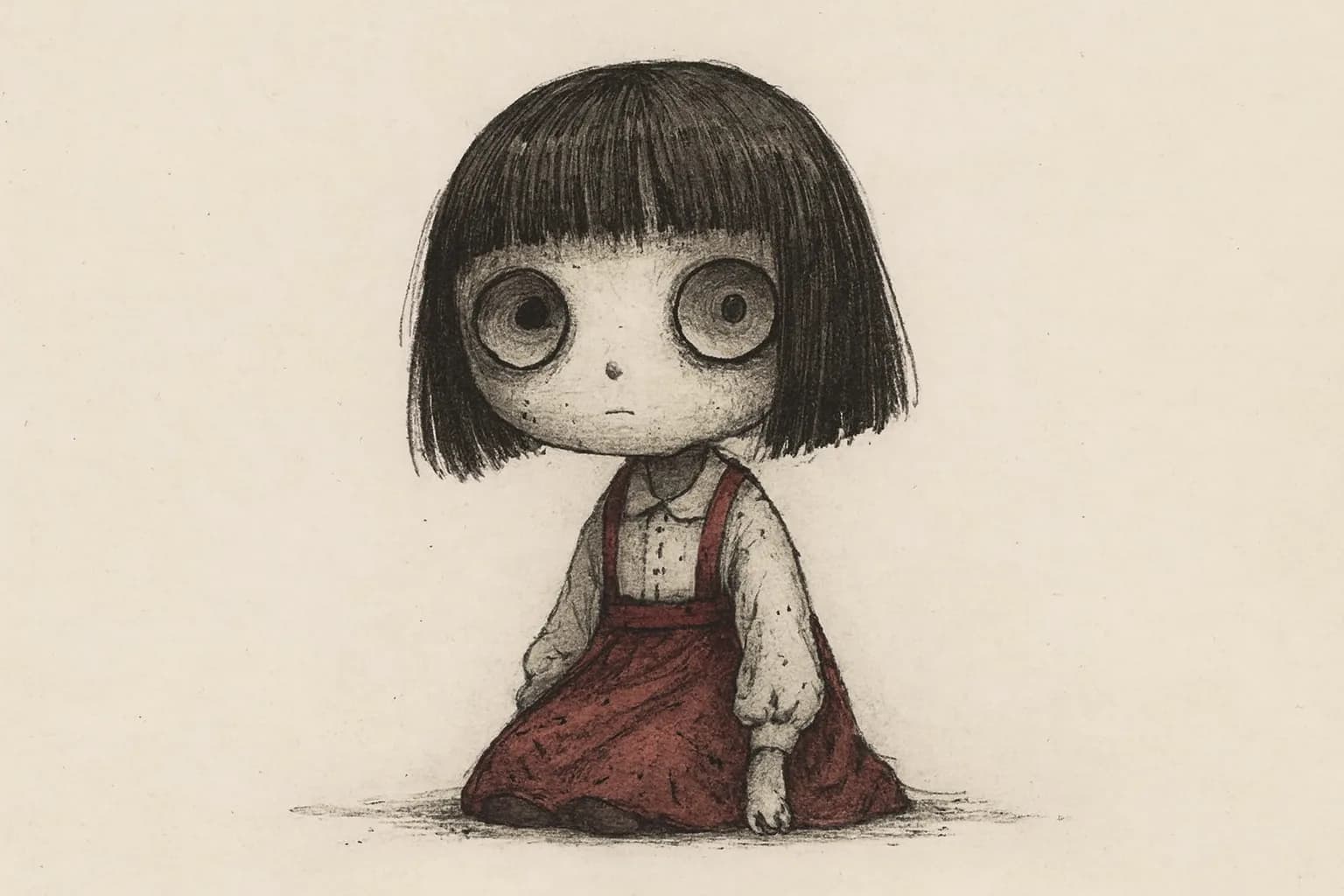
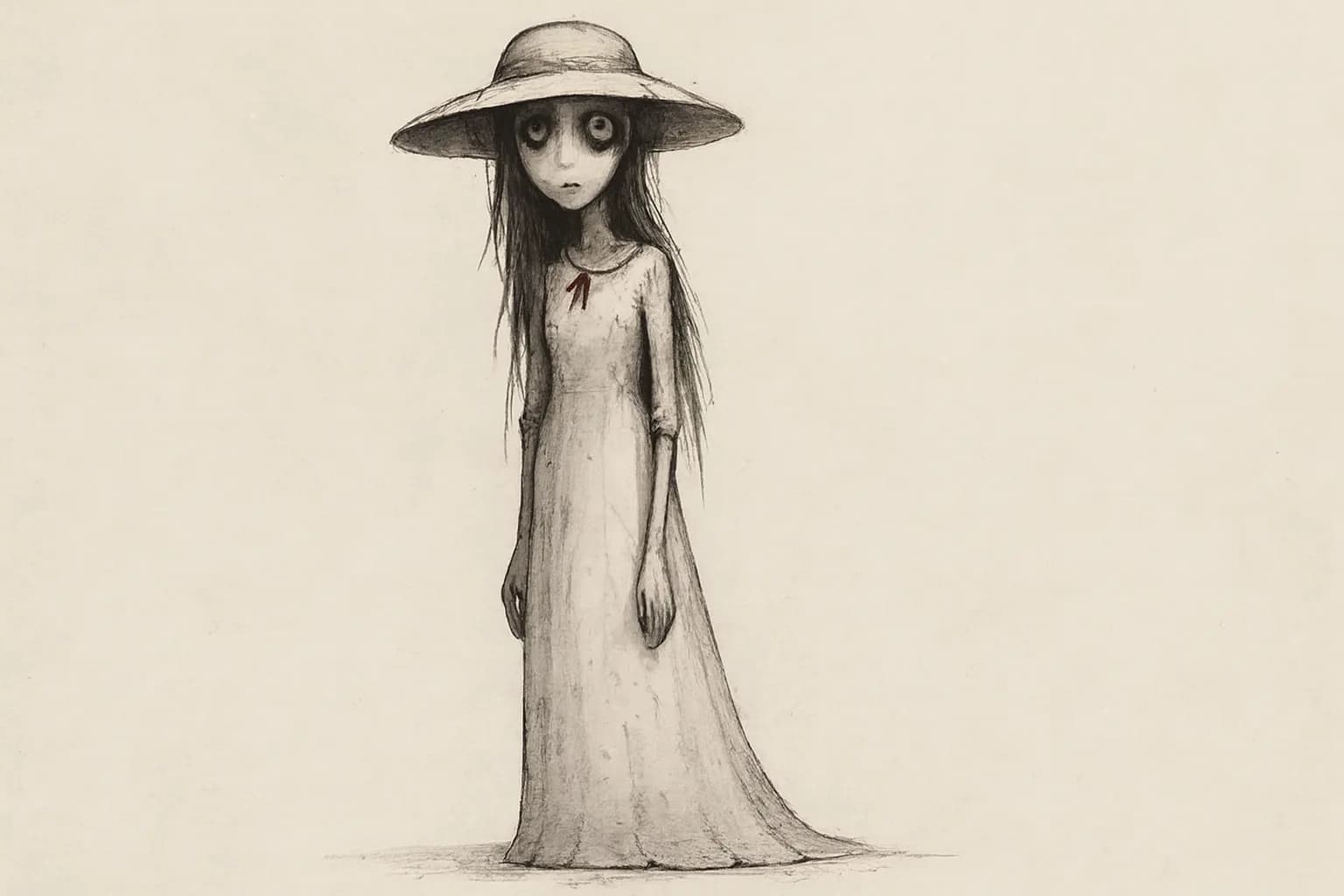
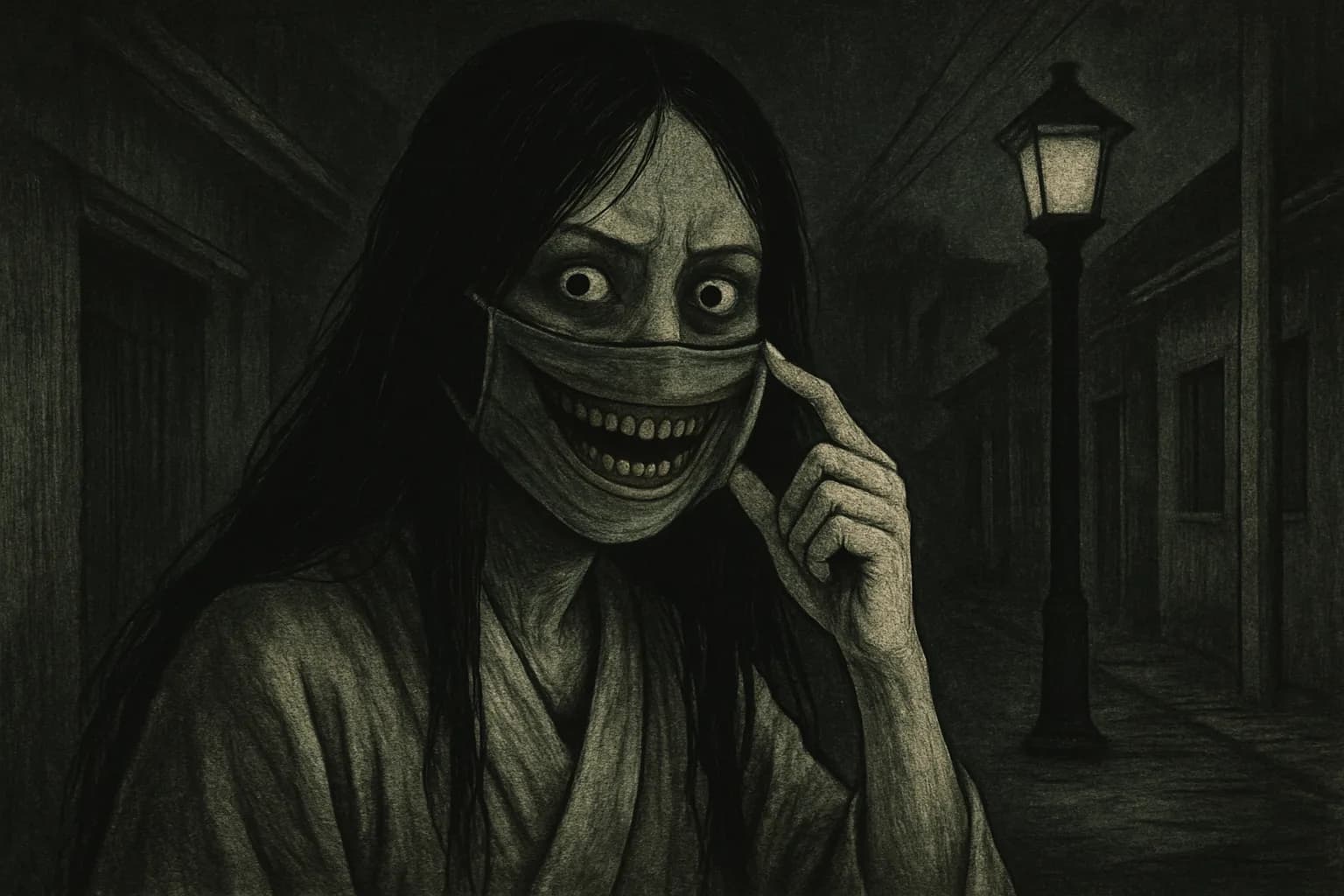
Kuchisake-onna appears as an ordinary adult woman, unremarkably dressed, wearing a plain white surgical mask over the lower half of her face — a completely normal sight in Japan, where masks are worn year-round against colds, hay fever, and city pollen. That ordinariness is the trick: nobody looks twice at a masked woman on a street corner. She approaches a child alone at dusk, usually near a school or on a quiet residential street, and asks her question. Answer no, and she kills the child on the spot, with a pair of scissors in most tellings, a sickle or a large kitchen knife in others. Answer yes, and she pulls the mask down. Underneath, her mouth has been slit from ear to ear into a wound-wide permanent grin, and she asks again: Am I pretty now?
No safe answer, and a few unsafe ones
Most kaidan — Japan's ghost stories — give the listener a way out that rewards a clever response. Kuchisake-onna barely offers one. Say no and she kills you for the insult; say yes and she shows you the wound, then asks again, and in a number of versions she kills you regardless of your second answer, or cuts your mouth to match her own. Playground folklore in 1979 circulated its own set of countermeasures anyway, the way children always invent rules for a game that has none: answer noncommittally — maa maa ("so-so") — and she'll be confused long enough to let you run. Offer her hard candy, specifically amber-colored bekko ame, and she'll stop to accept it. Say the word pomade three times in a row and she vanishes, for reasons no version of the story bothers to explain. None of these were traditional charms passed down through generations. They were rules a frightened eleven-year-old improvised on a Tuesday, repeated by every other eleven-year-old in the prefecture by Friday.
Where it comes from
There is no author to trace this back to. Folklorist Michael Dylan Foster, in Pandemonium and Parade: Japanese Monsters and the Culture of Yōkai (2009), treats the 1979 Kuchisake-onna panic as a case study in how a modern rumor can behave exactly like an old yokai legend without any of an old legend's provenance — spreading school to school and city to city on nothing but repetition, absorbing local variations as it traveled, and eventually cooling into a story adults told about a strange season of nerves. Backstories were grafted onto her after the fact, once the panic itself needed explaining: a woman disfigured by a jealous husband, or scarred in a car accident, or, in a few tellings, loosely tied to older Japanese stories about women mutilated as punishment or revenge. Some echo older tales. An Edo-period story tells of a fox disguised as a slit-mouthed woman. None is a proven source for the 1979 rumor. They're the kind of origin a story acquires once people start asking where it came from.
Kuchisake-onna today
The legend never fully died out. Reported "sightings" recurred in Japanese cities into the 1990s, and a similar rumor, sometimes called the Red Mask, spread among schoolchildren in South Korea in the mid-2000s. Kōji Shiraishi's 2007 horror film Carved (Kuchisake-onna) introduced her to a wider international audience and led to sequels, putting her alongside Sadako from Ringu as one of the few modern Japanese ghost stories most non-Japanese horror fans could actually name. She remains unusual among yokai for having a documented birthday: December 1978 in Gifu, nearly fifty years ago, still within living memory of the schoolchildren who were told to walk home in groups.