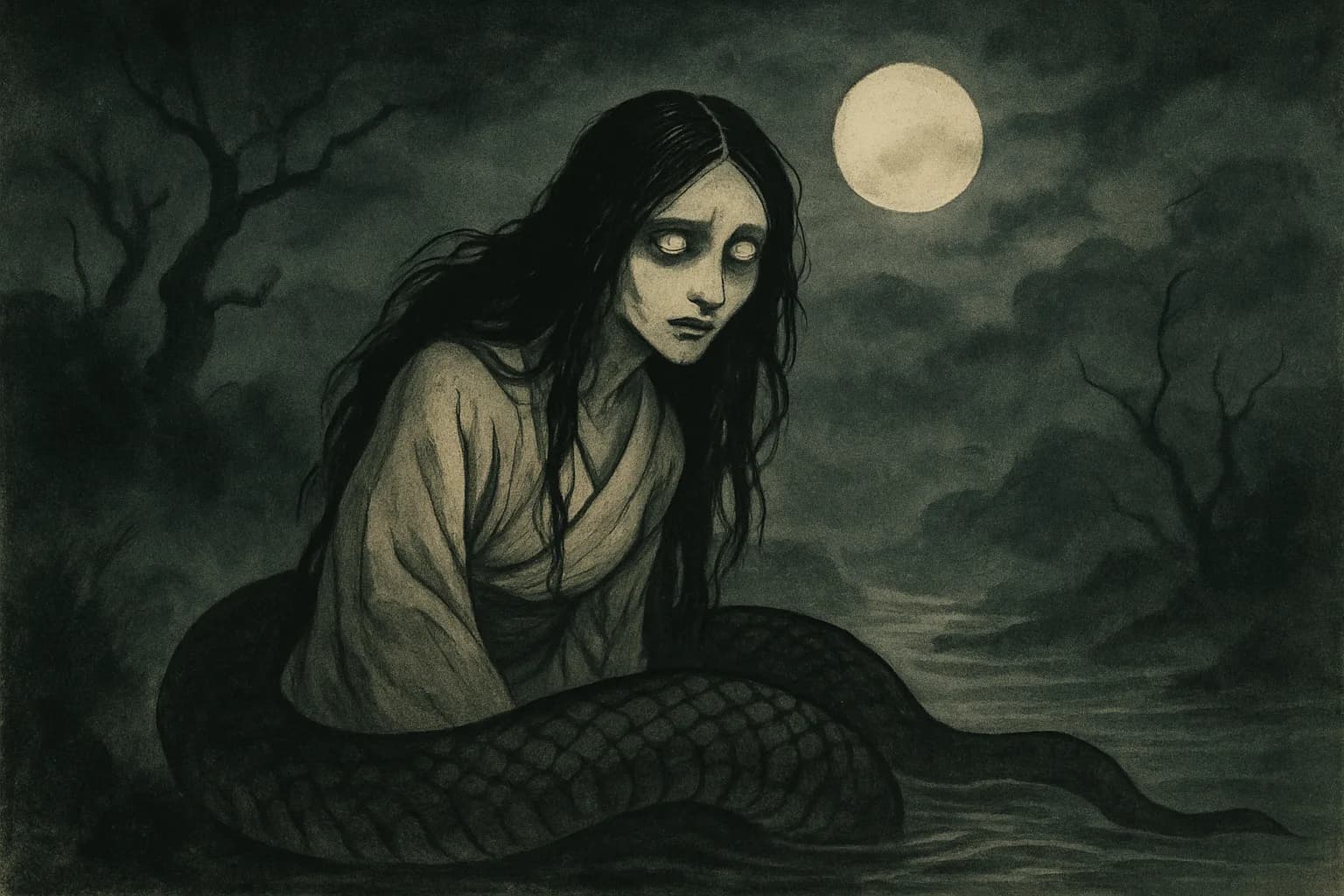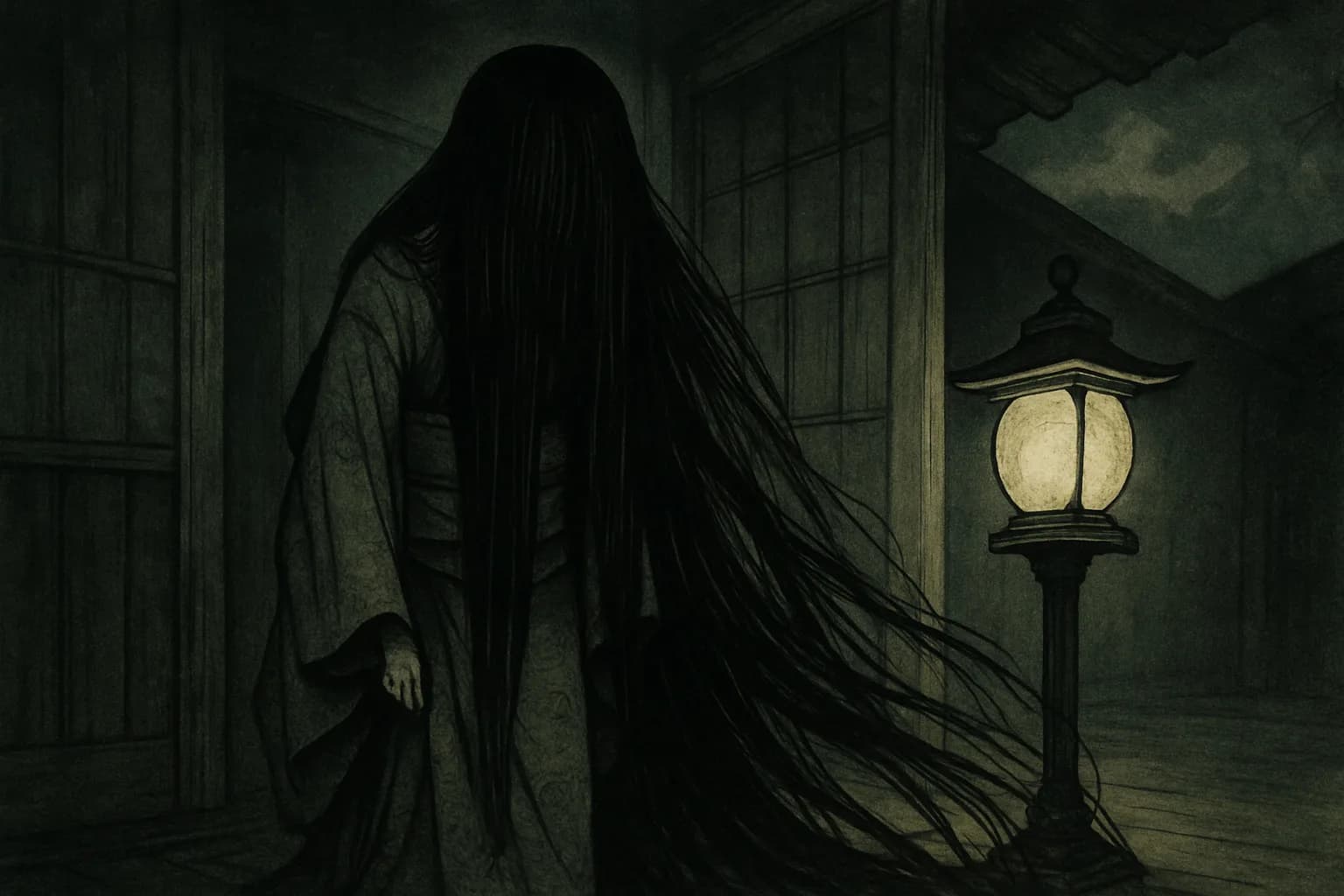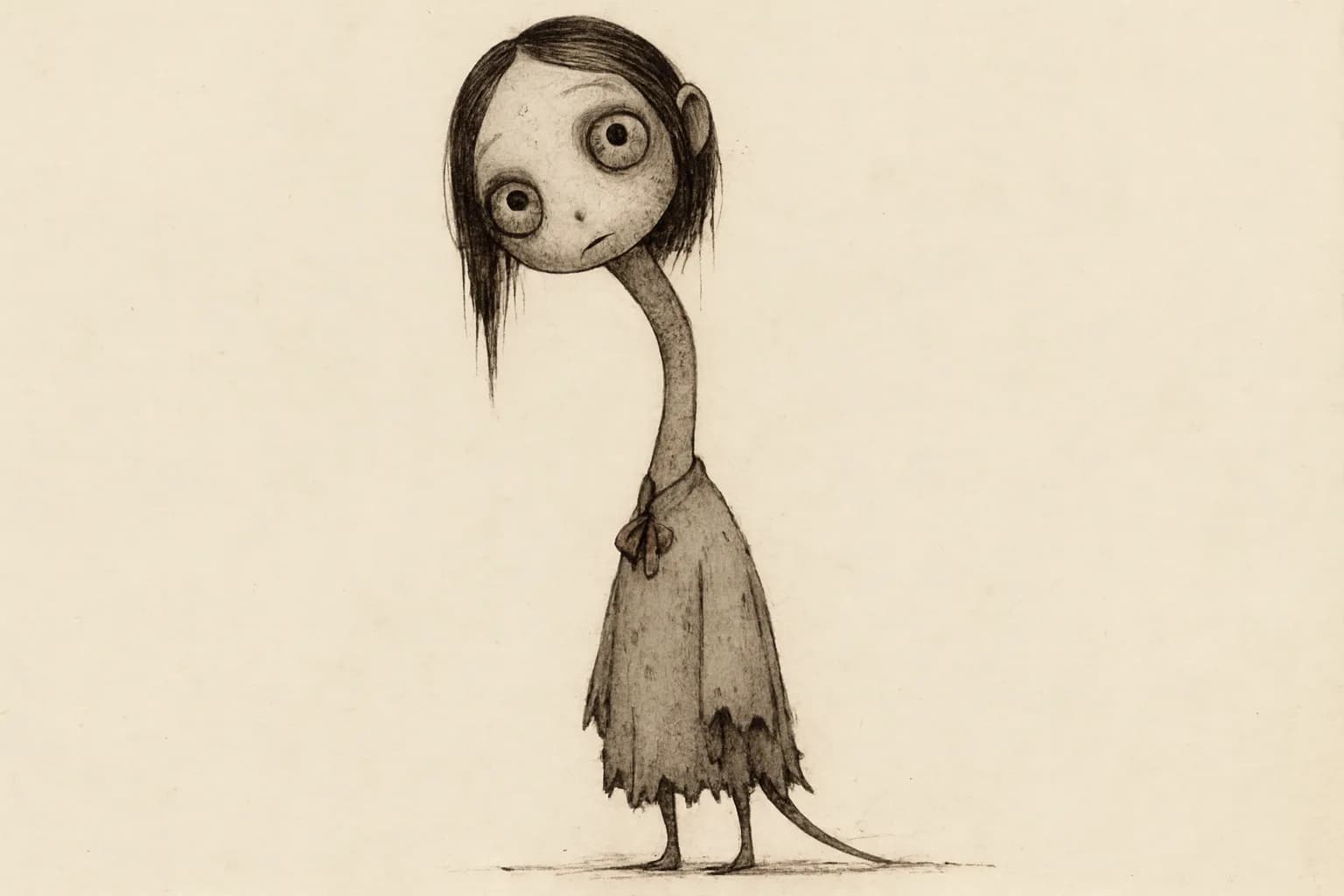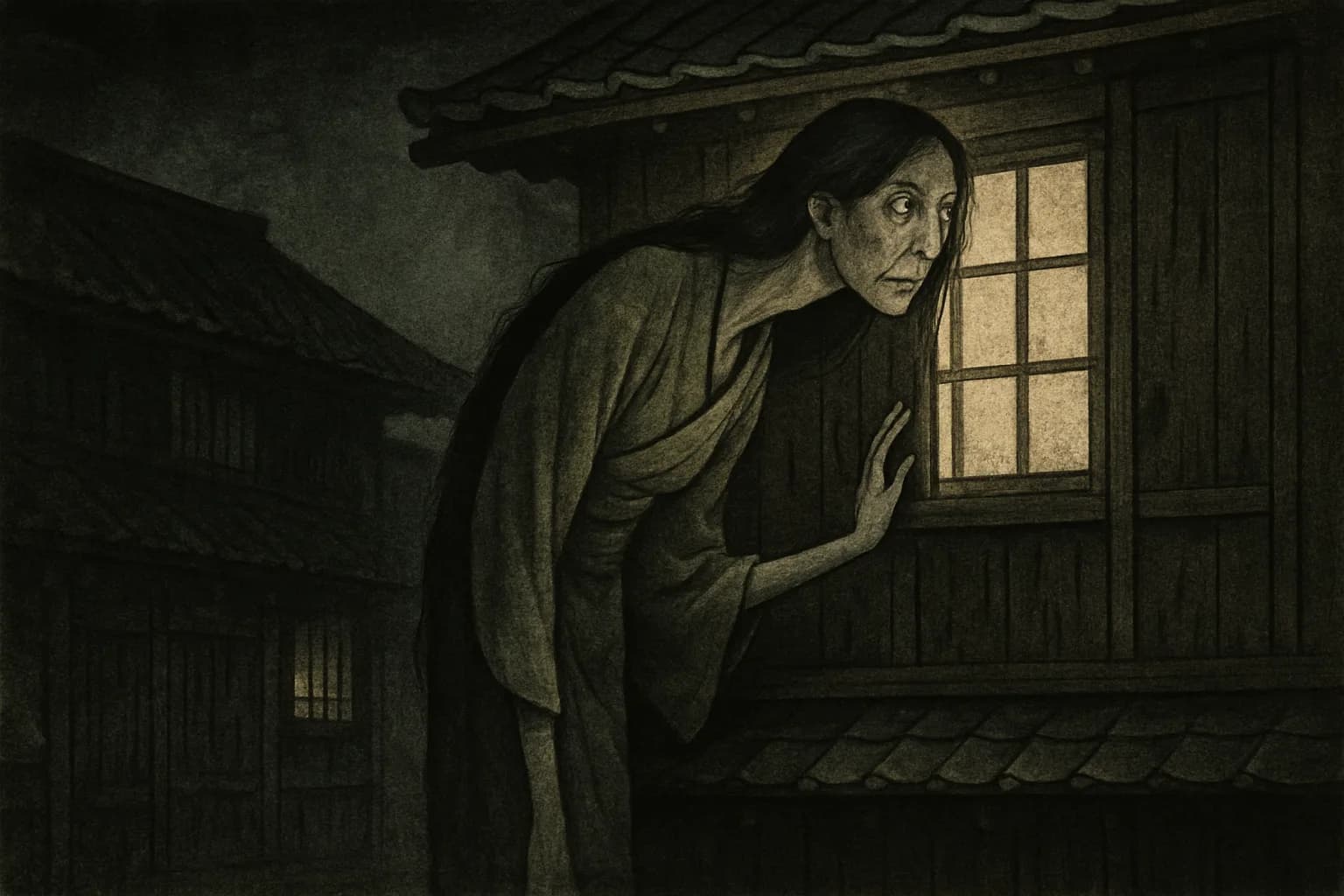
The most famous rokurokubi story in English has no stretching neck at all. Lafcadio Hearn's 1904 collection Kwaidan includes a tale called "Rokuro-Kubi," in which a wandering monk stumbles on a mountain hut and finds its five occupants lying headless after dark, their necks unmarked by any blood. Those heads come off entirely. That is not a mistake by Hearn. In early Edo stories, "rokurokubi" often meant exactly this: a head that leaves its body.
What does it look like?
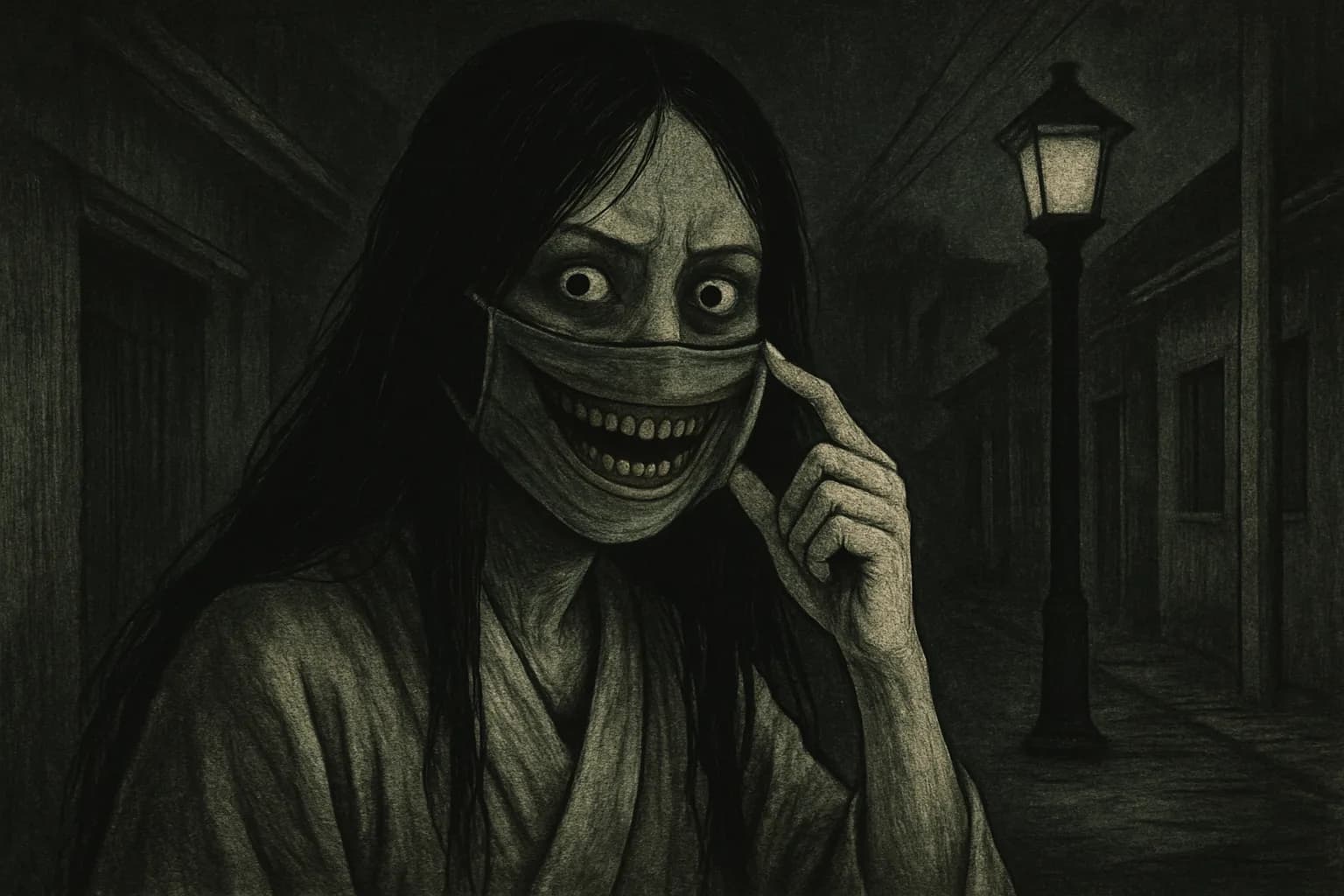
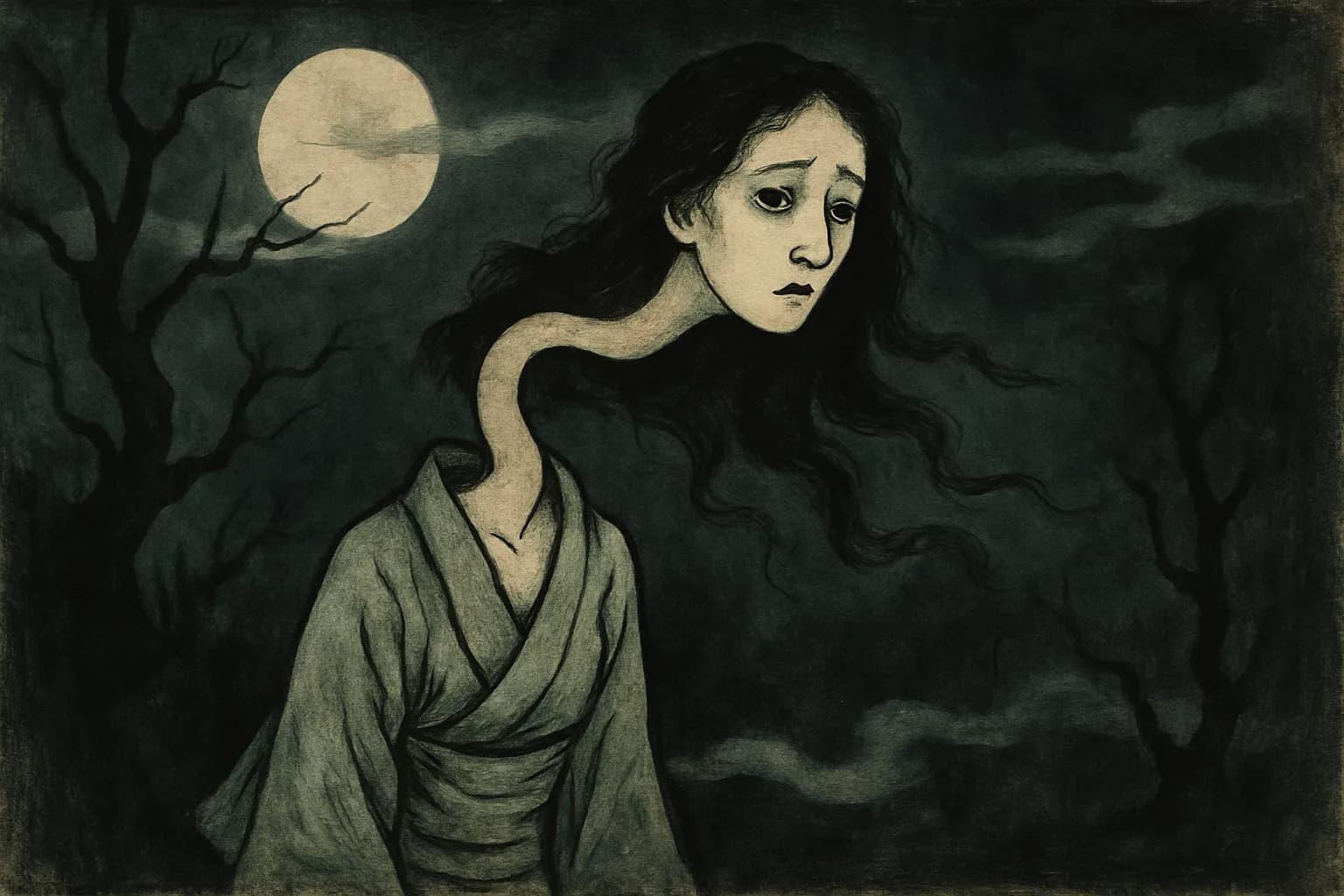
By day, a rokurokubi looks like an ordinary woman, indistinguishable from anyone else in the house or village. After she falls asleep, her neck begins to lengthen — sometimes just far enough to peer into a neighboring room, sometimes stretching yards down a corridor or out a window into the night. The body stays put; only the neck travels, thin and rope-like, carrying the head to wherever it wants to look. Toriyama Sekien drew her this way in Gazu Hyakki Yagyō (1776), the first volume of his four-part bestiary: a well-dressed woman in an elegant kimono, her neck curved out at an angle no living spine could hold. He labeled the picture 飛頭蛮, "flying-head barbarian," and some read that long "neck" as a thread of spirit.
The name itself points at the mechanism. Rokuro (轆轤) is the word for a potter's wheel, and also for the pulley on a well bucket or the sliding shaft of an umbrella handle — anything that extends on a spool or a hinge. Kubi (首) is simply neck, or head. A rokurokubi's neck is imagined less like flesh and more like a winch paying out rope.
The other kind: when the head leaves entirely
Japanese sources describe two types of rokurokubi. The older type is the nukekubi (抜け首, "slip-off head"). In a nukekubi's case, the neck doesn't merely stretch — the head detaches completely and flies off on its own, hunting for blood or insects while the body lies motionless. A nukekubi is considered the more violent of the two, and the more dangerous to disturb: folklore warns that if someone moves or hides the sleeping body while the head is away, the head cannot reunite with it and the victim dies. Often, neither kind of creature knows what it is. Both are sometimes described as unaware of their own affliction, waking each morning with a memory of a strange dream — of having seen the town, or the room next door, from some impossibly stretched-out angle — and no idea it happened while they slept.
Hearn's story belongs to this older type. His monk finds heads that have come loose entirely and gone hunting on their own. Today that is called nukekubi, but Hearn's Japanese source, the 1803 Kaibutsu Yoron, already calls them rokurokubi.
Where it comes from
The trail runs back to China. The Soushen Ji ("In Search of the Supernatural"), a collection of strange accounts assembled by Gan Bao in the fourth century, records a people called the Luotoumin, or "drop-head people," and describes a Wu-dynasty general's maidservant whose head detached and flew off every night while she slept. A Tang-era collection, Duan Chengshi's Youyang Zazu, places "flying-head" people (飛頭蛮) in the caves of Lingnan, in what is now southern China and northern Vietnam. They bear a red scar around the neck. At night their heads fly off to hunt crabs and earthworms, and return to their bodies by morning. Edo-period scholars knew these Chinese sources directly — the encyclopedia Wakan Sansai Zue cross-references the flying-head legend when discussing rokurokubi — and the imported story fused with homegrown Japanese kaidan (ghost story) telling once it crossed the sea. Domestic tellings appear by the seventeenth century: the 1663 story collection Sorori Monogatari and the 1677 Shokoku Hyakumonogatari, the latter setting a nukekubi tale in Echizen province.
Rokuro-Kubi in Kwaidan
Hearn's version deserves telling on its own terms. The monk, Kwairyō, was once a samurai named Isogai Heidazaemon Taketsura before he took vows after his lord's defeat. Sheltering for the night with a hospitable woodcutter in the mountains, he wakes to find the man and his four companions reduced to headless bodies, throats unmarked, no blood anywhere. Kwairyō realizes what he's found, arms himself by tearing a young tree out of the ground, and beats back the flying heads as they return and lunge at him one by one. Four flee; the fifth, the host's own head, locks its teeth into his sleeve and won't let go no matter how many times he strikes it. It dies still biting, and he travels on with the head hanging from his sleeve.
Rokurokubi today
The neck-stretching yokai has had a long afterlife as a recruitable demon in Atlus's Megami Tensei franchise, going back to spin-off entries like Devil Children Black Book & Red Book, where the games keep the core image intact: an ordinary-looking woman by day, capable of something no human neck should do once night falls. Modern retellings still use "rokurokubi" for both the stretching neck and the detaching head. That is not a mix-up: Japanese storytellers used the name for both from the start.