Ask people to name a yokai, and some of the answers are younger than cars.
We wanted to know how many. So we went through every creature in our source ledger — 327 of them. For each one, the ledger records the earliest work we know that mentions it. Where that line was vague, we read further.
The result is smaller than the internet suggests. Only six of them were born after 1900. Two began in school toilets, two on one internet forum, and two as rumours about the street and the road.
But "modern" gets into older yokai in three quieter ways. Some kept their picture and got a new name. Some kept their story and got a new face. One got a new job title. Those cases are far more common than brand-new creatures, and they are harder to spot.
Six were born after 1900
These six have no version older than the 20th century. Nobody has found an Edo print, a temple record or a folk tale behind them.
| Creature | First recorded | Where it spread |
|---|---|---|
| Aka Manto | 1930s | School toilets |
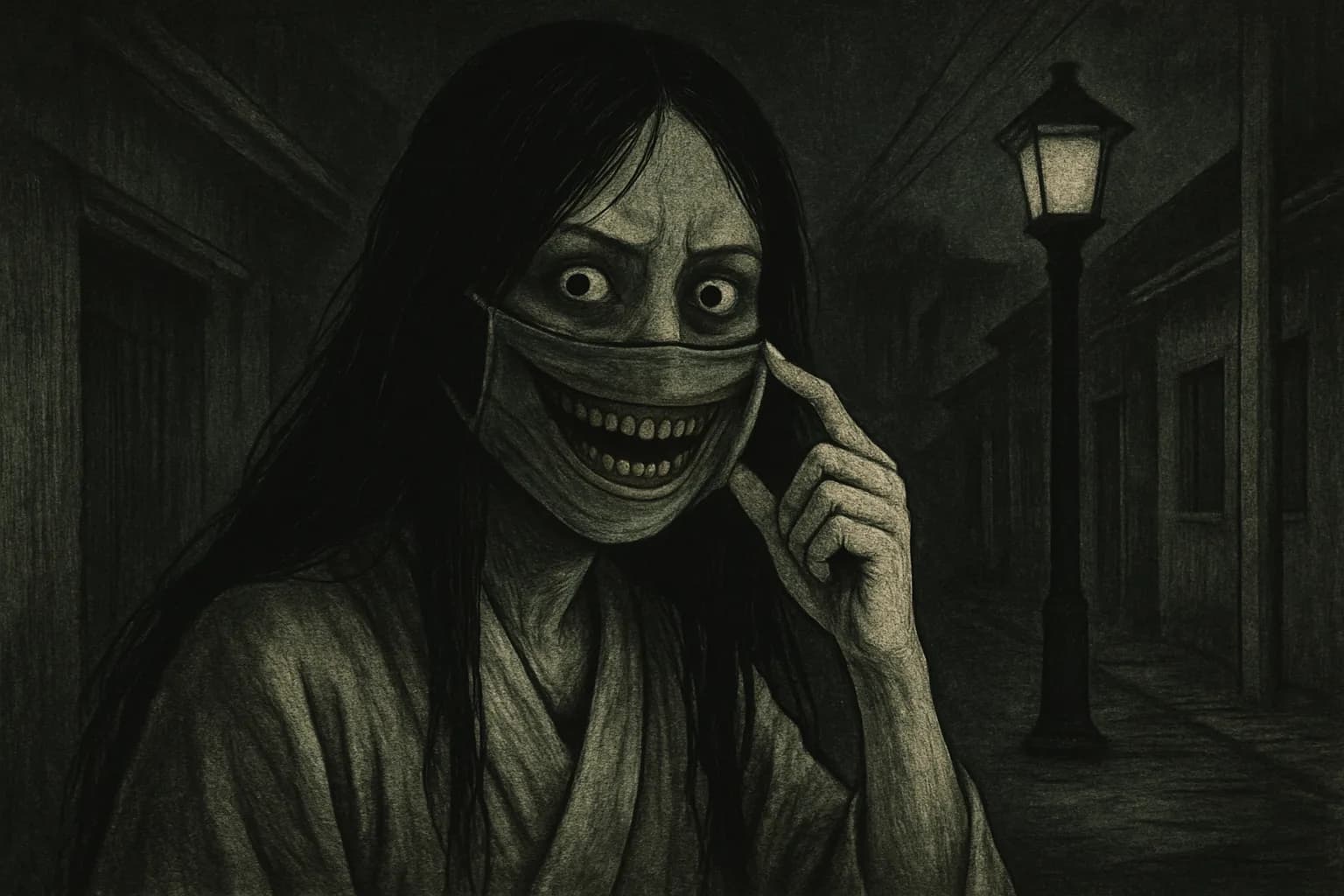
| Kuchisake-onna | December 1979, Gifu | Streets, then the whole country |
| Hanako-san | Collected from the 1980s | School toilets |
| Turbo Baba | Late 20th century | Mountain roads |
| Kunekune | 2003 | 2channel message board |
| Hasshaku-sama | 2008 | 2channel message board |
Notice who carried them. Rumour carried the first four, mostly among children. Anonymous posters carried the last two. None of them has an author anyone can name.
That is also how older yokai travelled. The folklorist Michael Dylan Foster uses the 1979 Kuchisake-onna panic to make this point. A modern rumour can behave exactly like an old legend. The only real difference is the date.
Two near misses from the 1800s
Two famous creatures sit just before the line. They show how close "old" and "new" can be.
Amabie comes from a single news broadsheet printed in 1846, in Higo Province. It rose from the sea, predicted a good harvest, and said that its picture would protect people from disease. That one print is its whole historical record. For 170 years almost nobody knew it. Then, in the spring of 2020, its pictures spread across Japanese social media as COVID-19 arrived. The creature is old. Its fame is from 2020.
Kokkuri-san is a game played with a coin and a paper of letters. It is usually called traditional. Our ledger records it from the 1880s. It most likely began as Western table-turning, brought in by foreign sailors around 1884. The kanji now used for its name mean fox, dog and tanuki. They were fitted to the sound afterwards.
Gashadokuro is an old picture with a new name
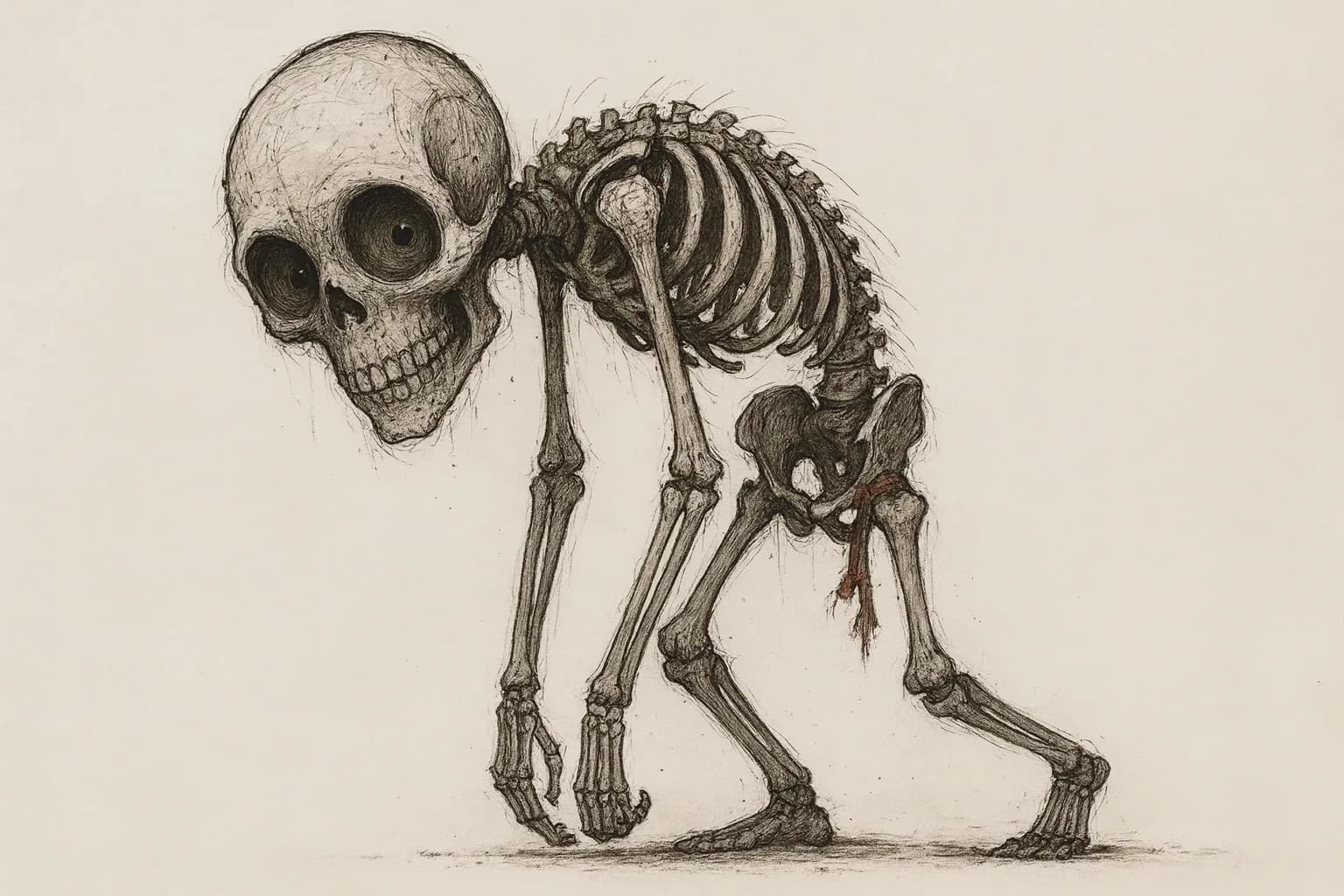
The giant skeleton feels ancient. Its picture is old. Utagawa Kuniyoshi printed a house-sized skeleton around 1844. In his print, a sorceress summons it against a warrior in a ruined palace.
But the name "gashadokuro" is not in that print. It is not in Toriyama Sekien's four yokai books either. The word is a 20th-century label. Someone fitted it to the older image later.
So the creature most people picture is about 180 years old. The name they call it by is less than a century old. The two were joined after the fact.
Nurarihyon got its rank in 1929
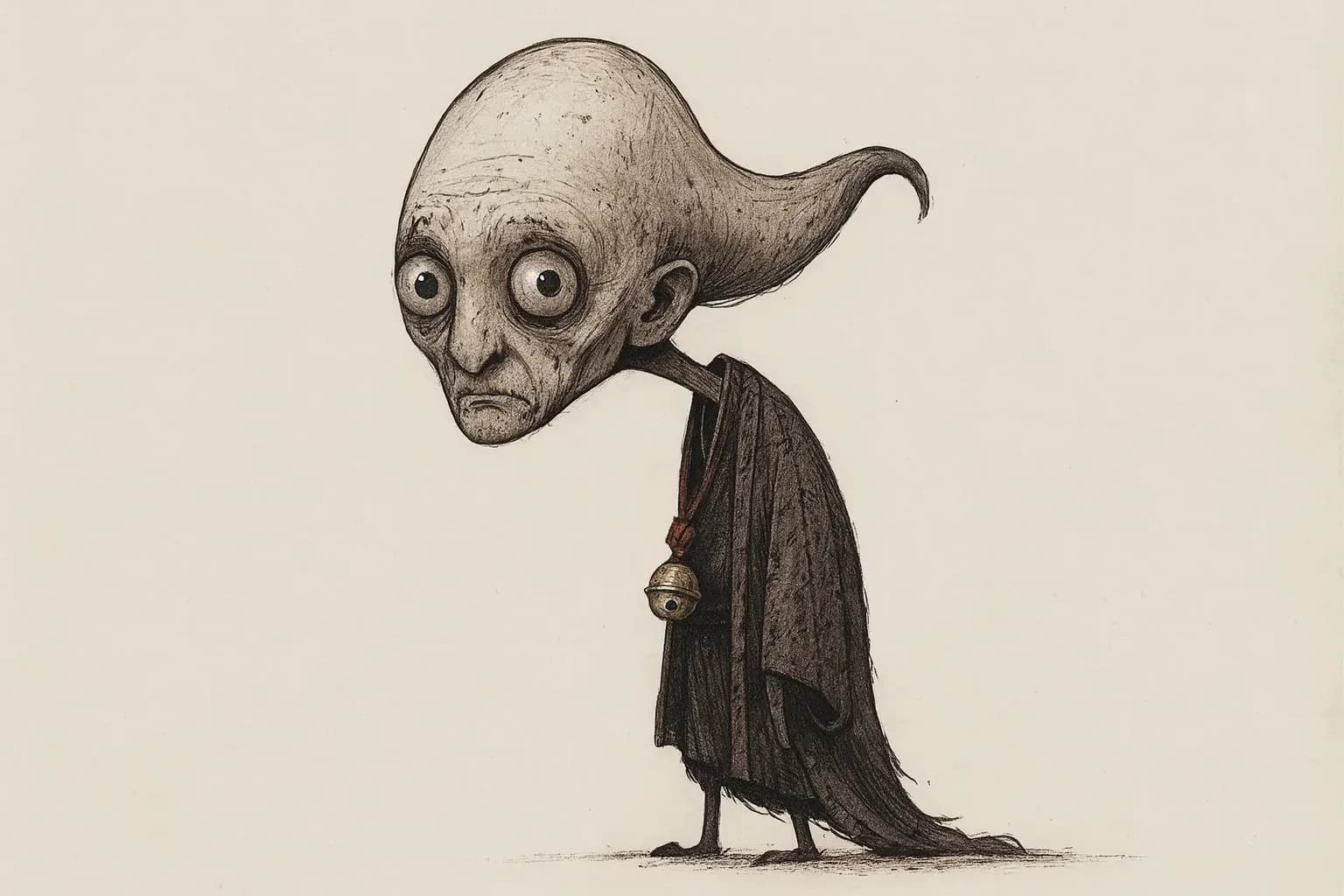
Sekien drew Nurarihyon in 1776. It is an old man with a long, gourd-shaped head, dressed like a wealthy priest. His plate gives no rank and no powers.
The title "supreme commander of all yokai" comes from 1929. That year, Fujisawa Morihiko wrote new captions for the old pictures. He called this one the boss of the yokai. The phrase was his own.
Mizuki Shigeru then cast Nurarihyon as the commander of all yokai in GeGeGe no Kitarō. Millions of readers grew up with that version. English pages still repeat the rank as fact. None of them can point to an Edo source for it.
Nurikabe kept its story and lost its face
Some yokai are old as stories but new as pictures. Our ledger flags six of them, including the nurikabe and the ittan-momen.
The nurikabe began in Fukuoka as an invisible wall. A traveller walking at night finds the road blocked and cannot see by what. The ittan-momen is a flying strip of white cloth from Kagoshima. Both stories are older than the 20th century.
Their famous faces are not. The wall with stubby limbs and the cloth with eyes come from Mizuki's drawings. The old stories gave the wall no body and the cloth no face. Ask for "a nurikabe" today, and you will almost always get his.
About fifty more were first written down after 1900
This is the group that confuses people. For about fifty more creatures, our ledger has no record older than 1900. But that does not make them new.
Take the zashiki-warashi, the child spirit of old farmhouses. Its first famous printed appearance is Yanagita Kunio's Tōno Monogatari, from 1910. Yanagita's storytellers in Iwate treated it as an old belief. Nobody had simply written it down before. Ten creatures in our ledger reach paper through Yanagita and the folklorists around him.
The same is true by region. Nineteen of the late-recorded group come from Shikoku. Seven come from Okinawa. Villages there told these stories for generations. The collectors just arrived late.
The rule is simple. A late record means the writing was late. It does not mean the creature was.
How to tell an old yokai from a new one
Four questions sort most cases.
- Is there an Edo-period picture? Sekien's four books (1776–1784) are the first place to look.
- Is the name on that picture? If not, the name may be younger than the image.
- Does the famous look match the old one? If it does not, check whether it comes from Mizuki.
- Who first said what it does? A rank or a power with no old source is usually a modern addition.
Our count has a limit. It covers our ledger, not every yokai in Japan, and a better source may turn up for any of the fifty. Still, the main result should hold. Truly new yokai are rare. Old yokai with new parts are everywhere.