Kokkuri-san is a parlour game. It is not a monster with a body. The frightening part is the coin. Every finger on it denies pushing, and the coin still moves. Players say a fox has come into the room. Then they ask it a question.
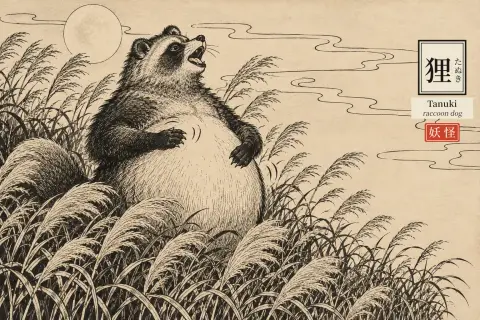
The name is a pun. 狐 is a fox. 狗 is a dog. 狸 is a tanuki. Those three animals are not what players see. The kanji were fitted to a sound that already existed.
What people actually do
In the form children know, a sheet of paper lies on a desk. It has yes and no, a torii gate, man and woman, numbers, and the kana syllables. A five-yen or ten-yen coin sits on the paper. Everyone rests a finger on the coin and says, "Kokkuri-san, please come." The coin slides. It points at an answer.
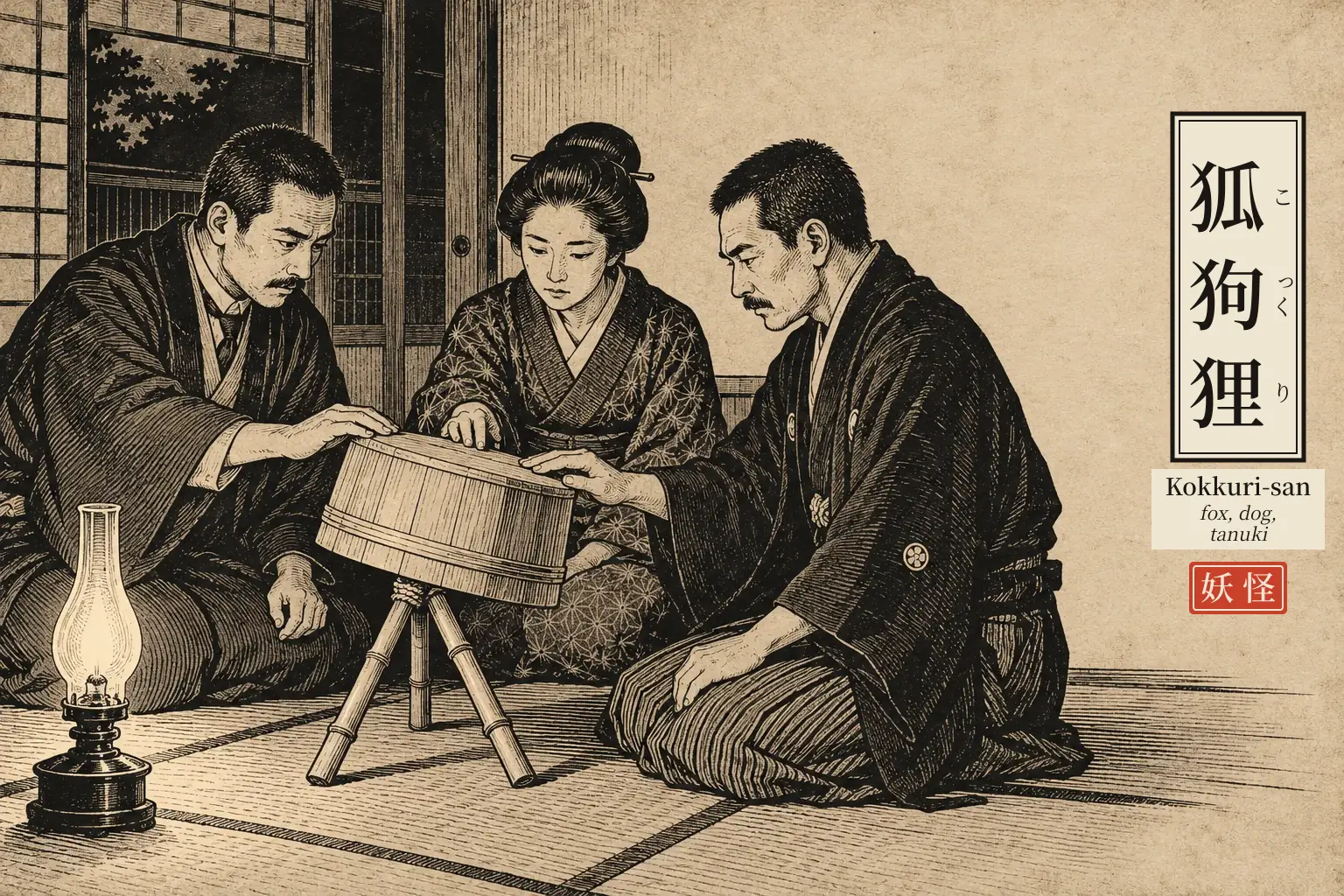
Japan did not start with the coin. In the 1880s, Western tables were not common in Japanese homes. People used the lid of a rice tub, an ohitsu, set on three bamboo sticks. The lid tipped. Kokkuri, kokkuri. That nod is the name.
Where it comes from
The philosopher Inoue Enryō recorded a story about how it arrived. Around 1884, an American sailing ship was damaged near Shimoda, on the Izu peninsula. Its sailors showed local people a game from home. Inoue guessed it was table-turning. Hands rest on a table. The table tilts. Sitters say a spirit is pushing.
The fad moved from port to port. Inoue tested it himself and wrote Yōkai Gendan (1887) to explain it. He found a limit. Ask "rain or sun tomorrow," and the lid can answer. Ask the minute the rain will start, and it cannot. He said the players' hands moved the lid, without their meaning to. Scientists in Europe had said the same about tables, decades earlier. Inoue also heard that police in Osaka had banned the game, because of the harm it caused.
A boys' manga in the 1970s put the game back in schools. Children played it for fun. Some teachers gave strict warnings. People who remember that time still say: never do it. The warning was about the mind. In 1915, psychiatrist Morita Masatake named a "prayer psychosis." Writers link some kokkuri players to it. Some parents were warned too.
Go deeper
Books worth owning if this world pulls you in.
- The Book of Yokai →Michael Dylan FosterThe most readable scholarly introduction to yokai — where they come from, what they mean, and the major creatures.
- Japandemonium Illustrated: The Yokai Encyclopedias of Toriyama Sekien →trans. Hiroko Yoda & Matt AltThe complete Edo-period bestiaries that so many of these entries trace back to, in full English translation.
Some links are affiliate links; if you buy through them we may earn a small commission at no extra cost to you.
Kokkuri-san today
The fox, the dog, and the tanuki never appear in the room. They are the spelling. The moving thing is a coin, or it was once a rice-tub lid. People still treat the answer as if someone else gave it.
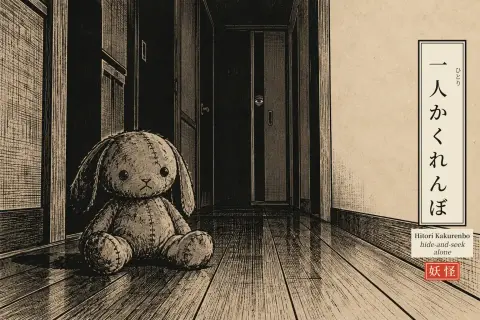
A later one-person rite, hitori kakurenbo, is sometimes told as a darker cousin of this game. The steps of that rite are a different page, and they are not written out there either.