Hasshaku-sama has no shrine. She has no Edo-period print and no line in any old book of monsters. What she has is a single forum post, dated August 26, 2008. Since then she has spread exactly like an old rural ghost story: grandparent to grandchild, village to village. The one difference is that this grandchild typed the story into a thread called "stories too scary to be funny."
What does Hasshaku-sama look like?
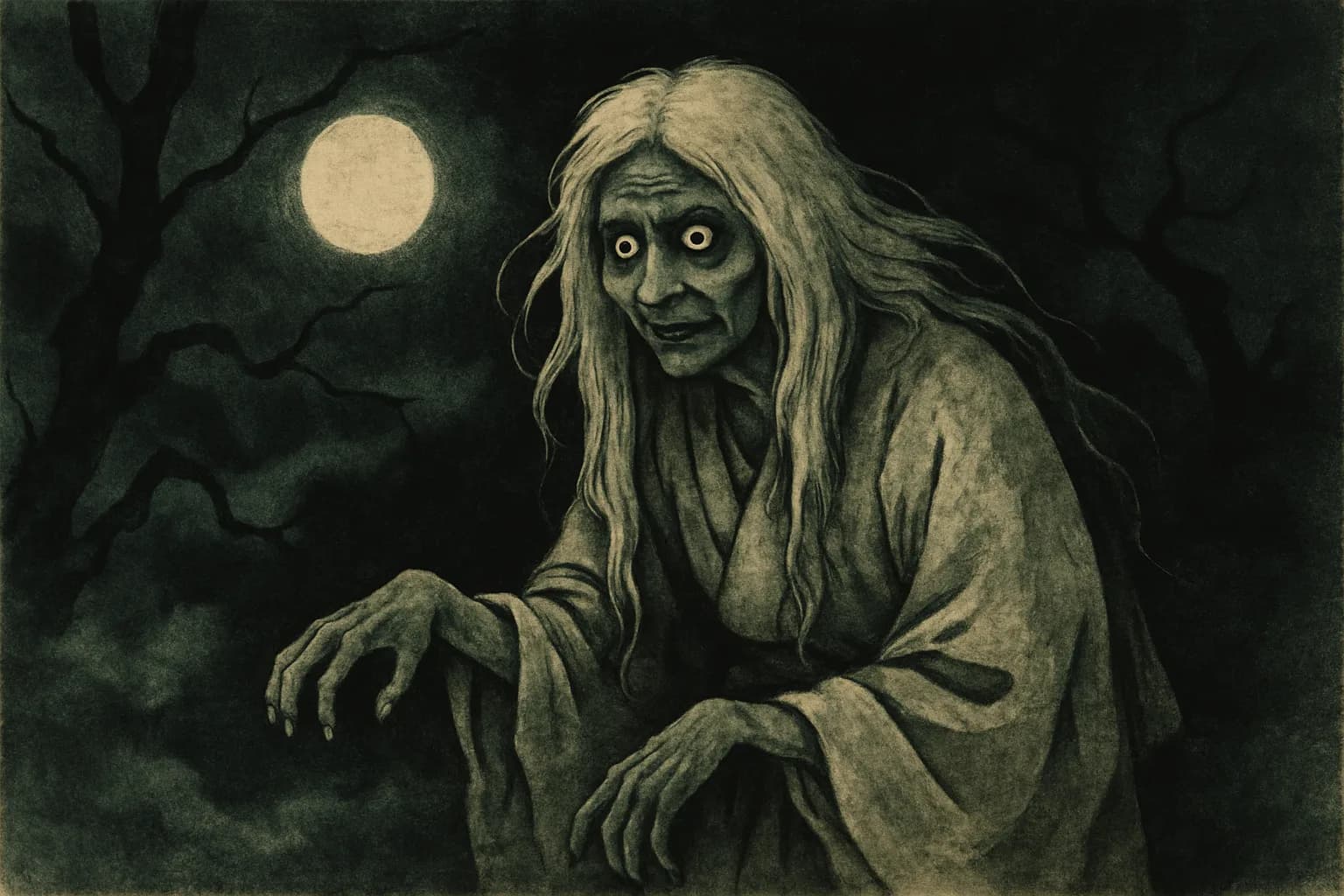
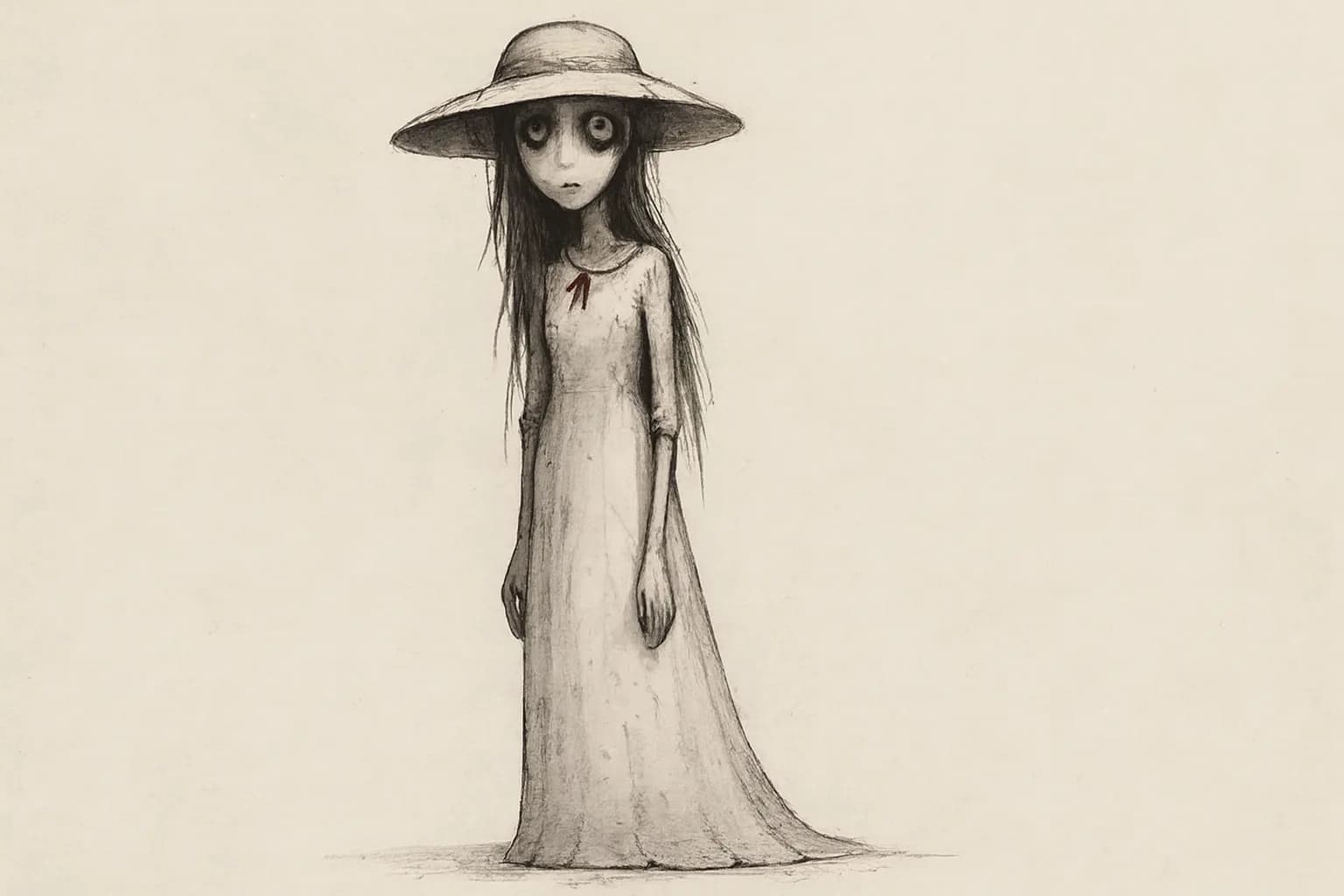
Her name states her size outright. 八 (eight) and 尺, a shaku, an old unit near 30cm, add up to roughly eight shaku — about 240 centimeters, or close to eight feet. She usually wears a plain white one-piece dress, sometimes a black one. A white hat sits on her head and hides most of her face. Her age is not fixed. Different tellings call her a young woman, a middle-aged woman, or an old woman. She can apparently be any of them.
The voice through the hedge
She makes a strange sound as she closes in, rendered as "po, po, po," half human laugh and half something mechanical. She appears mostly in the countryside. She targets the young more than adults, especially children. Anyone she marks is said to die within a few days.
She can also throw her voice. She copies the voices of people her target knows, to lure them outside. She can knock on doors and windows to draw attention too.
The night you have to stay inside
Older-sounding lore is built right into the original post. Jizo, stone guardian statues, were said to seal her inside one area. Someone has since broken those statues. The story says she can now appear anywhere.
The post itself tells one specific encounter. A man visiting his grandparents' farmhouse sees a tall woman in white, beyond a hedge nearly two meters high. She vanishes before he can look twice. When he mentions her height and her "po po po" voice to his grandparents, they panic.
They seal him into an upstairs room. The windows are taped over with newspaper. Charms hang on the walls. Salt is piled in all four corners, and a Buddhist statue stands watch. He is told to stay until seven the next morning.
That night she knocks on the glass. A voice through the door tells him it is safe to come out. He stays put. By morning the salt in the corners has turned black.
The next day, relatives drive him away in a convoy, chanting Buddhist prayers while Hasshaku-sama runs alongside the car. His grandfather later explains why. The relatives came to pull her attention away from him. He and the boy's father were ready to take his place, if it came to that.
The grandfather forbids him from ever coming back. Years later the grandfather dies. The warning is still in force, so the narrator cannot attend the funeral. The post ends with a phone call. His grandmother tells him someone has destroyed the sealing statues after all.
Other tellings add their own survival rules. Keep a protective charm on you at all times. Shut yourself in a room with salt in every corner until seven in the morning, and pray. If she does appear, do not speak to her, and do not point. Even so, the legend insists that no one who has met her has ever been saved — which the narrator's own story quietly contradicts.
Where it comes from
Hasshaku-sama was born on an internet forum, not in a village. The original post appeared on August 26, 2008, in a thread on the occult board of 2channel, an anonymous Japanese forum, titled roughly "stories too scary to be funny." Writers on Japanese folklore now file her under toshi densetsu, urban legend, alongside internet stories like Kotoribako and Yama no Ke.
What makes her convincing is structure, not age. She borrows every device of an older oral ghost story: a grandparent who knows the rules, a ritual with salt and charms, a village that cannot be named. Readers found her believable because she behaves exactly like a legend that is centuries old. She is not.
Some writers describe her as a giant-woman figure handed down in the San'in region of western Japan. This is a loose attribution, not the story's own setting — the original post deliberately leaves the village unnamed. She should also not be confused with taka-onna, a genuinely old tall-woman figure recorded in Edo-period sources centuries before this thread existed.
Hasshaku-sama today
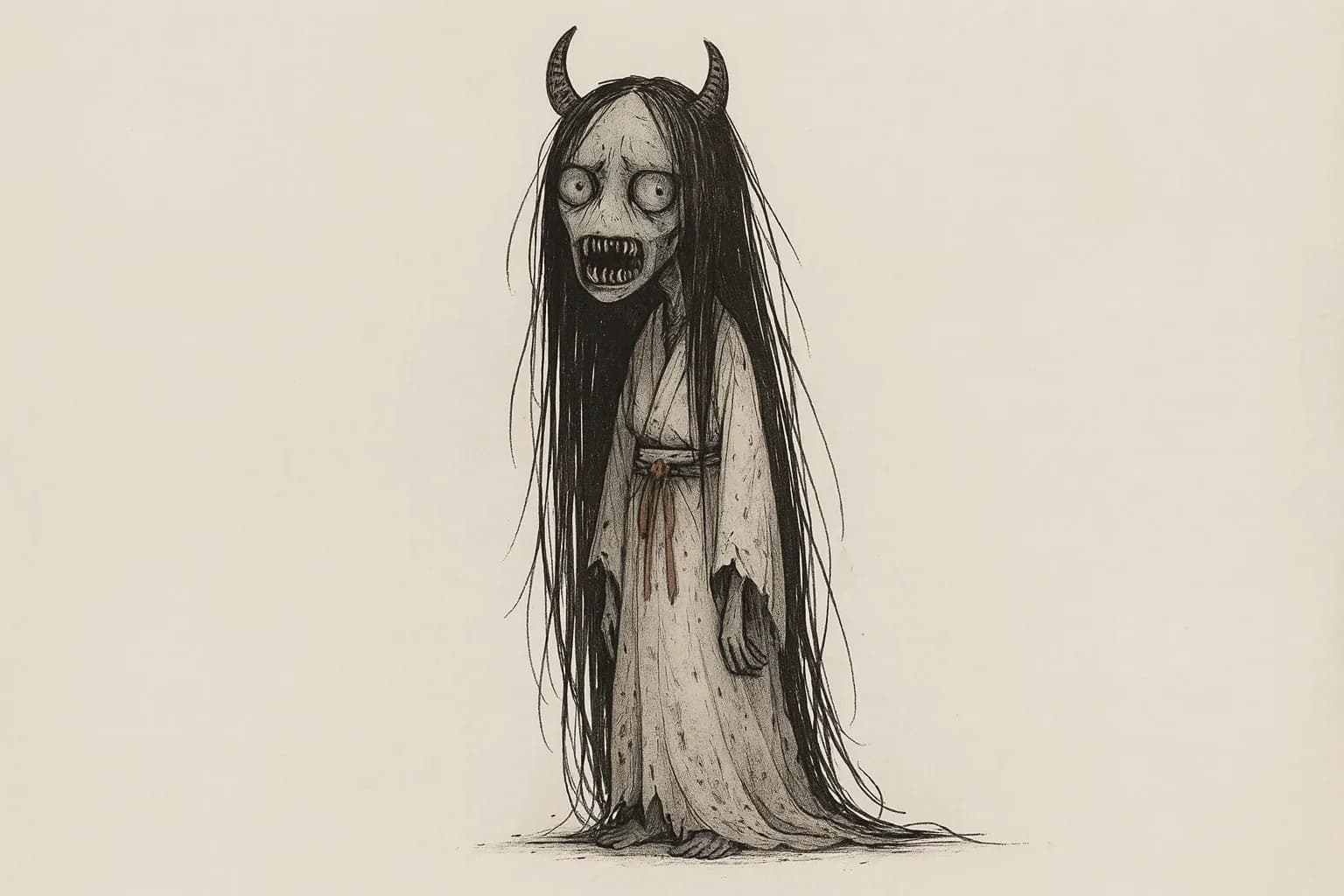
By the early 2020s she had become a favorite subject for manga artists and illustrators, covered in outlets like Mynavi News. Most fan art simplifies her into a figure who can only say "po." That misses the original: in the 2008 post, her real trick is mimicking other people's voices, not repeating one sound.
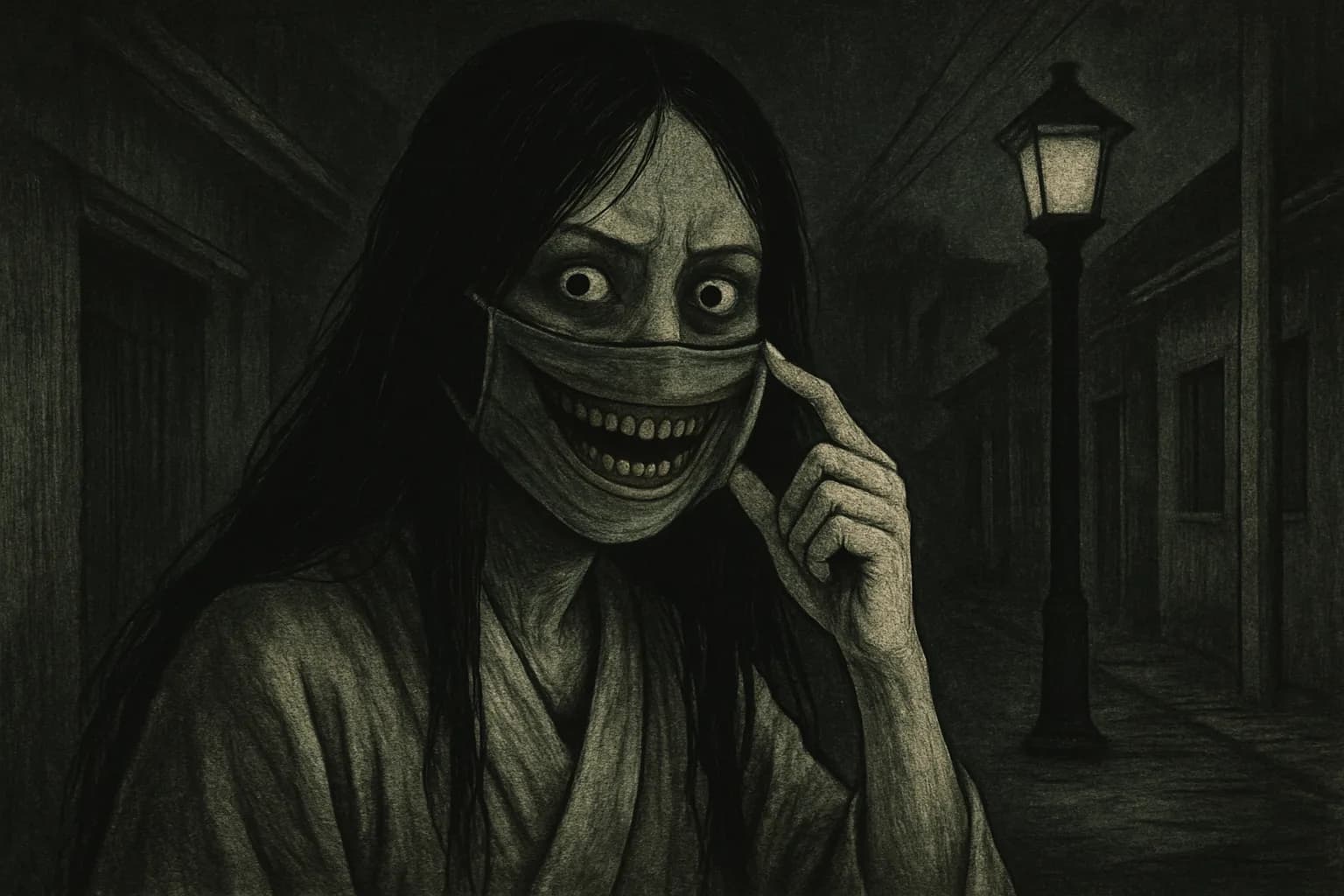
One widely covered illustrated story puts her face to face with kuchisake-onna, the slit-mouthed woman of 1970s rumor, and a third legend, Teketeke. Instead of fighting, the three bond over a shared hobby. A character based on Hasshaku-sama also appears from episode 16 of "Toshi Densetsu Senpai" ("Urban Legend Senpai"), a webcomic on Shueisha's Shonen Jump+ platform.
Some commentators point to Capcom's "Resident Evil Village," where the towering Alcina Dimitrescu resembles Hasshaku-sama in scale alone. Capcom has not said so itself.