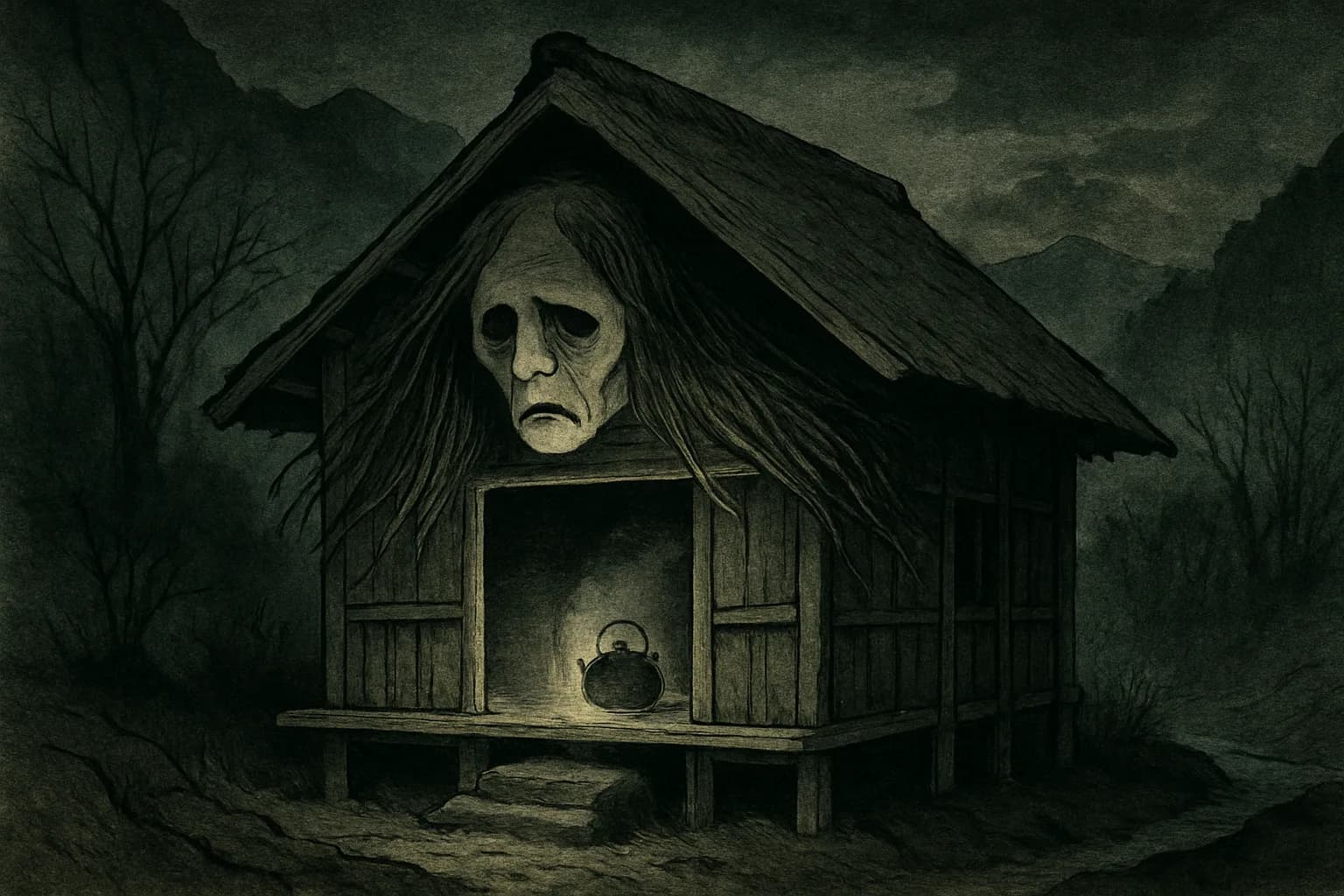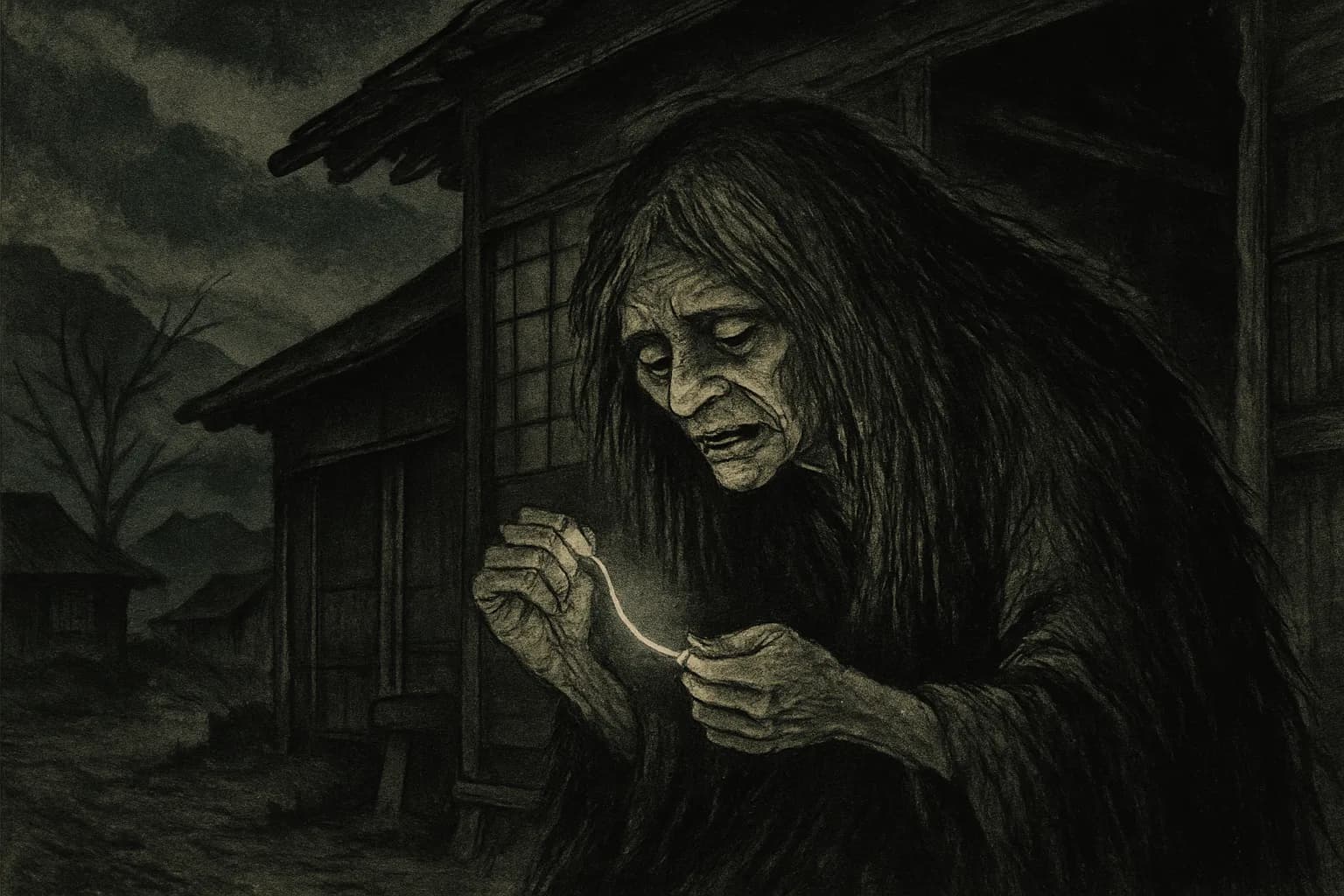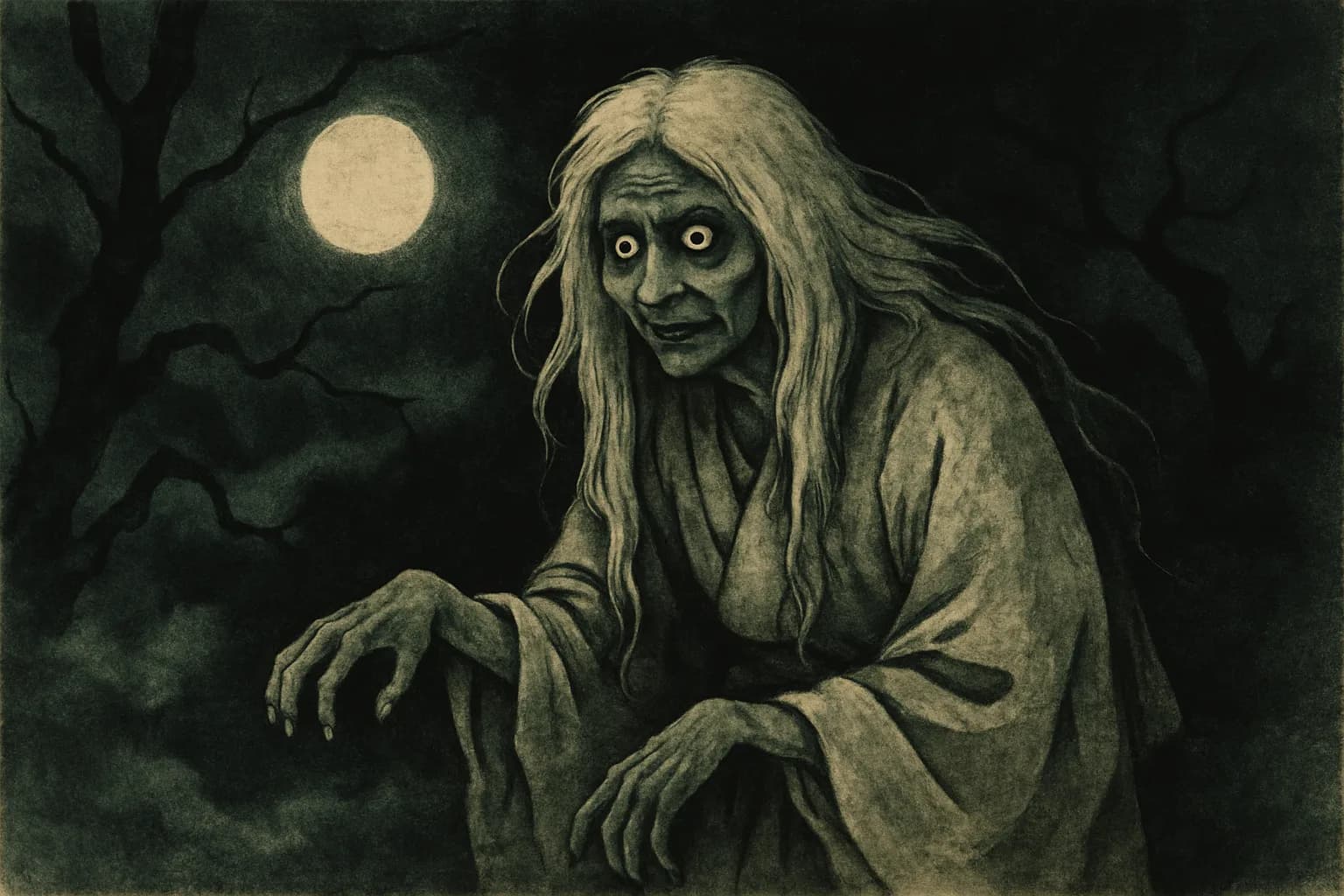
A lone traveler, lost after dark on a mountain road, spots a light in the distance and a hut with an old woman who offers a meal and a place to sleep. In half of Japan's mountain folklore, this is the last good decision that traveler ever makes. The old woman is a yamauba — 山 (yama, "mountain") + 姥 (uba, "old woman") — and her hospitality is bait.
What does a yamauba look like?
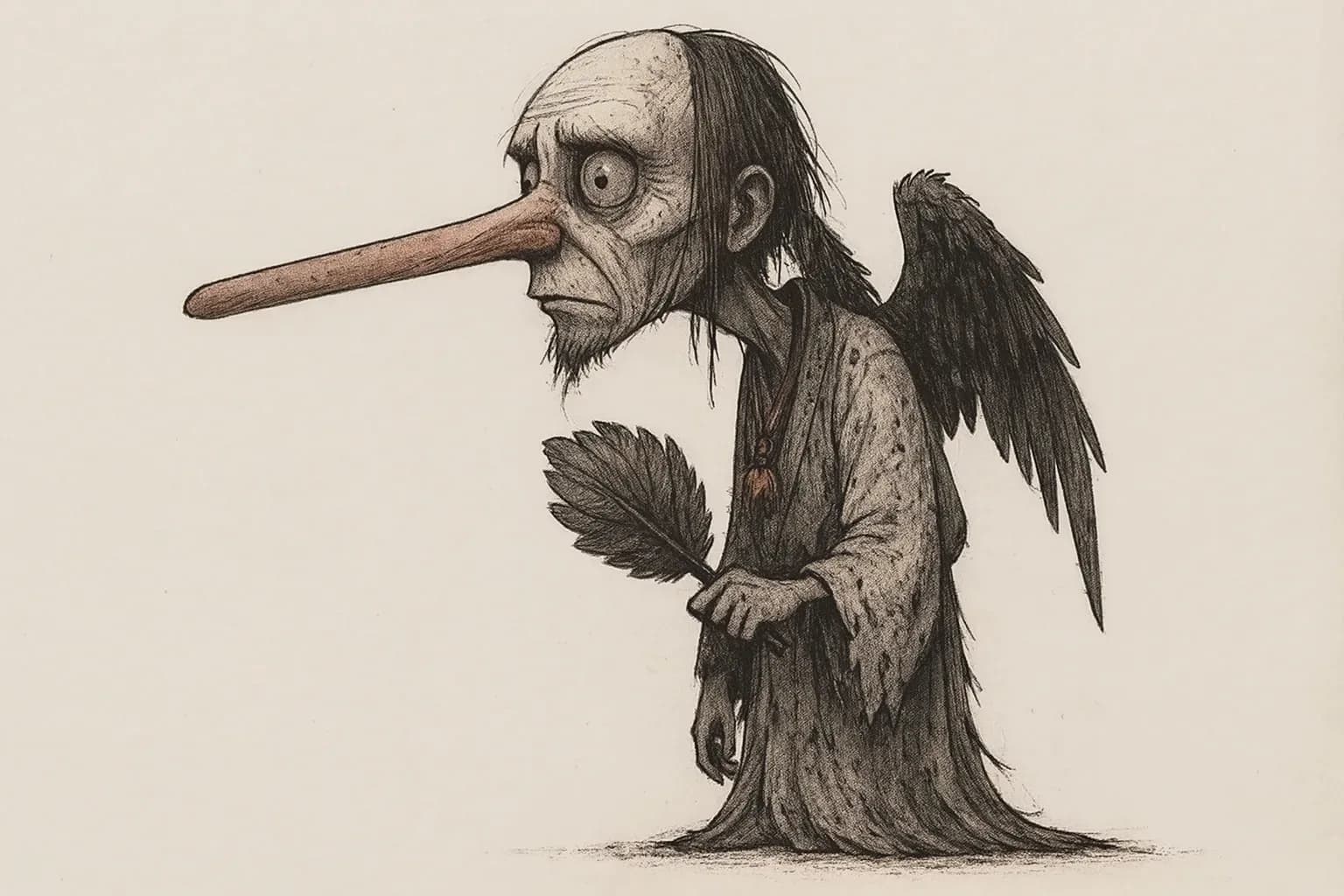
The older, more common image is unglamorous: a gaunt, filthy woman with wild white or grey hair, ragged clothes, and — in some tellings — a mouth that splits open impossibly wide, or a second mouth hidden beneath the hair at the back of her skull. She lives alone in a hut deep in the mountains, far from any village, and she is strong enough to overpower grown men despite her age.
That image was not the only one. Around 1800, Kitagawa Utamaro made over thirty prints of her as a young, unkempt beauty raising a red-skinned boy. It's the same figure, recast as a devoted mother rather than a monster. Utamaro was not the first. Chikamatsu Monzaemon's 1712 puppet play had already cast her as Kintoki's mother.
The hospitality that isn't
The core yamauba story is a trap built from good manners. A woodcutter, a peddler, or a group of travelers loses the trail at nightfall; a yamauba's hut appears exactly when they need one; she feeds them, sometimes lets them sleep — and by morning, some or all of the party are gone. In several regional tellings she's caught boiling human remains in a pot, or discovered mid-transformation with her real face showing through. The lesson embedded in nearly every version is blunt: in the mountains after dark, an old woman's kindness is the thing to fear most.
Mother of a hero
The gentler counter-legend is just as old and just as widespread. On Mount Ashigara, a yamauba is said to have conceived and raised a superhumanly strong child, red-skinned and fearless, who grew up wrestling bears and carp in the forest. That child was Kintaro, later known as Sakata no Kintoki, who left the mountain to join the warrior Minamoto no Yorimitsu's band of retainers — the same shitennō later credited with beheading the oni king Shuten-doji. Utamaro's prints of Yamauba and Kintaro together, tying his topknot or playing with a toy mask, drew directly on this maternal legend rather than the cannibal one.
The dancer and the demon
Yamauba also has a documented life on the Noh stage, in the play Yamanba, attributed to Zeami Motokiyo. Its plot turns the folklore back on itself: a professional dancer nicknamed Hyakuma Yamauba, famous for performing a song about the mountain witch, travels toward Zenko-ji temple and accepts shelter from an old woman for the night — who reveals herself as the real Yamauba, and asks to see the famous dance performed for her. What follows is less a monster attack than a long, unsettling meditation on wandering, judgment, and the blurred line between good and evil, delivered by the very figure the dance caricatures.
A grimmer cousin in Fukushima
A darker relative of the story is anchored to a specific place: Kurozuka, the "black mound," in Adachigahara, now part of Nihonmatsu City in Fukushima Prefecture. There, a former wet nurse named Iwate is said to have murdered a pregnant traveler for her unborn child's organs, believing it would cure the noble daughter she had raised — only to discover, from a keepsake talisman, that the victim was her own long-lost daughter. Grief broke her, and she spent the rest of her life as a cannibal hag preying on travelers, until a wandering priest finally confronted her. The tale is staged in its own Noh play, Kurozuka, and the site is still marked with a temple built to pacify her spirit.
Where it comes from
Folklorists connect the yamauba figure to ubasute, the folk memory (real or legendary) of elderly women left in the mountains when a household could no longer support them — a practice that would make the mountains themselves a place haunted by abandoned old women. Others trace her back further, to mountain deities and matriarchal spirits who governed the wilderness before Buddhism and organized religion pushed them into the role of monster. Her double nature — devourer in one story, devoted mother in the next — is unusually intact for a yokai; most got flattened into one or the other over time.
Yamauba today
The name outlived the folklore in an unexpected place: Tokyo street fashion. In the early 2000s, an extreme offshoot of gyaru style — deep fake tans, white eye makeup, neon hair extensions — got dubbed "yamanba" by critics who thought the look resembled the wild-haired mountain crone. It was meant as an insult. The girls who wore it kept the name.