This page has one test. How far did the story leave the telling and show up in real life? Police, a school rule, or a sold-out public ticket comes first. A film comes after that. A story that never left its first posting comes last. Who is scariest is a different list, the scariest yokai.
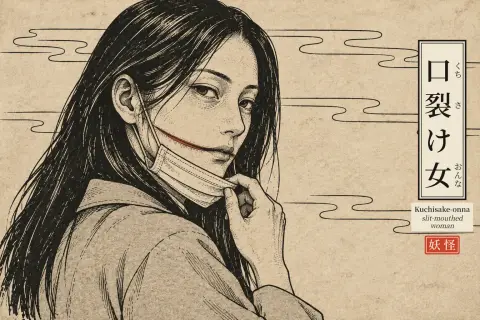
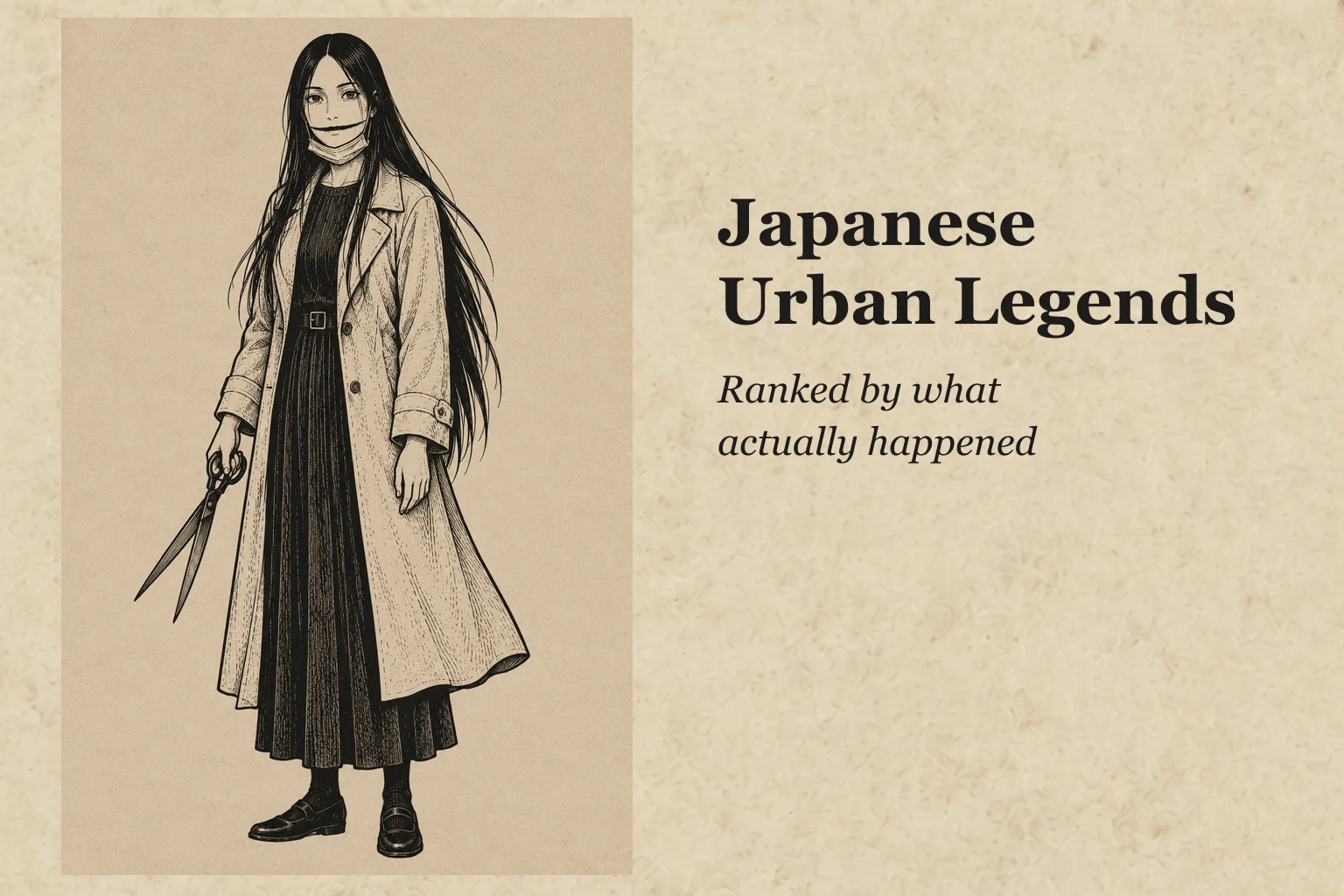
The Japanese urban legend that went furthest into real life is Kuchisake-onna. In 1979, police cars went out for her, and some schools sent children home in groups.
The set is 14 well-known urban legends. It is not every creature on this site. A parlour game, a station, a box, and a rite are here because people look them up with the monsters. Two famous internet tales stay off the numbered list. Nothing public happened.
| Rank | Name | What happened outside the story | Trace |
|---|---|---|---|
| 1 | Kuchisake-onna | Police cars, group walks home, one arrest | Panic |
| 2 | Aka Manto | A stranger takes children; police seized a show | Police |
| 3 | Kokkuri-san | The coin moves on its own; teachers warned children off | Schools |
| 4 | Jinmenken | A national media craze; an Edo booth in 1810 | Press |
| 5 | Kisaragi Station | A railway sold out a souvenir ticket in an hour | Ticket |
| 6 | Hanako-san | Told in schools nationwide, then filmed in 1995 | Schools |
| 7 | Kotoribako | Readers felt sick; the name was listed as unsearchable | Forum |
| 8 | Teke-teke | Two films opened the same day. No panic on file | Film |
| 9 | Turbo Baba | Collected in print by 1996, in many regions | Oral |
| 10 | Hitori kakurenbo | People wrote that they tried the rite | Tries |
Police, a school rule, or a sold-out public ticket beats a film. A film beats a tale that never left its first posting.
She brought out police cars
1. Kuchisake-onna
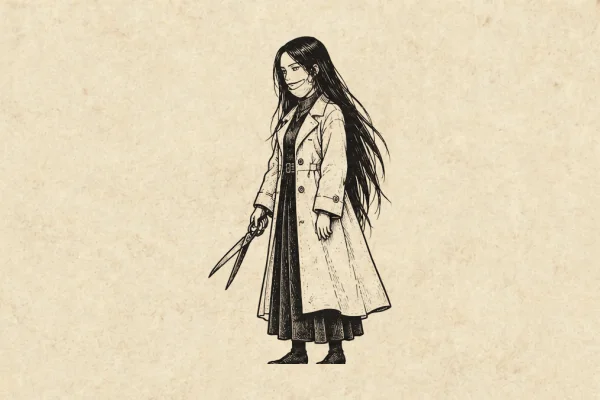
The Kuchisake-onna wears a mask and asks if she is pretty. Say no, and she cuts you. Say yes, and the mouth runs from ear to ear. Either answer can end with the scissors. Talk of her started in Gifu in December 1978. A local paper printed it on 26 January 1979. By June the story covered Japan. Police cars went out in Kōriyama and Hiratsuka. Schools in Kushiro and Niiza walked children home together. On 21 June, police in Himeji arrested a woman dressed as her, carrying a knife. No real attacker was found. Children invented escapes, such as saying "pomade" three times. Those were not old charms.
A stranger in a red cloak
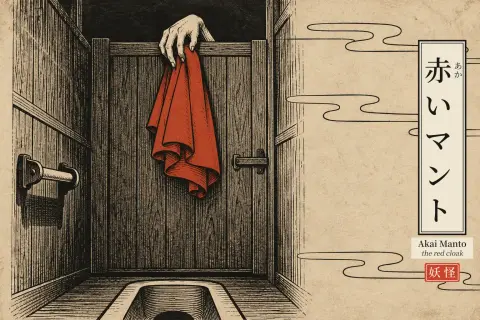
2. Aka Manto
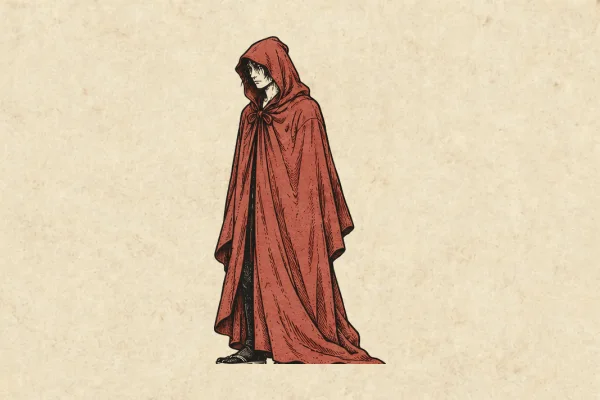
The fear in the street rumour is simple. A stranger in a red cloak takes children. Some tellings say he kills them. By 1940 that talk had reached Kitakyūshū, and Japanese pupils in colonial Korea. In Osaka, police seized a picture-story show that used the title. One writer, Asakura Kyōji, says the rumour was already moving by about 1936. The show was only caught in it. A second story shares the name: a voice in a school toilet offers a red cloak or a blue one, and both answers kill. That toilet tale is on the same page. No old charm is on file for the man in the street. He is second because the police acted, and the story itself is a child who does not come home.
The coin moved by itself
3. Kokkuri-san
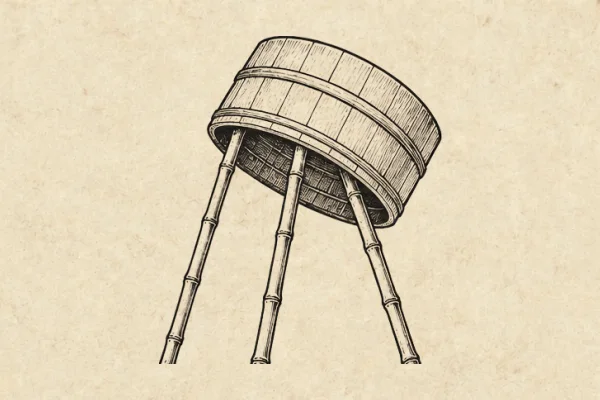
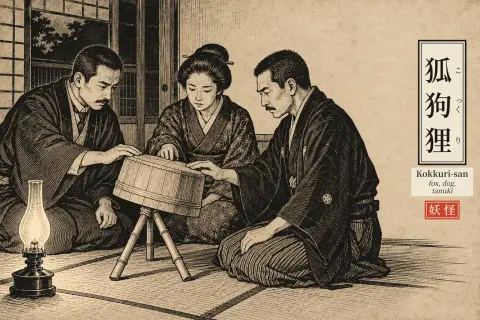
Kokkuri-san has no body. The fear is the coin. Every finger on it denies pushing, and the coin still slides. Players say a fox has come. In 1887, Inoue Enryō wrote that sailors had shown the game at Shimoda, around 1884. He tested it and said the players' own hands move it. No spirit does. A later doctor, Morita Masatake, wrote that a player can come to believe a spirit has taken them. In the 1970s, children played it at school. Some teachers gave strict warnings, because of what it did to the mind. It is not second. Nobody died, and no arrest is on file. It is third because schools treated the game itself as the danger.
The magazines ran the dog
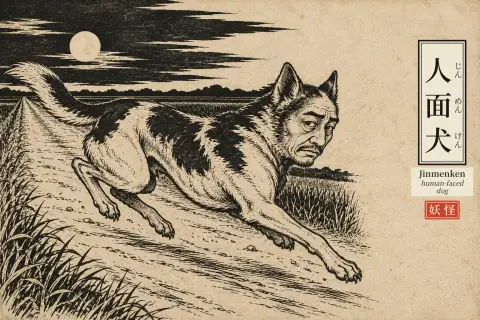
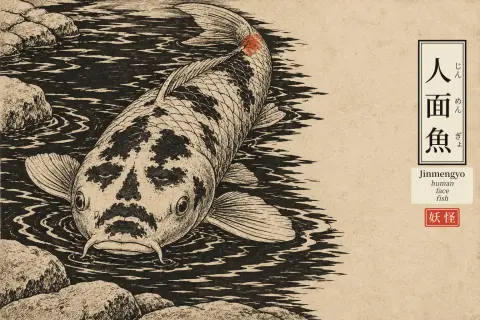
4. Jinmenken
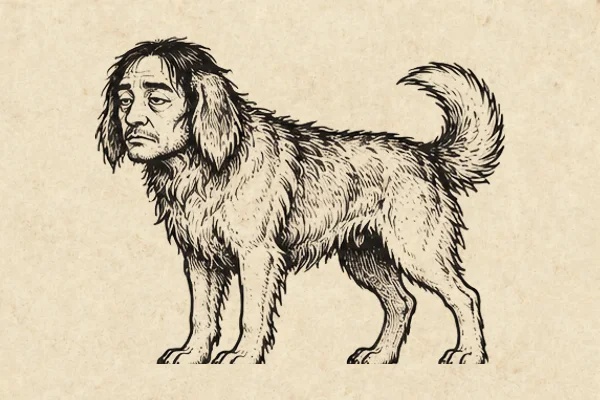
Jinmenken is a dog with a man's face. In 1989 and 1990 the rumour crossed Japan, and the mass media ran it. One writer later said a teen magazine had built the tale up on purpose. Other people have claimed that credit too. The idea is older than the highway chase. In 1810 a showman in Edo charged 12 copper coins to see a puppy with a human-looking face. Crowds came. The puppy died within days. The booth was real. The crash after a car it passes is only the rumour.
The railway sold the ticket
5. Kisaragi Station
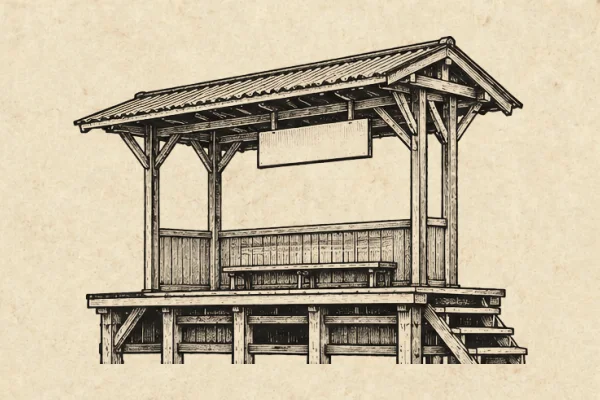
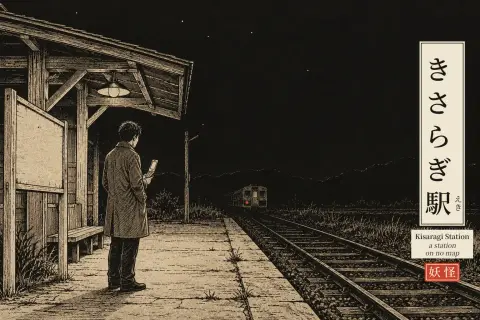
Kisaragi Station began as one night of messages, late on 8 January 2004, under the name Hasumi. The writer described a train ride that ended at a station nobody knew. In the telling, the messages then stop, and the writer is not heard from again. That silence is the scare people repeat. This page does not retell the ride. Enshū Railway, the line in the story, later got questions from the public. In 2022 it sold a souvenir ticket "to Kisaragi Station." The tickets were gone in about an hour. A film opened that same year. Wrapped trains in 2018 and 2021 advertised a manga that uses the tale. They were not a police matter.
The third stall went nationwide
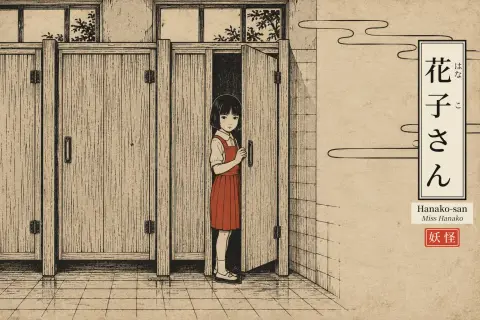
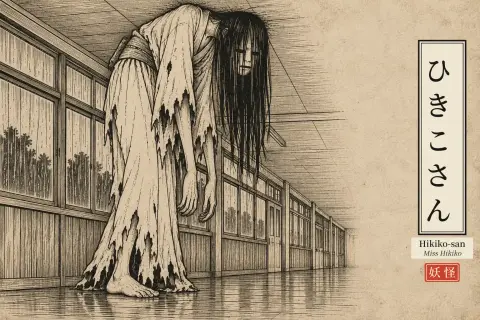
6. Hanako-san
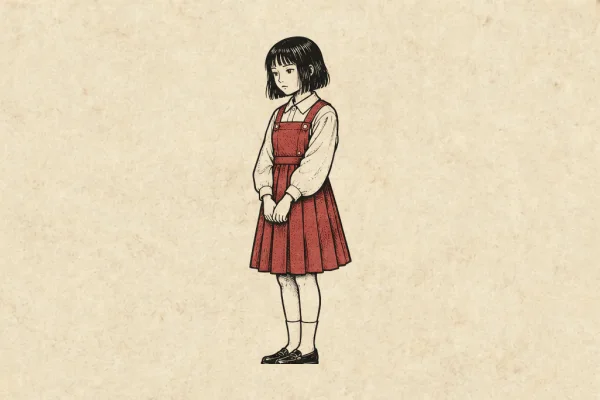
Hanako-san waits in the third stall. Knock three times and ask if she is there. A small voice may say yes. Researchers trace "the Third Hanako" to about 1950. By the 1980s, children across Japan were telling it. A 1995 film made her a protector, not a killer. One school version says a perfect test score makes her vanish. Children made that rule up. No panic and no arrest are written down. She ranks on reach. Almost any school could host the tale.
Readers were told not to search it
7. Kotoribako
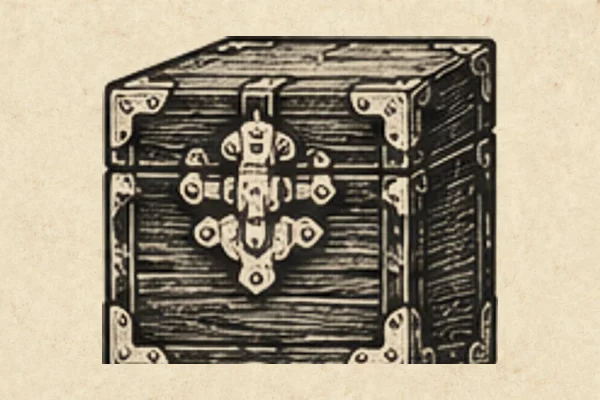
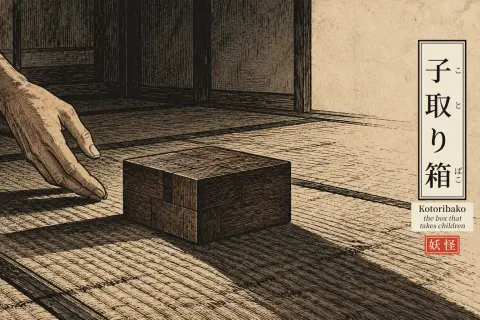
Kotoribako is a cursed box from one write-up on 6 June 2005, signed Kobako. The scare people repeat is that reading the story makes you ill. Readers wrote that they felt sick after reading it. In 2007 the name joined a list of words to avoid searching. Scholars say the local custom the write-up claims is not found in Shimane. It is one person's fiction. What the write-up puts inside the box is not repeated here.
Two films, and no street panic
8. Teke-teke
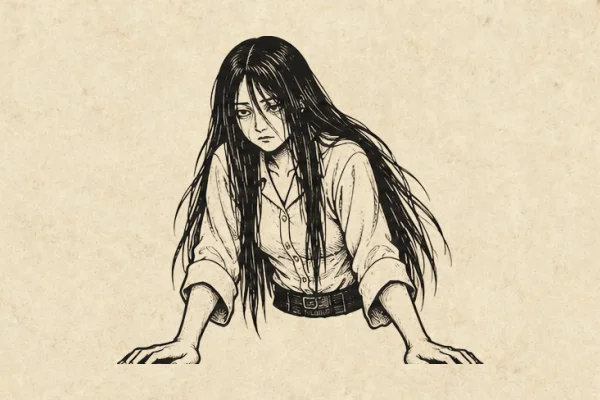
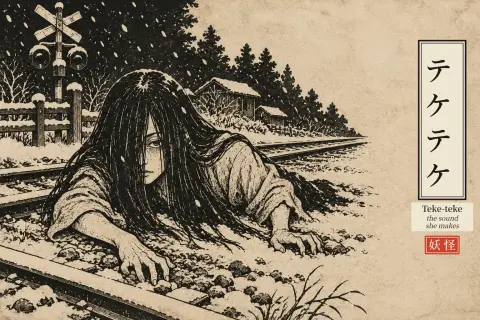
Teke-teke is the top half of a woman, pulling herself on her arms. The name is the sound those hands make. A manga used her in the 1990s. On 21 March 2009, two films opened in Japan on the same day. No school rule and no arrest turned up. A film is a public fact. It is not police in the street. That gap is why she sits this far down.
Many roads, and no incident
9. Turbo Baba
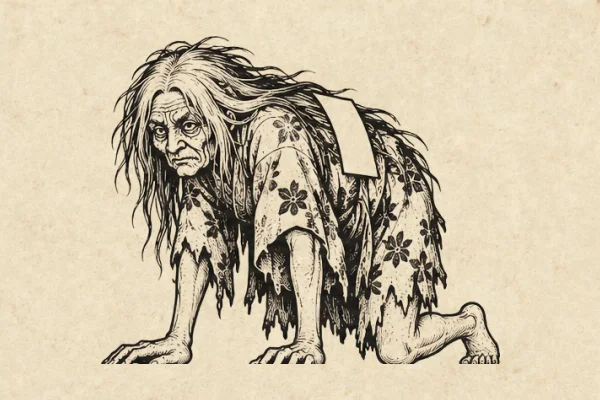
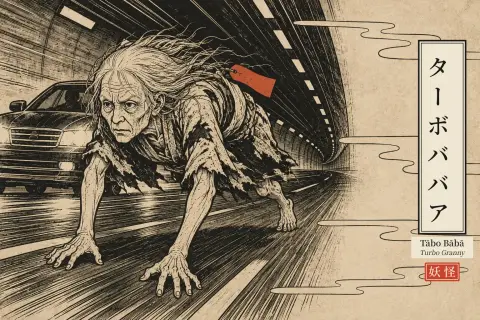
Turbo Baba is an old woman on all fours beside a moving car. A slip of paper on her back reads "Turbo." Nobody signed the first telling. A book had her by 1996. Cousin tales, a granny at some other speed, show up in many prefectures. None of them left a report we could find. A 2024 anime put a famous face on the name. That fame came later. It is not her rank.
People tried it
10. Hitori kakurenbo
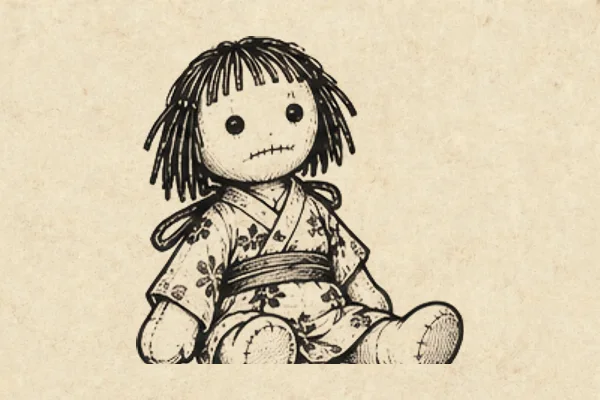
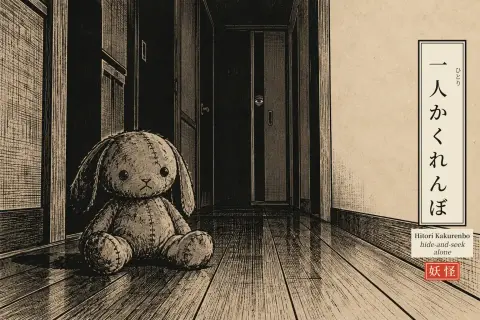
Hitori kakurenbo is a rite for one person, played with a stuffed doll. The scare is that something is said to come looking if you start. On 18 April 2007, a set of instructions appeared online. Readers wrote that they had tried it, and posted what they said came next. A film followed in 2009. Some call it an old game in western Japan. Others say a student club spread it to watch a rumour travel. No school ban turned up in the sources checked here. The steps are not on this page.
Still only a posting
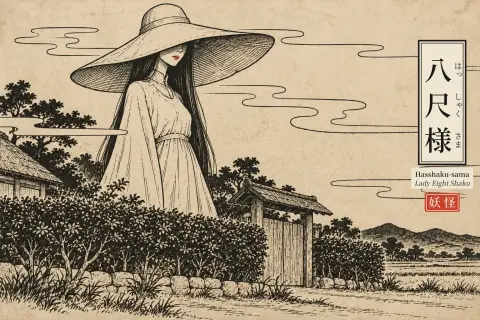
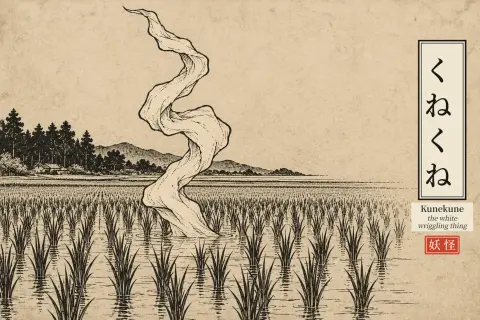
Hasshaku-sama began as one note on a message board, on 26 August 2008. Kunekune went up as fiction in 2003, and readers retold it as a memory. Both are widely known. No paper, no school rule, and no arrest is recorded for either, so they take no number. For who is deadliest when you meet them, see the scariest yokai.
All the legends on this page, and more such as the Okiku doll, are collected on the Modern Urban Legends page.
Going out as one of them for Halloween? See ten yokai costume ideas.