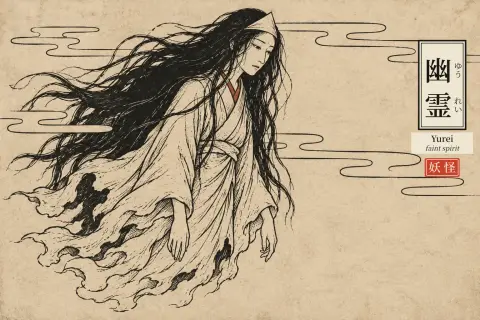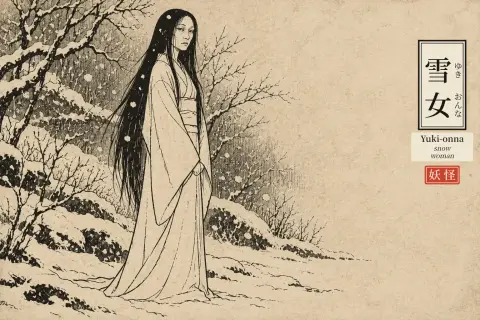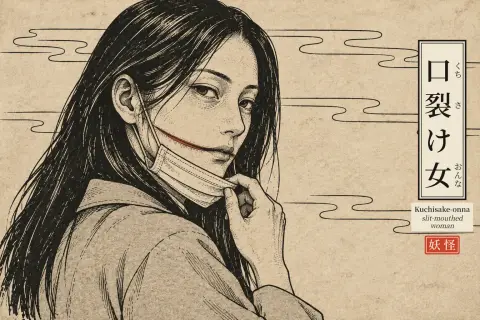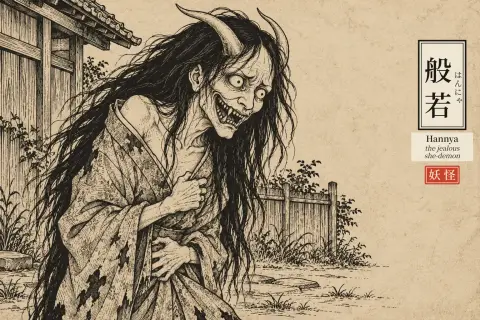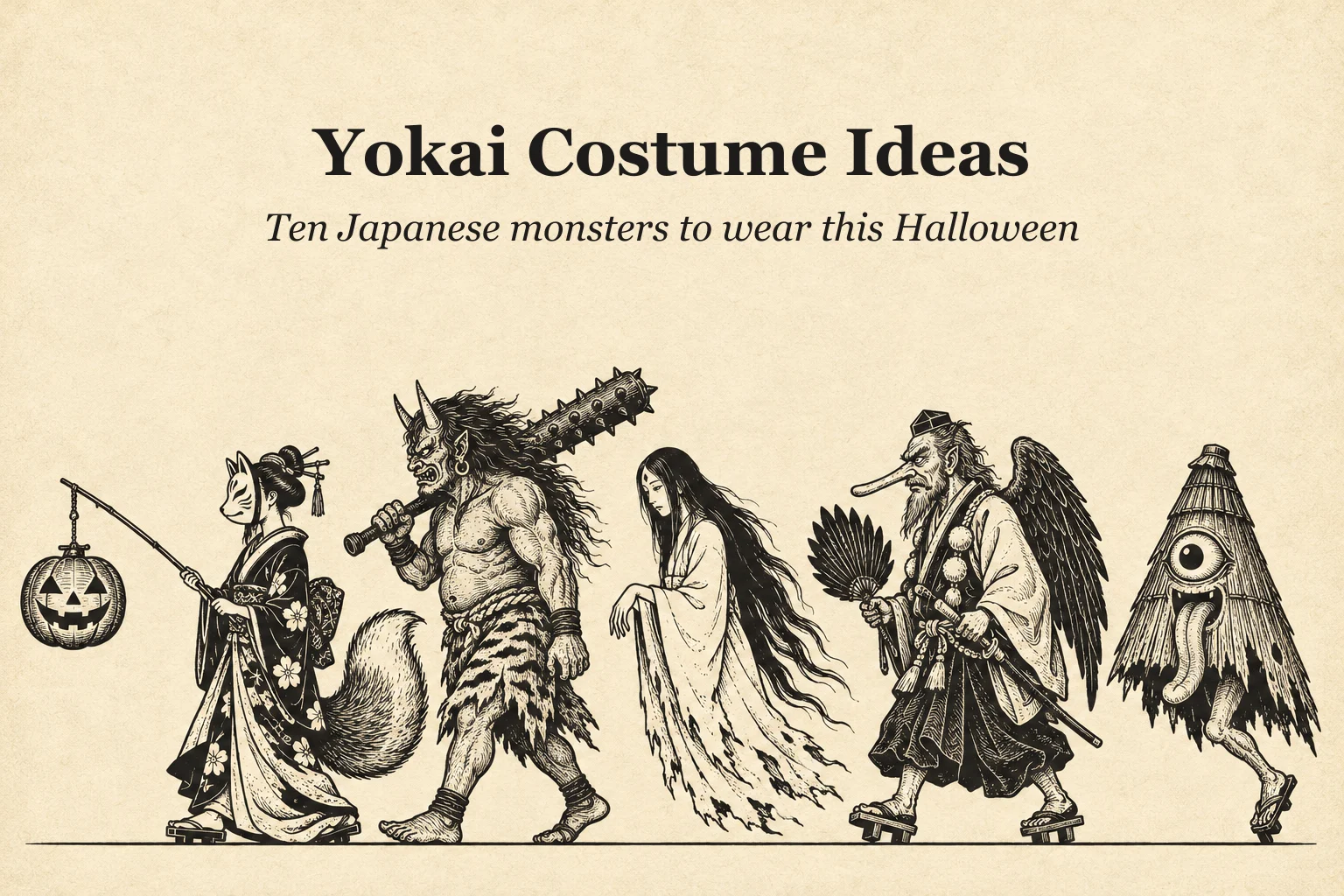
The easiest yokai costume is the yurei, the classic Japanese ghost. You need a white robe, long loose hair and limp hands. The hardest is the kasa-obake, a hopping umbrella with one eye.
A good yokai costume does not need to be perfect. It needs the two or three things that make people say its name. We took those details from the old pictures and stories, not from games or anime. Each section ends with the legend, so you have something to tell people at the party.
The list goes from easiest to hardest.
Easy: two ghost women in white
1. Yurei, the ghost
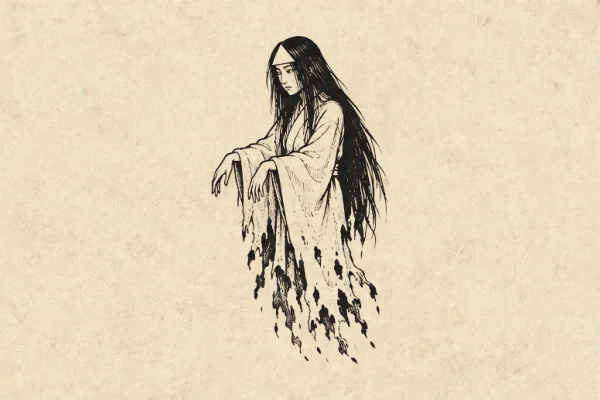
You need: a long white robe, long black hair worn loose, and a small white triangle of paper or cloth tied on your forehead.
The yurei wears what the dead were buried in. The triangle on the forehead, the hitaikakushi, was real Edo-period funeral dress. Hold your arms out and let your hands hang limp at the wrist. Old pictures give her no feet, so a robe long enough to hide your shoes helps. Why no feet? See why Japanese ghosts have no feet.
2. Yuki-onna, the snow woman
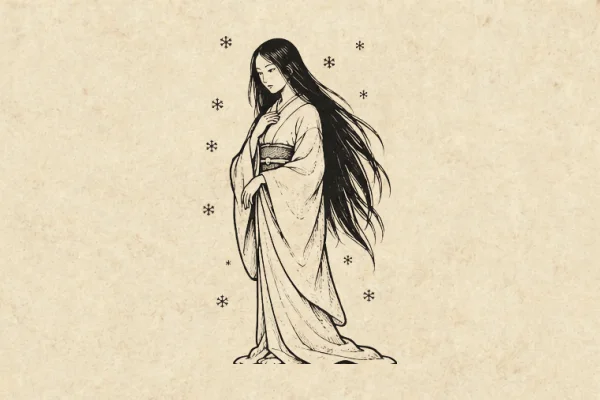
You need: a plain white kimono or long white dress, long black hair, very pale makeup, and a few paper snowflakes.
The snow woman appears to travellers lost in a snowstorm. In Lafcadio Hearn's 1904 story, she spares a young man. He must never tell anyone. Years later, he tells his wife, and his wife is her. Keep the costume plain and still. Her power is that she does not move much.
Easy: one mask does the work
3. Kuchisake-onna, the slit-mouthed woman
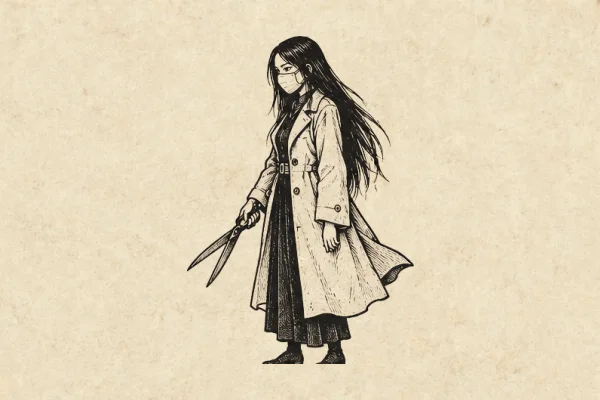
You need: a long coat, a large white face mask, long hair, and toy scissors.
In 1979, schoolchildren across Japan were afraid of a woman in a mask. She stops you and asks, "Am I pretty?" Answer yes, and she pulls the mask down. Her mouth is cut from ear to ear. The costume works because of the reveal: paint a red smile from ear to ear under the mask, and lower it only when someone asks. Read the full kuchisake-onna story.
4. Hannya, the jealous mask
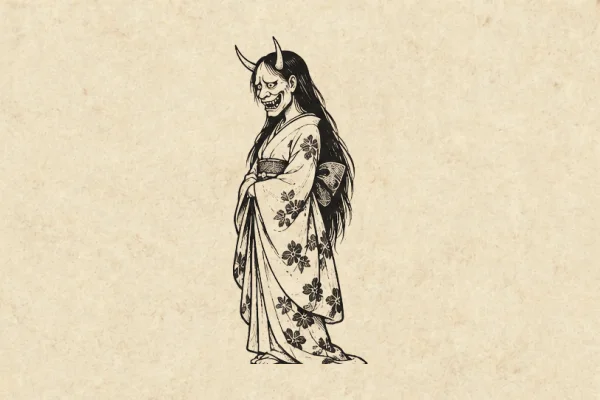
You need: a hannya mask (horns, gold eyes, a wide grin) and a kimono or robe.
The hannya is a mask from Noh theatre. It shows a woman so jealous she is turning into a demon. Actors wear it in plays like Aoi no Ue and Dōjōji. So the costume is a woman, not a monster. If anyone asks what the mask means, now you know. The colors are explained on the hannya mask page.
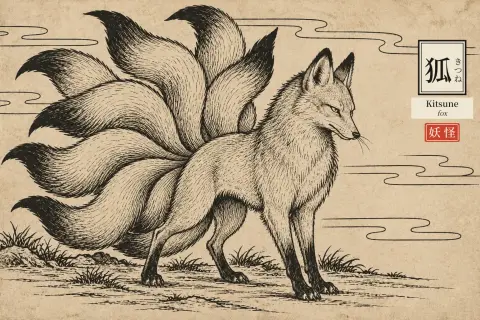
5. Kitsune, the fox spirit
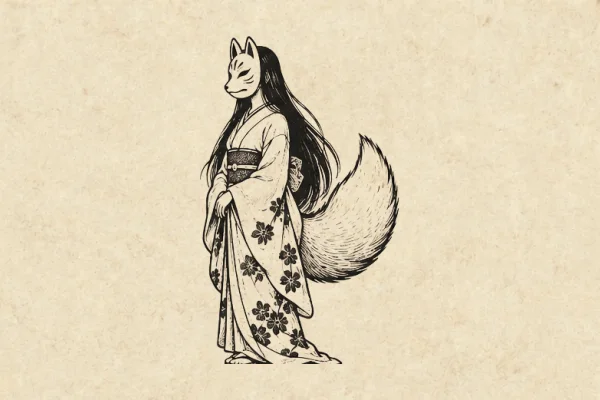
You need: a white fox mask with red markings, a kimono or robe, and one big bushy tail.
The kitsune is a fox that can take human shape. Foxes serve Inari, the god of rice, and fox masks are sold at shrine festivals all over Japan. In many tales, a fox in disguise cannot hide its tail. So let it show. A fox grows more tails as it ages, up to nine. See why the fox is everywhere. What the mask itself stands for is on the kitsune mask page.
Some making: horns or a long nose
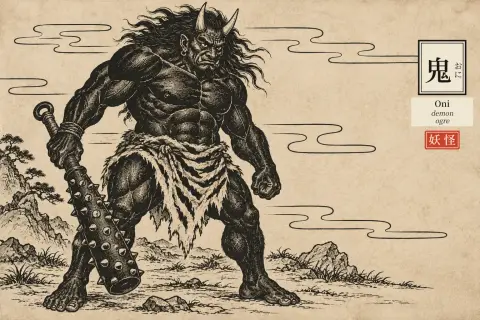
6. Oni, the ogre
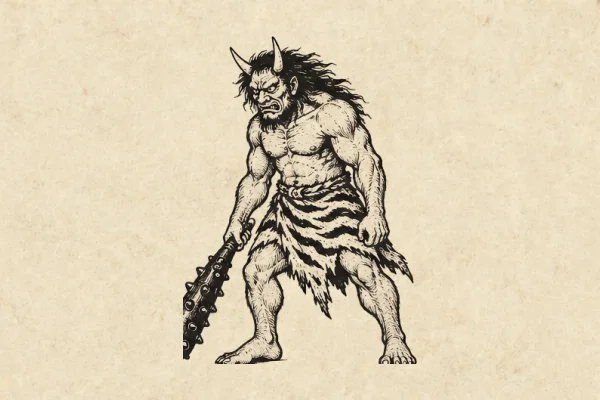
You need: two horns, a striped tiger-skin loincloth or skirt, red or blue face paint, and a spiked club.
The oni wears a tiger skin for a reason. The unlucky direction, northeast, was called ushitora, "ox-tiger." So the demon from that direction got ox horns and a tiger's skin. The club is a kanabō, an iron bar with spikes. A foam pool noodle with bottle caps makes a good one. See why oni have horns. If you wear an oni mask instead of face paint, the oni mask page says what it shows and how it differs from a hannya.
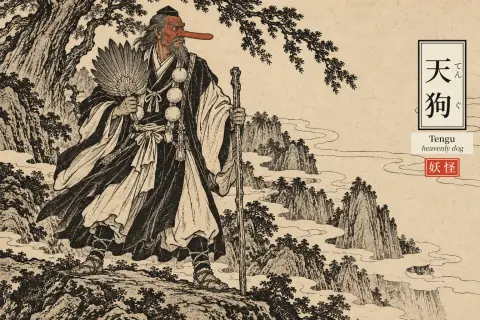
7. Tengu, the mountain goblin
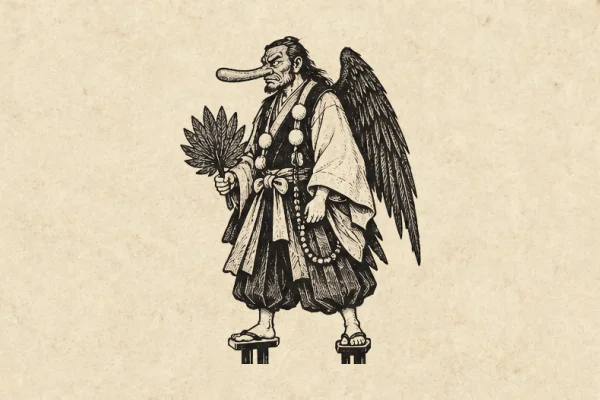
You need: a red mask with a very long nose, a monk's robe with round pom-poms, a feather fan, and tall wooden sandals.
The tengu lives in the mountains and dresses like a mountain monk. He carries a feather fan called a hauchiwa and walks on tall one-tooth sandals. The long nose came later: early tengu had beaks. See when tengu got long noses.
Some making: a creature to play
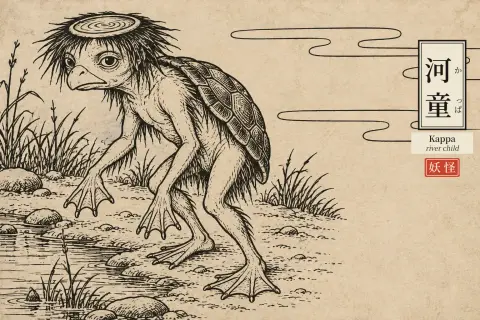
8. Kappa, the river imp
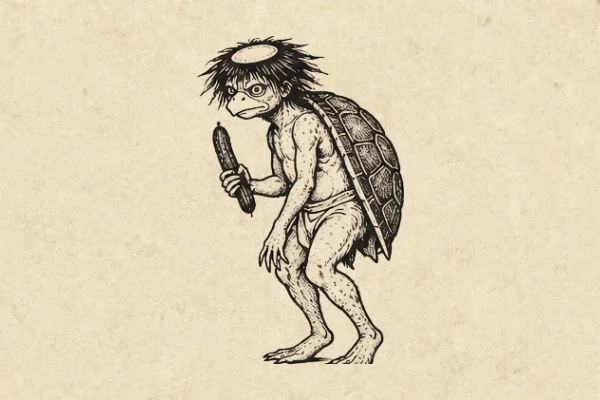
You need: green clothes, a turtle shell on your back, a small dish on top of your head, and a cucumber.
The kappa lives in rivers. The dish on its head holds water, and the water is its strength. If it spills, the kappa grows weak. That gives you a party trick: bow to a kappa, and it bows back and spills its water. Carry a cucumber, its favourite food.
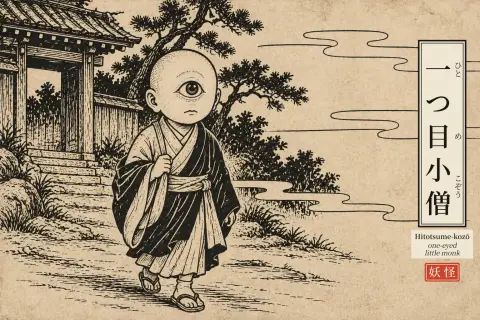
9. Hitotsume-kozō, the one-eyed boy
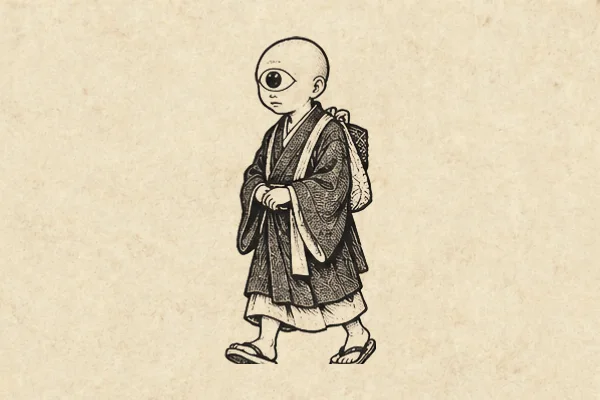
You need: a bald cap, a plain brown robe, and one big eye painted in the middle of your forehead, with your real eyes hidden by skin-coloured makeup or dark glasses.
The one-eyed boy is a temple page who appears on lonely roads. He rarely hurts anyone. He just looks at you. In parts of eastern Japan, families once hung a bamboo basket full of holes outside the gate on certain days. Faced with a basket of so many "eyes," the one-eyed visitor moved on.
A craft project
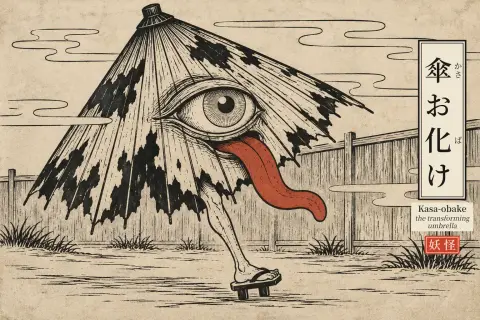
10. Kasa-obake, the umbrella ghost
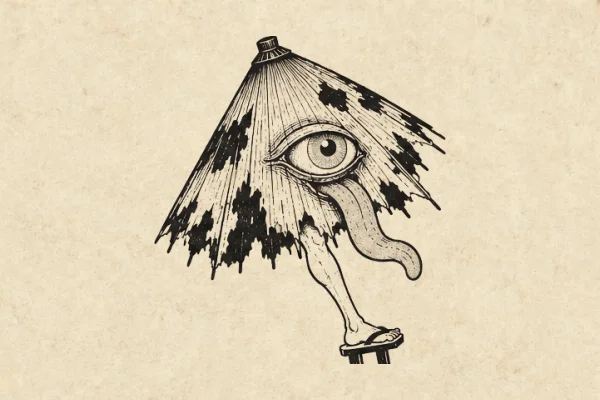
You need: an old umbrella, one big paper eye, a long red paper tongue, and one leg showing below.
The kasa-obake is a tsukumogami, a tool that comes alive after long years. Open an umbrella, point it down over your head and shoulders, and stick the eye and tongue on the outside. Hop on one leg if you can. It is the most work and the biggest laugh. See why tools turn into yokai at 100 years.
Why yokai make good costumes
Many of Sekien's yokai came with a picture and almost no story. Toriyama Sekien's picture books of the 1770s gave each one a name and one clear look. That is exactly what a costume needs: something people know at a glance.
Need a scary story to go with the costume? Read Japan's modern urban legends, from Hanako-san in the school toilet to Kisaragi Station.