Why a fox
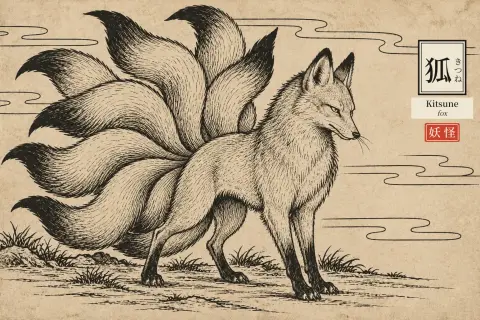
Fushimi Inari Taisha is the head shrine of about 30,000 Inari shrines in Japan. It says foxes are the messengers of Inari Ōkami, the shrine's name for Inari. People call these messengers byakko-san, the white foxes. The shrine adds two points. The deity itself is not a fox. And the messenger foxes are not ordinary foxes from the hills. Like the deity, they cannot be seen.
The fox has a second side. Japanese dictionaries say a fox can bewitch people, which means it fools them with a kind of spell. One mask museum puts both sides together. Its fox is Inari's messenger, and it can change its shape. It can bring a good harvest or wealth, or steal them.
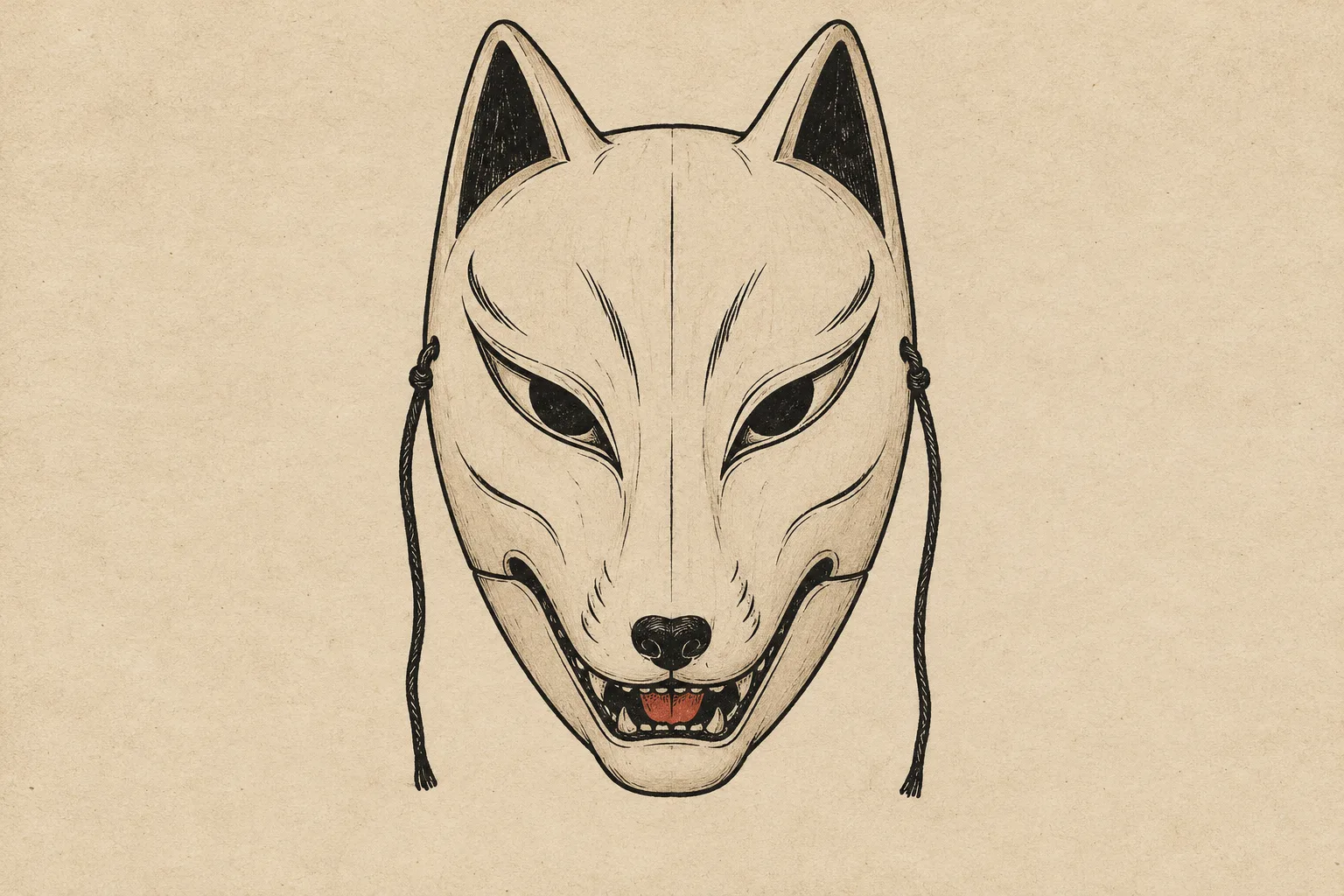
So the mask carries both faces of the fox. It is the shrine's messenger, and it is the animal that fools people. The kitsune page tells the fox's stories.
Where the mask is worn, and what for
You can see the fox mask in three main settings. Each one uses it for a different job.
Shrine dances. Kagura is a sacred Shinto performance at shrine festivals. Because the fox was believed to be Inari's messenger, dancers wore fox masks to pray for a good harvest. The Philadelphia Museum of Art has a fox mask from about 1725. It was made for kagura.
Kyōgen, the comic plays. Kyōgen is a comic play, often performed between Noh plays. Noh is a masked stage art where laughter is rare. In kyōgen, a fox character wears a fox mask. Noh shows the fox in a less direct way. A sign in the design of the mask or costume tells you it is a fox. In the Noh play Kokaji, the fox of Inari has a crown-like piece on its mask and costume.
In the kyōgen play Tsurigitsune, an old fox has lost all his relatives to a hunter's traps. He takes human form to stop the hunter. In the first half, he dresses as the hunter's uncle, a priest named Hakuzōsu. He wears a special mask for that part.
JAANUS, a dictionary of Japanese art, describes fierce kyōgen fox masks. They have a large snout, sharp teeth with the tongue between them, and sharply tapered eyes. The lower jaw is often a separate piece, so it can move.
Festivals. The Museum of Mask Arts has a paper fox mask from Kyoto, made in the 1960s. It is washi, Japanese paper, with water-based paint and a silk cord. Paper masks like this are mainly worn by ordinary people at festivals.
Tokyo's fox procession at Ōji comes from an old story. On New Year's Eve, foxes from all over the Kantō region, the area around Tokyo, gathered under a big enoki tree at Ōji. They put on their clothes there, so people call it the Shōzoku Enoki, the dressing tree. Then they went on to Ōji Inari Shrine. The woodblock artist Hiroshige drew this night in his series One Hundred Famous Views of Edo.
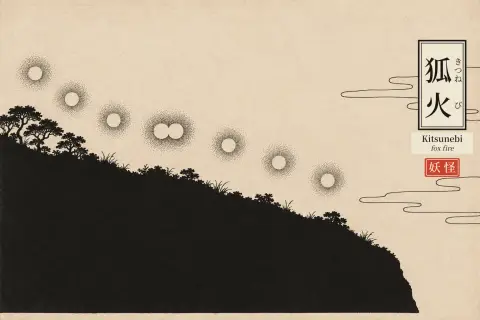
The Ōji fox procession acts out that print. It started in 1993. On New Year's Eve, about 300 people walk in old-style clothes and fox masks. They carry yellow lanterns for fox fires. They walk from Shōzoku Inari Shrine to Ōji Inari Shrine.
Kyoto has a fox wedding walk, the Kitsune no Yomeiri. It goes from Chion-in to Kōdai-ji, and the bride wears a fox mask.
How old is the fox mask?
No source we opened names the first fox mask. The Philadelphia kagura mask is dated about 1725. Two kyōgen fox masks in museums are from the 1700s too. Written records go back further than these masks. A Japanese dictionary quotes a 1660 book on kyōgen, Waranbegusa, for the fox mask used in Tsurigitsune.
The name
In Japanese the mask is 狐面, fox and mask. The same 面 is used for kagura and Noh masks, and for children's toy masks.
Frequently asked questions
Does a fox mask keep away evil?
Not as a general rule. Japanese Wikipedia mentions one fox dance in Yoshiwara, an old district of Edo, the old name for Tokyo. That dance was done to drive off bad luck. It is one dance, not every fox mask.
Do the colors of a fox mask mean anything?
Not in the museum records and dictionaries we read. Fushimi Inari Taisha calls Inari's messengers white foxes. But none of the sources says a white mask stands for them.
Sources
- Fushimi Inari Taisha, FAQ: foxes and Inari shrines
- Kotobank: 狐, 面
- JAANUS, "kitsune"
- the-noh.com: fox masks in kyōgen and Noh, What is Kyogen?
- Philadelphia Museum of Art, fox mask, c. 1725
- Kyōgen fox masks: Nelson-Atkins Museum of Art, Horniman Museum
- Museum of Mask Arts, washi fox mask, Kyoto, 1960s
- Ōji fox procession: GO TOKYO, nippon.com on Hiroshige's print
- Japanese Wikipedia, 狐面