Why the face looks like this
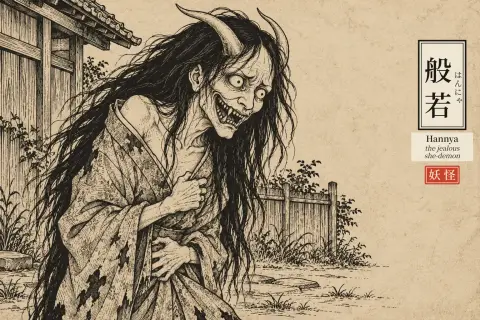
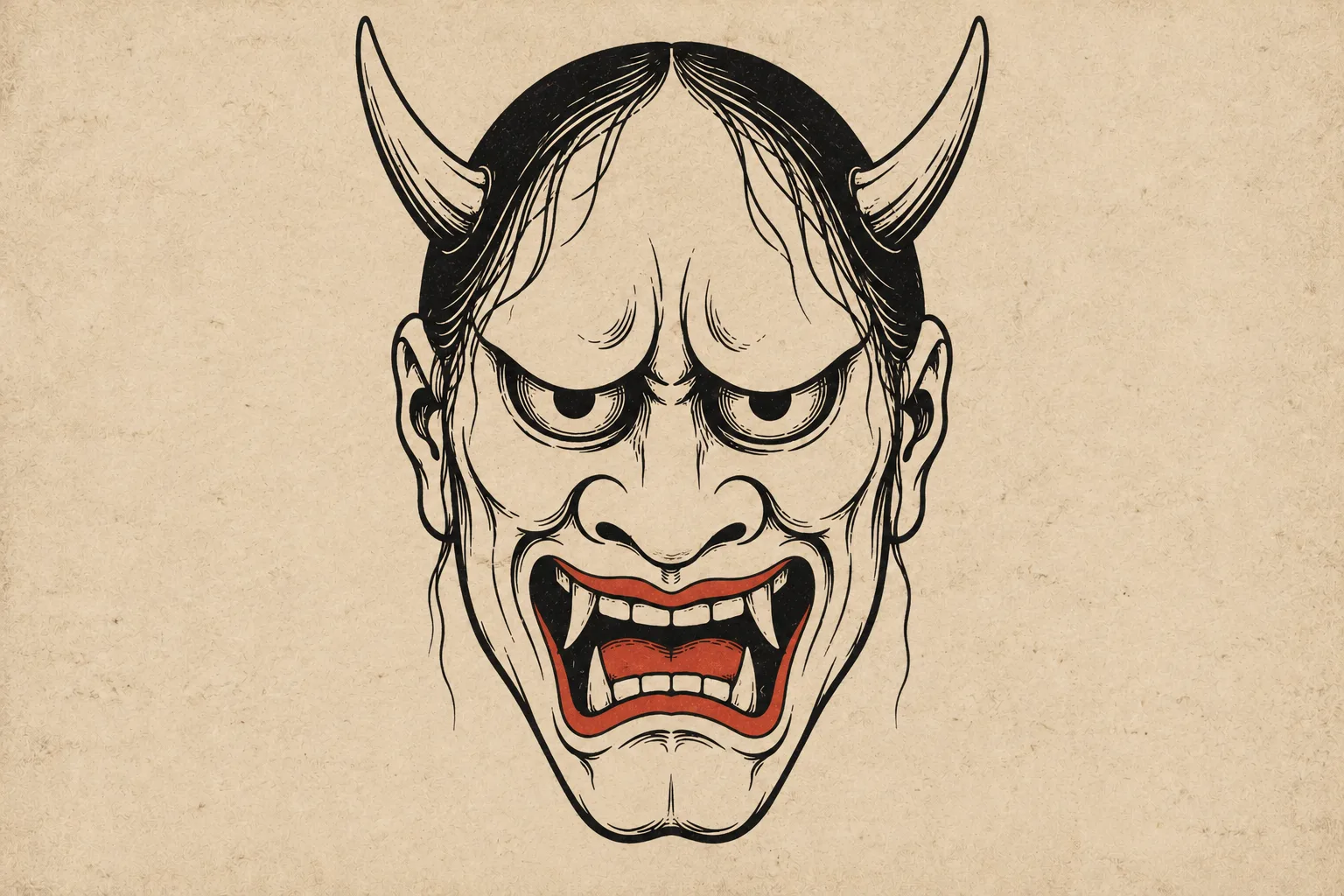
In Noh, a classical Japanese theater, this mask is for the role of a woman who has become a demon. JAANUS, a dictionary of Japanese art, calls her a female serpent-demon full of jealousy and hatred. Two horns rise from the sides of the forehead. Metal eyes sit half hidden under heavy brows. The open mouth has gold teeth and upper and lower fangs.
The actor can change the feeling of this face by tipping the mask. Tipped up, called terasu, the face lightens. Tipped down, called kumorasu, it looks sad.
Which color
The-noh.com, a site about Noh, groups three plays as san-kijo, "the three demon women." In the second half of each play, the main actor wears a hannya. The color changes with the woman.
White is for the play Aoi no Ue. The woman is Lady Rokujō, a noblewoman, and the white marks her high rank.
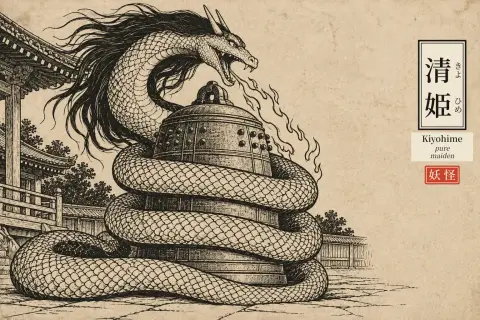
Red is for the play Dōjōji. The woman turns into a snake in a rage, and the red marks that passion. Her story is on the Kiyohime page.
Black is for the play Kurozuka. She first appears in human form, but she is a demon of the mountains in Tōhoku, in the northeast. The black marks that darkness.
Many people choose this face for a tattoo, because it shows a woman turned into a demon by jealousy.
How “Hannya mask” is spelled
般若 · Hannya mask · spelled han-nya
Why a demon mask has a name that means wisdom
JAANUS says several stories explain the name. The one it calls most likely is about a carver, Hannya-bō, who worked in the late 15th or early 16th century. His name is said to have stayed on the mask.
般若 spells the sound of the Sanskrit word prajñā in Chinese characters. Kotobank, a Japanese dictionary site, says it means wisdom. It is not ordinary cleverness, but the wisdom that sees what is real.
The two characters only carry the sound. 般 stands for "han," and 若 stands for "nya." Say it han-nya. Split apart, the characters do not mean wisdom, and they do not mean "demon."
Frequently asked questions
Is a hannya mask evil, or a protection?
In the Noh sources we read, it is a stage role: a female demon full of jealousy and hatred. These sources do not call it protection or good luck.
Is there a male hannya?
Not in the sources we read. JAANUS calls the hannya female, and the-noh.com lists it as a female mask in its group for ghosts, the spirits of the dead with regrets.
What is the difference between a hannya and an oni mask?
Ask whose face it is. Most often, a hannya is a woman who became a demon through jealousy. It is also worn for a demon that first appears in human form, as in Kurozuka. Many other demons get other masks, such as the shikami, a scowling mask for a bad demon. See the oni mask page.
Sources
- JAANUS: hannya, shikami
- the-noh.com: "San-kijo", "Masks" (the tilts, and the mask groups)
- Kotobank, 般若, entry by Abe Jion
- Museum masks: The Met, hannya by Yūkan Mitsuyasu, V&A, hannya mask, about 1650–1750