Why it looks like this
A daruma copies Bodhidharma, a Buddhist monk from southern India, sitting in meditation. Dictionaries describe it as a paper doll with no hands or feet, shaped like a monk in a red robe. Its bottom is weighted, so it stands up again when you knock it over.
That is why a common saying is tied to it: fall down seven times, get up eight. One dictionary calls it a lucky charm, bought to wish for good business, good fortune, and success.
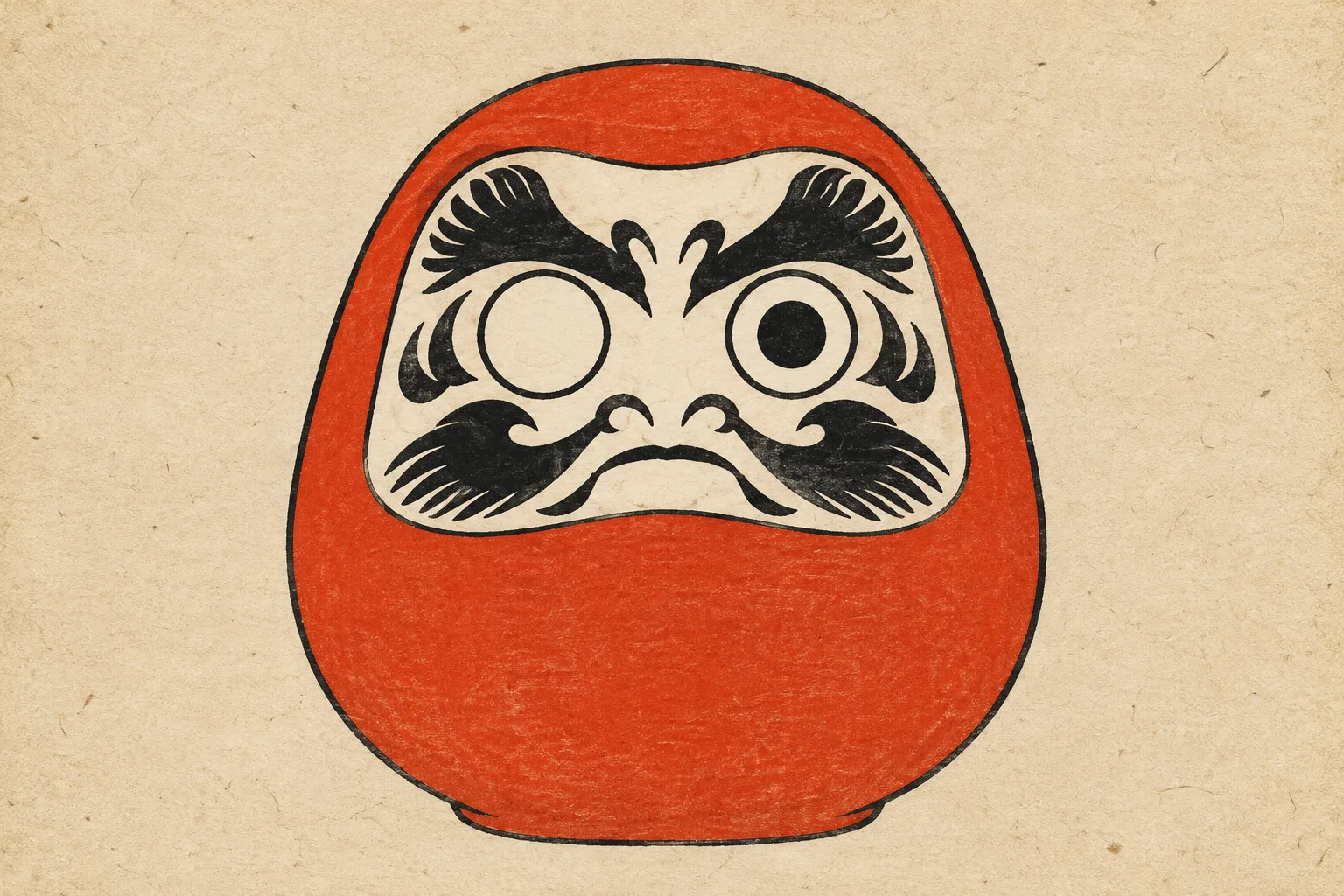
The face of a daruma from Takasaki, a city in Gunma Prefecture, has its own meaning. Shōrinzan Daruma-ji, the Takasaki temple that calls itself the birthplace of the lucky daruma, says the eyebrows are two cranes facing each other. The moustache is two turtles. The Gunma tourist guide adds that both animals stand for long life.
Which eye first?
Make your wish and paint the first eye. When the wish comes true, paint the second eye.
Why paint the eyes at all? A museum record says painting an eye asks Daruma to help with your wish. At Shōrinzan Daruma-ji, a priest can paint the first stroke of an eye for you. The temple calls this kaigen, "eye-opening," and prays to put a soul into the doll.
Face the daruma and paint the eye on your right. Shōrinzan Daruma-ji tells you to do this. That eye is the daruma's own left eye. The Gunma tourist guide and Japanese Wikipedia say "the left eye," so we read them as the same eye.
The temple gives one more choice. If a year passes safely, you can paint the other eye as a thank-you. Election candidates use the same custom. They paint one eye when they run and the other when they win.
In eastern Japan, many daruma are sold with blank white eyes. But not every daruma starts blind. In western Japan, more of them have black eyes and wear a headband. Japanese Wikipedia says Matsukawa daruma from Sendai come with both eyes, out of respect for the one-eyed lord Date Masamune.
What do you do with it after?
After about a year, take it to a temple or a shrine, and it is burned there. The Gunma tourist guide also lists New Year fairs. A blog post on Japan's official tourism site says to return it to the temple where you bought it, even if the wish did not come true.
Shōrinzan Daruma-ji takes old daruma every day from 9:00 to 17:00. There is no fixed fee, and it accepts only daruma, omamori charms, and ofuda. It burns them in a memorial service, and the biggest one is on January 15. Daruma are also burned with New Year decorations in dondo-yaki, a fire held around the 14th or 15th of the first month.
Do the colors mean something?
Red is the most common color. The red copies Bodhidharma's red robe. One encyclopedia adds an old belief: smallpox disliked red, so red daruma were placed by the beds of sick children.
Other colors are sold too, but their meanings change from source to source. The Gunma tourist guide says purple is for health and long life, gold or yellow for wealth, and blue for winning in sports. It also says these meanings may vary. A blog post on Japan's tourism site gives a different list. For example, it says blue is for school success. The Gunma guide says red is bought for general good fortune.
Where the daruma comes from
The toy came first. One encyclopedia says a weighted doll that stands back up came first, in an earlier age called the Muromachi period. Daruma made of paper appeared later, probably in the early 1700s.
Takasaki has its own story of how the daruma began. After the Mount Asama eruption of 1783 and the famine, Daruma-ji's ninth head priest carved a wooden mold. To help local farmers, he taught a man from Toyooka village to make paper daruma, and they were sold at the temple's New Year festival. Today the Gunma guide says about 80 percent of daruma are made in Takasaki.
How “Daruma” is spelled
達磨 · Daruma · spelled daru-ma
The name
The doll is named after Bodhidharma. His name in Japanese is spelled 達磨, read daruma. The two characters carry the sound of the Sanskrit name. They do not add up to a meaning of their own.
Frequently asked questions
What does a daruma with one eye mean?
Someone made a wish, and it has not come true yet. You paint the second eye when it does.