Why it looks like this
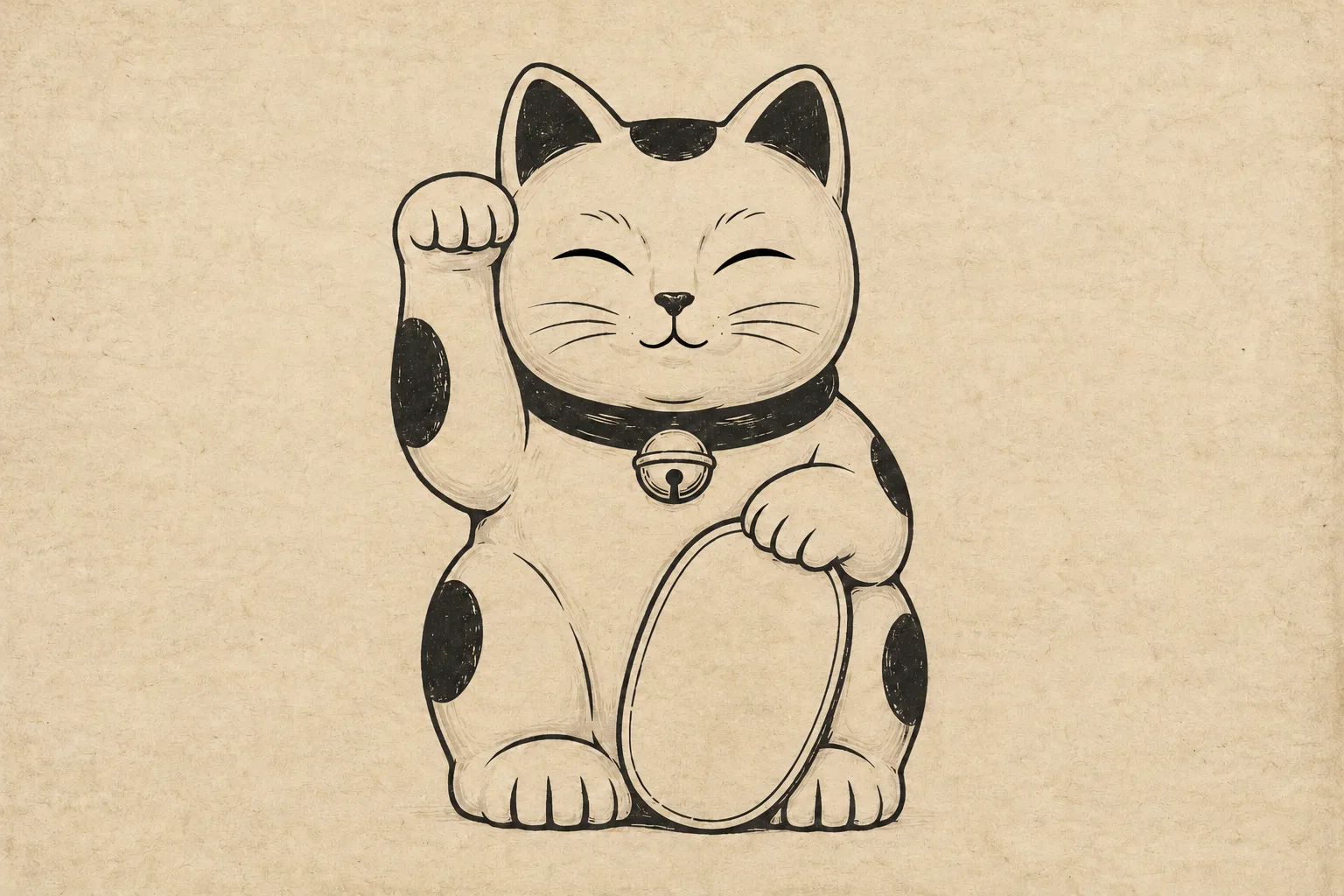
One dictionary describes a seated cat raising its right or left front paw, in the pose of beckoning people. Most are ceramic or clay. Some are papier-mâché.
Shops that serve customers display it, to beckon customers and treasure. In pleasure quarters and restaurants, there is also a custom of buying one at New Year and placing it at the entrance.
Why a cat? Japanese Wikipedia points to an old Chinese book, Youyang Zazu, from the Tang dynasty. It says that when a cat washes its face and its paw goes above its ear, a guest will come. An older Japanese encyclopedia also links the pose to a Chinese story like this.
Left paw or right paw?
Tokoname, a city in Aichi Prefecture, is one of the two main places that make maneki neko. There, the reading is simple. The Aichi Prefecture tourism site gives it this way:
| Paw | Meaning (Tokoname style) |
|---|---|
| Right paw raised | Beckons money |
| Left paw raised | Beckons customers |
This is not the only reading. Dictionaries say only "the right or the left paw." Gōtoku-ji, a temple in Tokyo, has right-paw cats, but it does not say they mean money. Japanese Wikipedia links the right paw to its being a samurai family's temple. Tokonyan, a giant cat in Tokoname, raises its left paw.
Do the colors mean something?
Yes, but the lists do not agree. Japanese Wikipedia says white and black were the main colors in the past. Many other colors are recent, partly from the feng shui boom.
| Color | Aichi tourism site (Tokoname style) | Japanese Wikipedia |
|---|---|---|
| White | Beckons good fortune | Good fortune in general |
| Black | Prevents illness | Wards off bad luck |
| Gold | Money luck | Money luck |
| Pink | Love | Love |
| Red | Wards off evil | Health and long life |
| Silver | Long life | — |
| Blue | Traffic safety | — |
| Yellow | — | Money |
The two sources disagree on red. Wikipedia explains its reading: the smallpox god was said to dislike red. A calico cat has no separate meaning there. Its spots count as part of white.
Why some hold a coin and some do not
Many maneki neko hold a large koban, an old gold coin. The Aichi tourism site says the big koban stands for good business.
The cats of Gōtoku-ji hold no coin. The temple explains why. Its cat brings you en, a good tie with people. It does not give you luck by itself. What you do with that tie is up to you.
Where the maneki neko comes from
There are many stories of where the maneki neko began. Most are set in Edo, the old name of Tokyo. Accounts differ. Japanese Wikipedia lists them as separate theories.
- Gōtoku-ji. A lord was returning from hunting with hawks. A cat at the temple gate beckoned him inside, and then a sudden thunderstorm hit. The temple names him as Ii Naotaka. With his support, the temple was revived in 1633.
- Asakusa. Cats called Marushime cats were sold near Sensō-ji temple and Asakusa Shrine. They are the cats that the 1852 diary below calls maneki neko.
- Imado. Imado is a pottery district in Asakusa. Japanese Wikipedia cites a record from 1852 about an old woman and a dream.
- Ryōgoku. One encyclopedia says the custom is said to start in the 1780s. A brothel there showed cats painted gold and silver at its front. After that, it says, clay ones were made in large numbers in Imado.
The oldest written use of the name we found is from 1852. A diary from that year, Fujiokaya Nikki, calls the Marushime cats "maneki neko." A print by Hiroshige from the same year shows a shop selling them.
Today, the two main places that make them are both in Aichi Prefecture. Seto-style cats are slim porcelain. Tokoname-style cats are stocky earthenware. Tokoname is said to have started about 50 years after Seto. The Aichi tourism site says Tokoname-style cats are said to hold about 80 percent of the market in Japan.
<!-- kanji -->The name
Maneki neko is written 招き猫. The first character, read mane, is the verb "to beckon" or "to invite." The second is "cat." So the name means what the figure does: a beckoning cat.
Frequently asked questions
Is a maneki neko a yokai?
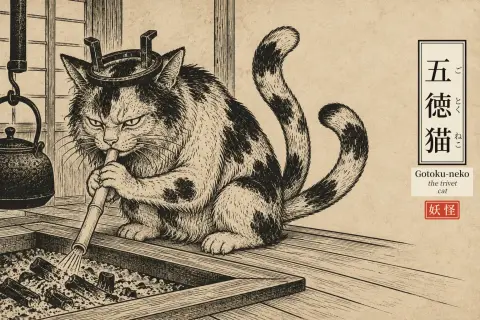
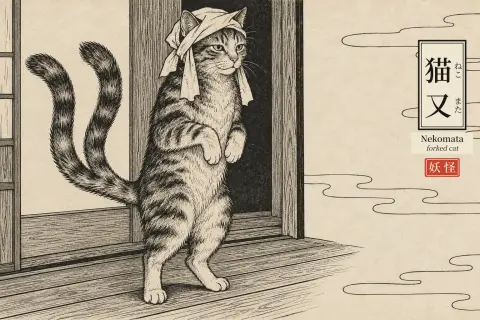
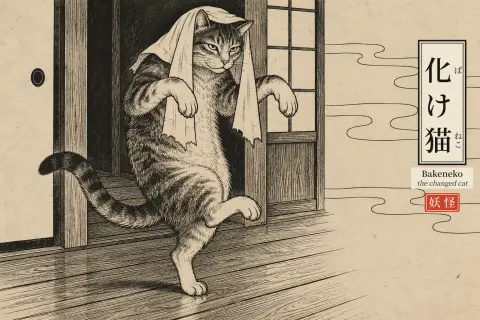
No. Dictionaries call it a lucky object. None of the sources we read call it a yokai. Japan does have cat yokai, though, such as the nekomata, the bakeneko and the gotoku-neko.
Is the maneki neko from China?
Most origin stories in the sources we read are set in Edo, old Tokyo. The idea of a cat calling guests is linked to old Chinese writing. Japanese Wikipedia also says many maneki neko in China hold the coin in the left paw.
What if both paws are raised?
You may see cats with both paws up. None of the sources we read give a meaning for that.
What should I do with a maneki neko after my wish comes true?
At Gōtoku-ji, many people offer a cat figure at the temple after their wish comes true. There is no fixed time for this.
Is there a Maneki Neko Day?
Yes, September 29. The Japan Maneki-neko Club set the date. Festivals are held around then in Ise, Seto and other towns.