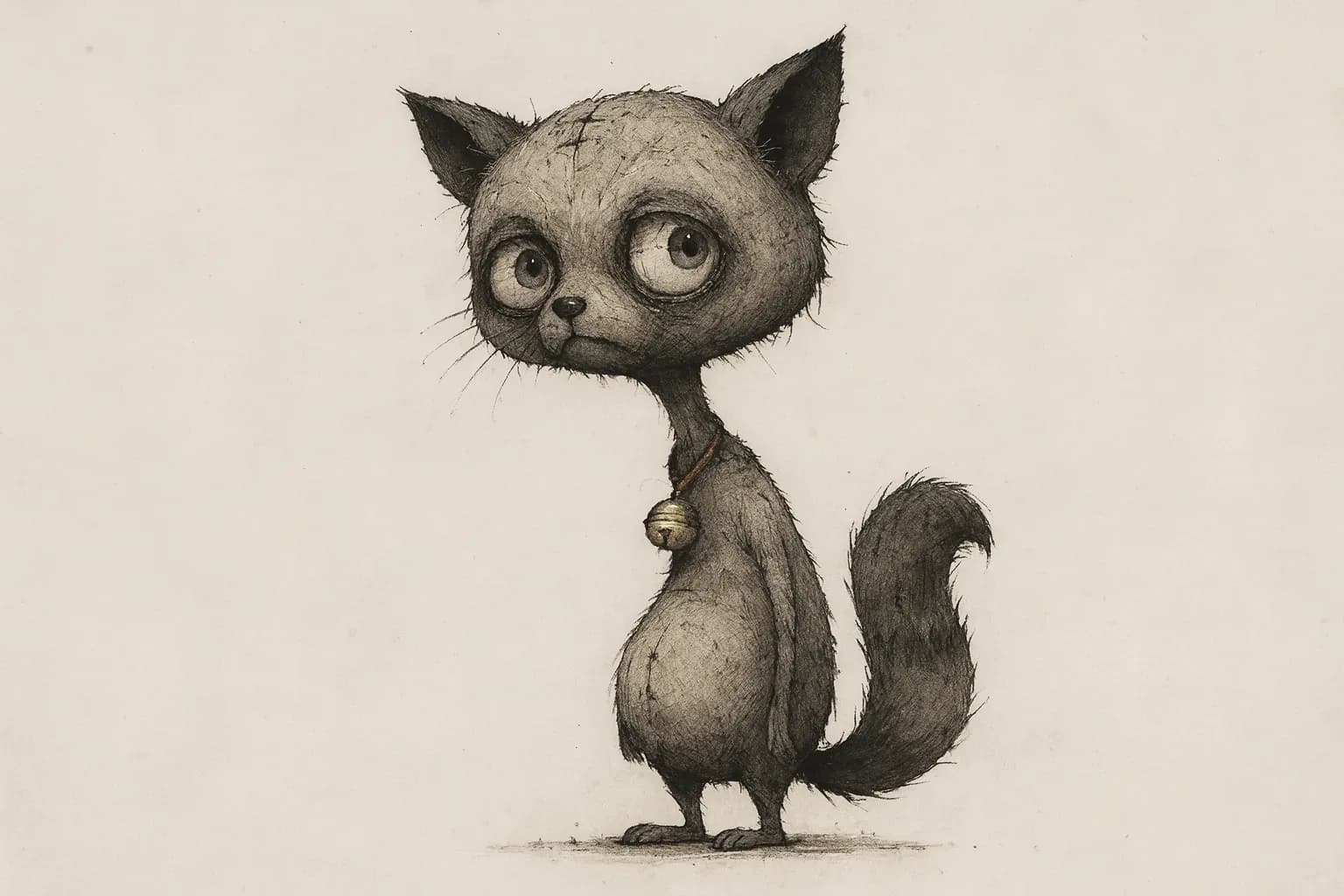
Edo-period households kept an eye on their older cats. Not out of cruelty, but caution: a cat that lived too long, grew too heavy, or lingered too close to the household's oil lamps was suspected of turning into a bakeneko — a "changed cat" that could rear up on two legs, ape its owner's voice, and settle old grudges with a household it had watched for years.
What does it look like?
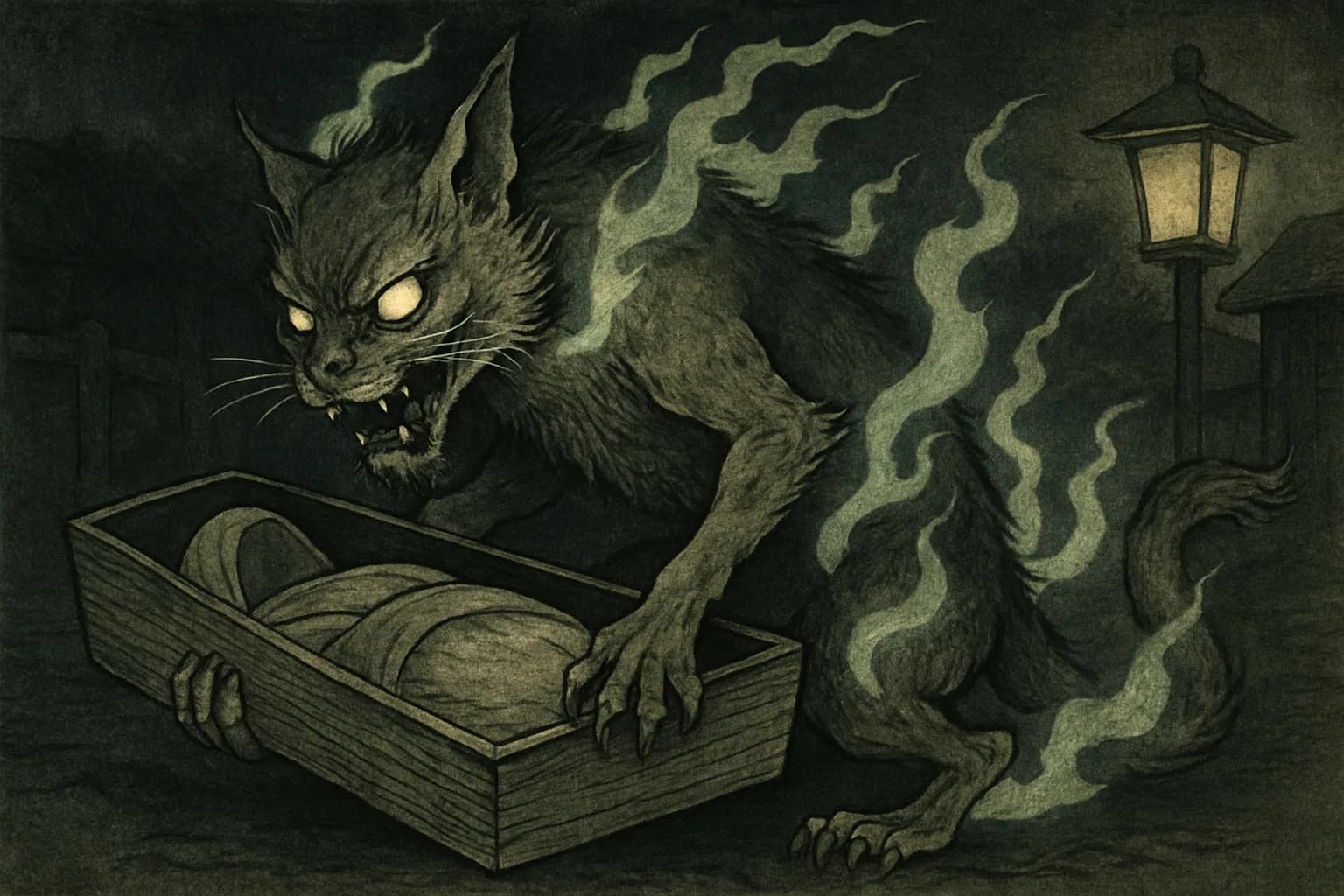
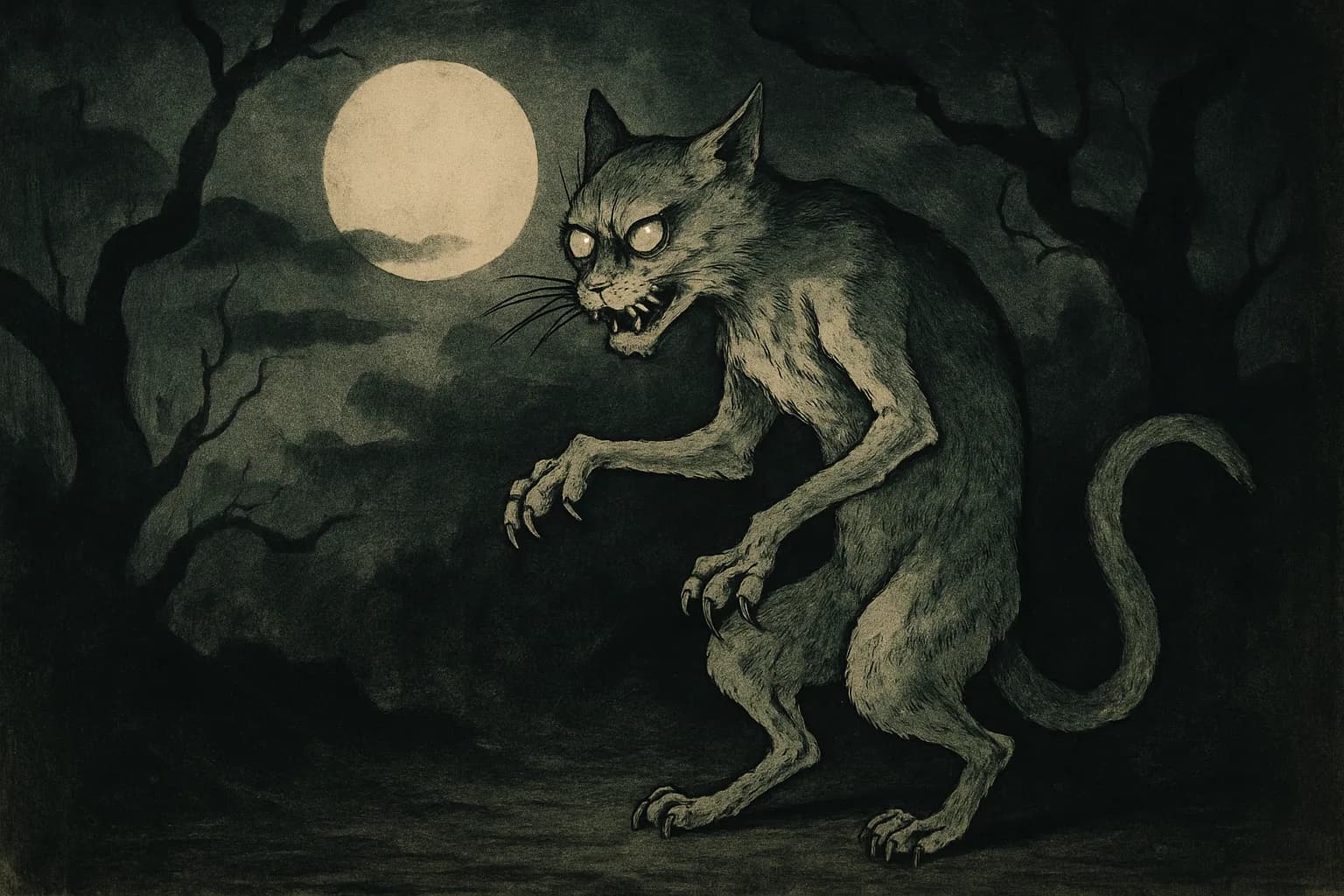
Most of the time a bakeneko looks like an ordinary cat, which is exactly the problem. The transformation is behavioral before it is physical: it starts walking upright on its hind legs, its shadow falls wrong, and it begins to speak, sometimes in the voice of a person it has heard often enough to imitate. In its fully monstrous form, folklore gives it a wide grinning mouth and the ability to throw off its cat shape entirely and pass as a human, most often the very owner who raised it, or an old woman living alone. Artists of the Edo period, especially the prolific cat-lover Utagawa Kuniyoshi, drew this halfway state again and again: cats standing on two legs in human dress, going about human business with a housecat's face.
How a cat becomes a bakeneko
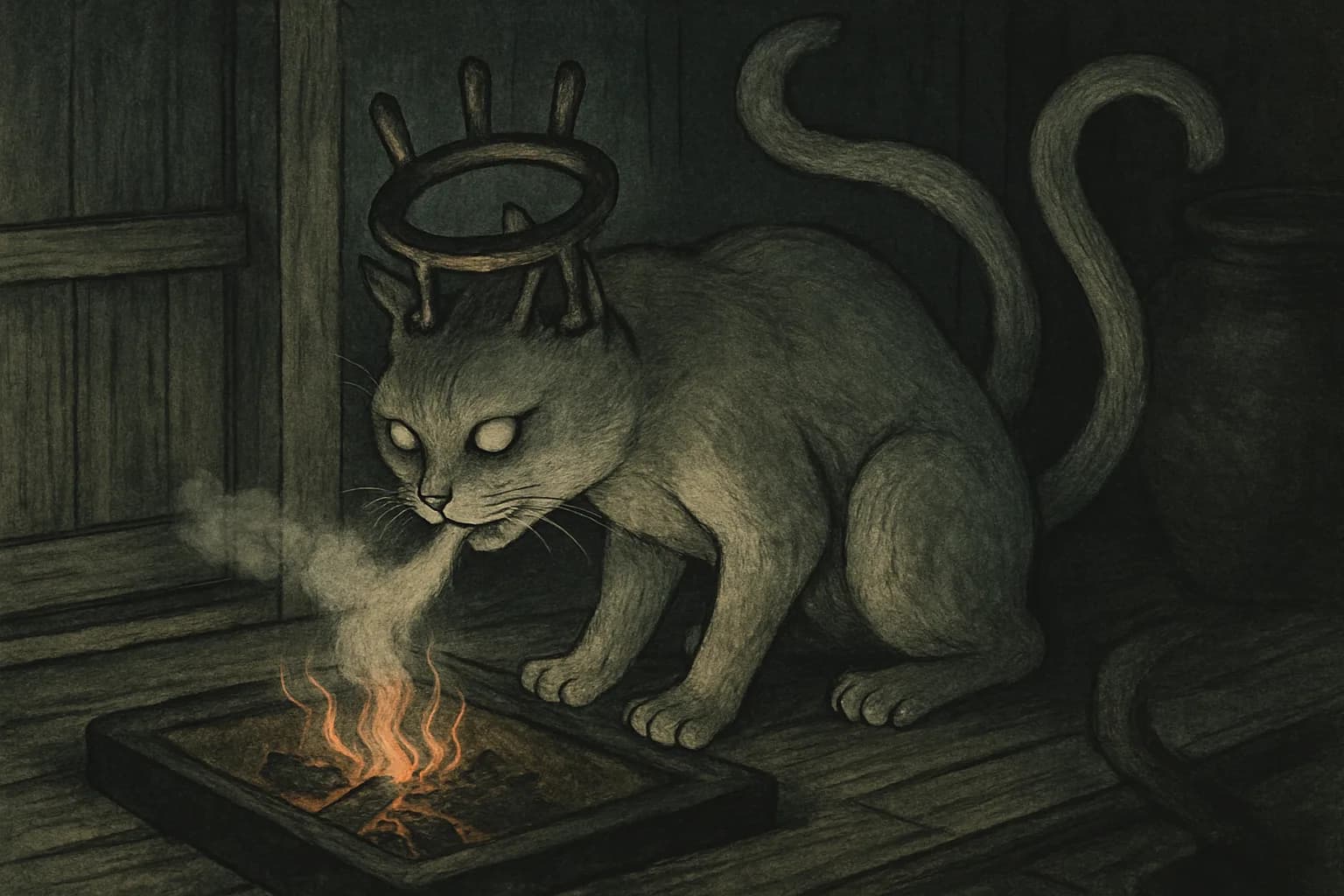
Folk belief listed several warning signs. Age was the main one — a cat that reached ten or thirteen years was already suspect. Size mattered too: an unusually large or heavy cat was assumed to be storing power. A long, untrimmed tail was another red flag, since a tail that grew long enough could eventually split in two, turning the cat into the more dangerous nekomata. And there was a stranger, very specific accusation: cats seen licking the fish oil from a household's andon lamps at night, their eyes catching the flame, were treated as cats already halfway transformed.
That last belief left a real mark on how people kept cats. Owners nervous about long tails favored kittens born with naturally short or kinked tails, a preference folklorists connect to the stubby-tailed cats still common in Japan today. Japan shares that trait with many cats in Southeast Asia and southern China.
The Nabeshima cat uprising
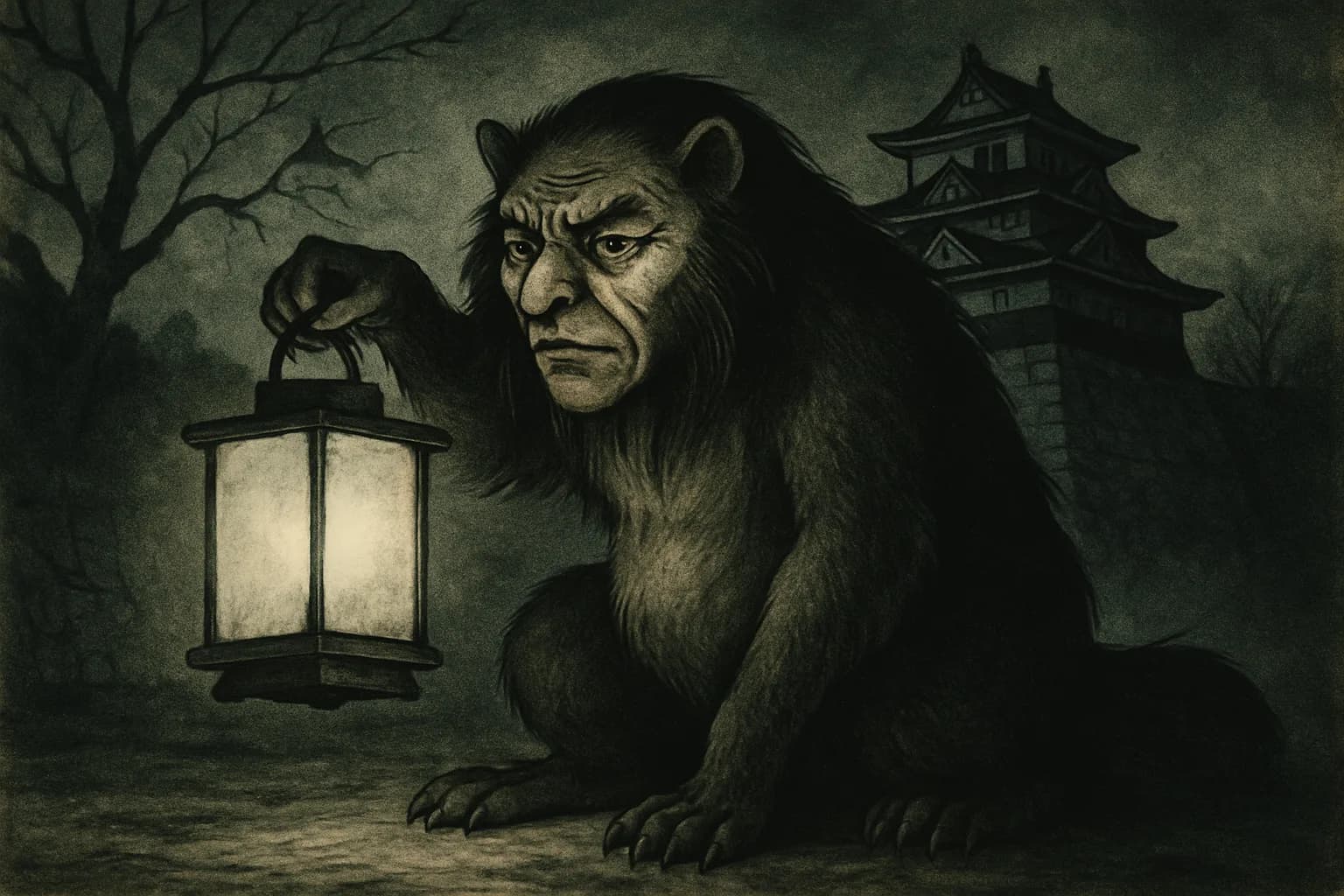
The most famous bakeneko story comes out of the Nabeshima domain in Saga, on Kyushu. In the tale, a retainer is killed after a dispute with his lord — in most versions, over a game of go — and his grieving mother takes her own life in despair. The family's cat licks the spilled blood and inherits the household's fury along with its power. It infiltrates Nabeshima Castle disguised as the lord's favored concubine, tormenting him with visions and illness night after night until a loyal retainer exposes the disguise and kills the cat. The story spread through Edo-period rumor and print, and by the nineteenth century it had become a kabuki subject, as in Hana no Saga Nekomata Zōshi (1853). Protests from the Saga domain got that first staging cancelled.
The dancing cat
A quieter but equally persistent motif is the bakeneko caught mid-transformation: standing on its hind legs with a hand towel balanced on its head, dancing when it believes no one is watching. Servants who stumbled on the sight and said nothing were said to be spared; those who screamed or told the household risked the cat turning on them. It's a smaller, almost comic image next to the Nabeshima bloodshed, and it shows up often enough in Edo-period gossip and prints that it reads as its own distinct strand of the folklore, less about revenge than about the unease of not quite knowing your own cat.
Bakeneko today
The 2007 anime series Mononoke grew out of a bakeneko story arc from its predecessor anthology, Ayakashi: Japanese Classic Horror (2006), and kept the yokai's name and premise while wrapping it in the show's distinctive woodblock-print visual style. The Nabeshima legend itself has been filmed multiple times since the silent era, usually under some variation of the title Nabeshima Kaibyoden ("The Ghost-Cat of Nabeshima"). And the old superstition about tails lives on obliquely in the Japanese Bobtail, a breed whose short, pompon tail is often traced back to centuries of owners quietly favoring kittens least likely to grow into something else.