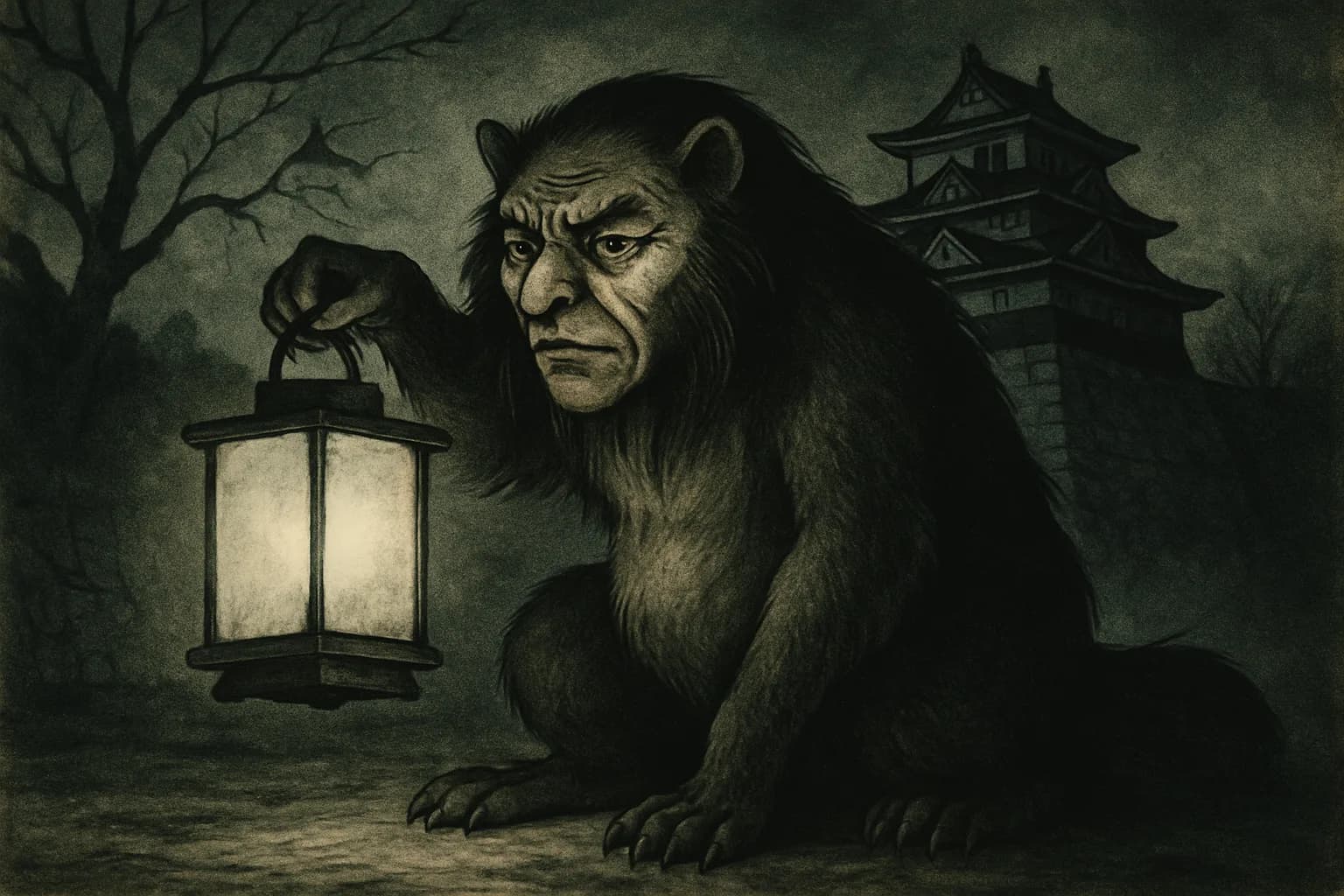
Around 1330, the Buddhist monk Yoshida Kenko wrote down a rumor going around Kyoto: deep in the mountains lived a beast called nekomata, cat-like but not a cat, that hunted and ate people. In his essay collection Tsurezuregusa ("Essays in Idleness"), Kenko tells of Amidabutsu, a linked-verse poet-priest living near Gyoganji temple, who hears the neighbors talk of nekomata in the hills and grows wary of walking home alone after dark. Sure enough, one night something leaps at him out of the dark and goes for his throat. Legs buckling, he tumbles into a river shouting for help — and the creature turns out to be his own dog, which had simply bounded out to meet him. The joke works because the fear was real. For readers in the fourteenth century, a monster cat in the mountains was not a fairy tale detail; it was the kind of thing a man walking home after dark genuinely worried about.
What does it look like?
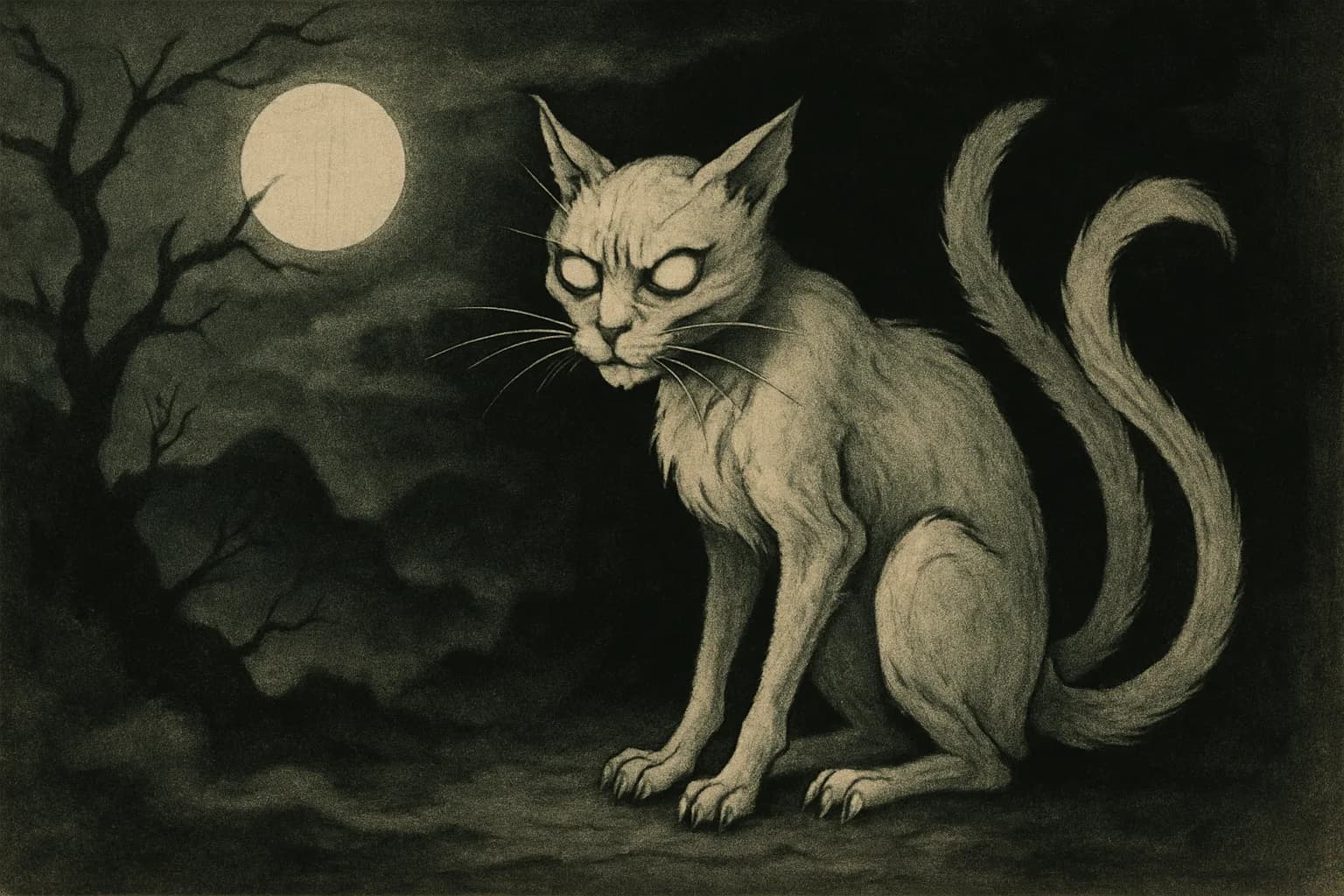
Kenko never describes its body, which left later artists to fill in the gaps. Toriyama Sekien, working four centuries later in his 1776 print collection Gazu Hyakki Yagyō ("The Illustrated Night Parade of a Hundred Demons"), drew the nekomata as an old cat gone upright: standing on its hind legs, a hand towel tied over its head, its tail ending not in a point but in two distinct, fur-tipped forks. That split tail became the creature's defining mark, the one detail every later telling kept. A nekomata could pass as an ordinary cat for years, right up until someone noticed the tail had grown long enough to divide.
A tail that splits with age
Cat owners in the Edo period took the tail seriously. The belief held that any cat, if it lived long enough, would eventually begin to change: its tail would lengthen, then fork, and once the fork was complete the cat gained the run of a human voice, the ability to walk on two legs, and a memory long enough to hold a grudge against whoever in the household had mistreated it. A cat that had already learned to talk and stand upright but kept a single tail was generally still called a bakeneko; once that tail split, most tellings agreed it had graduated into something worse. Families who wanted to keep an ordinary cat, ordinary, were said to dock or trim a long tail before it had the chance.
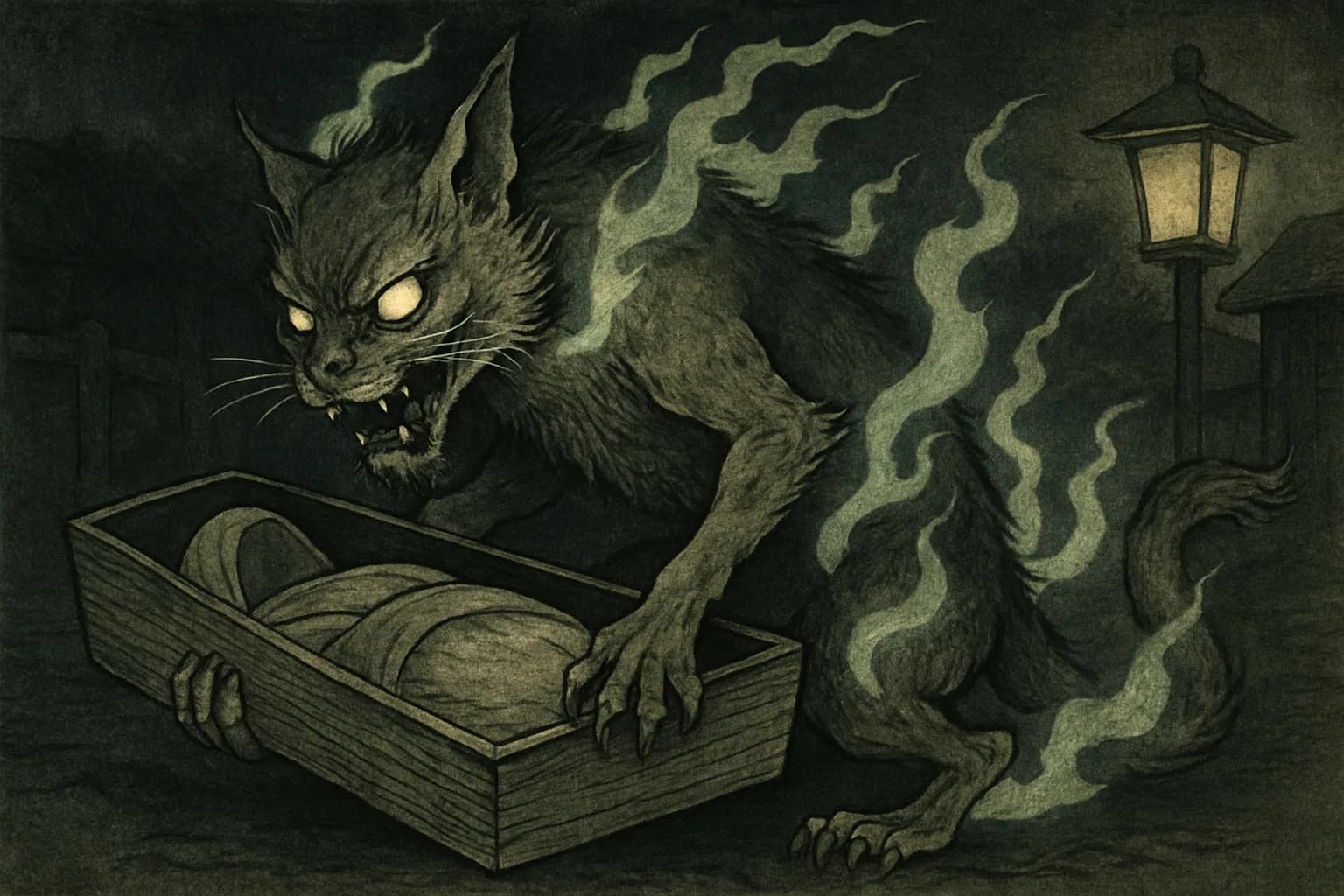
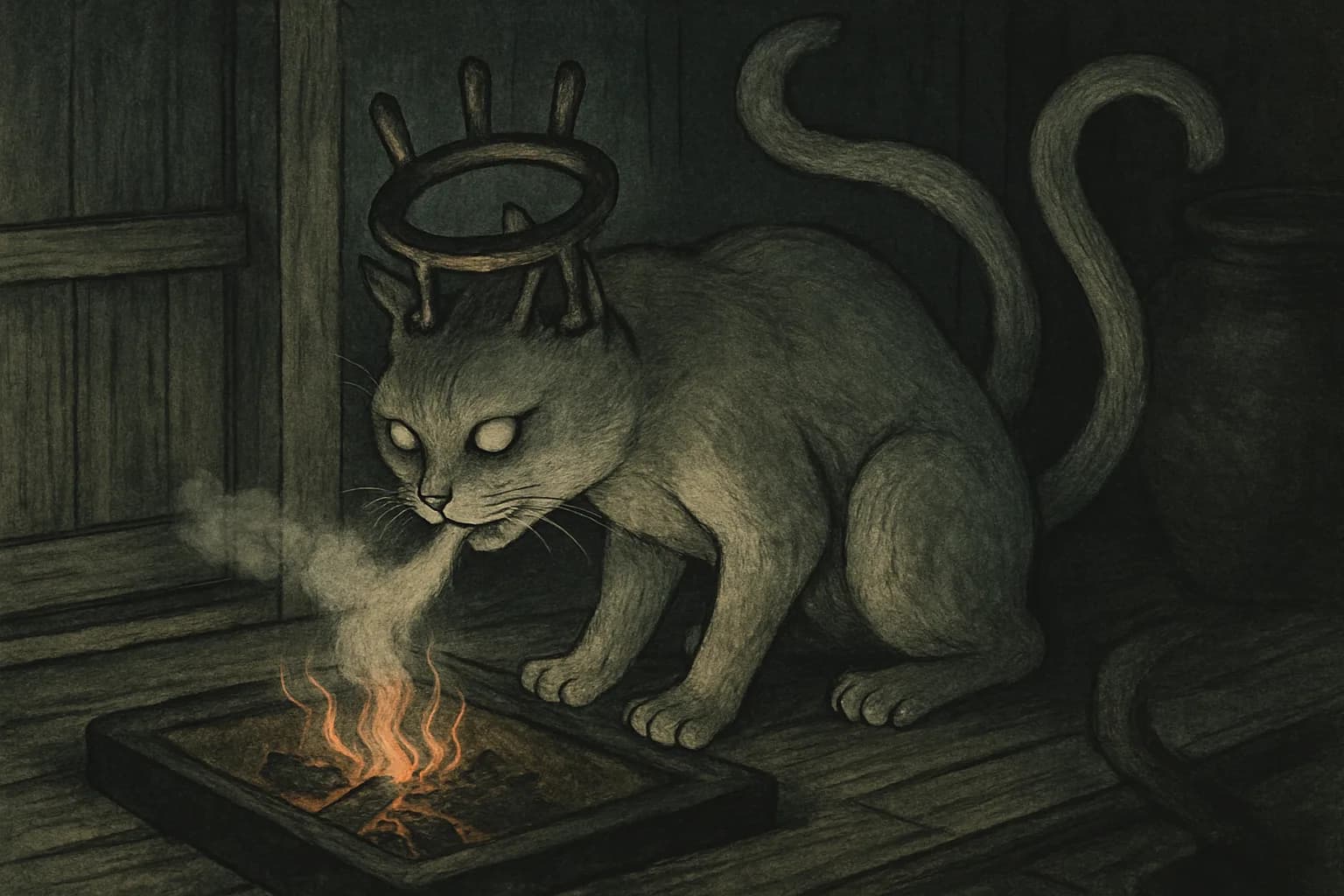
The nekomata's tricks went beyond the bakeneko's household mischief. It was credited with a puppeteer's control over corpses, said to be able to make a dead body sit up and dance by working its paws like strings, and with a taste for lamp oil that made any cat found licking an andon at night an object of suspicion. Some tellings folded it into the kasha, the corpse-snatching yokai that swoops down at funerals to steal the newly dead, treating both as versions of the same danger.
The mountain cat and the house cat
The nekomata has two homes in the old sources. Kenko's rumor starts in the mountains. But his neighbors add that even house cats can age into nekomata. So the wild predator and the aged pet already sit side by side in the fourteenth century. The creature stayed both at once: half old danger from the hills, half warning about what was curled up by the hearth.
Nekomata today
The forked tail still shows up whenever a game or anime needs a cat yokai with real menace rather than the softer bakeneko routine. Atlus has included Nekomata as a recruitable demon across the Shin Megami Tensei and Persona franchise for decades, keeping the two-tailed design and the forked tail intact. Team Ninja's Nioh series makes Nekomata a Guardian Spirit bound to the ninja Hattori Hanzo, its in-game lore repeating the same folklore beats almost verbatim: cats that live to a great age, rise onto their hind legs, split their tails in two, and learn to speak.
The name also survives on maps, and not as a cute afterthought. Nekomata-yama, "Nekomata Mountain," rises to 2,378 meters in the Tateyama range of Toyama Prefecture, in what was once Etchu Province — named for old local reports that the mountain's nekomata devoured people who wandered too far up its slopes. Long before it was a stock monster in games, the nekomata was, for travelers in that stretch of the Japan Alps, just a real danger the mountain was known for.
Why Naruto's Two-Tails is a burning cat called Matatabi
The second of the nine tailed beasts in Naruto is a cat wreathed in blue flame, and it reads as taking from the nekomata the two things the folklore cares about most: the tails that arrive with age, and the handling of fire. An old cat that splits its tail and then sits up at the hearth doing things a cat should not be able to do is the whole of the tradition, compressed.
The name is a joke layered on top. Matatabi is the ordinary Japanese word for silver vine, the plant that has the same effect on cats that catnip does elsewhere — common enough that "matatabi to a cat" is a stock phrase for something irresistible. A cat demon named after the one plant that reliably undoes cats is a pun the folklore itself never made, and a better one than most of what it did make.