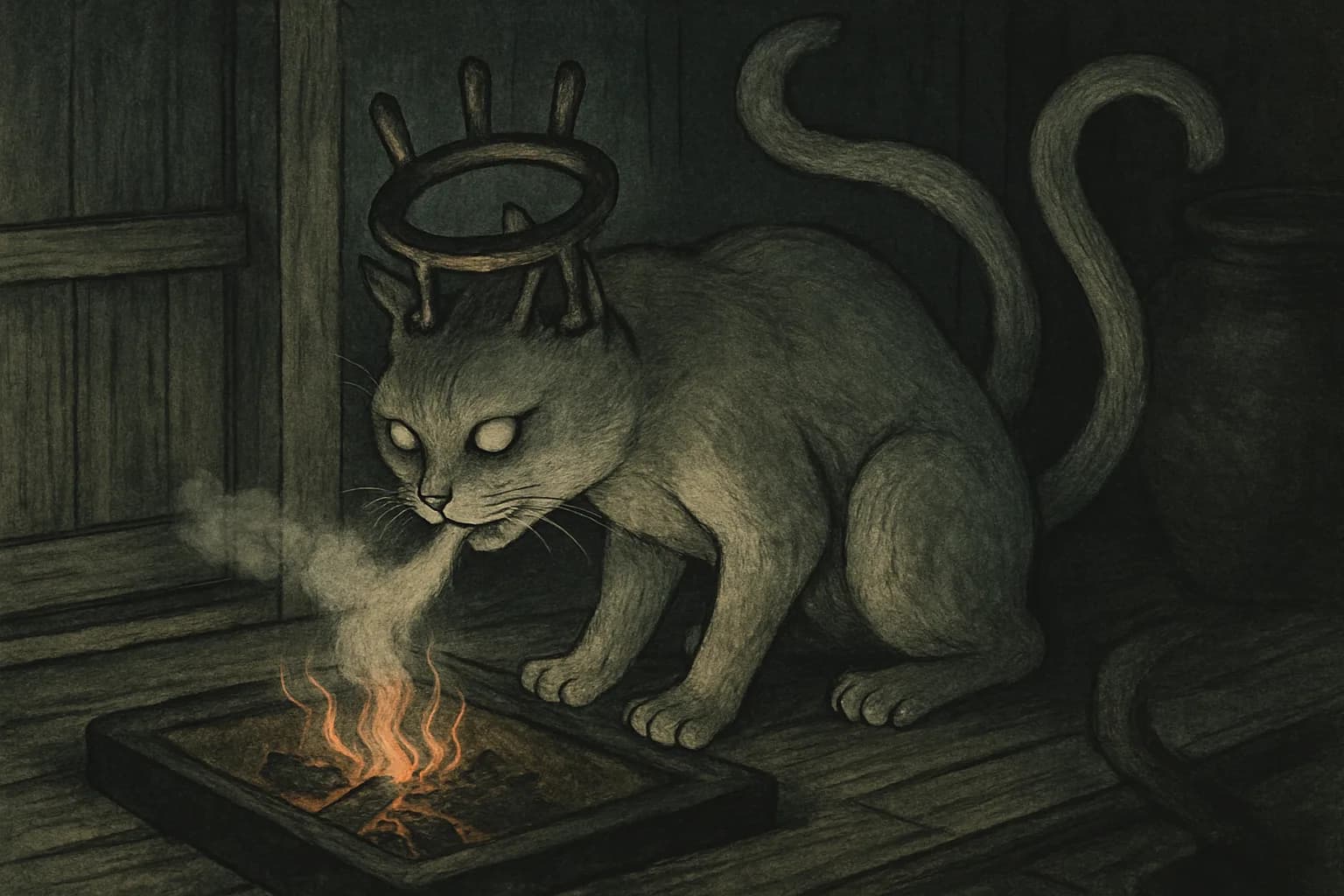
Open Toriyama Sekien's 1784 print collection Hyakki Tsurezure Bukuro ("The Bag of One Hundred Random Demons") to the entry for gotoku-neko and the joke lands before you read a word of the text. An old cat crouches at a hearth, two tails curled behind it, and balanced on its head — upside down, like a crown — sits a gotoku (五徳): the three- or four-legged iron trivet every household kept propped over the embers to hold a kettle or pot above the coals. The cat is not stealing the trivet. It is wearing it, and tending the fire as if the job belonged to it all along.
What does it look like?
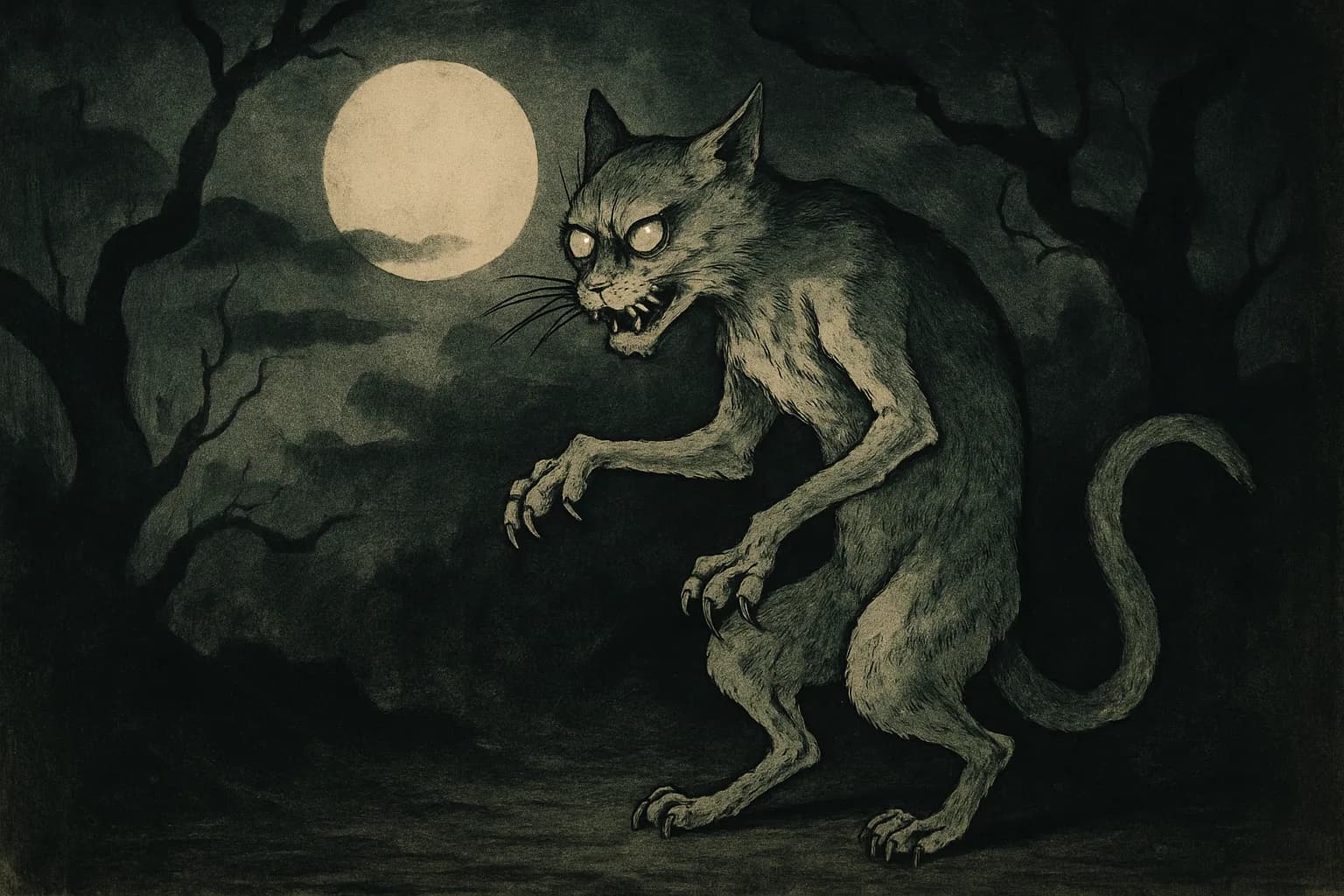
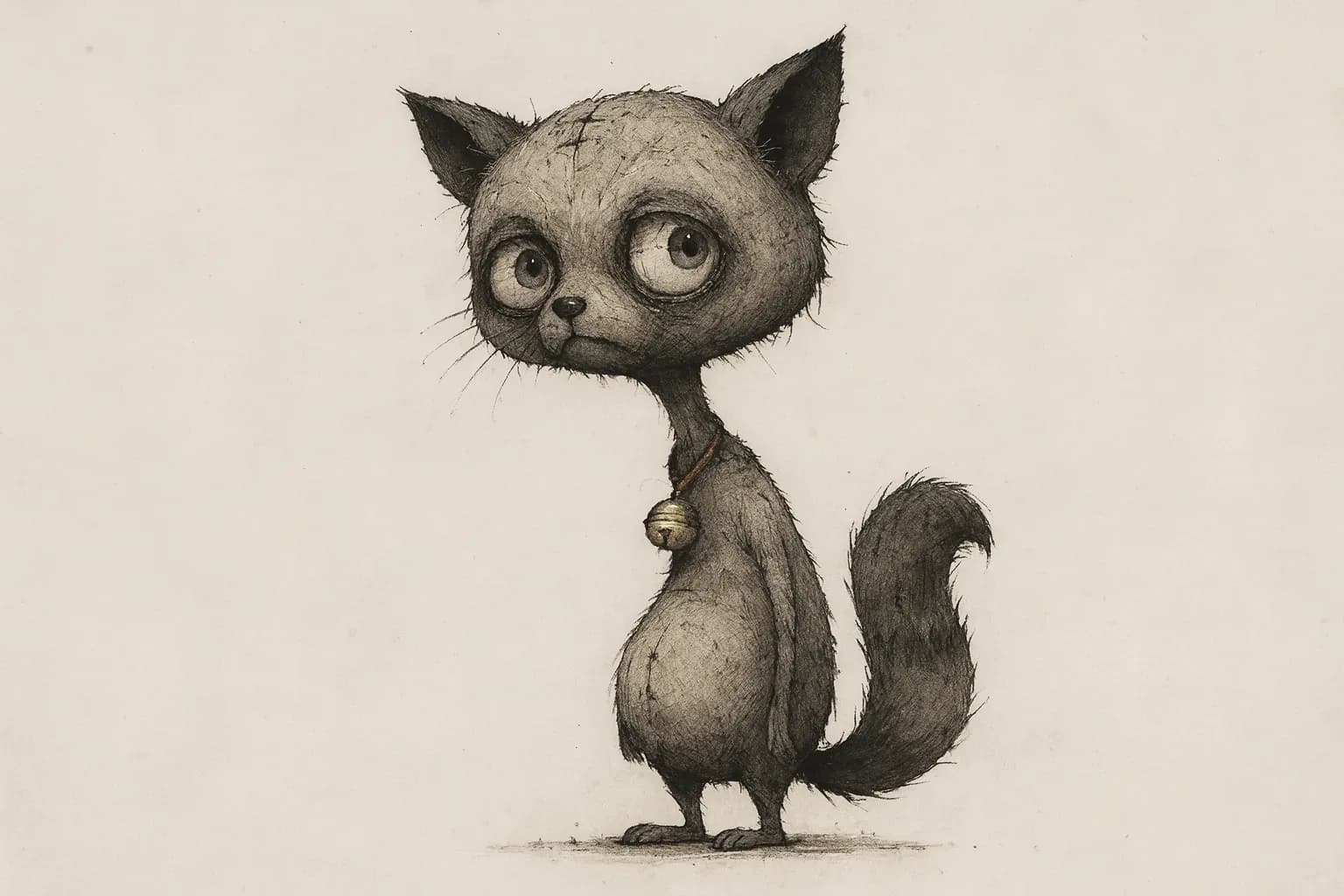
Sekien draws the gotoku-neko as an aged cat, past the point where an ordinary house cat is supposed to look the way it does. Its tail has split into two, marking it as a nekomata by the standard rules of Edo-period cat lore. Where it departs from every other split-tailed cat in the yokai catalogue is the ironware on its head: a real hearth trivet, worn like a hat, framing its face the way a crown frames a king's. In front of it, the print shows the tools of the job — the embers of an irori hearth, and a bamboo blowpipe, or hifukidake, of the kind used to breathe air into a dying fire and coax the coals back to a flame.
The effect is deliberately domestic rather than frightening. This is not a monster stalking a mountain road. It is a cat that has taken over a household chore.
A hundred nights of small, private jokes
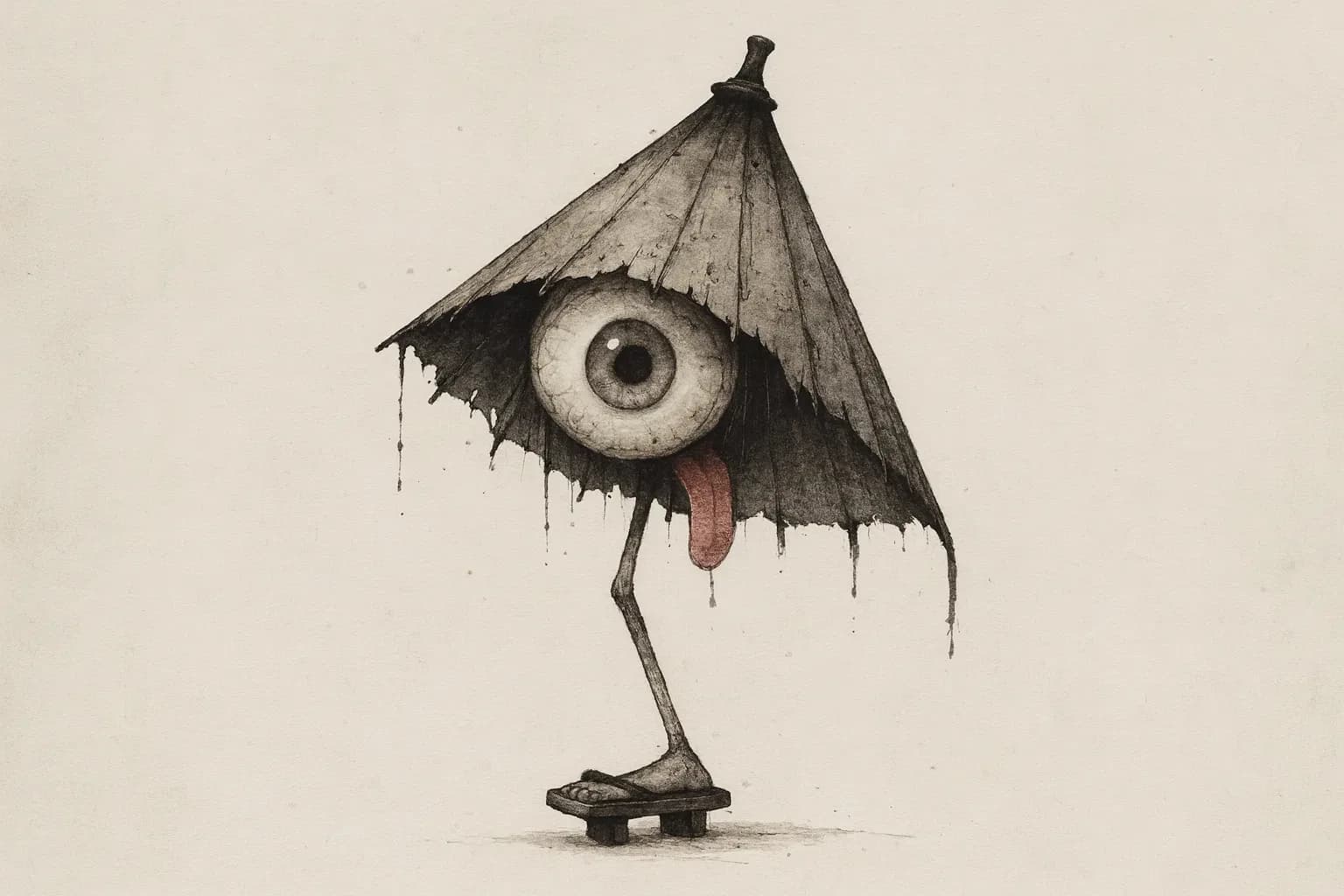
Hyakki Tsurezure Bukuro is the last of Sekien's four great yokai print series, and by the time he compiled it he had largely exhausted the traditional folk monsters passed down through centuries of oral belief. Many of the entries in this final collection are instead Sekien's own inventions: visual and verbal puns built from ordinary words and objects, dressed up as yokai and presented with a straight face alongside genuine folk tradition. Gotoku-neko largely fits that pattern. The name is a compound of gotoku, the trivet, and neko, cat — a yokai defined by the household object balanced on its head, in the same way Sekien's hone-karakasa is defined by the umbrella it once was.
Sekien's caption adds a second joke. Tsurezuregusa (section 226) tells of a scholar who forgot two of the "Seven Virtues" dances. People mocked him as "the Five Virtues" man — gotoku. Sekien wonders what this cat forgot.
He did not invent the picture from nothing. A Muromachi-period Hyakki Yagyō Emaki scroll already shows a yokai with a trivet on its head.
The humor works because every reader of the period would have recognized both halves of the picture instantly: the aging cat that has clearly been in the house long enough to start behaving strangely, and the trivet that sat in every kitchen's hearth, unremarkable until you imagine a cat has claimed it for its own.
Tending the fire instead of stealing it
Where a bakeneko's mischief usually runs toward menace — dancing on hind legs, mimicking a dead owner's voice, licking oil from the household lamps — the gotoku-neko's role in Sekien's picture is closer to a servant's. It squats by the coals, blowpipe in paw, feeding the fire. Modern books add that it lights fires by itself, but that idea was read into the picture later. Read one way, it is a nekomata that has grown old enough in one household to be trusted with a task instead of feared for a grudge; read another, it is simply Sekien's visual gag for the idea of a cat that has "earned its keep" so thoroughly that it might as well be wearing the tool of its trade.
Because it never carried the weight of genuine folk dread that clung to the nekomata of the mountains, no body of oral legend grew up around gotoku-neko outside of Sekien's own page. There is no recorded village tale of a real cat found wearing a trivet, no warning told to children, no shrine or place-name attached to it. It exists almost entirely as an illustration and a caption.
Where it comes from
Gotoku-neko belongs to the broader Edo-period fashion for cataloguing yokai as illustrated encyclopedias — an art-book tradition Sekien himself helped invent with his earlier Gazu Hyakki Yagyo. By his fourth volume, that format had become flexible enough to hold not just monsters people genuinely feared, but visual riddles built for readers who already knew the source material: the split tail of the nekomata, the shape of a household trivet, and the shared understanding that an old cat, kept long enough by the hearth, might start to seem like part of the furniture.
Gotoku-neko today
Gotoku-neko has never had the household-name status of the nekomata or the bakeneko, and it isn't the subject of games or films built around its own mythology. Its afterlife is quieter: it survives in reprints and museum digitizations of Hyakki Tsurezure Bukuro, in modern Japanese yokai encyclopedias that catalogue Sekien's full four-volume output, and among readers and researchers working through his stranger, punnier entries alongside the famous ones. It is a small, specific joke from 1784, still legible more than two centuries later to anyone who has ever left a kettle on the fire too long.