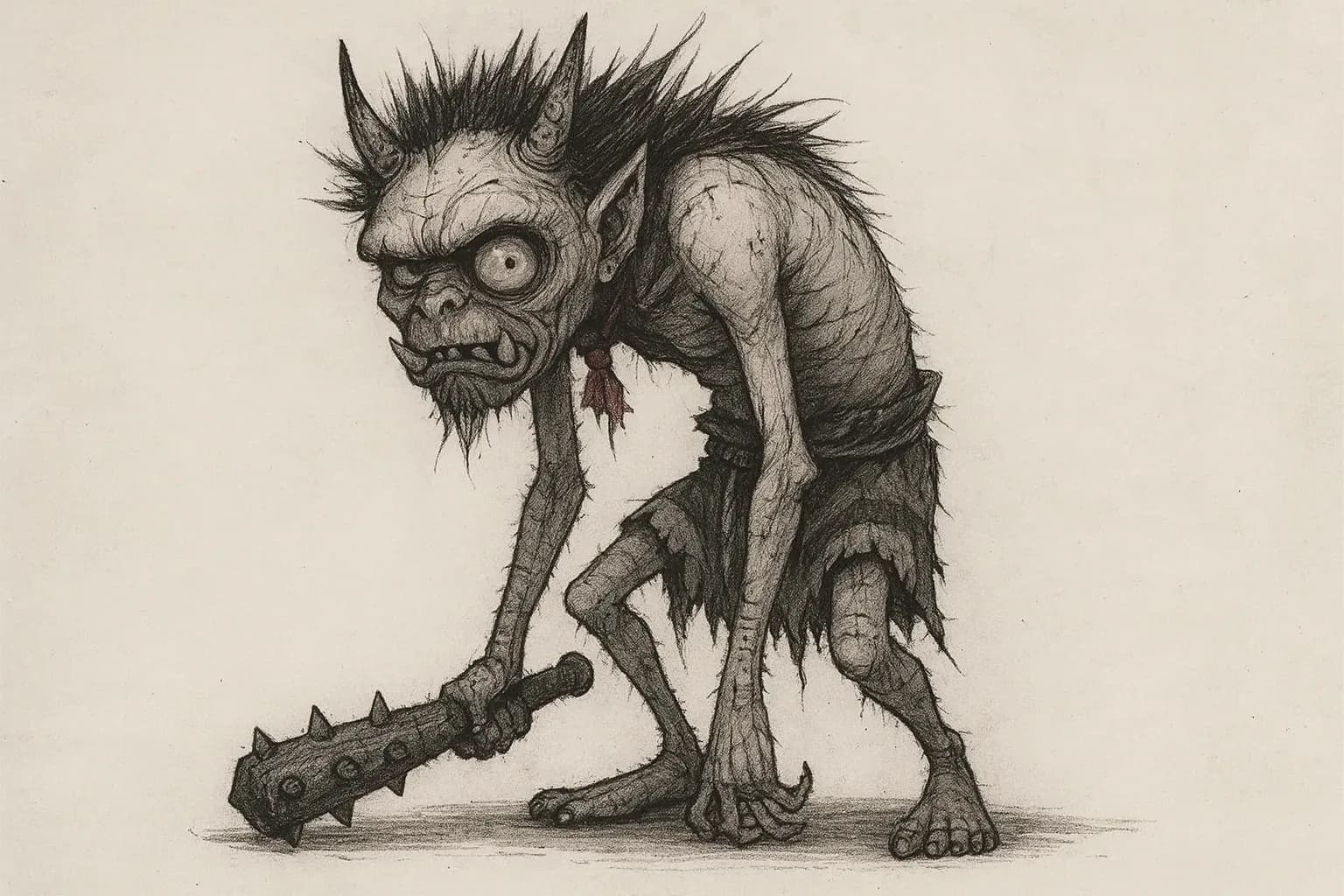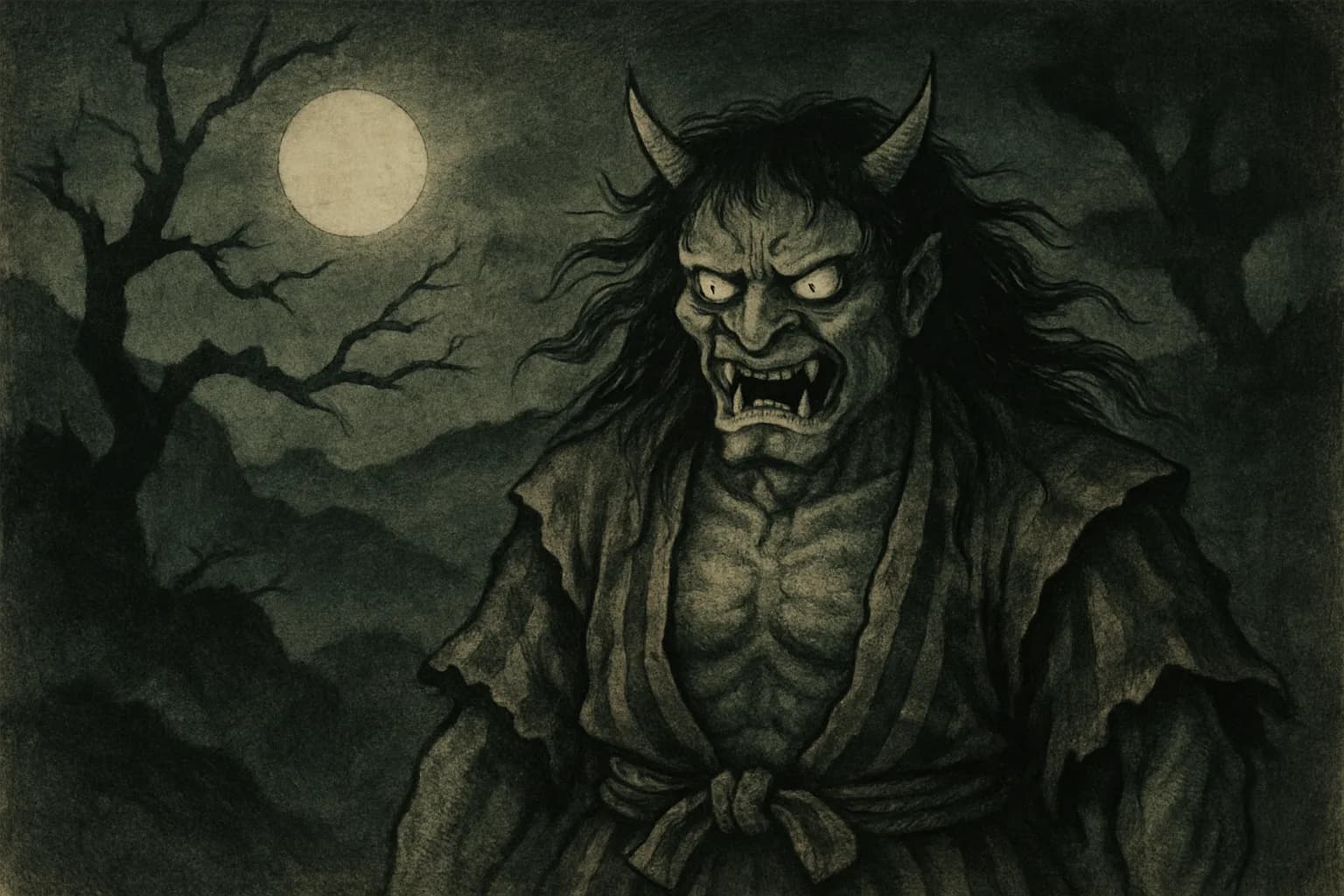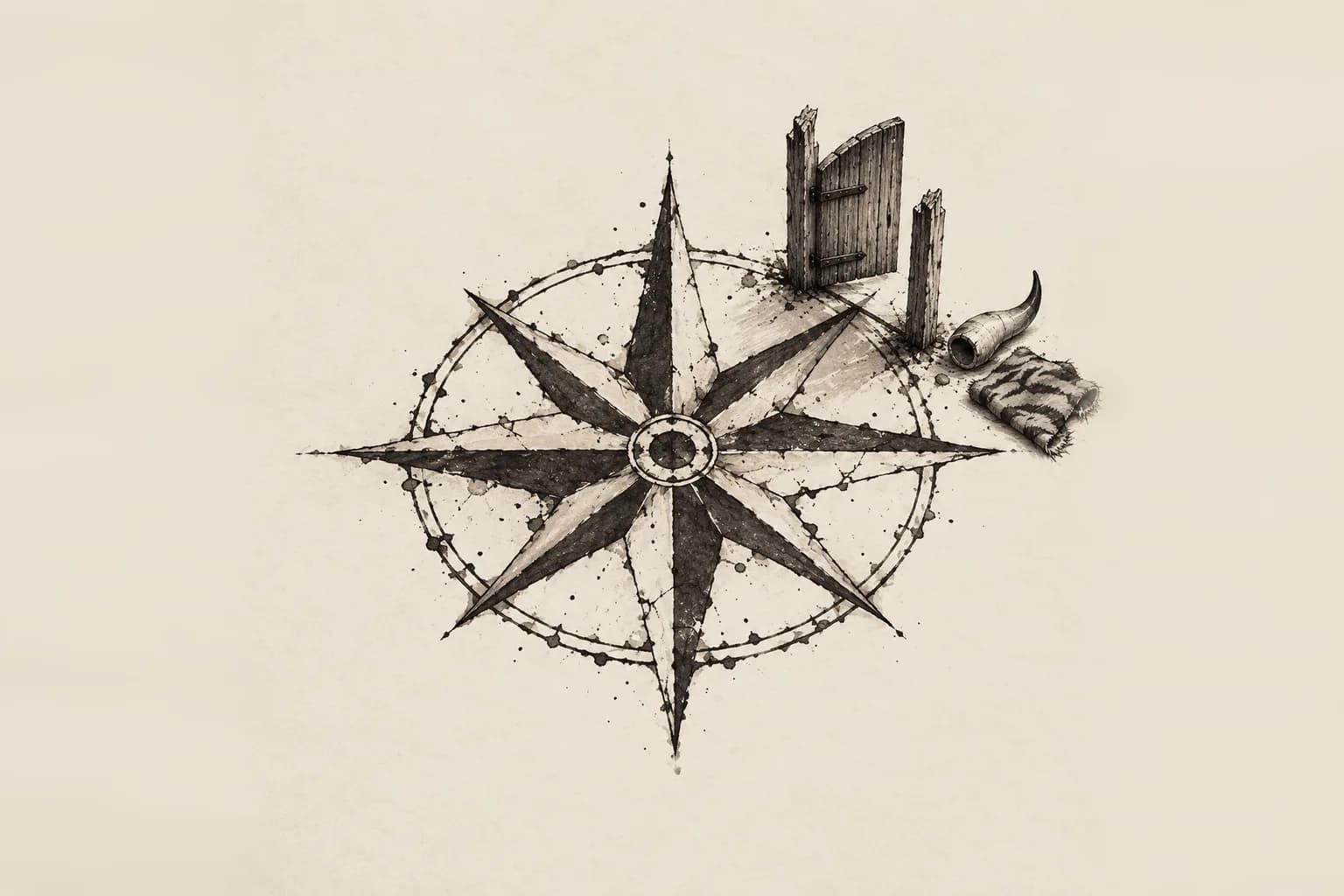
Picture an oni and you see the same costume every time. Horns on the head. A loincloth of tiger skin. A spiked iron club. Why those things?
The usual answer is the northeast. In old Chinese and Japanese thinking, the northeast was the "demon gate," the kimon. Its other name was ushitora, "ox-tiger." So, the story goes, the oni wears the ox's horns and the tiger's skin.
It is a neat answer. But nobody has found who first wrote it down. When you follow the dated records instead, the horns and the tiger skin turn out to be the newest parts of the oni. For most of its history, it had neither.
The demon gate is real and old
The northeast part of the story is solid. The word kimon, "demon gate," appears in the Lunheng, written by Wang Chong in China's Later Han dynasty, almost two thousand years ago.
The logic came from the calendar. The old Chinese system gave each direction one of twelve animals. The point between the ox and the tiger sat in the northeast. It was also where the old year turned into the new one. That was the season when plague demons were said to come. So the northeast became the gate the demons used.
Japan took the idea and kept it. In the early Kamakura period, the monk Jien wrote a poem saying that Mount Hiei blocked the demon gate of the capital. In the mid-Edo period, the scholar Arai Hakuseki wrote a whole essay, Kimon-setsu, on where the belief came from.
Setsubun comes from the same calendar
The same turning of the year gave Japan its best-known oni festival. In Han China, a year-end rite drove the plague demons out as the old year ended. The Book of the Later Han records it.
The rite reached Japan and slowly moved to Setsubun, the day before the old start of spring. That is why families still throw roasted beans at an oni every February and shout "Oni wa soto!" — "Demons out!" The oni at the door is the oni of the demon gate, arriving at the year's edge.
The costume link is the part nobody can date
So the direction is old. The link from direction to costume is the weak step. English Wikipedia calls it "one hypothesis." We searched Japanese reference works for an early writer who says it, and found none.
That does not make it false. It means the oni's costume and its explanation may have grown up separately. The tidy reason could have been fitted on afterwards, the way the name "gashadokuro" was fitted onto an older skeleton.
The oldest oni had no horns at all
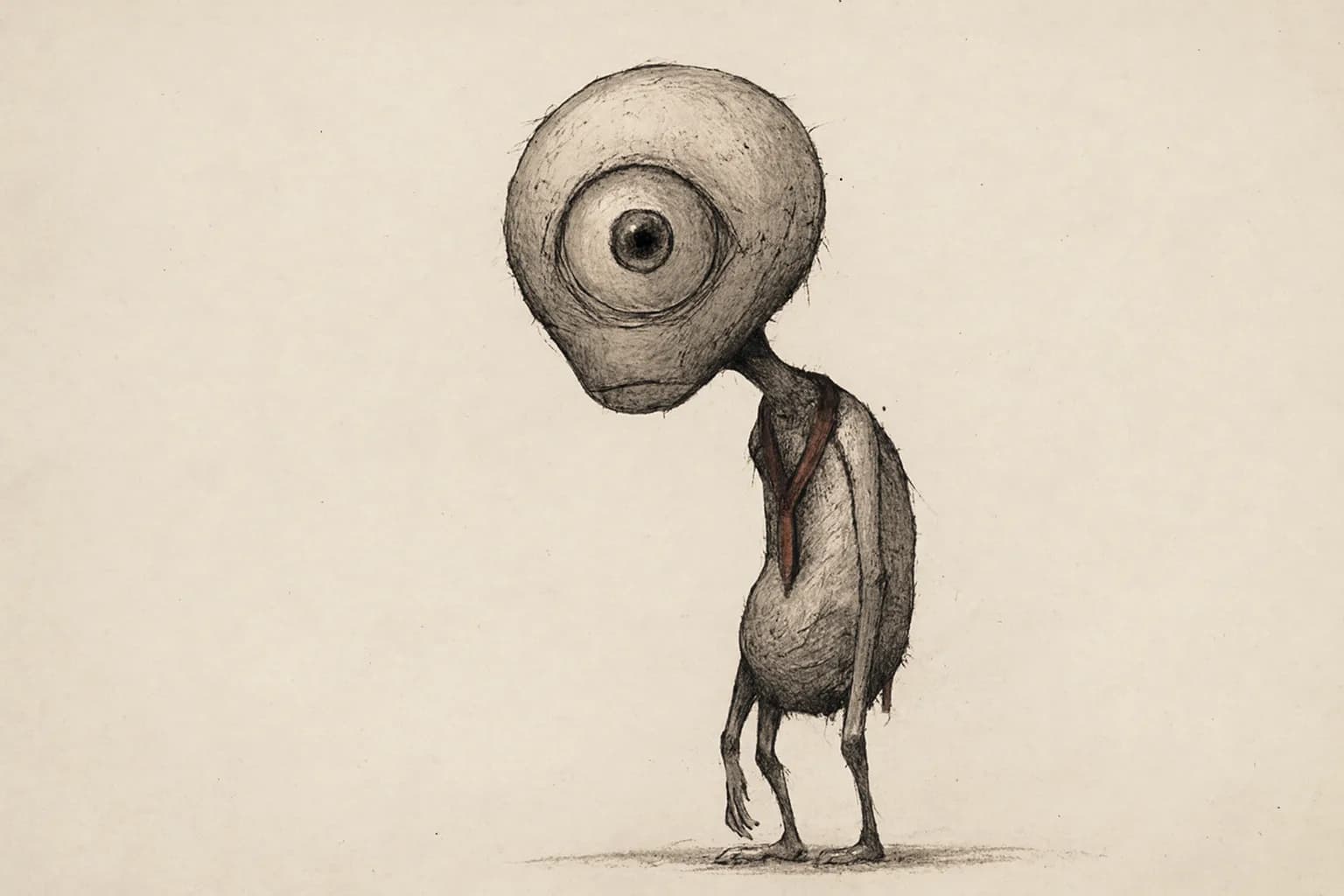
The oldest oni on record has almost no body. The Izumo no Kuni Fudoki, a gazetteer finished in 733, tells of a one-eyed oni in the village of Ayo. It ate a man working in his field. The text gives it no horns, no colour, no size and no weapon.
Even the word may mean "hidden." An old theory says oni comes from onu, to be out of sight. Before the reading oni settled, the same character was often read mono, a spirit you could not see.
Heian oni were often women
In the Heian period, an oni was frequently a grudge-bearing spirit, not a horned brute. The oni in The Tale of Genji are angry ghosts. Japanese scholars have noted that many early oni appear in the shape of women.
The famous scene in Ise Monogatari, episode 6, shows how unseen they were. A man runs away with a woman at night. He hides her in a storehouse. An oni eats her in one bite, and he never sees it.
The picture scrolls gave them bodies
The oni became a visible monster in the picture scrolls. In the late-Heian Kibi Daijin Nittō Emaki, a ghost appears in oni form. He has red skin, one horn, hair standing on end, three fingers and three toes. He wears a loincloth, but it is red, not tiger skin.
The Ōeyama Ekotoba, from the 14th century, is the oldest surviving scroll of Shuten-dōji, the oni king of Mount Ōe. His legend fixed the big, red, horned oni in the public mind. Even here, descriptions vary wildly: some give him many eyes and several horns.
The colours came with a theory of their own. The five oni colours, red, blue, yellow, green and black, are said to come from matching the five Chinese elements with five Buddhist hindrances. Like the ox and the tiger, it is an explanation laid over the picture.
Our own shelf shows the same thing
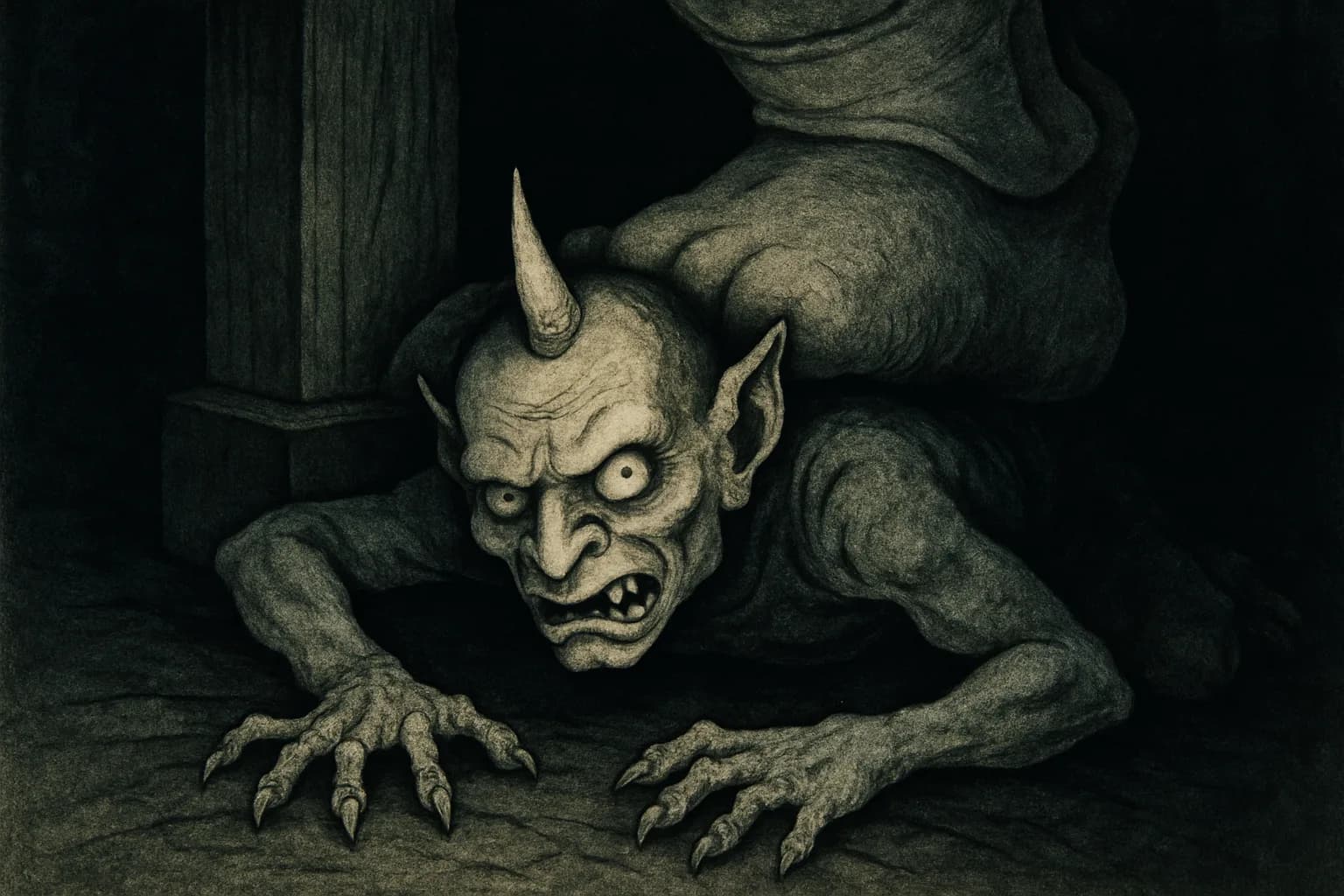
We counted every creature in our ledger whose name contains the kanji 鬼. There are 11. Only one of them wears a tiger skin: the generic oni itself.
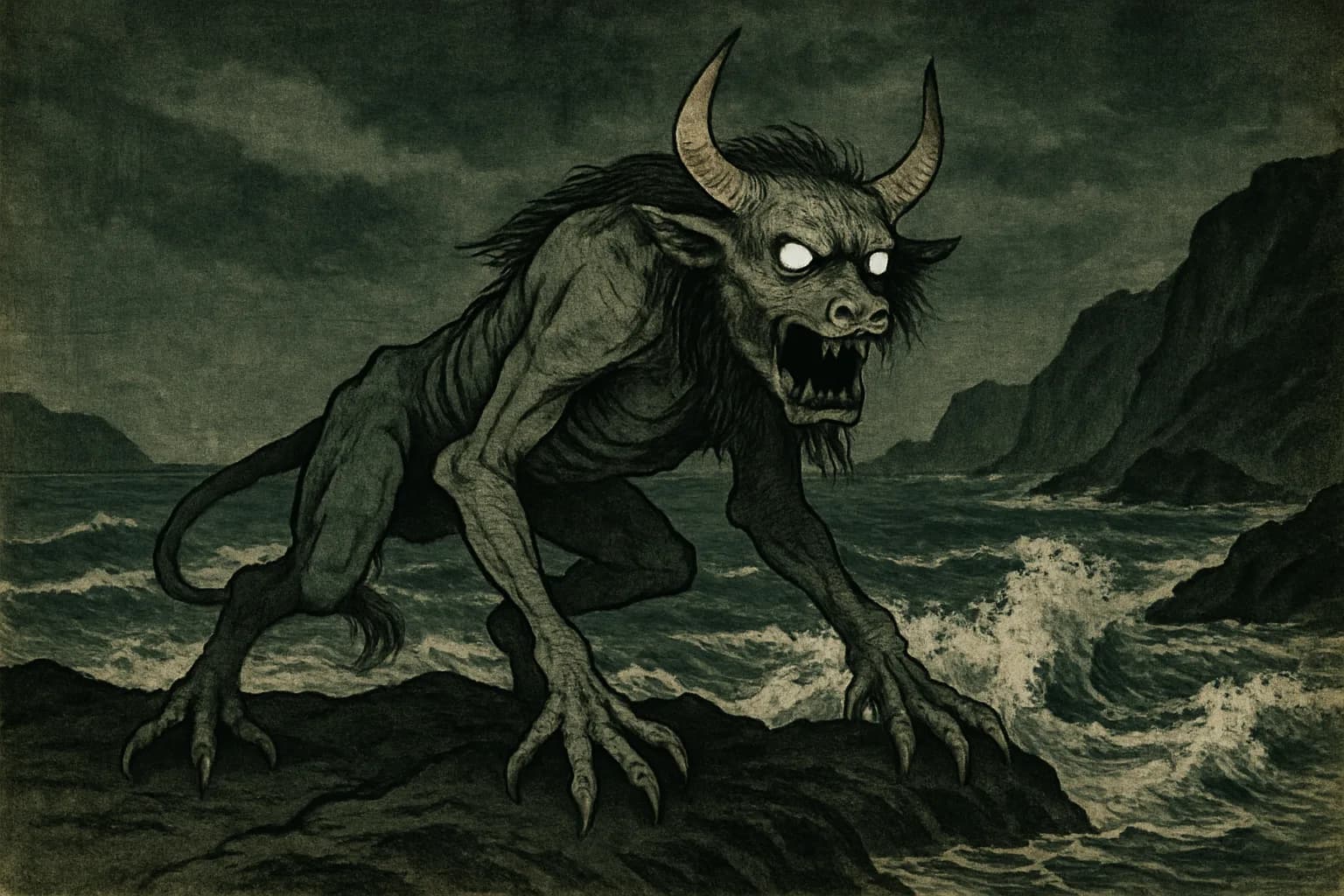
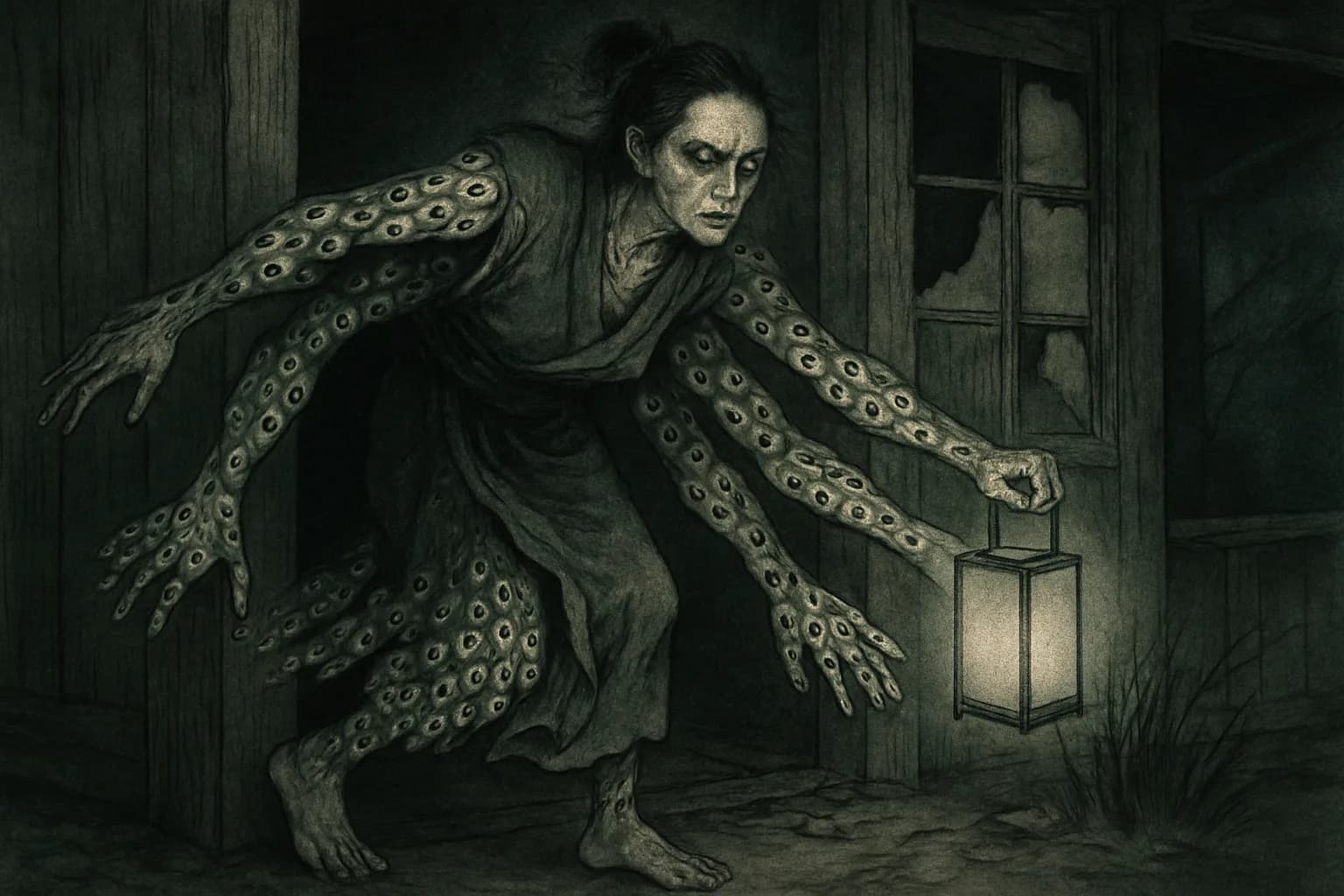
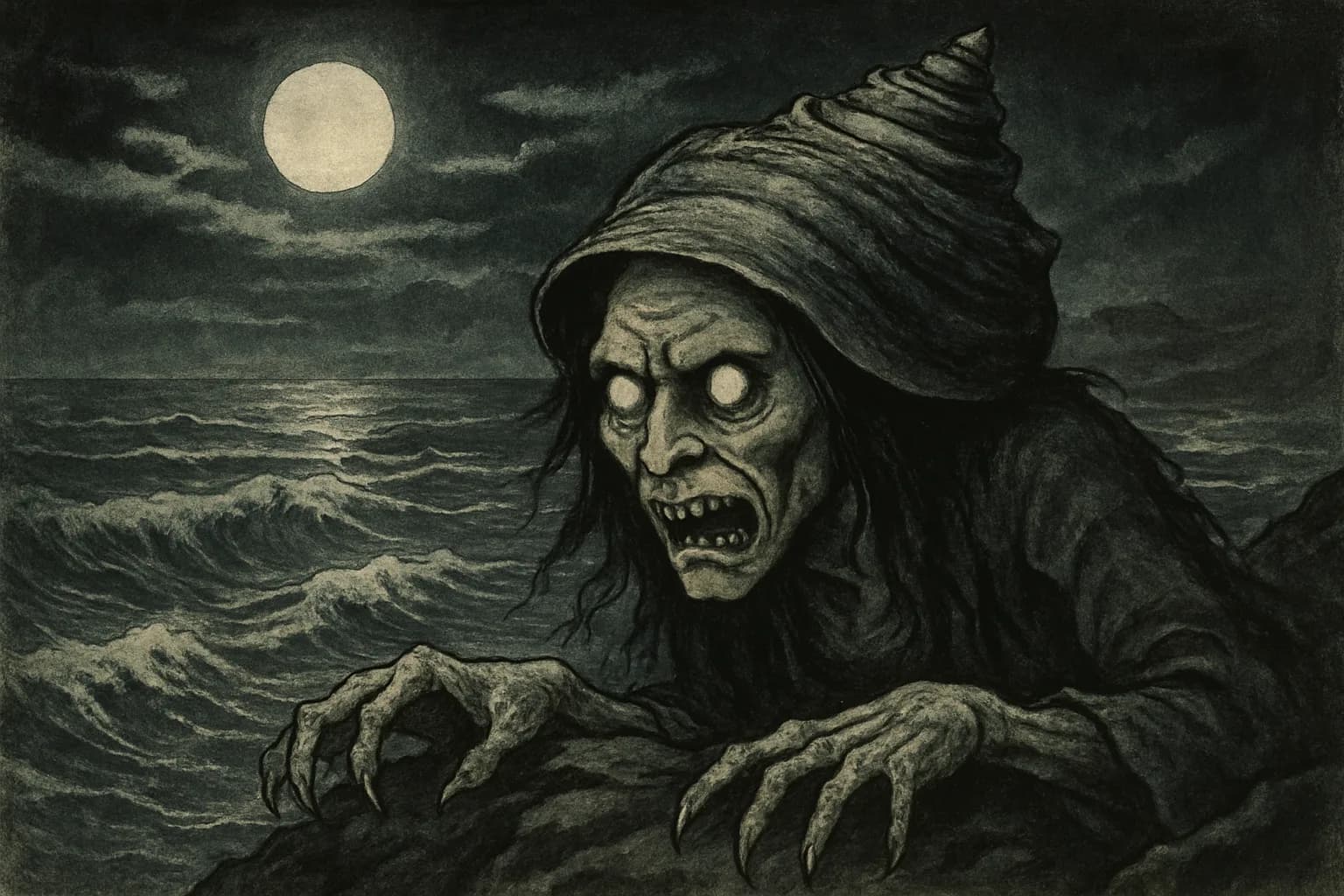
The others look nothing like it. Ushi-oni has a horned ox head on a monstrous body. Dodomeki is a woman whose arms are covered in eyes, with no horns at all. Sazae-oni is a turban snail. Onibi is a cold fire. The oni of Ayo has one eye and nothing else.
So the costume is not what makes something an oni. It is the uniform of one late, very popular picture. The ox-tiger story may still be the right reason for that uniform. We simply cannot show who first told it, and the records show the horns arriving long after the oni did.