Yes, an oni is a yokai. Today Japanese books file the oni as one kind of yokai, next to the kappa and the tengu.
But a thousand years ago, it was the other way round. The kanji for oni, 鬼, covered many fears: the dead, plague, and harm you could not see. "Yokai" was only a word for strange events. It became the name for the whole group in the 20th century.
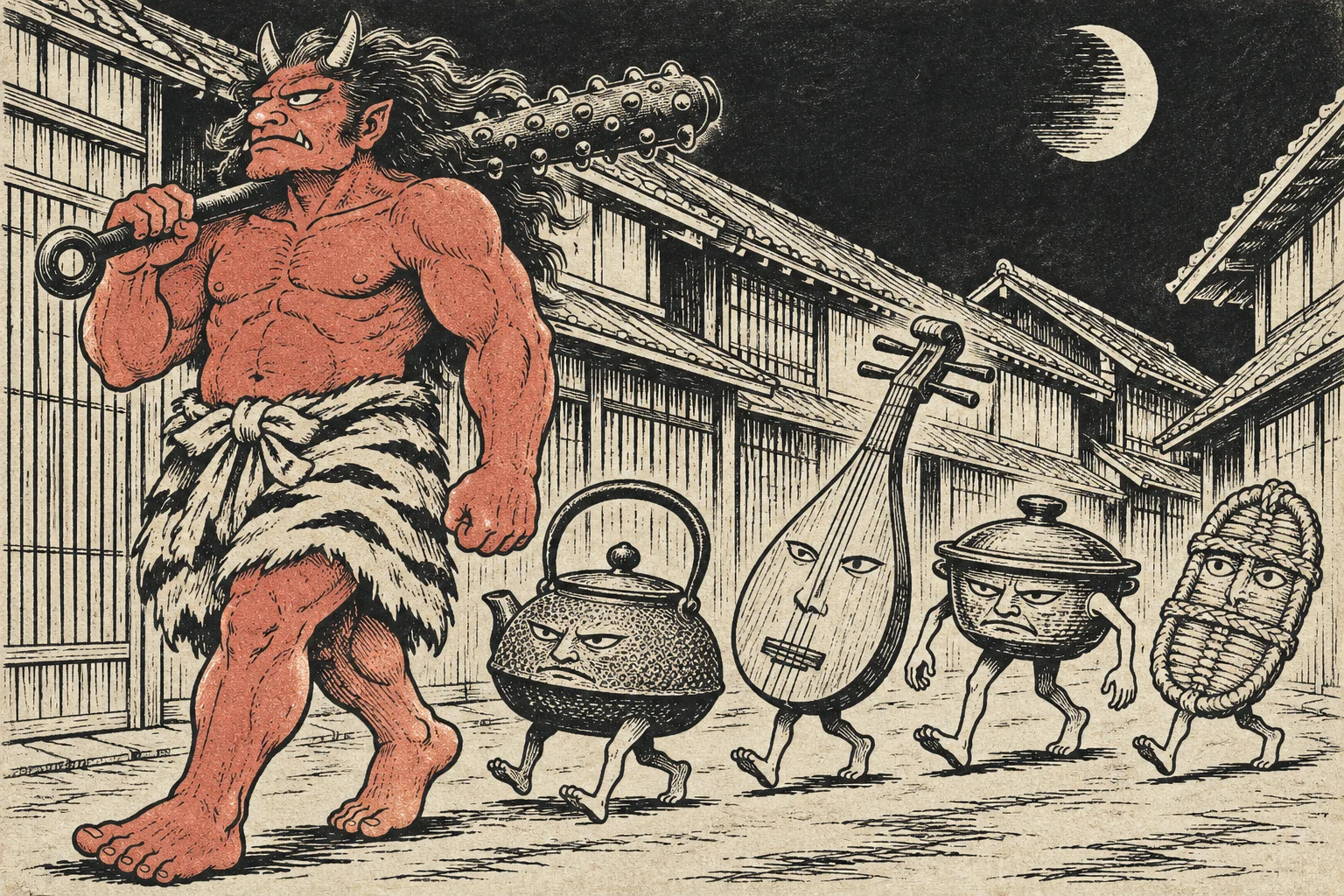
You can still see the old, wide meaning in one famous phrase. The "Night Parade of One Hundred Demons" is Hyakki Yagyō (百鬼夜行). The middle character, 鬼, is oni. But the phrase never meant a hundred horned ogres. It meant a crowd of night horrors of every kind. That is why its best-known picture scroll is full of pots, sandals and lutes that came alive.
| Oni | Yokai | |
|---|---|---|
| Kanji | 鬼 | 妖怪 |
| Old meaning | The dead, plague, unseen harm | Strange events, omens |
| Around the year 1000 | The wide word, in writing | A rare word for strange events |
| Edo period (1603–1868) | Mostly the horned ogre | Still rare; people said bakemono |
| Today | One kind of yokai | The name for the whole group |
| Looks like | A big human body with horns | Anything: an animal, an object, a sound |
| Usually lives | Far away: a mountain, an island, hell | One fixed spot near people |
The short answer
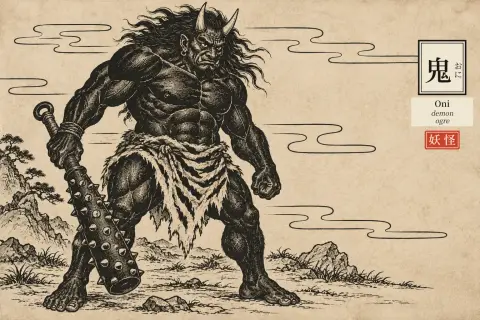
An oni is the yokai with a human shape. Japanese dictionaries describe it the same way: a human body, horns on the head, fangs in the mouth. It often carries an iron club and comes in a gang with a boss. The horned brute in your games is the real thing.
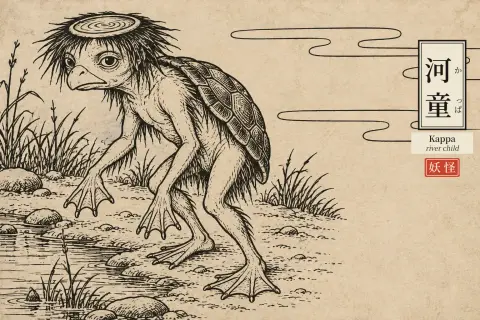
Most other yokai are smaller and stranger in shape. A kappa is a river creature. A tengu is part bird. An old umbrella can be a yokai. If it has a human body and horns, it is an oni.
A thousand years ago, 鬼 covered almost everything
The character 鬼 grew wide because Japan used it for three different fears at once.
In China, 鬼 meant the spirit of a dead person. Japan borrowed the character. It also used it for its own idea of an unseen harm, like a plague. A Japanese dictionary from the 930s says 鬼 is the spirit of a person. It adds one theory: the word oni comes from a word for "hidden."
A modern historian points out that writers of the Heian period drew no clear line between oni, angry spirits of the dead and plague gods. When one character is used for three fears, it covers all three.
That is why a crowd of night horrors of every kind could be called "one hundred oni." The Konjaku Monogatari, a tale collection from around 1120, tells of a young nobleman who meets a night parade of oni on a dark road.
A scroll at a small temple in Kyoto was painted in the 1500s. Most of its marchers are worn-out household things: a kettle, a lute, a shoe. Japanese calls them tsukumogami, objects that come alive with age. The title "Hyakki Yagyō" comes from a later label, not from the painting itself. Whoever added it was using the phrase in its old, wide sense: a parade of strange things, not of ogres.
In 1776 the artist Toriyama Sekien borrowed the same old phrase. His famous catalogue is Gazu Hyakki Yagyō, an illustrated version of the parade. It holds fox fire, a kappa, a ghost and much more.
"Yokai" was a word for strange events
The word yokai (妖怪) is old too, but it named events, not creatures. In 777, an official history says the court held a great purification "because strange events kept happening in the palace." Those strange events were yokai.
In the Edo period (1603–1868), ordinary people said bakemono, "changed thing," for these creatures. By then 鬼 mostly meant the horned ogre.
The change came with a philosopher, Inoue Enryō. In the 1880s and 1890s he set out to explain Japan's superstitions with science. He defined yokai as anything that ordinary reason could not explain. The word fit his work. It already meant a strange event, and strange events were what he studied. He called his work yōkaigaku, "yokai studies."
The word spread slowly. Folklorists took it up in the 20th century. Comics and picture books for children helped make it everyone's word after the 1960s. The oni became one member of the group.
Two names that kept the old meaning
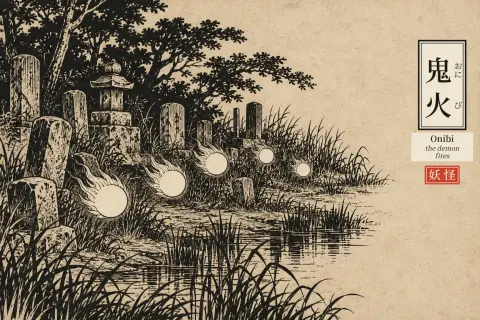
Onibi (鬼火) means "oni fire." It is a cold blue flame over graves and wet ground. It has no horns and no body.
Its 鬼 is the old Chinese one: the spirit of the dead. People said the fire rose from the bodies of the dead, or from someone who died angry. The everyday meaning of 鬼 moved on to the horned ogre. The fire's name stayed where it was. So did the phrase Hyakki Yagyō.
How to tell an oni from other yokai today
Look at three things.
The body. An oni is built like a person, only bigger. It has one or two horns and often red or blue skin. (Why horns? See why oni have horns.) Most yokai are animals, objects or shapes that are not human.
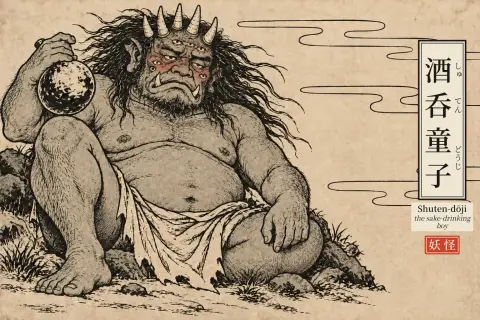
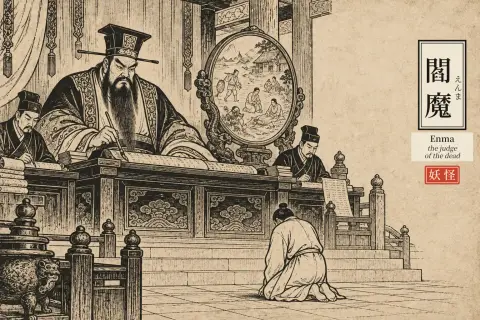
The home. Oni usually live far away. They live on Mount Ōe in Kyoto Prefecture, home of the oni boss Shuten-dōji. They live on the island in the Peach Boy tale, Momotaro. Or they guard sinners in Buddhist hell for Enma, the judge of the dead. Most yokai keep to one spot near a village.
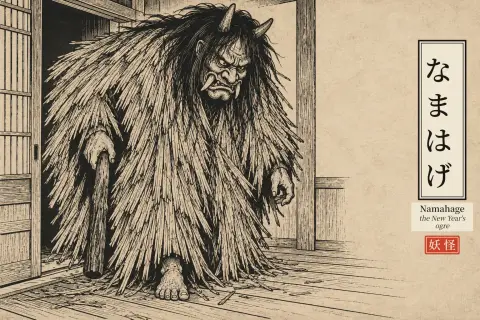
The festival. Every year around February 3, families throw beans and shout "Oni out!" at Setsubun. No other yokai has a nationwide day for being thrown out. Not every village sends the oni away, though. In some northern towns, oni-like visitors such as the Namahage are welcomed as gods once a year.
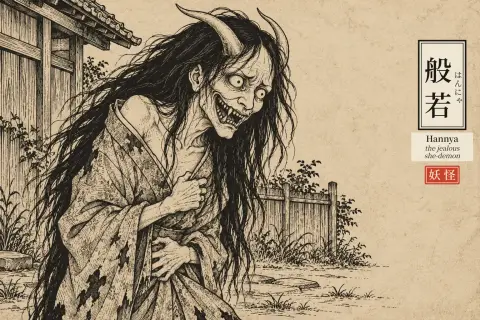
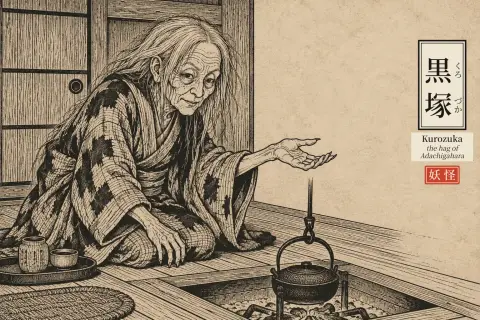
People can also become oni. In Noh, Japan's old masked theater, a jealous woman turns into an oni, the face of the Hannya mask. The local legend behind Kurozuka makes a nursemaid into a demon hag. Other yokai can come from people too, so this alone does not tell them apart.
A rule you can use
Look for the human body and the horns. That is an oni, and an oni is a yokai.
The word itself used to be much wider. Today that old meaning survives only inside two names: a blue fire over graves, and a night parade of pots.