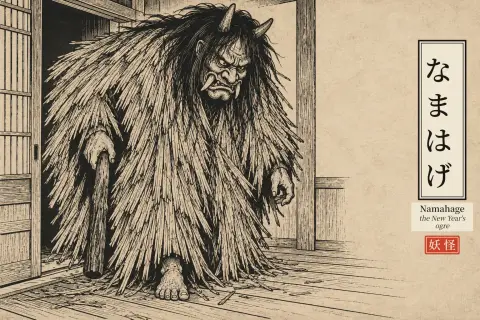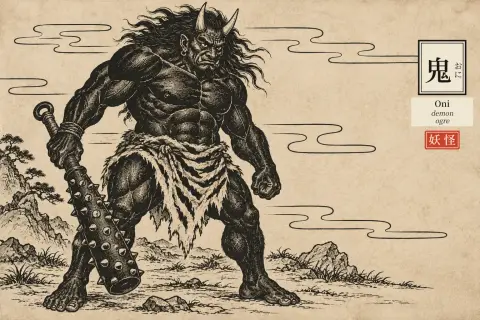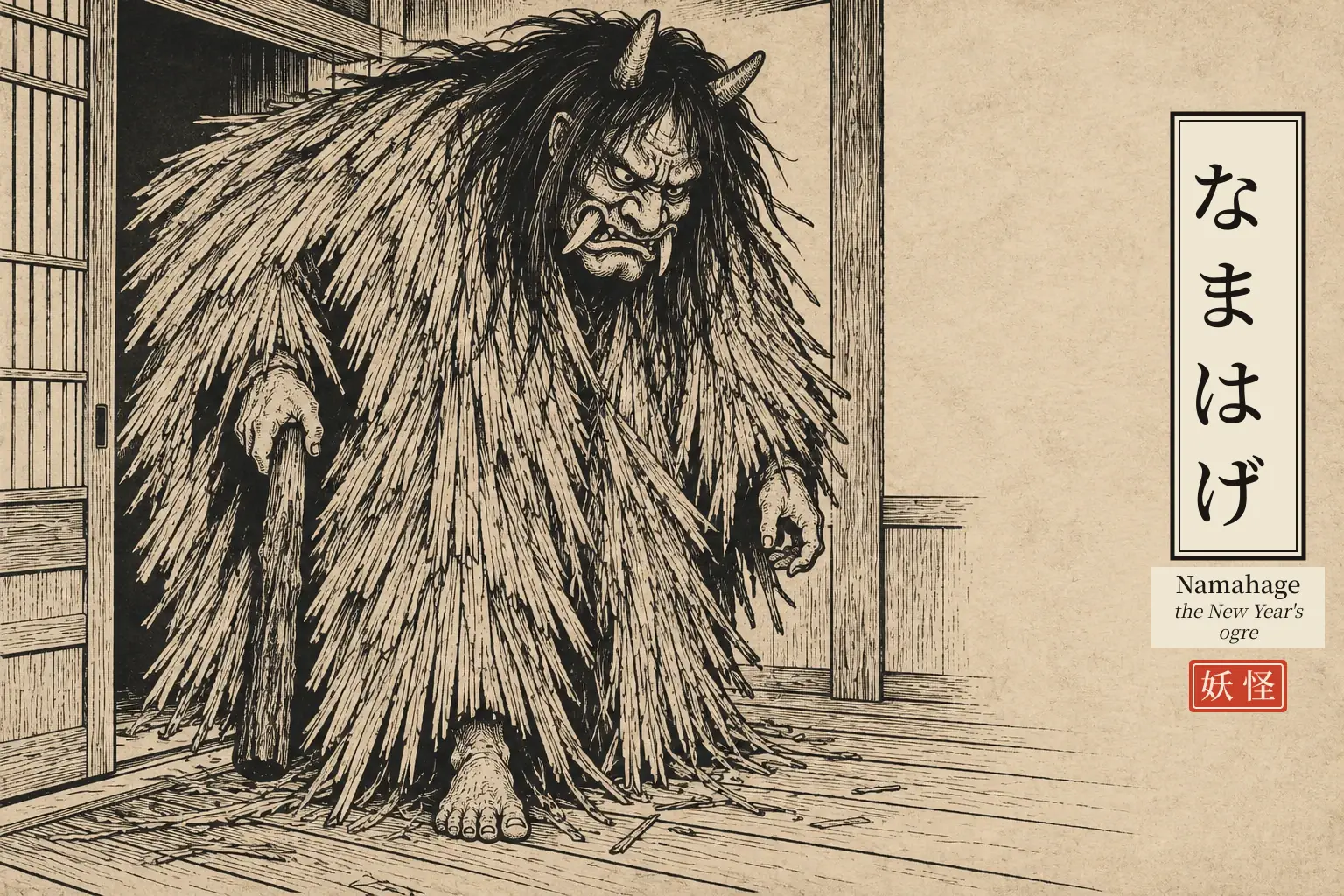
Half yes. Both come at the end of the year, in masks, to scare children into being good. But Krampus is a devil. Namahage are gods. The job is the same, and what they are is the opposite.
There is no historical link between them. Nobody carried the custom from the Alps to Japan, or back. They grew up on their own, at opposite ends of the world. That is what makes the match so interesting.
Others have seen it too. The French photographer Charles Fréger spent years photographing masked winter customs in Europe, starting with Krampus. When he looked for the same thing in Japan, namahage were the first he photographed. His Japanese series became the book Yokainoshima (2016).
Who they are
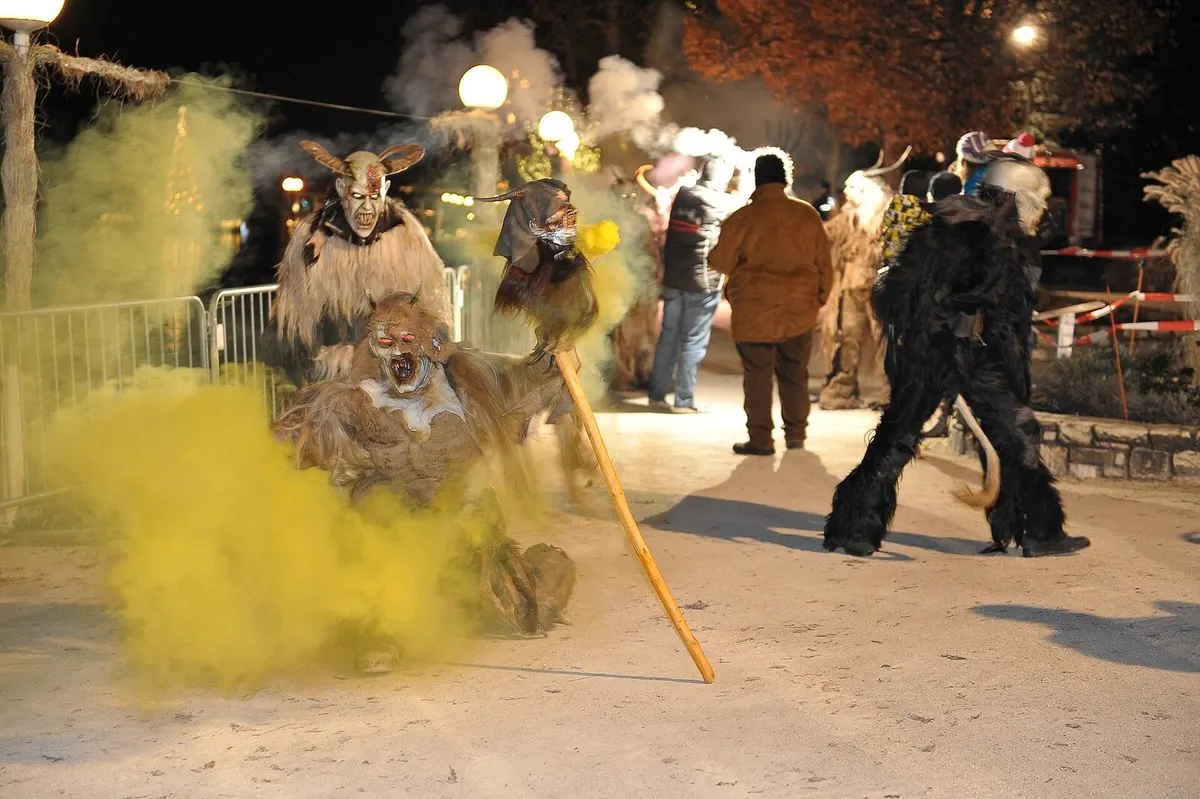 Photo: Johann Jaritz, CC BY-SA 3.0, resized
Krampus comes from the Alps: Austria, Bavaria, South Tyrol and their neighbours. He comes on the night of December 5, called Krampusnacht. That is the night before St. Nicholas Day. He has horns, thick fur and a long tongue. He carries chains, birch switches and a basket on his back for naughty children. Today, hundreds of people in Krampus costumes run through Alpine towns in parades called Krampuslauf.
In the English-speaking world, Krampus is fairly new. Few Americans knew him before 2000. Then old Krampus postcards were reprinted in magazines and books, and Krampus parties and parades spread in US cities. The 2015 horror film Krampus made him famous.
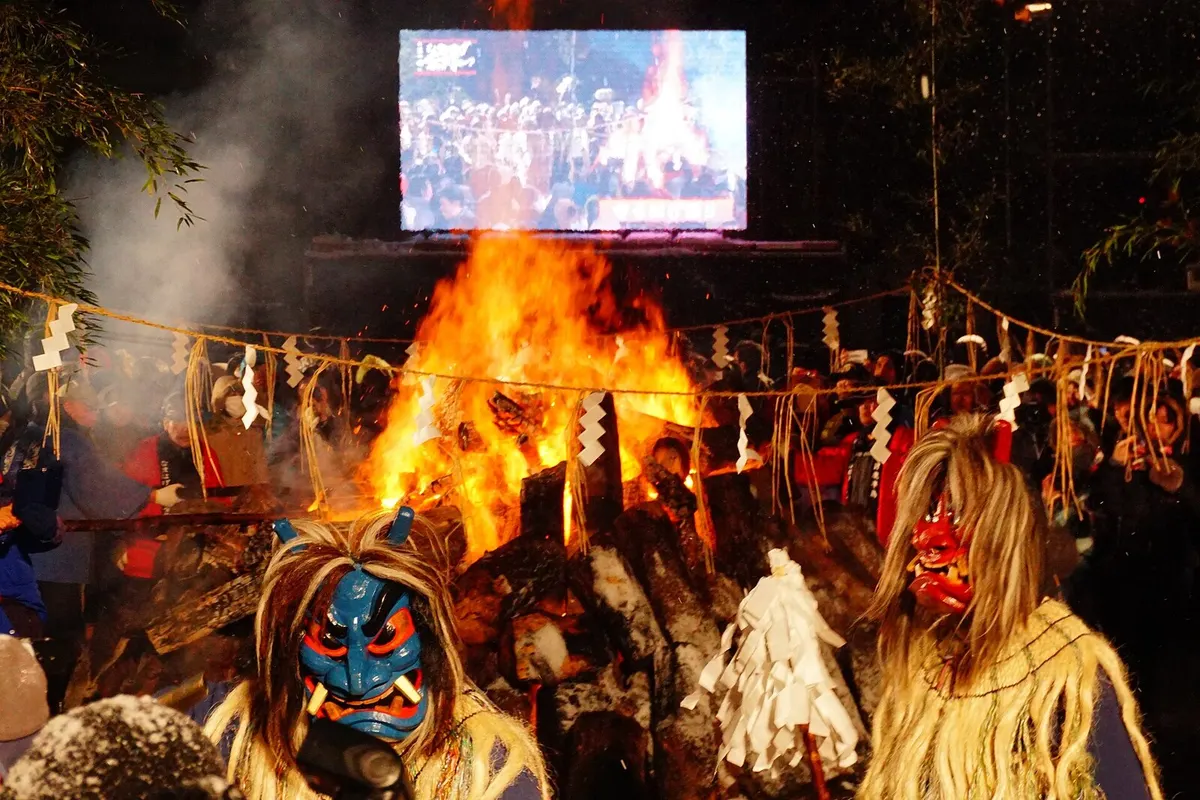 Photo: 掬茶, CC BY-SA 4.0, resized
Namahage come from the Oga Peninsula in Akita, in northern Japan. They come on New Year's Eve. Men from the village put on wooden masks and coats of straw. They stamp into each home and roar, "Any crybabies here? Any kids who don't listen to their parents?" They also ask if the young wife of the house gets up early. Namahage once came on Little New Year, the 15th day of the first month in the old calendar. They moved to December 31 after Japan switched to the Western calendar in 1873. In 2018, UNESCO listed namahage with nine similar Japanese customs, as raiho-shin, "visiting gods."
What they share
| Krampus | Namahage | |
|---|---|---|
| When | December 5, at night | December 31, at night |
| Look | Horned mask, fur, chains | Fierce wooden mask, straw coat |
| Who plays them | Local men in costume | Local men in costume |
| What they do | Scare and scold naughty children | Scare and scold crying, lazy or rude children |
| Where | House visits and street parades | House visits, village by village |
A Japanese scholar, Sugane Yukihiro, puts namahage, Krampus and Halloween side by side. All three are visits that go from house to house at the turn of a season.
Where they split
| Krampus | Namahage | |
|---|---|---|
| What he is | A devil | A god |
| Who comes with him | St. Nicholas, who rewards the good children | No saint. A messenger comes first, and the head of the house welcomes him |
| How the visit ends | Bad children are punished | He is fed, and he leaves a blessing for the year |
Krampus is a devil from the start. Historians find no proof of the "pagan god" story often told about him. Records of him only begin in the 1500s. His clearest roots are the devils in medieval church plays about St. Nicholas. Over time he became the saint's servant, a devil on a chain.
Namahage are treated as gods. In Oga, they are said to come down from the mountains with the new year. The family does not chase them away. The head of the house sits them down and serves them food and sake. In return, they drive out bad luck and promise a safe year, good crops and a good catch.
Why the same scare turned out so different
Here is one way to read it. This is our reading, not a proven fact.
Europe split the visitor in two. The kindness went to a saint, and the fear went to a devil. Good and evil stand on opposite sides, and the good one keeps the bad one on a chain.
Japan kept the visitor whole. The namahage scares the children, and the same namahage blesses the house. Shinto has a word for this. A god's spirit has two sides: aramitama, the rough and violent side, and nigimitama, the gentle and kind side. They are the same god. A fierce god, welcomed the right way, becomes a god who protects you. That is why the family feeds the namahage instead of driving it out.
So the two customs answer the same question in opposite ways. What do you do with something frightening at the end of the year? In the Alps, you chain it to a saint. In Oga, you invite it in for dinner.
The name, and where to see them
The name is said to come from namomi, the red rash you get from sitting too close to the fire. Hagu means to peel. A namahage peels the rash off lazy people who sit by the fire all winter. "Krampus" may come from an old German word for "claw," but nobody is sure.
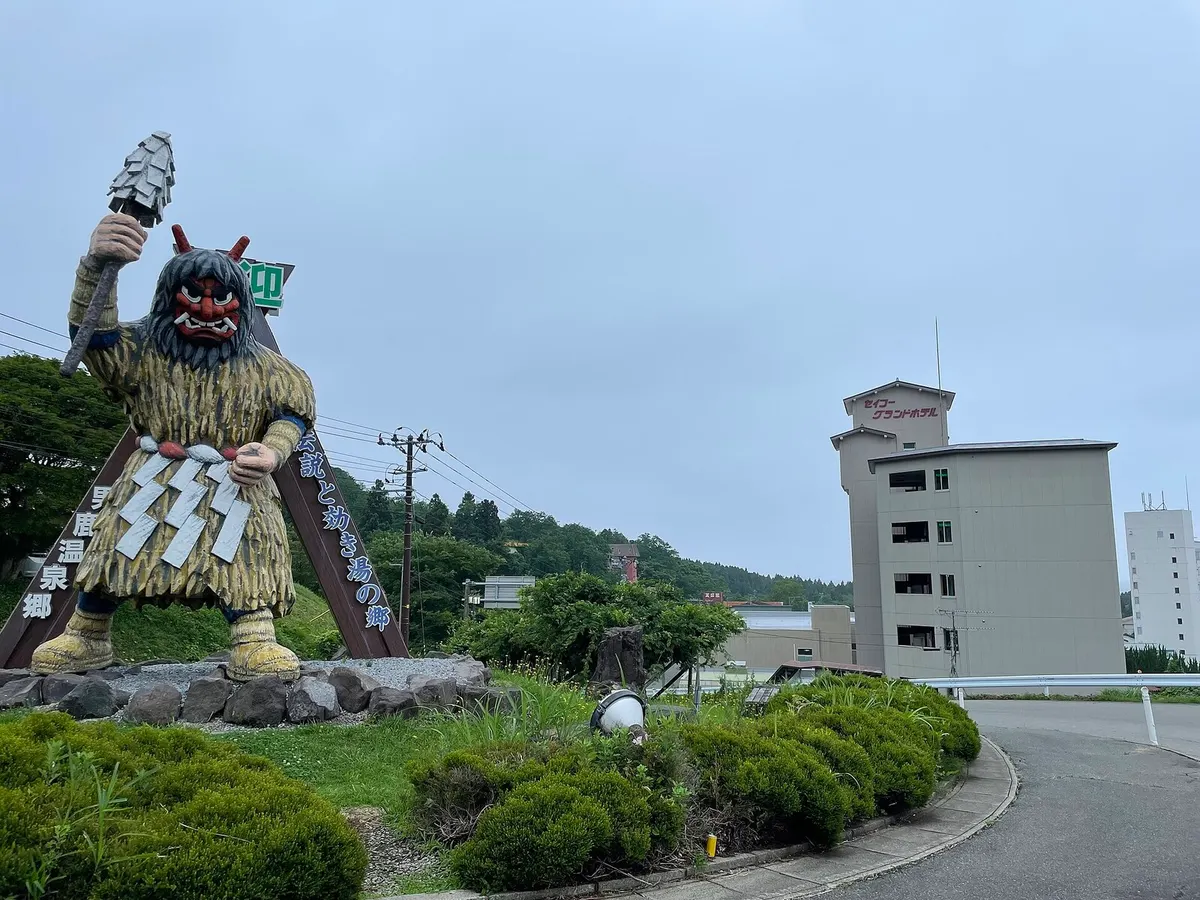 Photo: Totti, CC BY-SA 4.0, resized
To see namahage, go to Oga. The real house visits happen on New Year's Eve and are private. The closest thing a visitor can see is next to the Namahage Museum. At the Oga Shinzan Folklore Museum, an old farmhouse, a New Year's Eve house visit is acted out in full, every day of the year. See the museum's times on Oga's official namahage site. But visitors can see them every February at the Namahage Sedo Festival at Shinzan Shrine. It began in 1964, and it mixes the namahage with an older shrine fire rite. The Namahage Museum shows more than 150 masks from about 60 villages. Each village has its own face. At Shinzan, the namahage have no horns at all. So if you picture namahage as horned oni, Oga will surprise you.
To see Krampus, go to an Alpine town in early December. Salzburg and many towns in Austria and South Tyrol hold Krampus runs.
The photos on this page come from Wikimedia Commons. Each credit links to the photo's own page.