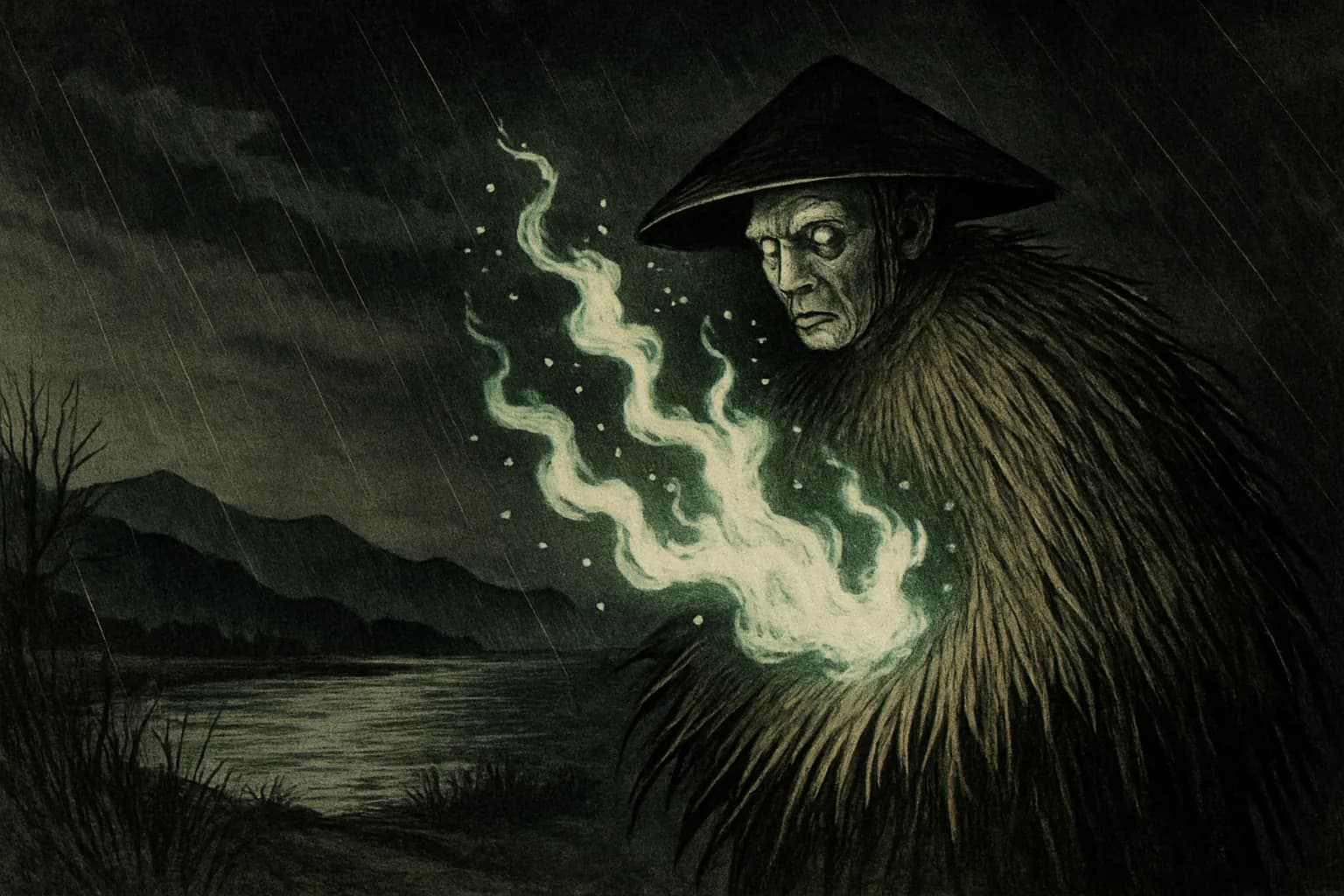
Cross an old graveyard or the site of a forgotten battle after dark, old accounts warn, and you might see it: a low blue flame hanging at head height, burning nothing, held by no one. The Edo-period encyclopedia Wakan Sansai Zue (1712) describes exactly this — a blue light "like a pine torch," often traveling in clusters, said to draw the spirit out of anyone foolish enough to walk into it. The name for it is onibi, 鬼 (oni, demon) + 火 (bi, fire): demon-fire.
Onibi isn't really the name of a single creature. It's the umbrella term Edo-period writers used for an entire family of unexplained night-lights, each with its own local name and story.
What does onibi look like?
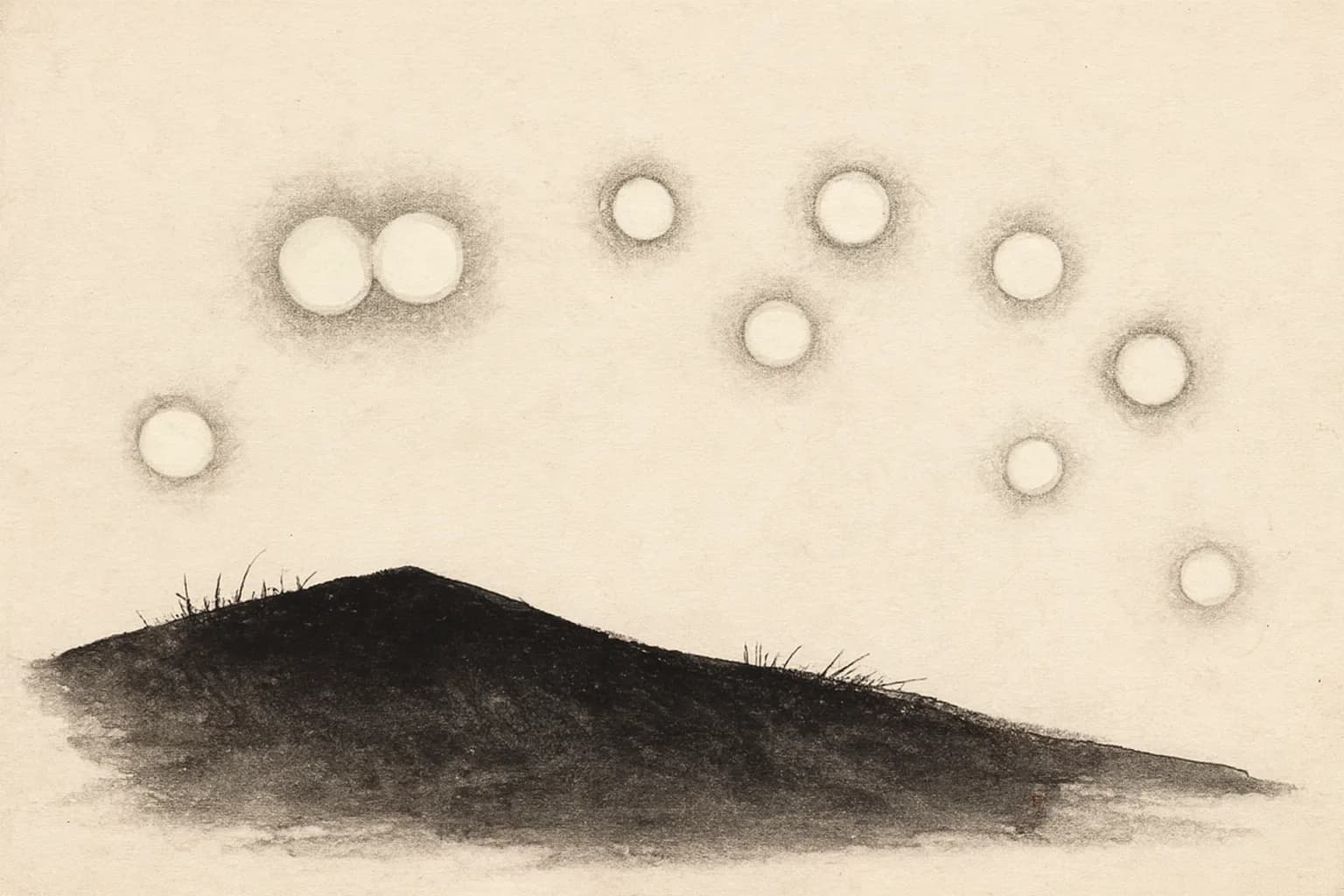
Consistently, it's small — roughly fist- to head-sized — glowing pale blue or blue-white, and it moves low to the ground at something close to walking pace rather than darting or leaping. Like the other fires it's grouped with, it gives off no detectable heat and leaves nothing scorched behind it, which is precisely what marked it as kaika, "monster fire," rather than an ordinary flame someone had simply misjudged in the dark. Woodblock artists rendered it as little more than a bare glowing orb, sometimes several strung together in a loose, drifting line across a field.
Not one fire, but a whole family
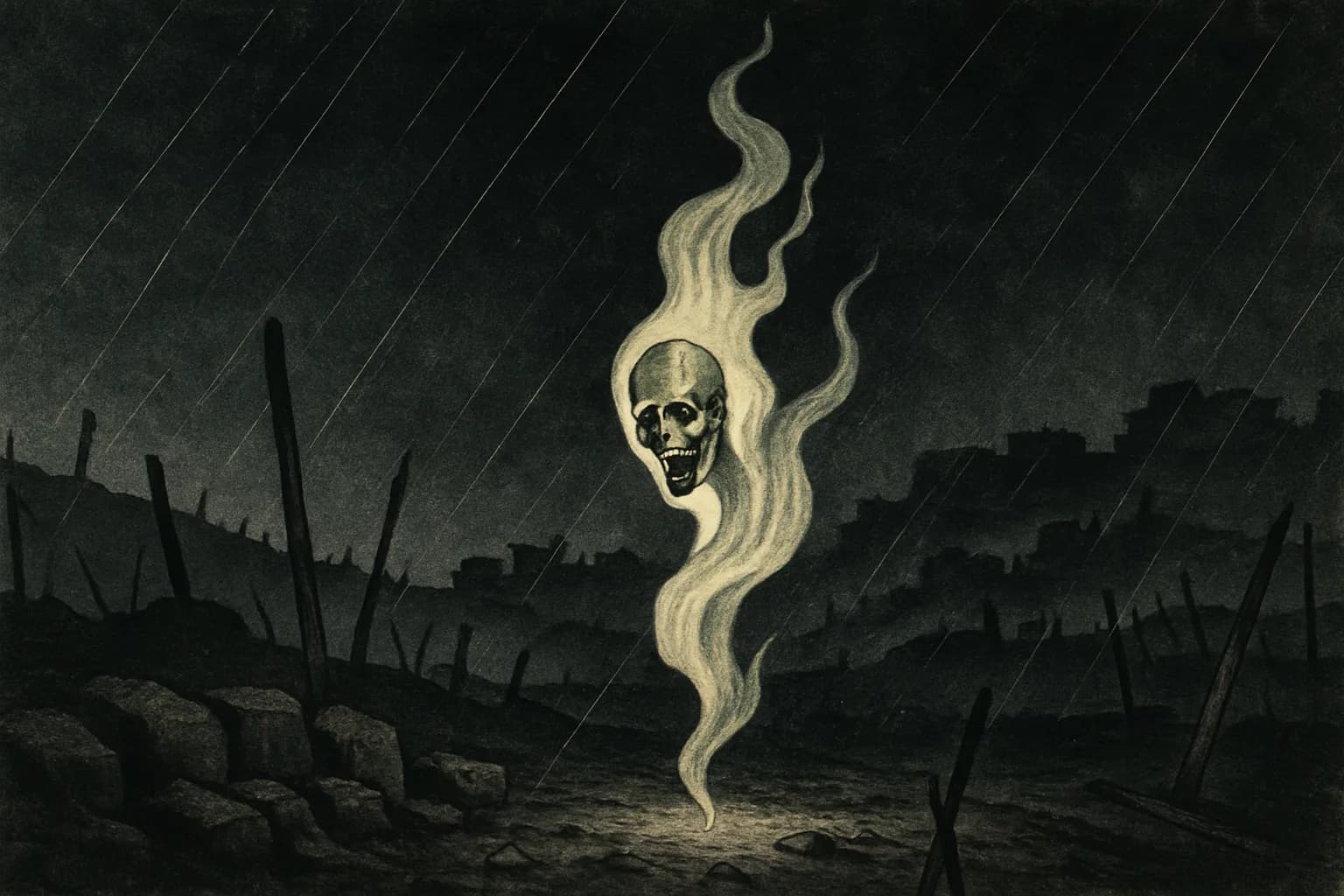
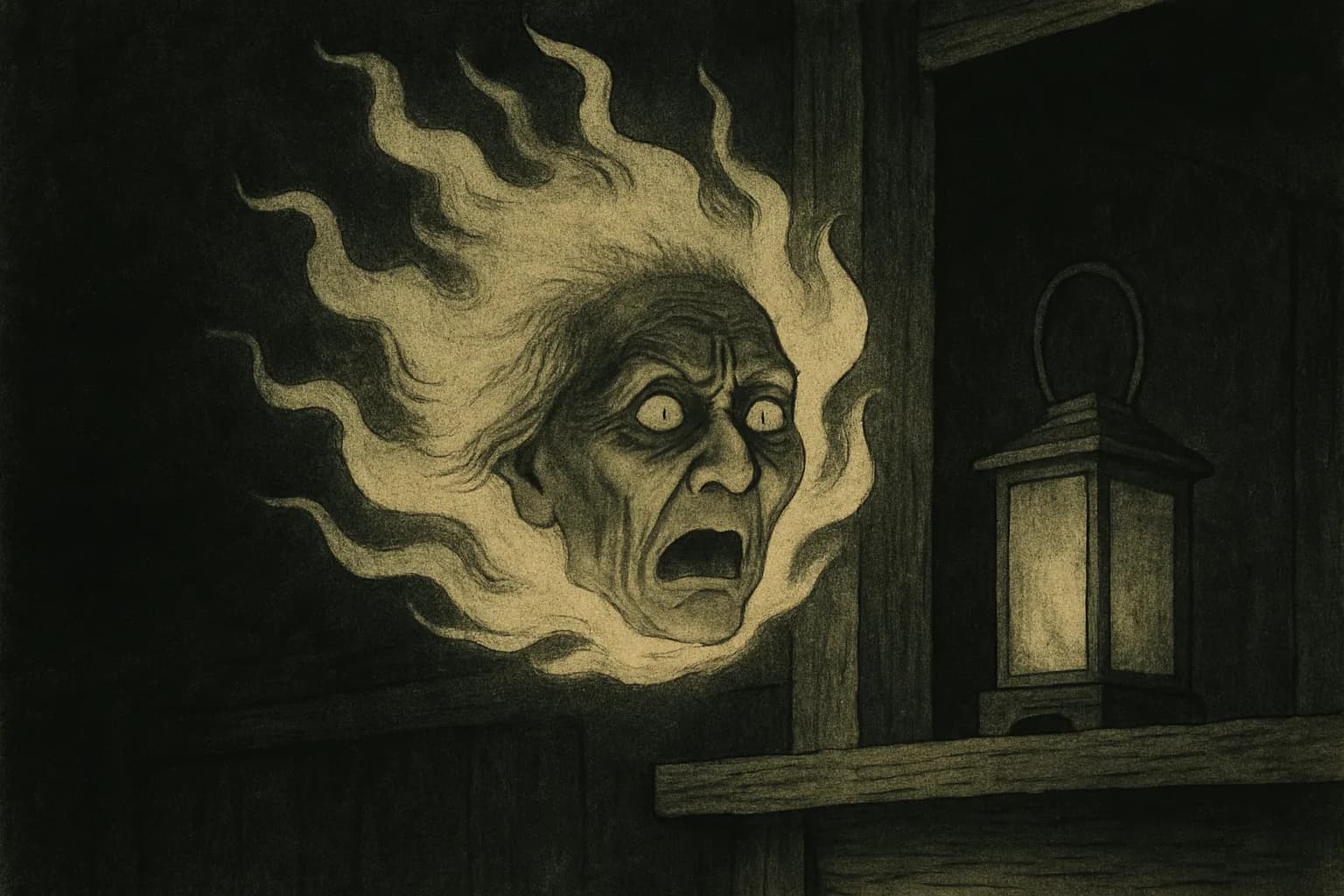
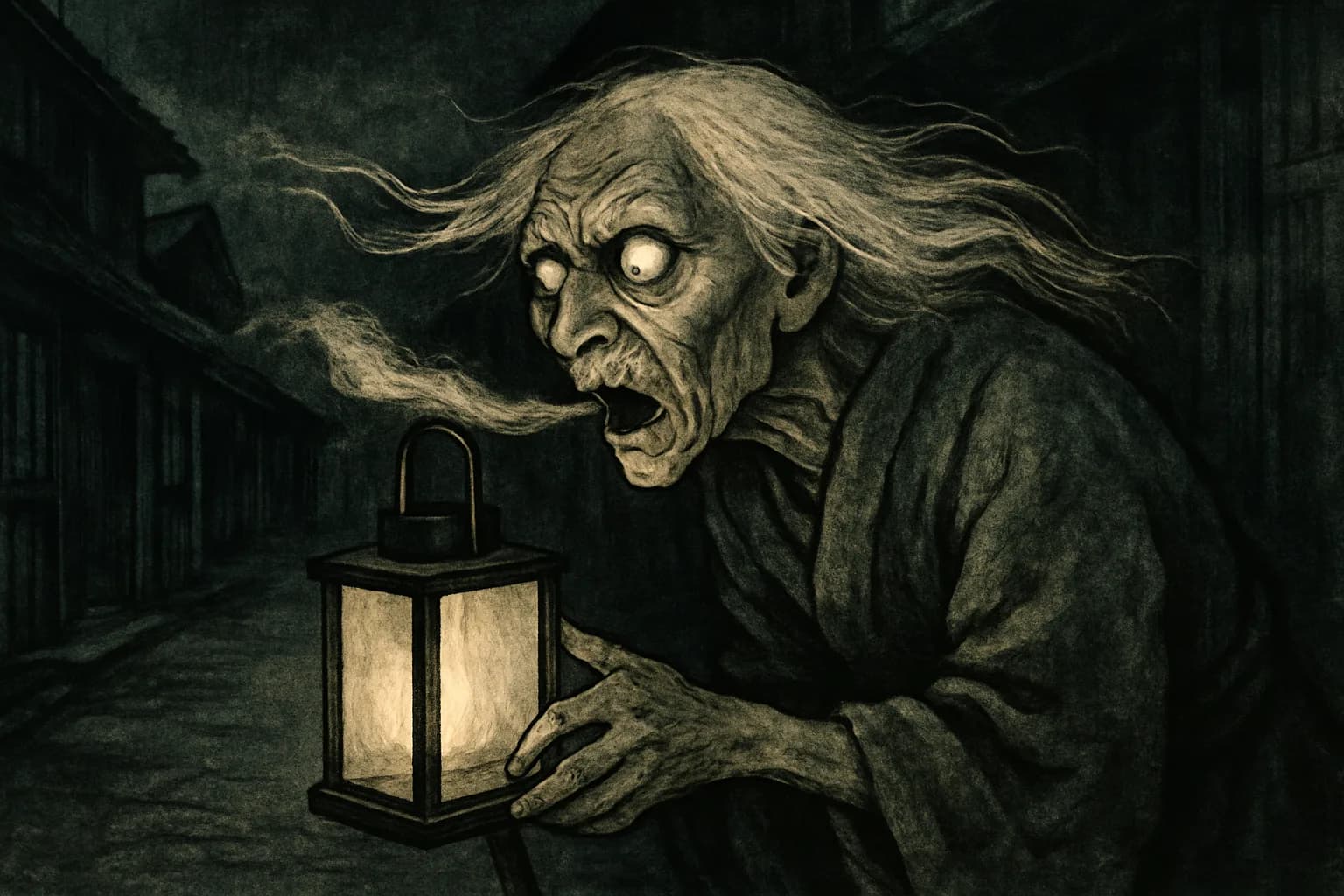
Toriyama Sekien, the eighteenth-century artist who spent his four-volume Gazu Hyakki Yagyō cataloguing Japan's supernatural creatures, gave individual names and backstories to several onibi. In Kyoto, he recorded Sōgenbi (叢原火), the burning head of a monk from Mibu-dera temple who had stolen the temple's offering money and its sacred lamp oil, and who was condemned after death to fly the night sky as a flame in payment. In his Konjaku Gazu Zoku Hyakki he recorded Sarakazoe (皿数え, "plate-counting"), a fire rising from a well and counting plates aloud — his rendering of Okiku, the maid of the Banchō Sarayashiki ghost story, murdered over an accusation of breaking one of ten treasured plates. Elsewhere the same category covers Kosenjōbi (古戦場火), fires said to gather specifically at the sites of old, bloody battles, where the dead had gone unburied or unmourned.
Different names, different backstories, but the same idea underneath: a light with no visible source, tied to a violent or unresolved death.
Where onibi comes from
The folk explanation was direct — onibi rose from the bodies of the dead, human and animal alike, left in fields and unmarked graves, or from the sheer intensity of a grudge someone carried to their death. A battlefield thick with unburied corpses, a well hiding a murder, a graveyard at the edge of a village: these were exactly the places villagers expected to see one, and the stories functioned as a kind of memorial marker, keeping a violent local death in circulation long after the people involved were gone.
Modern writers on the subject also point to the same natural process blamed for will-o'-the-wisps worldwide: phosphine and methane seeping up from decomposing matter in soil, capable of igniting faintly in open air with no visible fuel. That explanation doesn't erase the folklore so much as account for why sightings clustered so reliably around graves and old battle sites in the first place.
Onibi in Japan today
The word has stayed in circulation as general shorthand for any inexplicable floating light, and its individual variants still turn up by name — Kosenjōbi in particular, tied to specific historical battlefield sites, remains a staple of Japanese ghost-story collections. The category has also crossed into games: Team Ninja's Nioh 2 draws directly on onibi imagery for its supernatural fire effects, and the Megami Tensei series lists Onibi as one of its low-tier demons, both trading on a shape Japanese audiences already recognize on sight.
Sarakazoe's source story, meanwhile, never really faded. Himeji Castle still maintains a well identified as Okiku's — the one she is said to have been thrown into after being falsely accused — and it remains a stop on the castle grounds today, plate-counting ghost included.