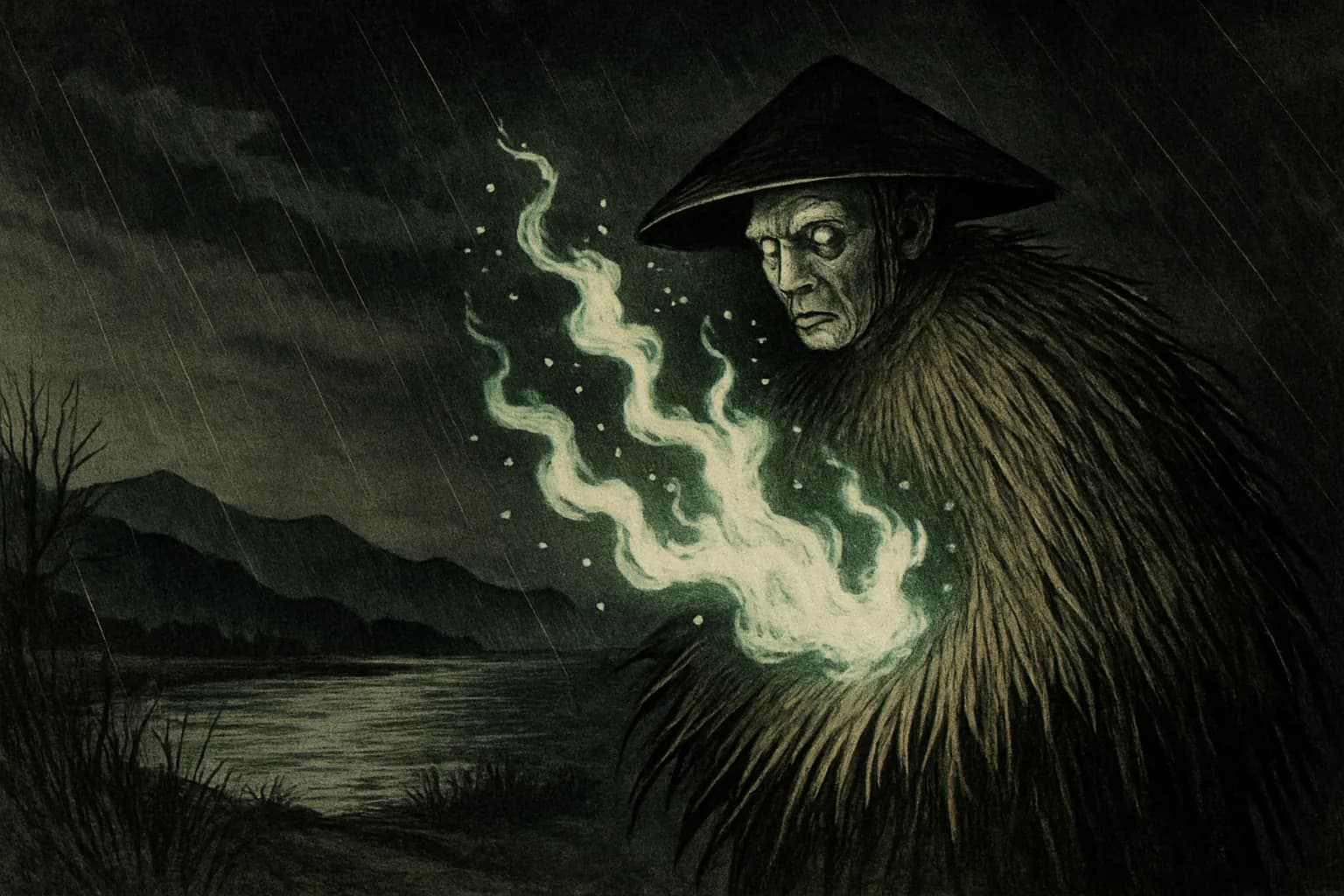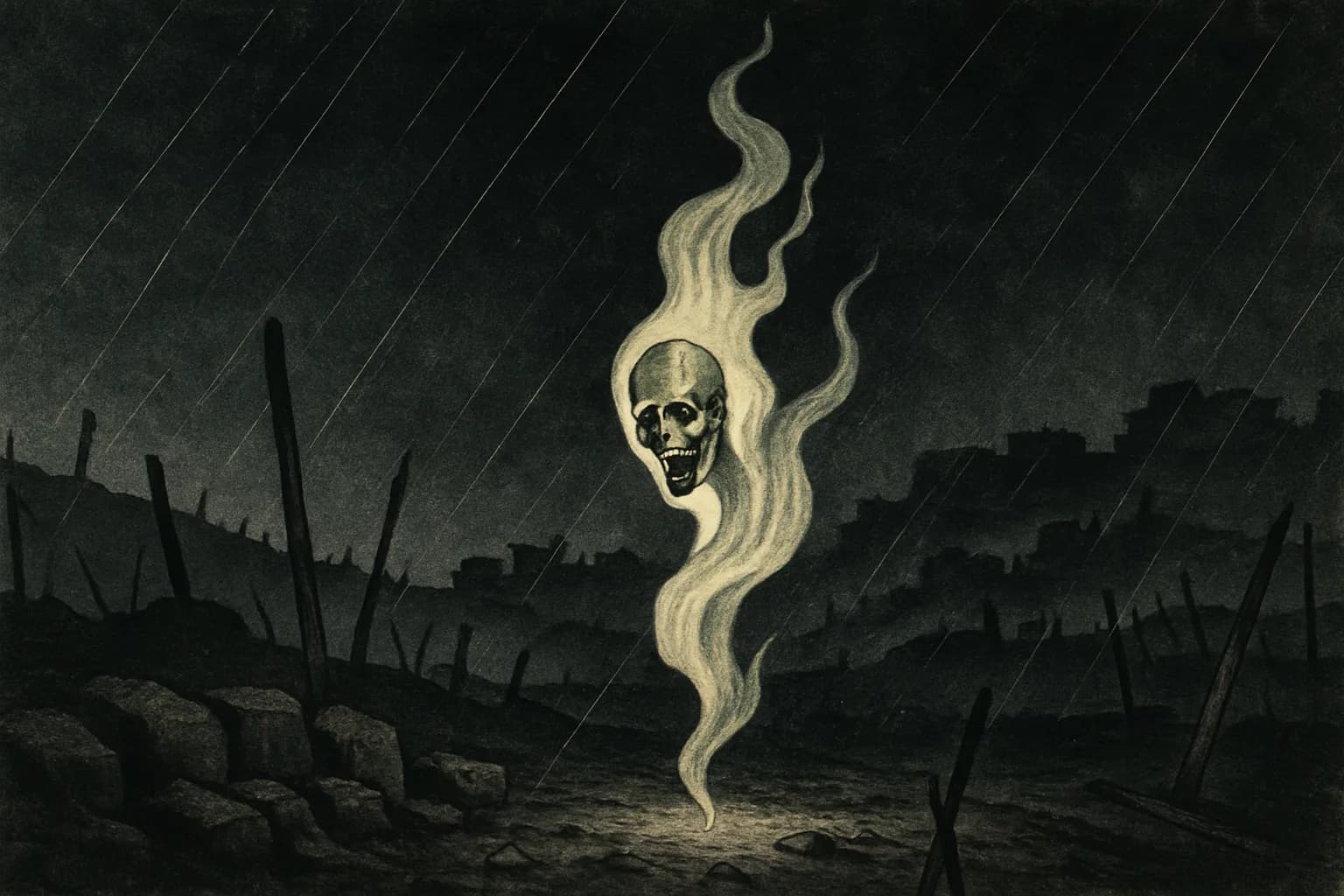
Rain falls on a field where, centuries ago, an army broke and ran. There is nothing left to mark it — no wall, no grave markers, just grass and the shape of the ground. And then, low over the earth, a fire starts up with no wick and no fuel and begins to drift. Toriyama Sekien catalogued this sight in his 1779 Konjaku Gazu Zoku Hyakki and gave it a name that states its business plainly: kosenjōbi, from 古 (ko, old) + 戦場 (senjō, battlefield) + 火 (bi, fire) — the old-battlefield fire.
What does it look like?
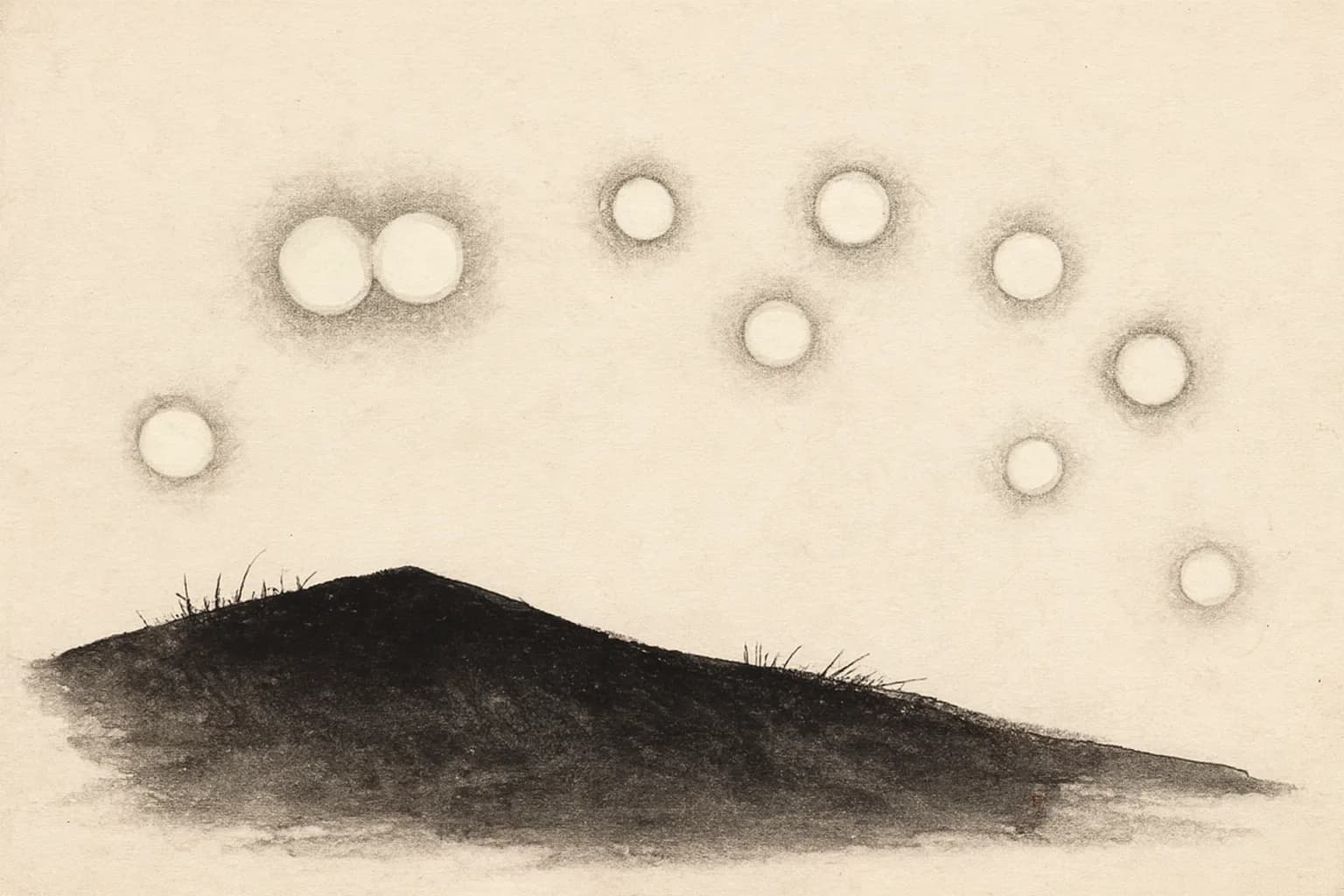
Like most of the fires in Sekien's supernatural catalogue, kosenjōbi is described as small and low, closer to a hand torch than a bonfire, burning with no visible source and no heat you could warm yourself by. What sets it apart from its relatives is the weather it keeps. Where hitodama are said to hover over graves on still, dry nights and onibi drift through marshes at any season, kosenjōbi is specifically a rain phenomenon — it is on wet nights, when the old battle-ground turns to mud, that the fires are said to rise and cross the field.
Ground that never got a funeral
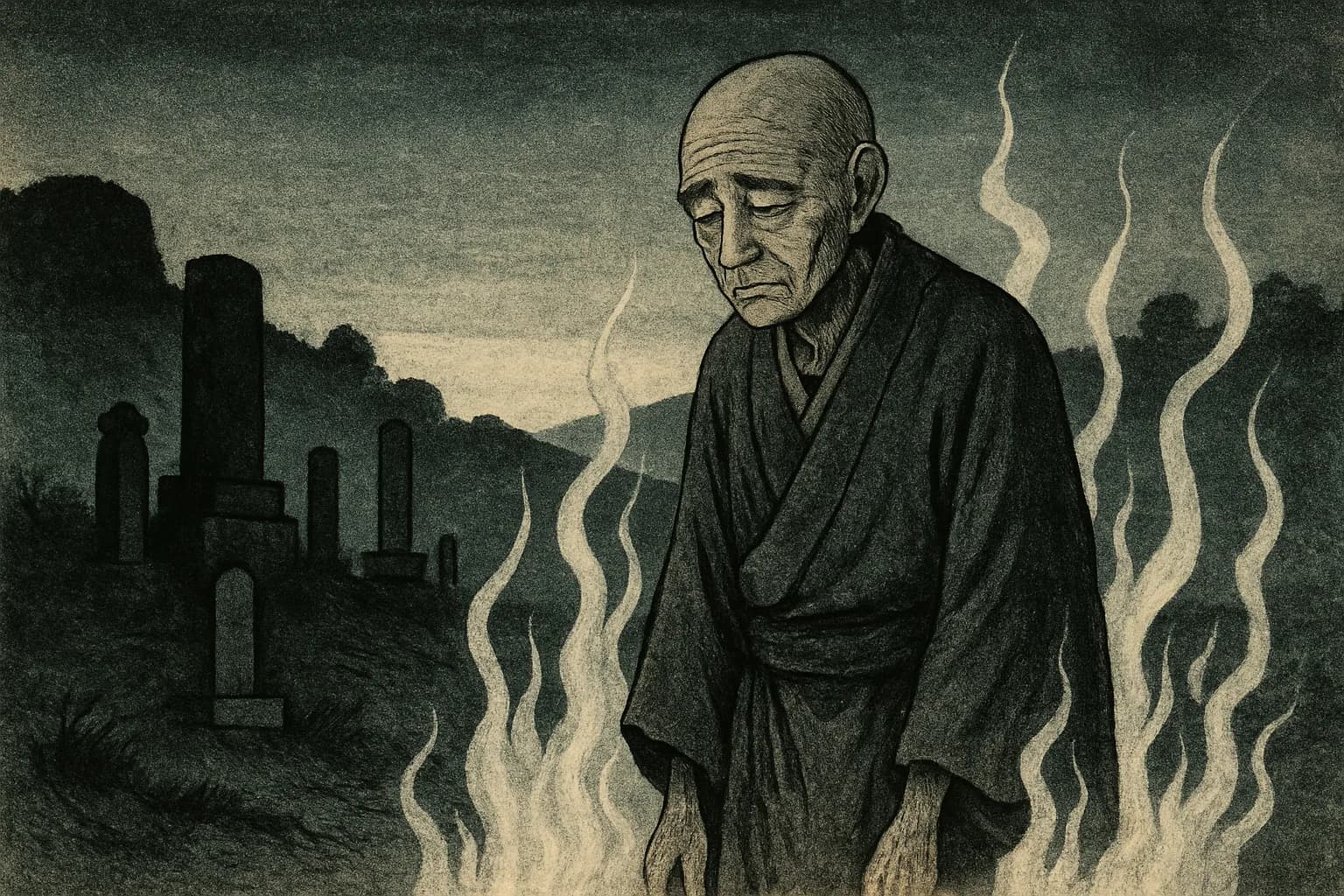
The folk logic behind kosenjōbi is the same logic behind most of Japan's ghost-fires, but sharpened by where it happens. A samurai battle in the Sengoku period could put thousands of men on a single field in a single day, and for the ordinary foot soldier — the ashigaru, not the named generals — there was often no individual grave waiting afterward. Bodies went into mass pits, or were left where they fell for the villagers to deal with once the army had moved on. Buddhist ritual mattered enormously to how a soul was believed to settle after death; skip the rites, and the dead were thought to linger, unable to leave. A kosenjōbi was read as exactly that lingering, made visible: the accumulated resentment and unfinished business of men denied a proper send-off, still burning on the ground where they died.
It's the same root cause behind gashadokuro, the giant skeleton said to form from pooled, unburied bones — that yokai gives the dead a body; kosenjōbi gives them a flame instead. Two different pictures drawn from the same premise about what happens when a battlefield's dead are left uncared for.
One name among several
Sekien didn't invent the idea of a fire tied to a specific tragic death — he was cataloguing a whole family of them. In the same run of illustrated compendiums he recorded Sōgenbi, the burning head of a monk punished for stealing from his temple, and elsewhere onibi more broadly, the demon-fires blamed on any resentful or violent death. Kosenjōbi is the entry in that family assigned specifically to war: not a fire that could show up anywhere, but one pinned to a category of ground — the old battlefield — and a category of death — the mass, unmourned kind that premodern warfare produced by the thousand.
Kosenjōbi today
The phenomenon has stayed a fixture of Japanese ghost-story anthologies precisely because the geography behind it is still walkable. Japan's largest historical battles — Sekigahara, Kawanakajima — put enormous numbers of common soldiers into the ground with little individual ceremony, and old battle sites across the country are still dotted with small stone markers and roadside jizō statues, many erected well after the fact specifically to pacify the souls of the war dead who never got a proper burial. Kosenjōbi is the version of that impulse told as a story instead of carved in stone — the same unease about the unburied dead, given a shape you might see if you were unlucky enough to cross the right field on the wrong rainy night.