Ghost Lights
Japan has a separate name for almost every light that has no business being there, and the difference between them is never what the flame looks like — it is who owns it. A fox lights one on purpose. A soul leaves the body carrying its own. Some burn where soldiers fell, steered by nobody at all. These are the kaika: cold fires that give off no heat, cross wet ground on windless nights, and were never quite safe to follow.
Some of these lights belong to the dead. A hitodama is a soul leaving the body. Onibi are cold fires in graveyards and marshes. Kosenjōbi rise over old battlefields, where soldiers' blood soaked into the ground. Kazenbō is a monk wrapped in flame. Later writers say he burned himself to reach paradise.
Some belong to animals. Foxes lit the kitsunebi. At Ōji in Edo, farmers counted these fox-fires on New Year's Eve to forecast the rice harvest. Hiroshige printed the scene in 1857. The aosagibi is an old heron, often called a night heron, whose wings glow in night flight.
Some have a face, or a crime behind them. The ubagabi is a ball of flame with an old woman's face. She stole lamp oil from a shrine. Others do something to you. Minobi sparks cling to a straw cape in the rain, and multiply if you brush them off.
A few come in pairs. The inenbi is two flames that stay fixed in one place. The takuro-bi is two fires that rise side by side off the coast of eastern Hiroshima.
Each page below lists its sources.
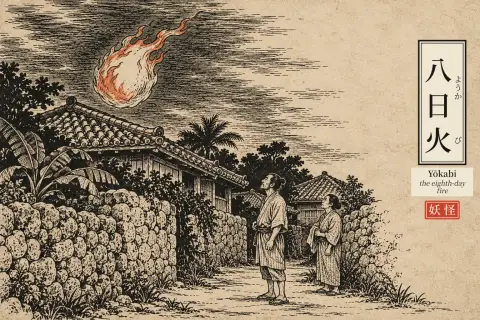
Eighth-Day Fire
八日火Fireballs seen all year, but the ones around the tenth of the eighth month get their own name.
ominous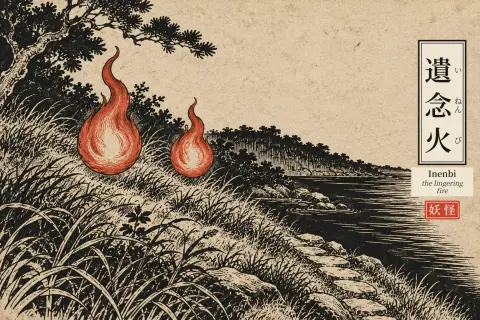
Inenbi
遺念火A fire that stays fixed in one place, while other ghost-lights wander.
sorrowful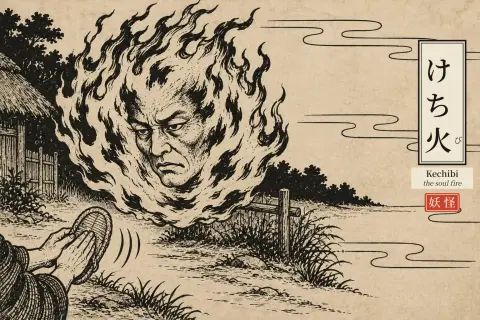
Kechibi
けち火A floating ball of fire with a human face in it, lured closer by slapping a straw sandal three times.
ominous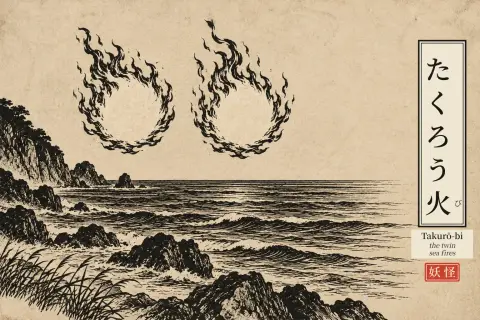
Takurō Fire
たくろう火Two fires that rise side by side off the Mitsugi coast on summer and autumn nights.
ominous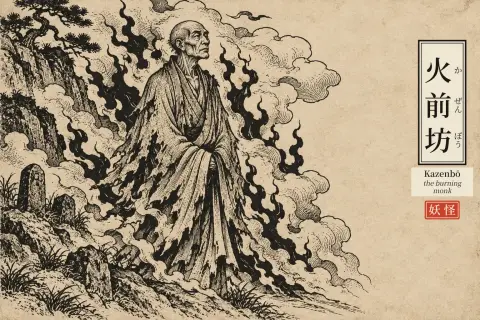
Kazenbo
火前坊A monk who burned himself alive on Toribeyama, still wrapped in his own flames.
sorrowful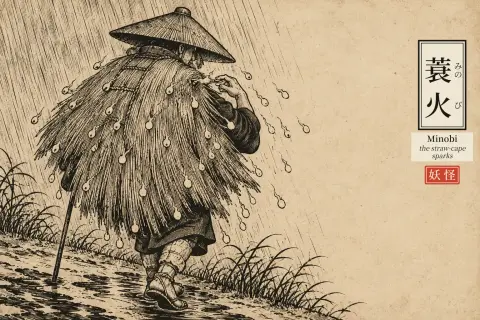
Minobi
蓑火Sparks that cling to a traveler's straw cape on rainy nights—and multiply if you try to brush them off.
eerie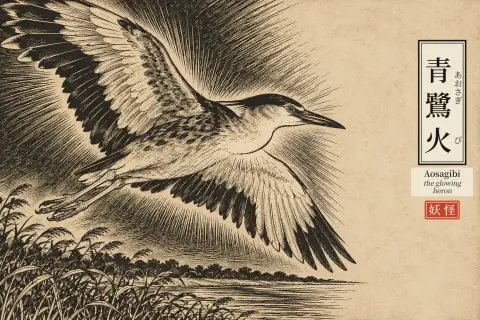
Aosagibi
青鷺火A night heron whose feathers glow blue-white as it passes overhead—a real bird, and a real light.
mysterious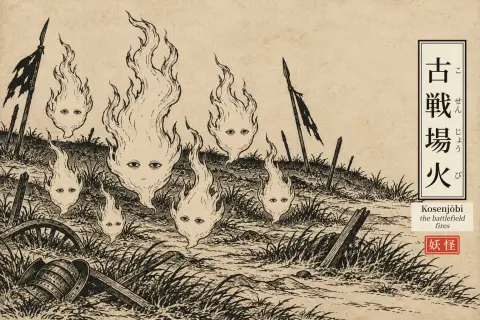
Kosenjobi
古戦場火Flames that rise from old battlefields at night, where the dead were never buried.
eerie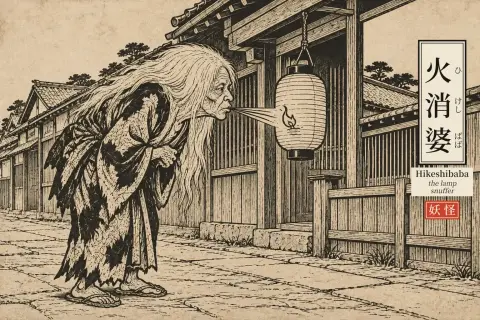
Hikeshibaba
火消婆An old woman who blows out the lantern in your hand and leaves you standing in the dark.
menacing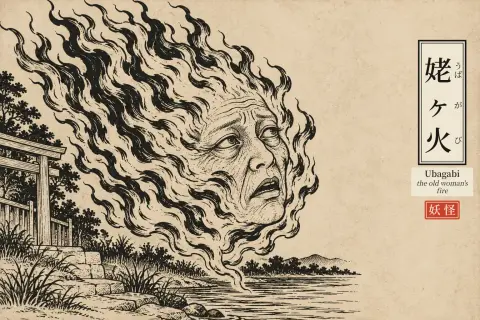
Ubagabi
姥ヶ火A ball of flame with an old woman's face, born from a woman who stole lamp oil from a shrine.
vengeful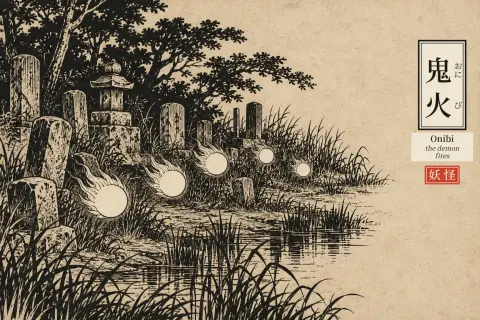
Onibi
鬼火Cold blue 'demon-fires' that flicker in graveyards and wetlands, said to be born of the dead.
eerie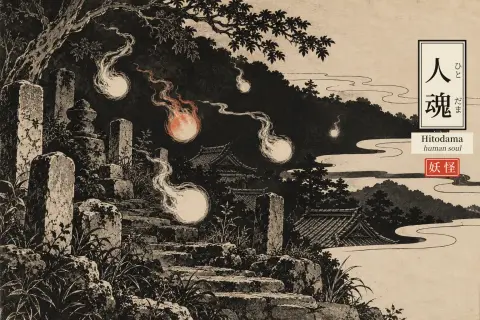
Hitodama
人魂Pale floating orbs of soul-fire that drift from the newly dead near graveyards and rooftops.
eerie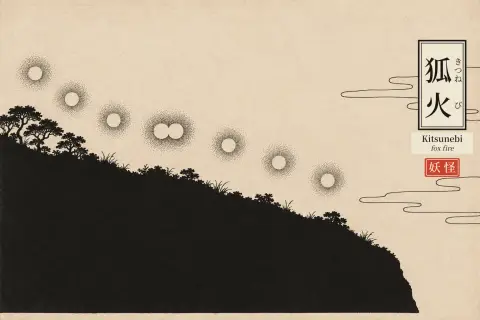
Kitsunebi
狐火Mysterious floating fox-fires that lead travelers astray at night.
eerie