Sailors on Japan's Inland Sea kept watch for a light that followed them home. It rose off the coast near Mitsugi, in the old province of Bingo — today's eastern Hiroshima. The light carried no lantern and threw no heat. It matched a boat's speed exactly, staying the same distance back no matter how hard the rowers pulled. Sailors called it Takurō-bi (たくろう火). The name ends in 火 (bi, "fire"); the rest is written only in sound, with no agreed meaning behind it.
What does it look like?
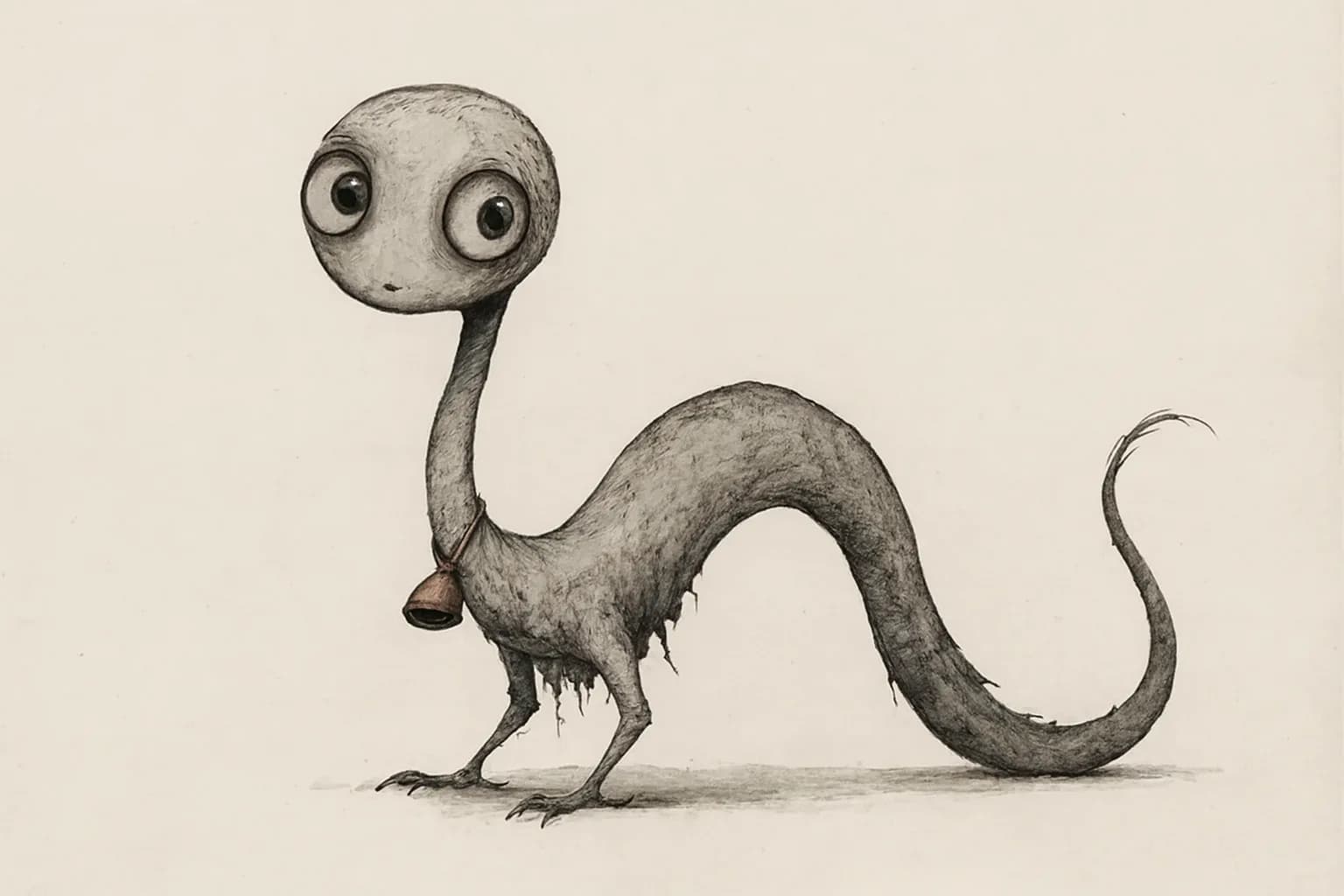
Takurō-bi appears as a ball of fire hovering low over open water. Most sightings place it at night, in late summer or early autumn, along the coast between the old Aki and Bingo provinces. Like Japan's other kaika, "strange fires," it gives off light without heat and has no visible source.
Most accounts describe two flames rather than one. They hold a short, steady distance apart as they move, as if pacing each other down the coastline.
Kurabe-bi: the fire that races itself
That pairing gave the creature a second name: Kurabe-bi (比べ火), "comparing fire." Two lights, always level, always the same distance apart — sailors read it as a kind of contest playing out over the water.
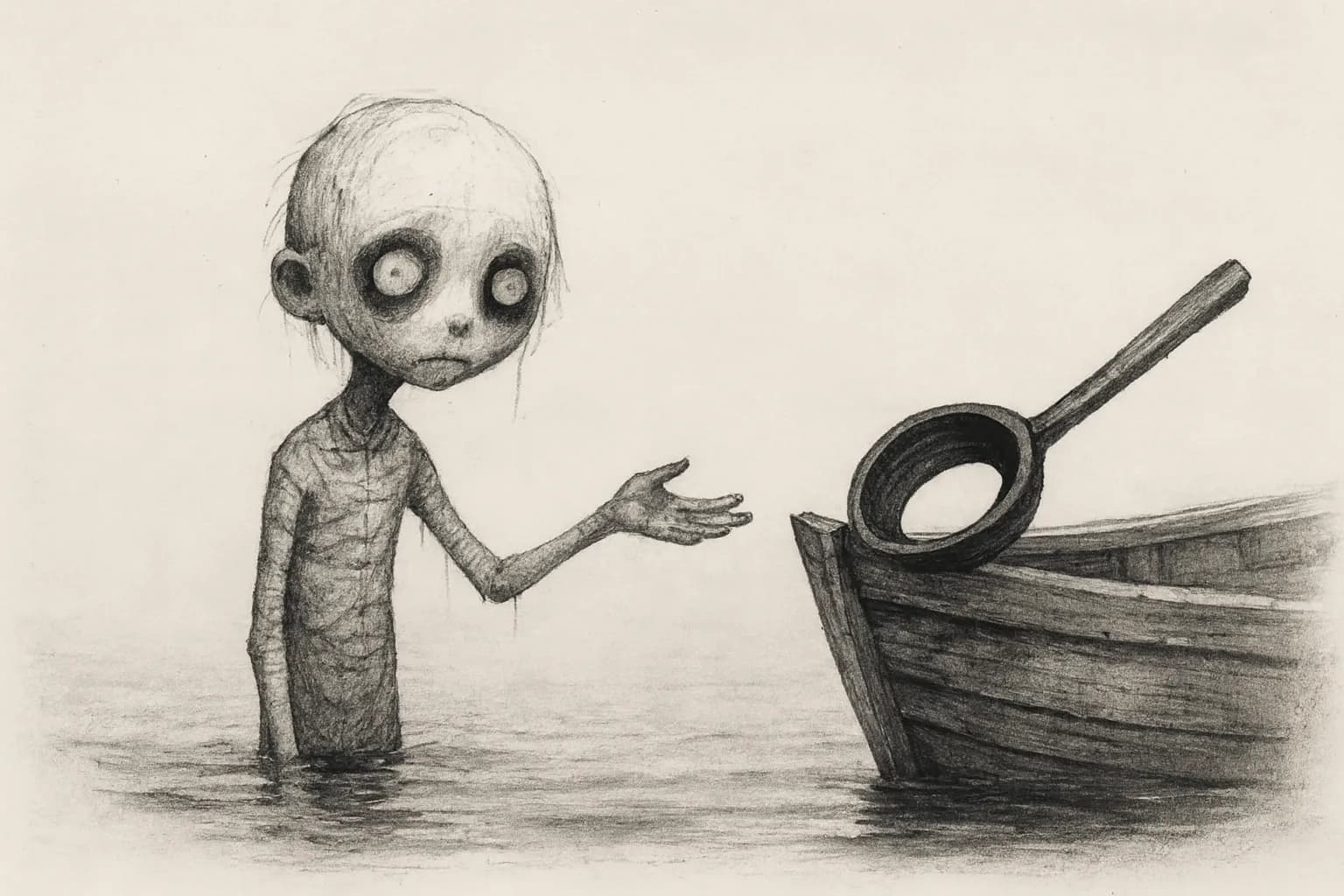
Takurō-bi rarely does more than watch. It trails a boat, keeps pace, and eventually falls back or goes out. Compare that to funayurei, the drowned dead of the same waters, who rise beside a hull and beg for a bailing ladle, then use it to swamp the boat that lent it. Next to a funayurei, Takurō-bi reads less like an attacker and more like a warning light that happens to be alive.
Where it comes from
Central Hiroshima folklore ties the fire to a specific tragedy. Two women died violently somewhere along this coast. Afterward, people said, their bodies became stone: two rocks called Kyō-jorō, the "Kyoto woman," and Chikushi-jorō, the "Chikushi woman," named for the old Chikushi region of northern Kyushu. Their spirits are what still rises from the water as Takurō-bi. Kyoto and Chikushi sit at opposite ends of the old sea route through the Inland Sea, which points to two travelers who started far apart and never finished the trip.
The earliest written record sits in the Geihan Tsūshi (芸藩通志), a gazetteer of the Aki and Bingo provinces completed in 1825. It catalogued local place names, customs, and the strange sights tied to them, and the fire off Mitsugi's coast was one of its entries.
More than a century later, the folklorist Yanagita Kunio revisited the story in his essay collection Yōkai Dangi (妖怪談義). He quoted the Geihan Tsūshi passage directly and pointed to the Kyō-jorō and Chikushi-jorō rocks, which sit on the old border between Aki and Bingo. Yanagita read the fire as bound up with the beliefs of the boatmen who worked that route, tying a hazardous stretch of water to two named, storied deaths instead of leaving it an unexplained danger.
Takurō-bi today
The story stayed local for nearly two centuries. Then, in 2018, the sixth televised GeGeGe no Kitarō series gave the fire a full episode: "Flame on! The Solitude of the Takurō-bi." That version invents a personality with no root in the Bingo record — a lonely yokai exploited as a sideshow act who ends up befriending a robot. It borrows the name and leaves the coastal legend behind.
Outside that one episode, Takurō-bi has stayed one of the more obscure entries in Japan's catalogue of fire yokai, filed alongside kitsunebi and onibi rather than headlining anything. It has no shrine and no festival. What it has is one stretch of coastline, a name that is mostly sound, and two rocks that, depending on who you ask, are still standing where the women fell.