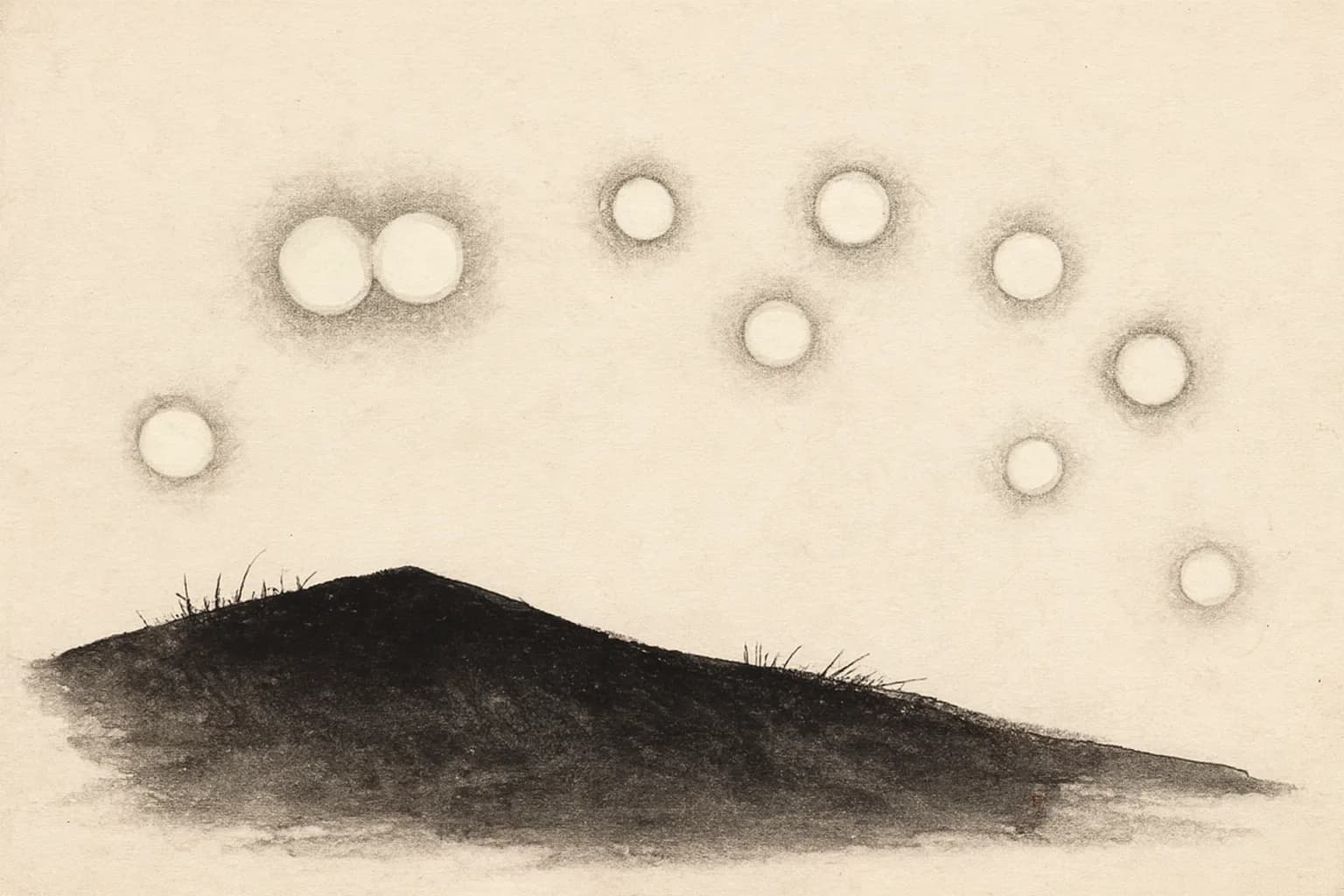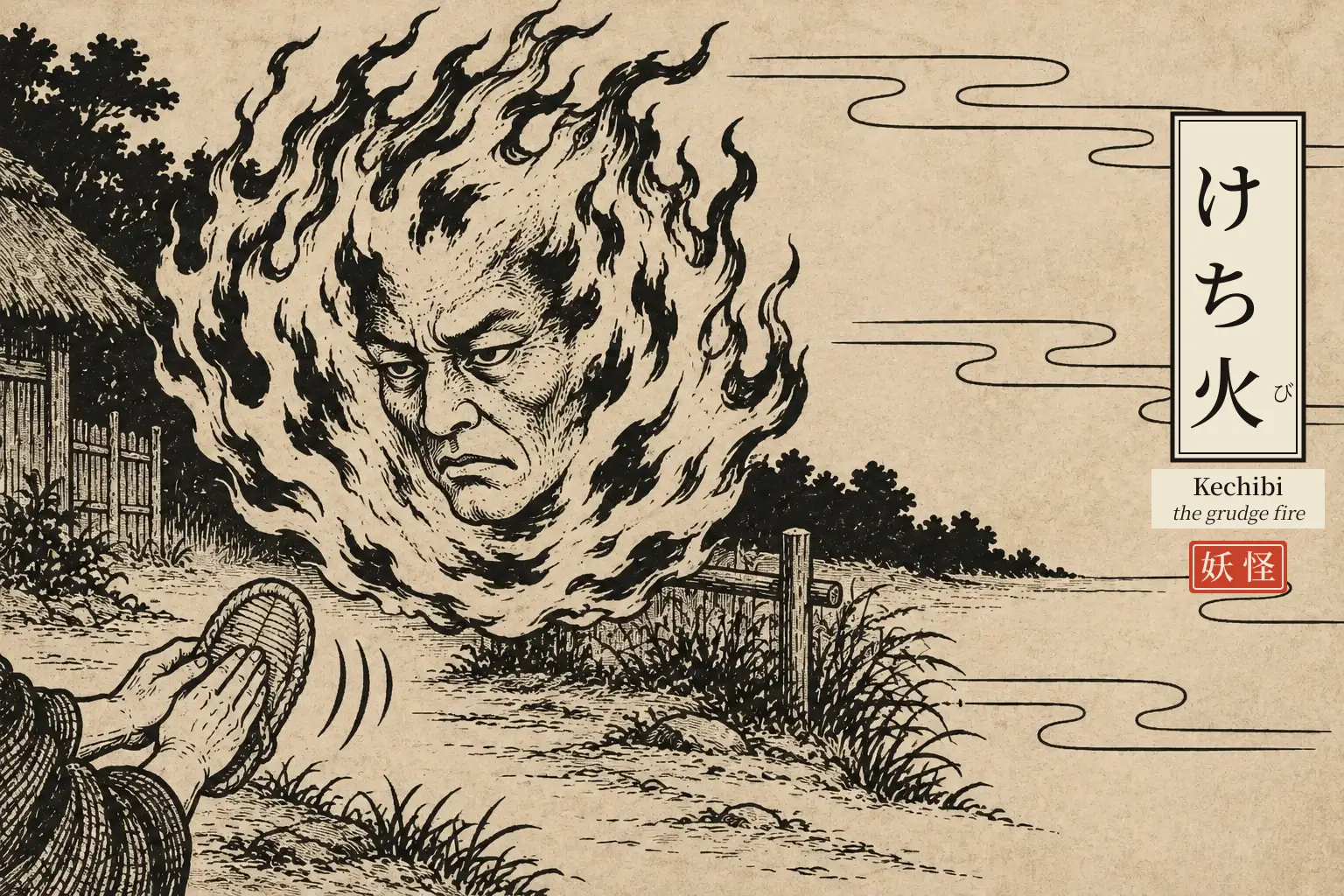
On a dark road near the Monobe River, something small and bright rolls in the dirt. Walk toward it, and it rolls away. Give chase, and it may lead you straight into someone else's house. This is kechibi (けち火), a drifting ball of fire. Stories place it in Kōchi, on the island of Shikoku, and far off on Sado Island in Niigata. Only its last character, 火 (bi), "fire," tells you plainly what this is.
What does a kechibi look like?
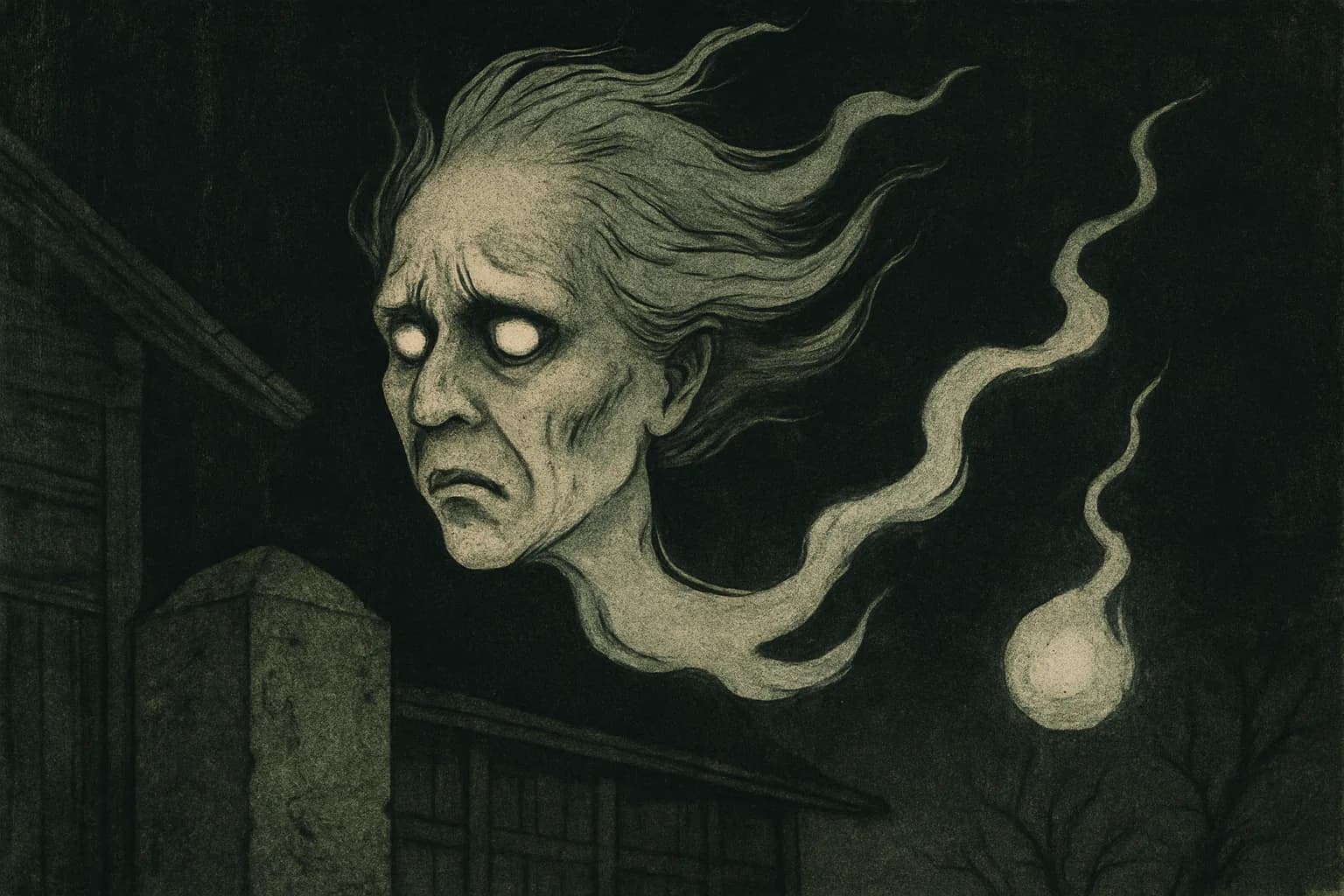
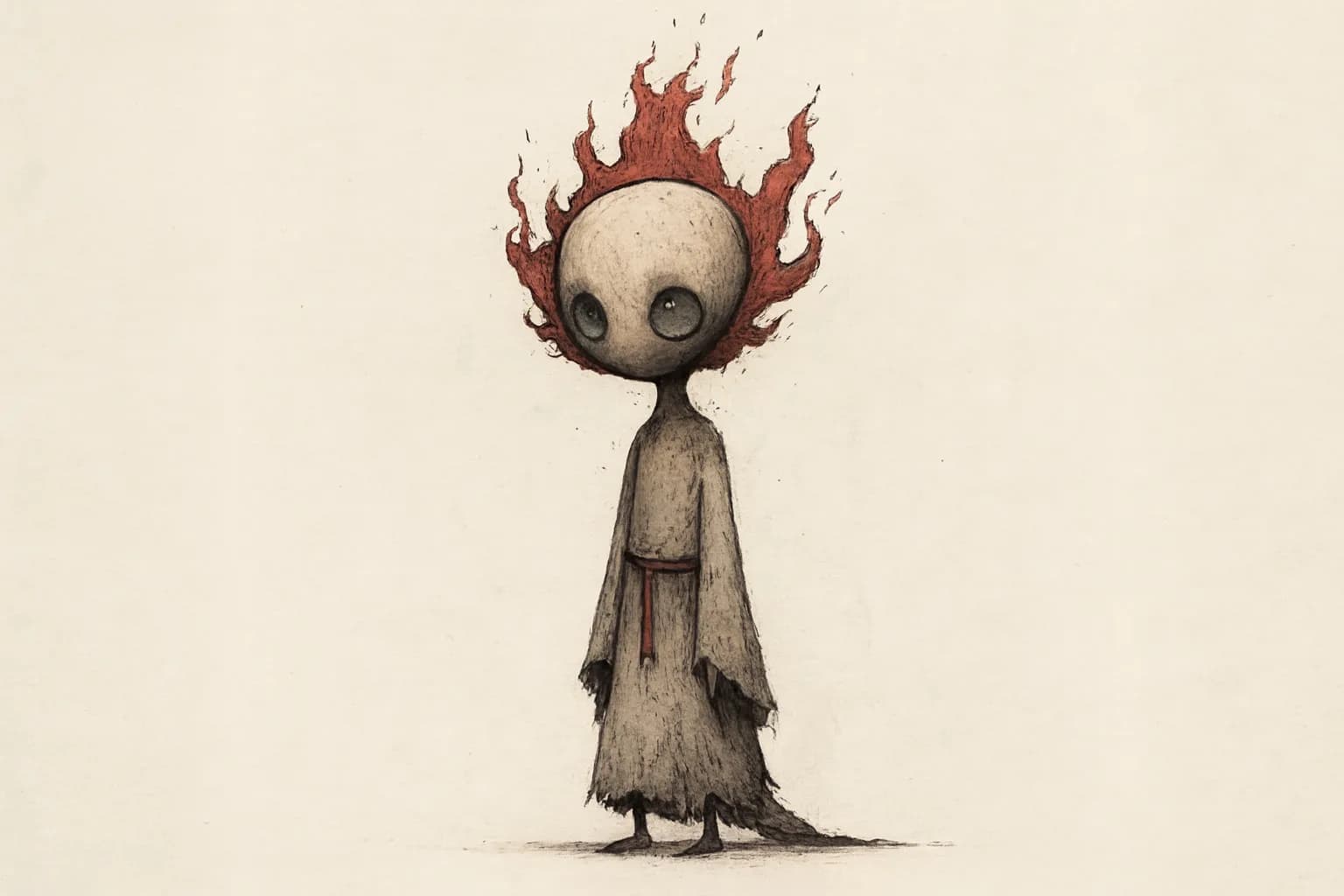
Kechibi takes the shape of a ball of fire. Old belief held it was a person's vengeful spirit, turned to flame. Look closely, people said, and a human face floats inside the fire.
Calling it closer
The old stories agree on one thing. You can call a kechibi nearer, if you want to. Strike a straw sandal, a zōri, three times, and it comes. Or wet the sandal with spit, and beckon. Villagers in Kōchi passed this down as both trick and warning. Few say why anyone would want to try it.
Two kinds of kechibi
The folklorist Ichihara Rin'ichirō studied kechibi stories across Kōchi. He split them into two groups. One kind rises from a body at the instant of death. The other rises out of someone who is only sleeping.
A night by the Monobe River
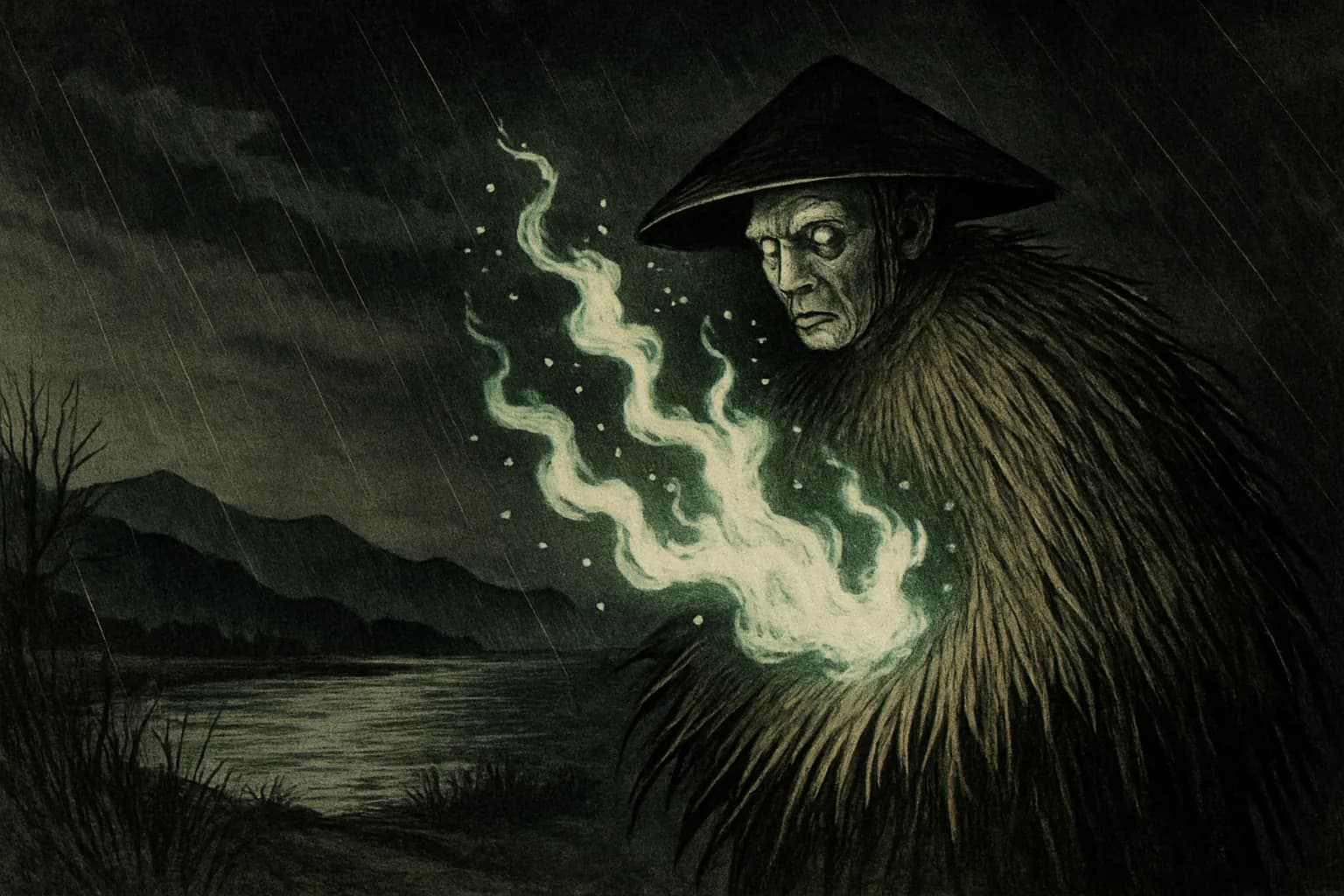
In early Meiji-era Kami District, a man called Yoshi-yan was walking home at night. Near the Monobe River, he saw a kechibi rolling by the road. He came closer, and it rolled away. Curious, he gave chase, and the fire fled straight into a house. Inside, a man woke from restless sleep. He told his wife that Yoshi-yan had been chasing him in his sleep.
Caught in Takaoka
A bolder man met kechibi around the same time, in Takaoka District. Saitō Kumae saw the fire and shouted a dare: fly here. It did. Kumae reached for it with his hand, and it vanished. He stamped at it with his foot, and it vanished again, then came back. At last he caught it between both palms and carried it home. When he opened his hands, it was already gone. The next day, Kumae came down with a fever no one could explain. He never recovered.
Out at sea, and in Nara too
Kechibi is not only a story for dry land. Along the coast, people reported the same fire over open water. There, it counted as a kind of funa-yūrei, a ship ghost. Far off in Nara Prefecture, a similar mystery fire is called janjan-bi. Some treat the two as the same fire under different names.
Where it comes from
The oldest written trace sits in the Tosa Obake Zōshi, an Edo-period picture scroll from Tosa, now Kōchi. Its artist is unknown. In it, the characters for onibi (鬼火), demon fire, carry the furigana reading "kechibi" instead. Whoever drew it treated the two fires as close enough to share a name.
On Sado Island, the word runs even plainer. In the village of Sotokaifu, hitodama, a soul shown as fire, was simply called kechi. Drop the 火, and the bare word already meant the same thing. Yanagita Kunio recorded both in his 1956 book, Yōkai Dangi: the Sado word, and Kōchi's sandal trick.
Put the pieces together, and kechibi reads as one more name for an old, shared idea. A grudge, given a shape you could see coming.
Kechibi today
Kechibi still appears in regional yokai references from Kōchi and Sado. It sits with relatives like onibi, kitsunebi, and hitodama, under the broader kaika, or mysterious-fire, family. Dictionaries of Sado dialect still record the word kechi on its own. On Shikoku, researchers like Ichihara kept the old Meiji-era stories in print, long after the tellers died.
Two stories still carry the name. One is the fire a man named Yoshi-yan chased by the Monobe River. It turned out to be tangled up in another man's restless sleep. The other cost Saitō Kumae his life.