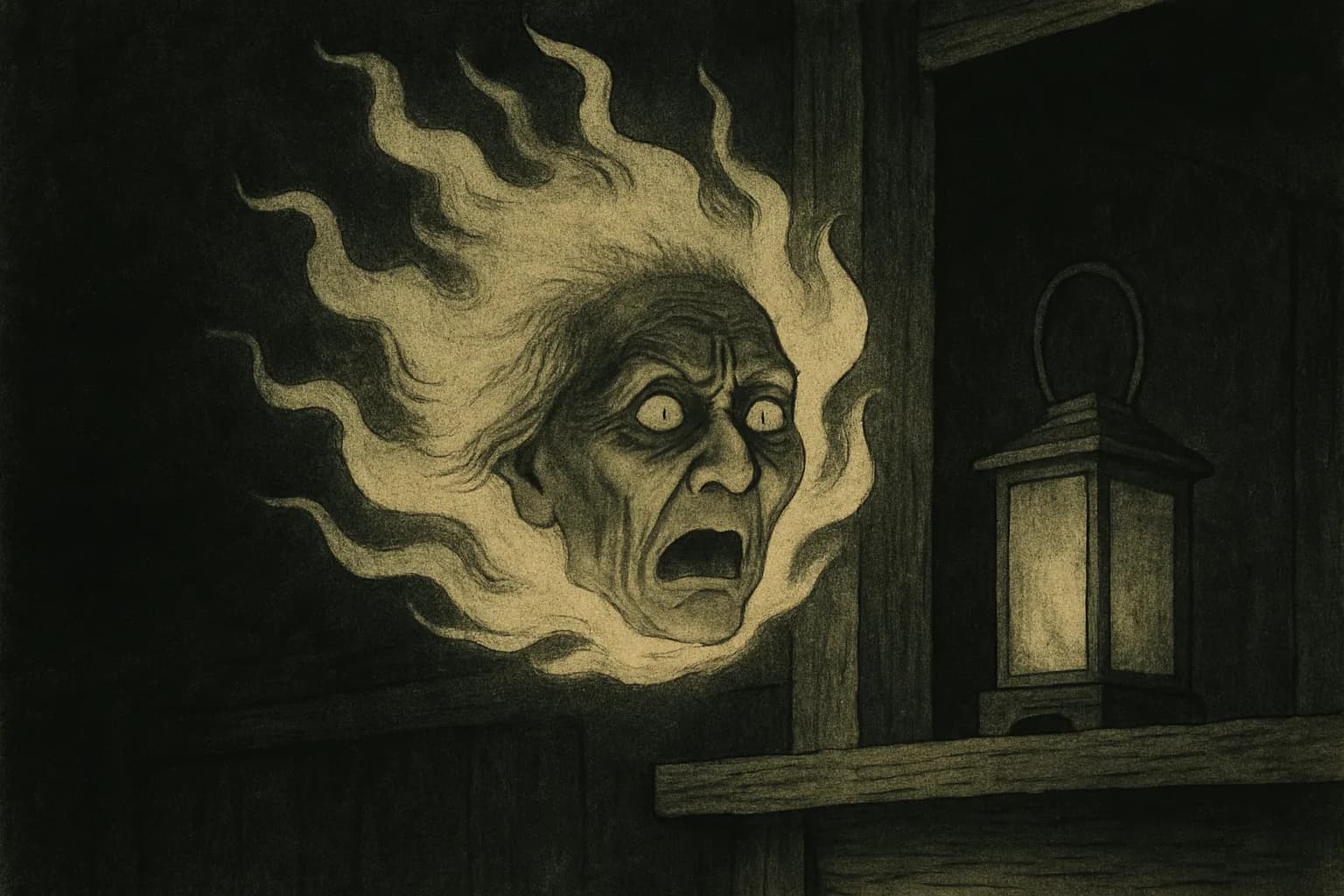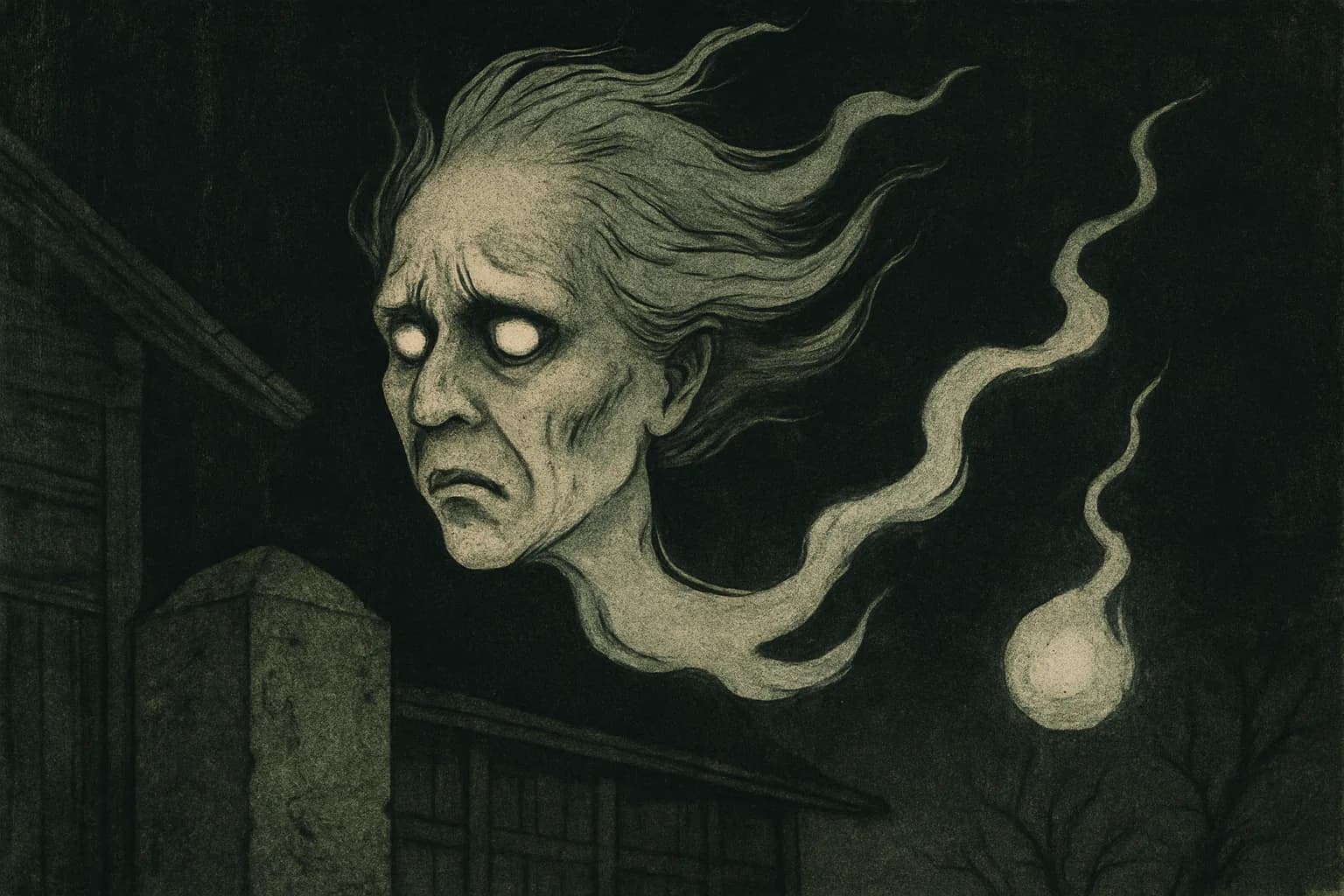
A soft red-orange globe hangs a few feet above a graveyard path at dusk, trailing a faint tail like a low comet, and drifts on no wind at all. Nobody in old Japan needed the sight explained to them. This is a hitodama — a "human" (人, hito) turned into a "soul" or "ball" (魂, tama) — the visible shape a person's spirit takes in the moment it slips free of the body, at death or in the days just after.
What does a hitodama look like?
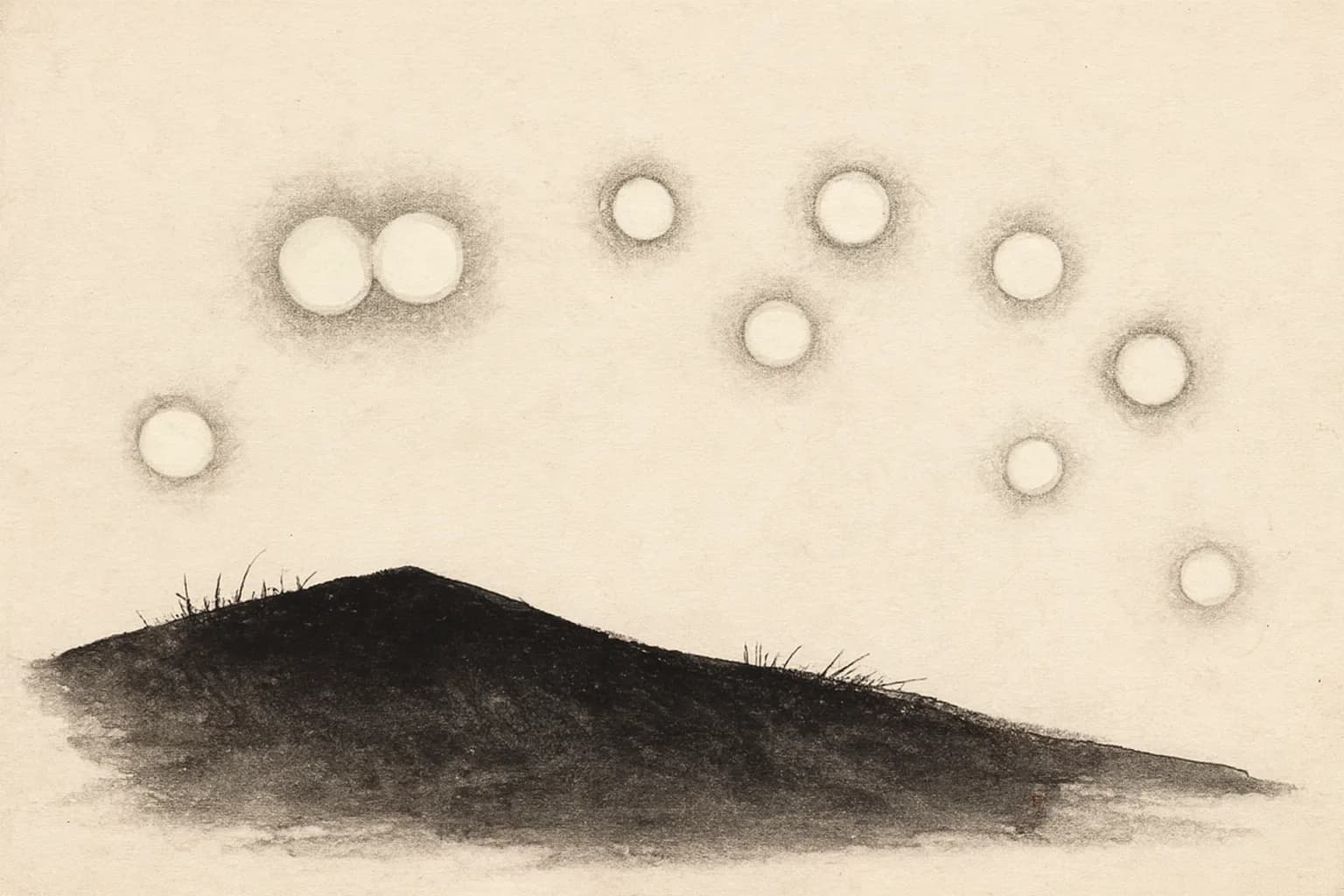
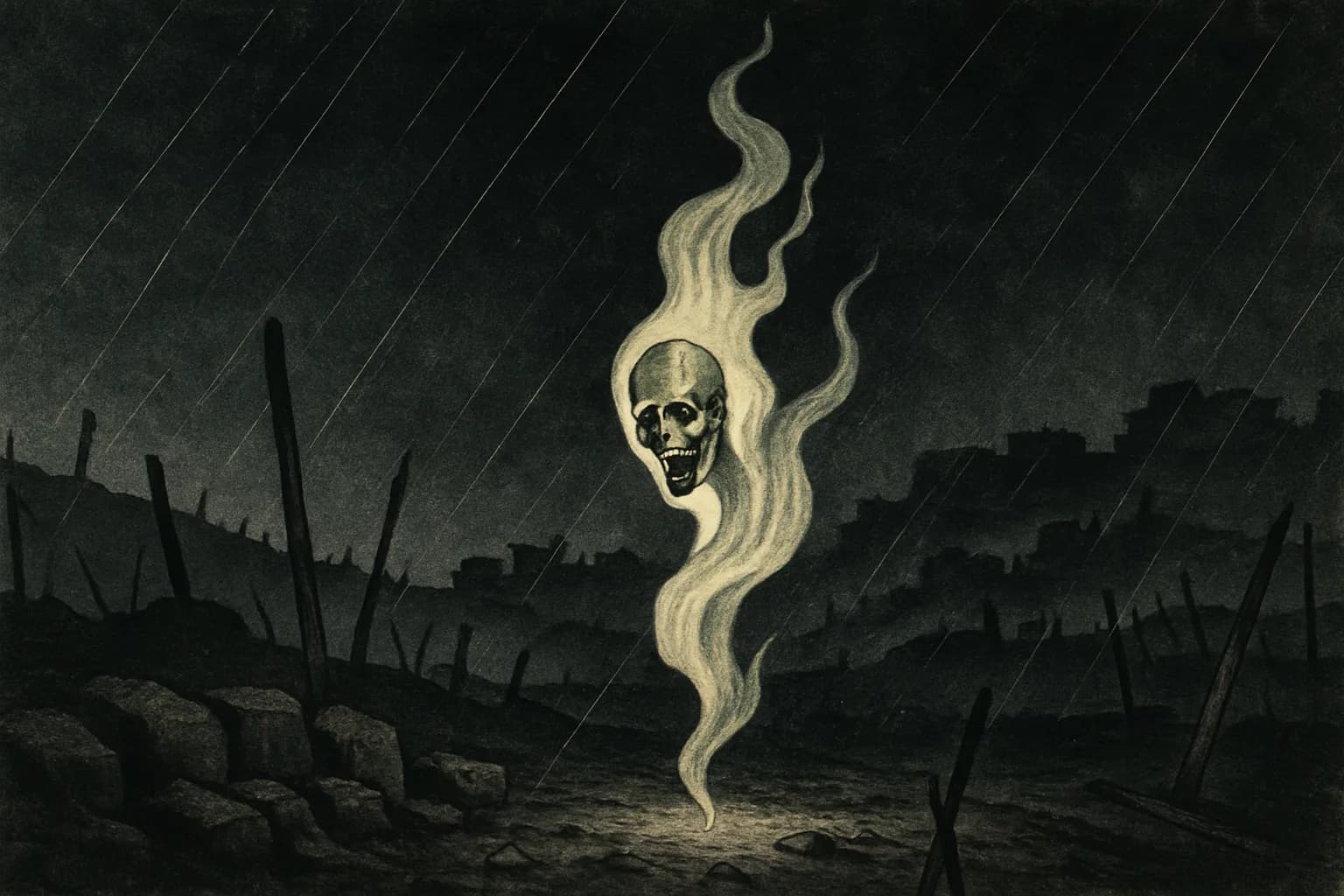
Descriptions are fairly consistent across regional accounts: a soft, pulsing sphere glowing pale blue-white, dull orange-red, or occasionally green, with a wispy trailing tail that gives it the look of a slow-moving comet or a lit paper lantern cut loose from its string. It floats low. Ukiyo-e artists rendered it as exactly that — a bare glowing orb with a curling tail — and it is one of the simplest, most recognizable shapes in the whole catalogue of Edo-period ghost imagery.
A soul in transit
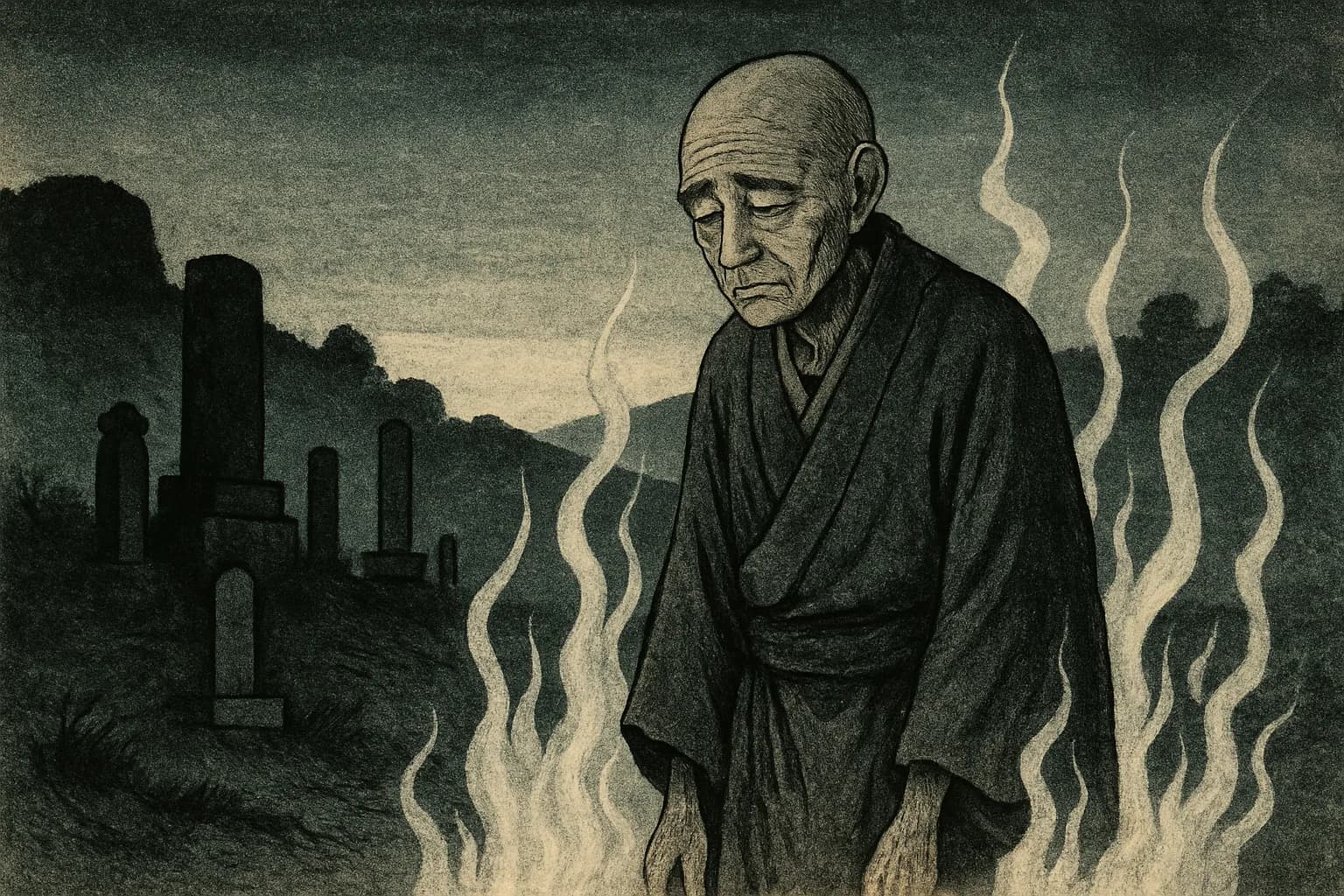
The belief attached to a hitodama is specific: it is a soul on its way somewhere, not a spirit that has settled anywhere to haunt. Villagers told of the light slipping out of a sickroom window at the instant a patient died, hovering briefly over the house, and then drifting off toward the local graveyard or temple. Others reported them hanging over fresh graves in the days after a burial.
Hitodama, onibi, and kitsunebi — telling the fires apart
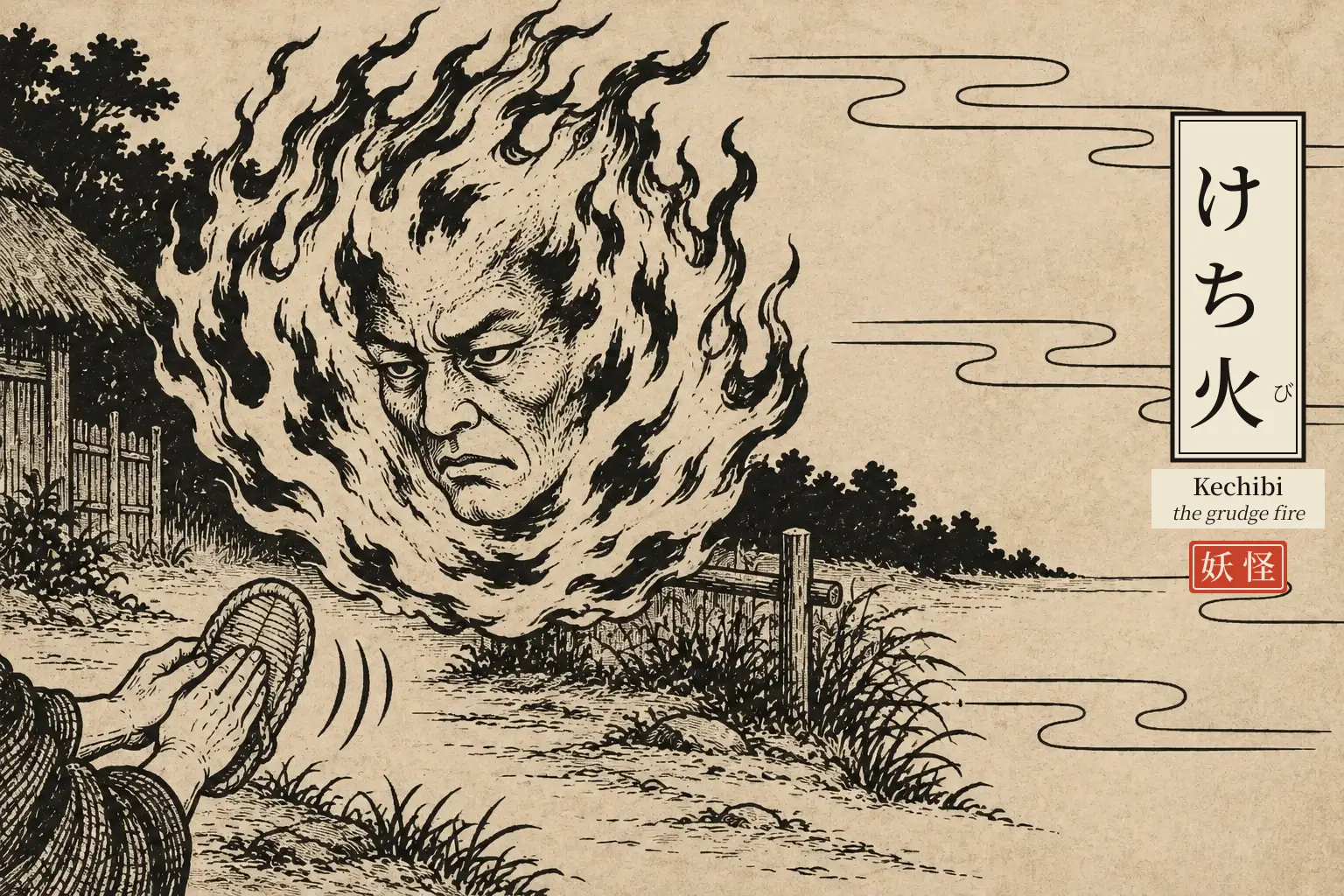
Night-lights in Japanese folklore come in a small family, and hitodama is only one member. Toriyama Sekien drew it in Konjaku Gazu Zoku Hyakki (1779), beside other night-fires. His earlier Gazu Hyakki Yagyō (1776) gives separate entries to two close relatives: onibi (鬼火, "demon fire") and kitsunebi (狐火, "fox fire"). Kitsunebi is the light foxes were said to make to lead travelers off the road. All three are floating fires, and people mix them up even today. Still, each has its own explanation. A light leaving a body or hanging over a grave was a hitodama. A light luring a walker into a swamp on a moonless night was more likely onibi or kitsunebi.
Where it comes from
The core of the belief sits on a very old idea in Japanese religious thought — that a person's soul, or tamashii, is a distinct thing from the body, and that watching it leave was in principle something a sharp-eyed observer might do. Graveyards, sickrooms, and the eaves of a house at the hour of death were exactly the places where that boundary was thought to be thinnest, which is why hitodama sightings cluster there rather than in open fields or on mountain roads.
There is also a mundane explanation that Japan shares with will-o'-the-wisp traditions across the world: decomposing organic matter, bone and flesh included, can release phosphine and methane that ignite faintly in open air, producing a small drifting flame with no obvious source. Graveyards, unsurprisingly, are exactly where such gases would seep up from the ground — which may be less a debunking of the hitodama than an explanation for why the belief took root where it did.
Hitodama in Japan today
The word hitodama never really left everyday speech. It is still the reflexive term Japanese speakers reach for when something described as a floating, tailed ball of light comes up — in a ghost story swapped during the summer kaidan season, in a grandparent's account of a night on the way home from a funeral, or simply as shorthand for "spooky light" with no yokai intended at all. The same silhouette — a bare glowing sphere with a curling tail — has become the default visual for "a spirit is present" across Japanese horror manga, anime, and games, a shorthand already familiar in Sekien's day. Every summer's Obon lantern-floating ceremonies, when small lit lanterns are set adrift on rivers to guide ancestral souls back to the other world, draw on the same old picture of a soul as a small drifting light finding its way home.