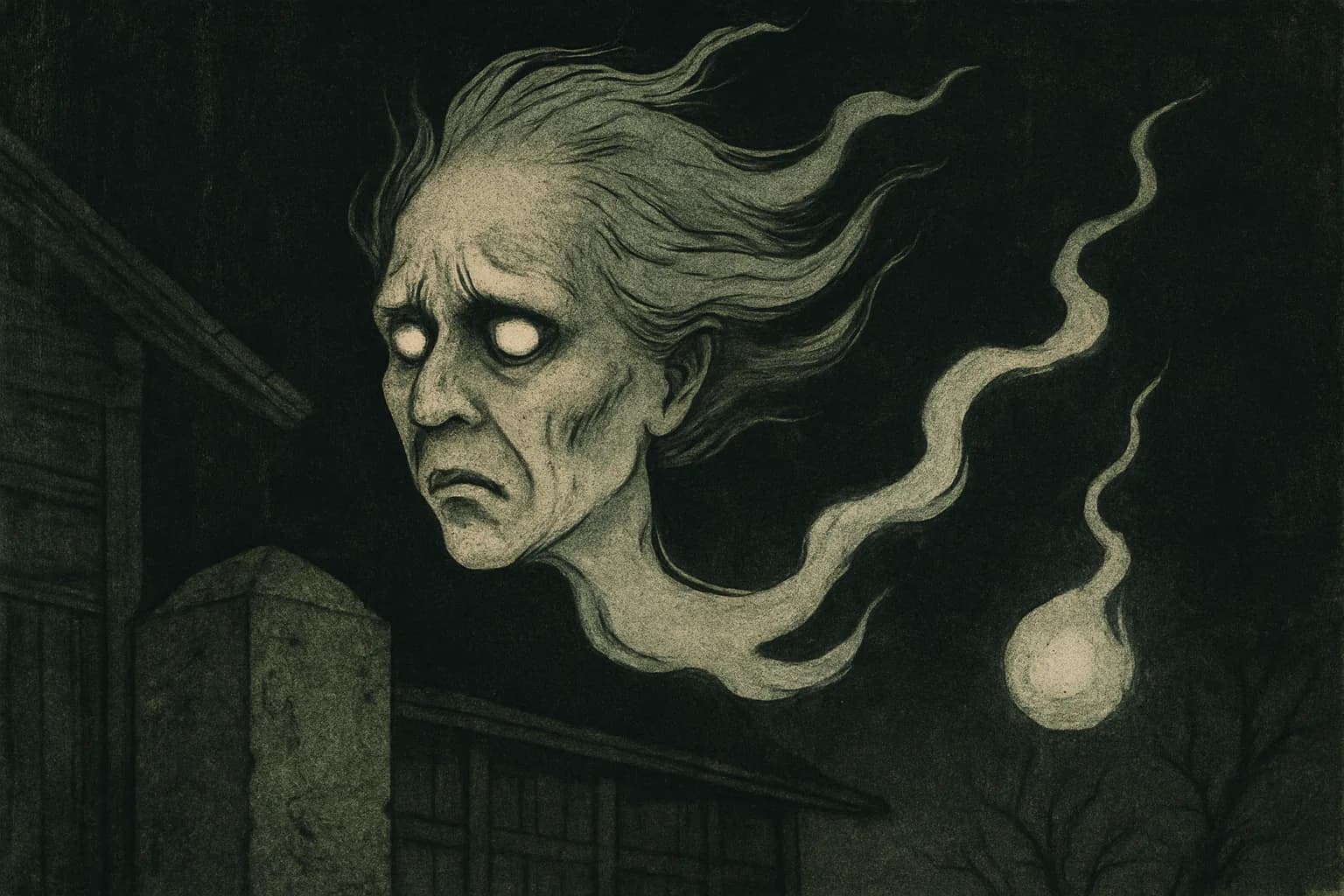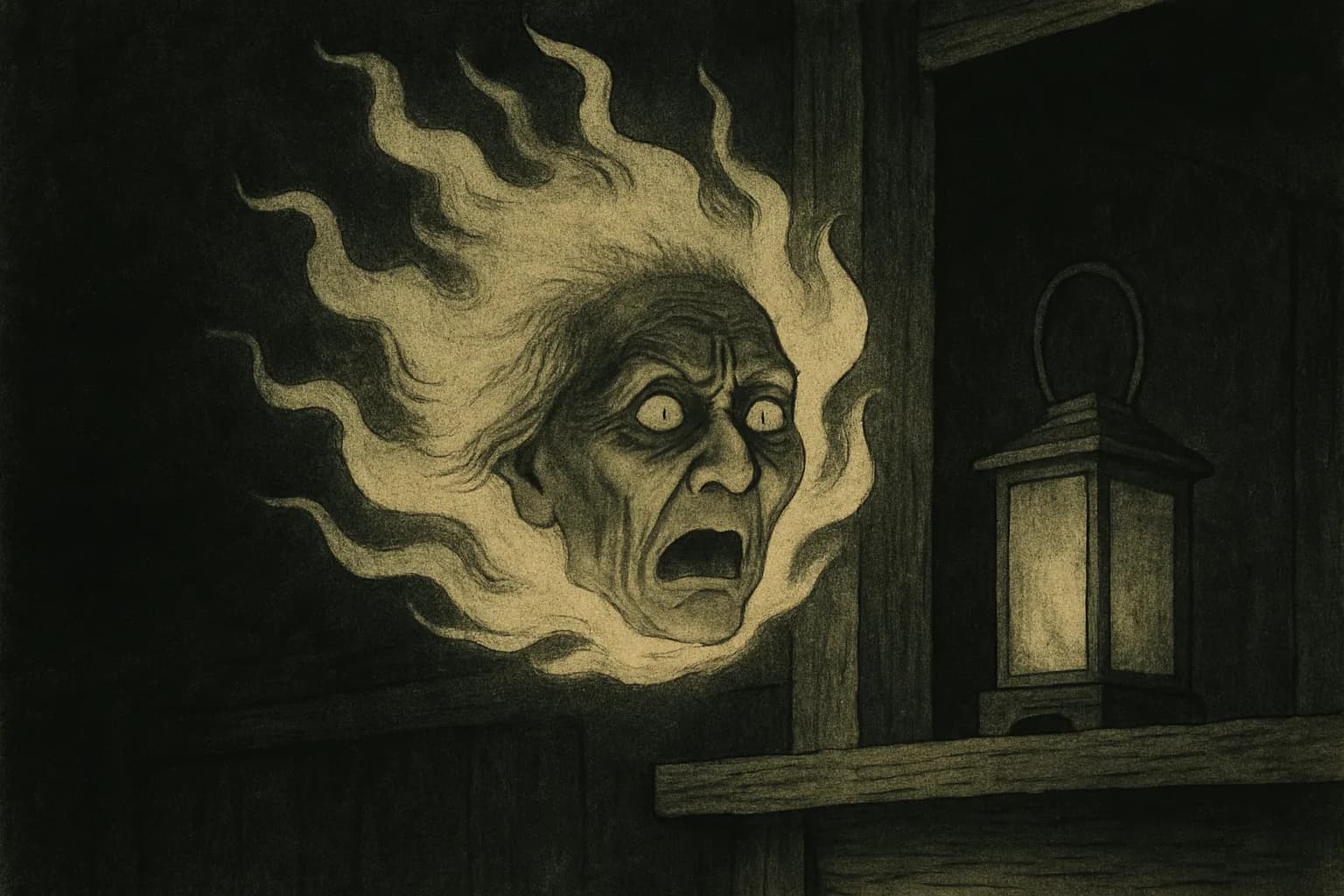
In Kawachi Province — the flatlands east of Osaka Bay, now Osaka Prefecture — old travelers told of a ball of fire that drifted low over the fields on wet nights. Look closely, they said, and you could make out a face inside the flame: an old woman's, wrinkled and unhappy. The fire had a name, ubagabi (姥ヶ火), and unlike most will-o'-the-wisps blamed on nameless ghosts or foxes, this one came with a specific crime attached.
What does it look like?
Ubagabi belongs to a whole family of Edo-period kaika — "mysterious fires" — floating balls of flame with no visible source, no heat you could feel from a safe distance, and no body to speak of. What sets ubagabi apart from a plain onibi or hitodama is the face pressed into the flame itself: an aged woman, caught mid-expression, riding inside the fire that she herself became. Toriyama Sekien's print gives the fire a restless, searching quality, as though it is still looking for something it lost.
The oil she stole
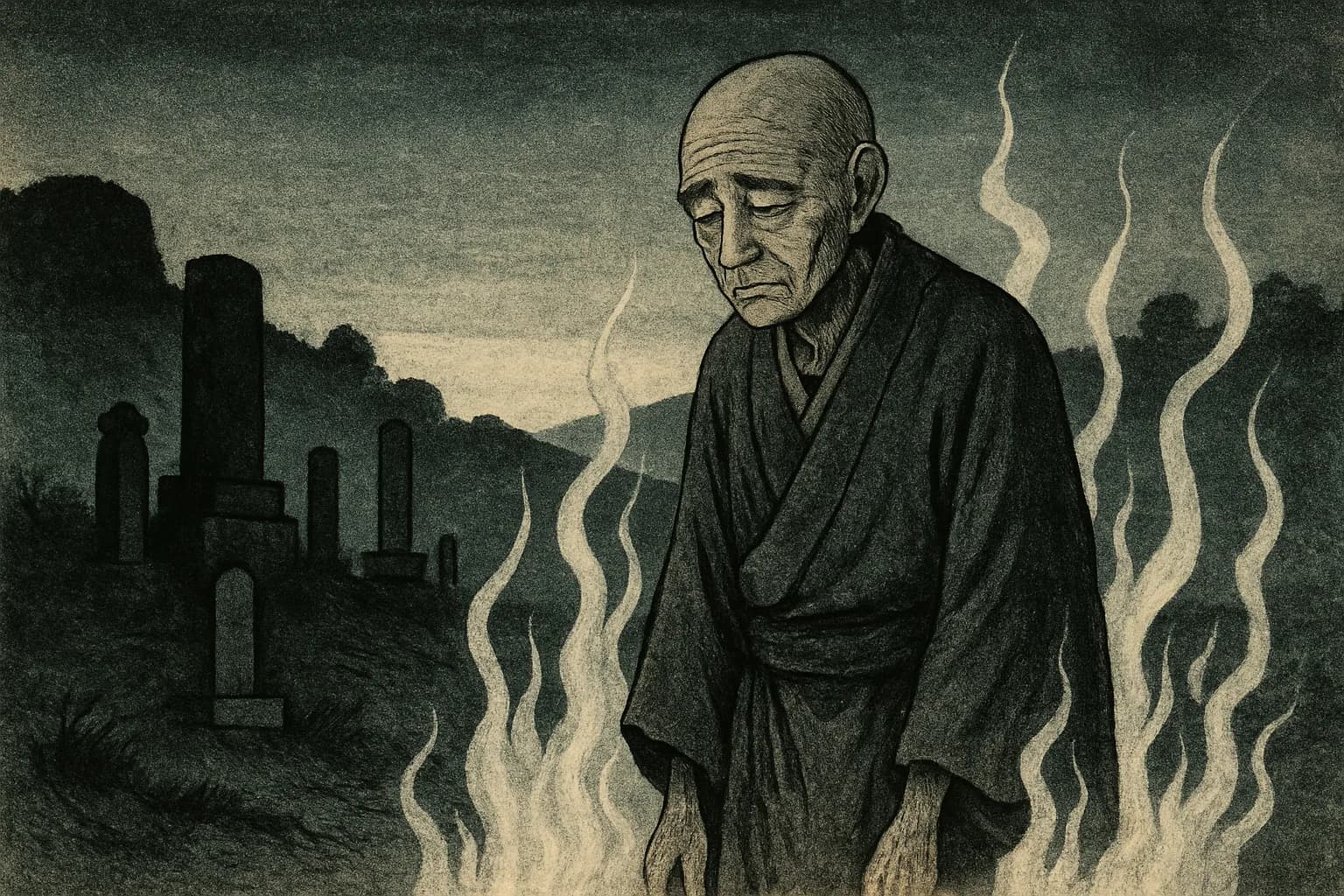
The story behind the fire is a small one, and that is what makes it stick. An old woman who served at a shrine in Kawachi was entrusted with its lamp — the light kept burning as an offering, fed with oil that was itself a gift to the god. She began skimming that oil for her own household use, a little at a time, night after night. When she died, the theft did not die with her. Her spirit was bound to the fire she had been stealing from, and she returned as that fire herself: a woman-shaped flame with nowhere else to go, still hovering around the province where her shrine once stood.
It is a ghost story with almost no violence in it. Ubagabi does not chase travelers or curse households; it simply exists, endlessly, as the visible shape of a debt that was never paid back to the god who was robbed.
Kin among the night fires
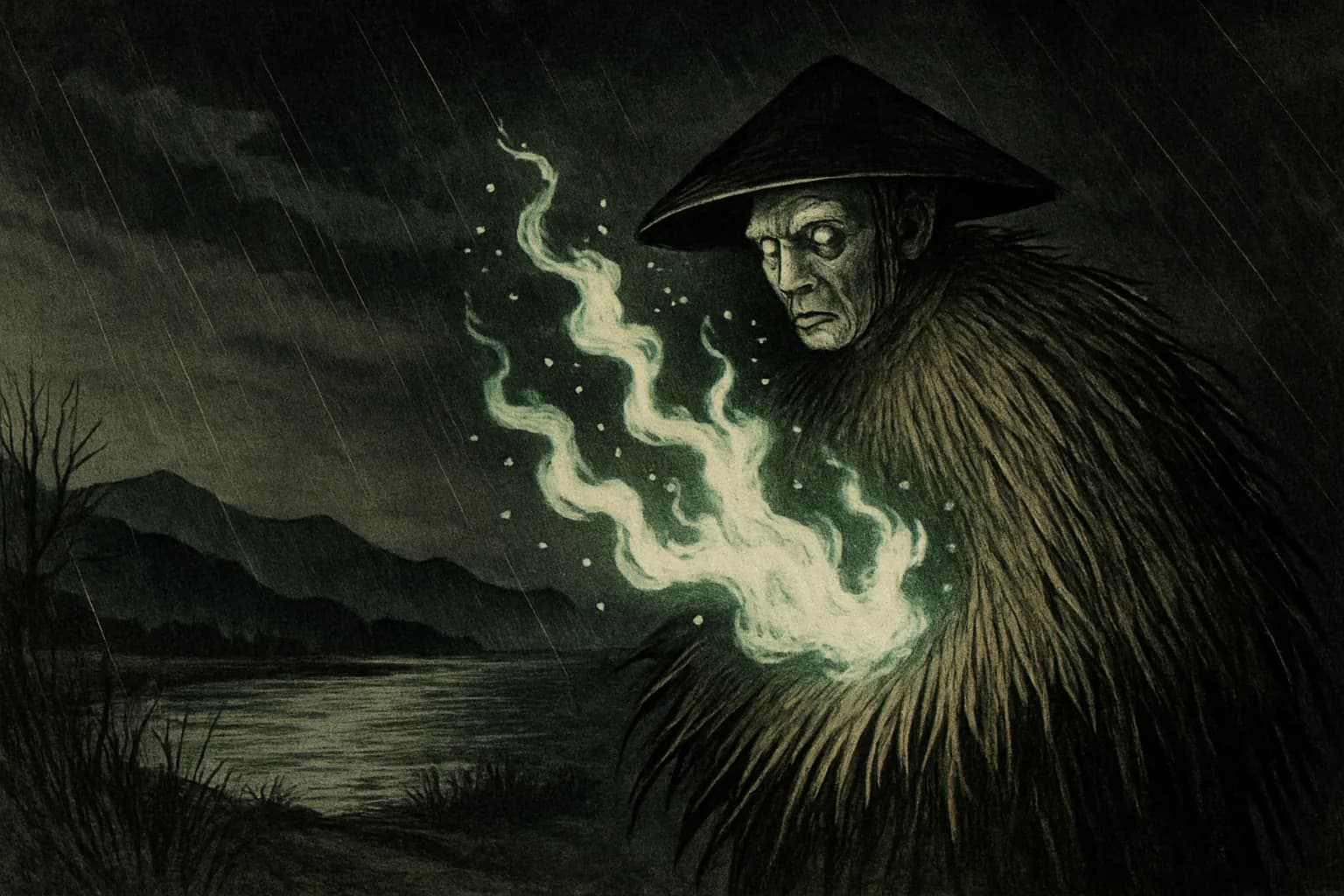
Sekien didn't invent ubagabi in isolation — he drew it as one of a cluster of night-fire yokai that share a family resemblance and, often, a family sin. Onibi and hitodama are the plainer members of the group, unexplained fires with no story attached beyond "a spirit, drifting." Abura-akago, the "oil baby," is the closer cousin: a small flame shaped like an infant, also born from someone caught stealing lamp oil, also doomed to keep circling the scene of the theft. Line the three up and a pattern appears that isn't really about ghosts at all.
Where it comes from
Lamp oil in the Edo period was expensive, and a shrine's eternal light needed constant refilling — an ongoing cost that fell to whoever was trusted to tend it. That trust was worth stealing from, and apparently sometimes was. The cluster of "oil thief" yokai that Sekien catalogued — ubagabi among them — reads less like invented horror and more like a folk memory of an actual, mundane temptation, moralized into something that would frighten the next attendant straight. Steal from a god's lamp, the story warns, and you don't just lose your place; you become the flame you were siphoning from.
Ubagabi today
Ubagabi never became a mascot the way the kappa or tanuki did — it stayed exactly what it was in Sekien's catalog, a minor entry in the long roll call of Edo night-fires. It survives now mostly in yokai encyclopedias and in illustrated reprints of the hyakki yagyo scrolls, one face among dozens of small flames drifting through the same eighteenth-century pages. That obscurity suits it. Ubagabi was never meant to be famous; it was meant to be a warning left burning quietly over one particular stretch of Kawachi road, for anyone who might be tempted to skim a little oil off the top.