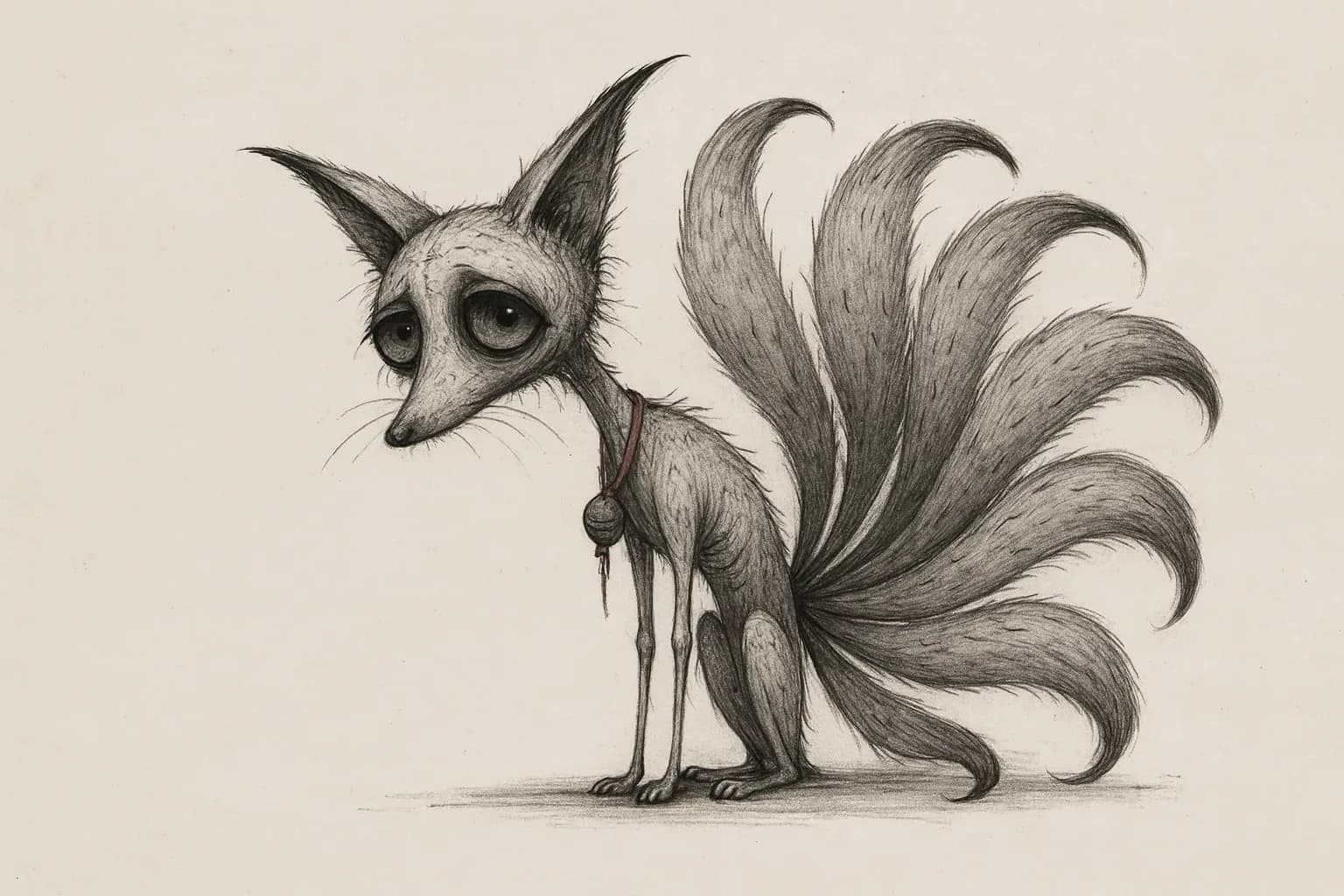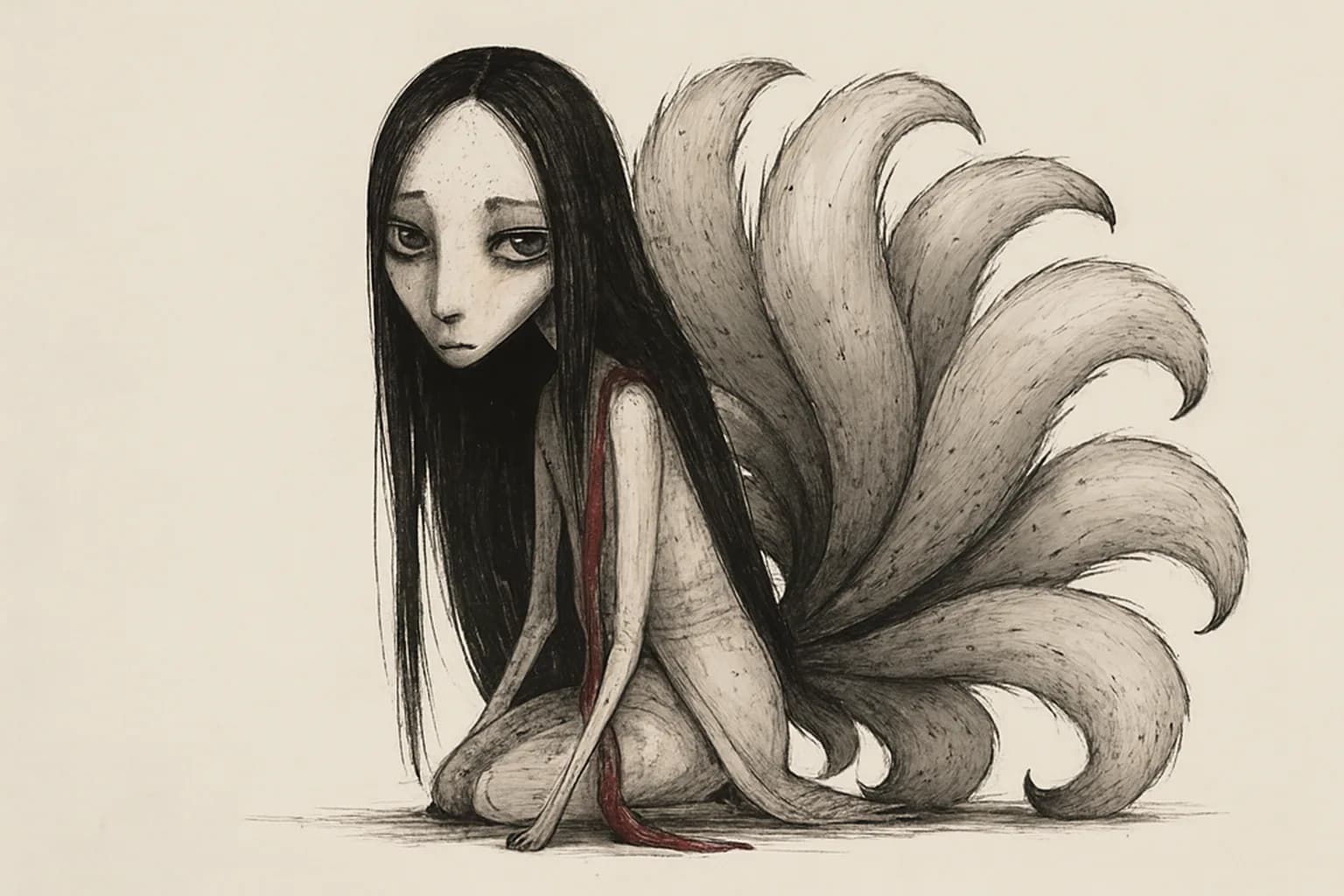
Ask the internet about Japanese foxes and you get one question back. Why nine tails?
Here is the short answer, which most pages do not give. A book published in 1803 said so. Before that the fox had two.
That is worth five minutes on its own, and the dates are below. But it opened a better question, so we counted our own shelf.
Three of our 127 written entries are foxes. The wider ledger we write from holds 327 creatures, and 11 of those are foxes. Either way the fox is a small part of the shelf — and 24 of the written entries mention one.
The nine tails are four centuries younger than the legend
Start with what people come for.
In the medieval telling, the fox has two tails. Tamamo no Sōshi, the Muromachi version of the legend, is specific: a fox of eighty thousand years, seven shaku long, with two tails.
Nine arrives later, and it arrives from China. The Chinese story of Daji — the consort who was a nine-tailed fox — fused with the Japanese court legend during the Edo period.
| Year | What happened |
|---|---|
| Muromachi | Tamamo no Sōshi: the fox has two tails |
| 1766 | Kanke Byakko Tsū uses the wording "gold-furred, nine-tailed" |
| 1803–1805 | Ehon Sangoku Yōfu Den finishes the story, running India to China to Japan |
That is roughly four hundred years after the two-tailed version. Scholarship on the question is explicit: the nine-tailed setting was assembled in the late Edo period, not inherited from antiquity.
So a modern manga with a nine-tailed fox is not reaching back a thousand years to a sacred beast. It is inheriting a late-Edo bestseller. The tails-per-century arithmetic fans quote is bookselling — good bookselling, still working two centuries on, but bookselling.
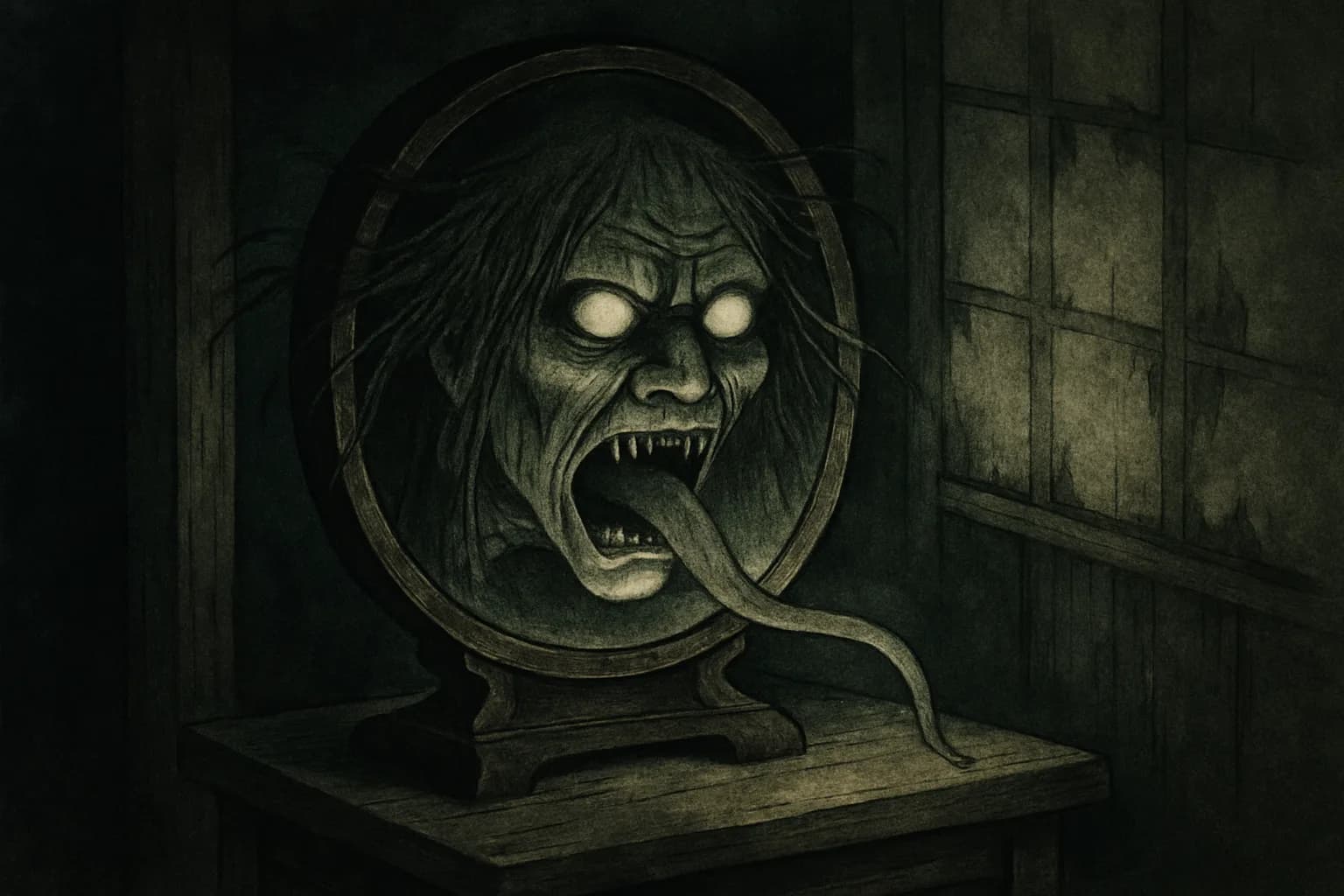
Our own ungaikyo entry holds the other end of that thread: the mirror that exposed Daji is a Chinese story, and Sekien built an entry from it.
Now the better question. Three written foxes, twenty-four appearances. What is the fox doing in the other twenty-one?
The fox appears more than any other animal
We checked every entry for every animal. Here is how often each one turns up somewhere in the text.
| Animal | Entries that mention it |
|---|---|
| Fox | 24 |
| Tanuki | 13 |
| Snake | 13 |
| Dog | 13 |
| Bird | 12 |
| Cat | 9 |
The fox wins, and it is not close. Yet only three entries are about a fox: kitsune, kitsunebi and tamamo-no-mae.
So something else is going on in the other twenty-one. We read every one of those mentions to see what job the fox was doing.
What the fox is doing in the other 21 entries
It falls into three jobs, and none of them is "being a monster".
| The fox's job | Entries |
|---|---|
| A benchmark you compare other creatures to | 9 |
| The default suspect for an unexplained event | 6 |
| A yardstick for fame | 5 |
| Where the nine-tailed idea came in | 1 |
The fox as the default suspect
This is the striking one. Six entries do not describe a fox. They describe something odd, and then hand it to the fox.
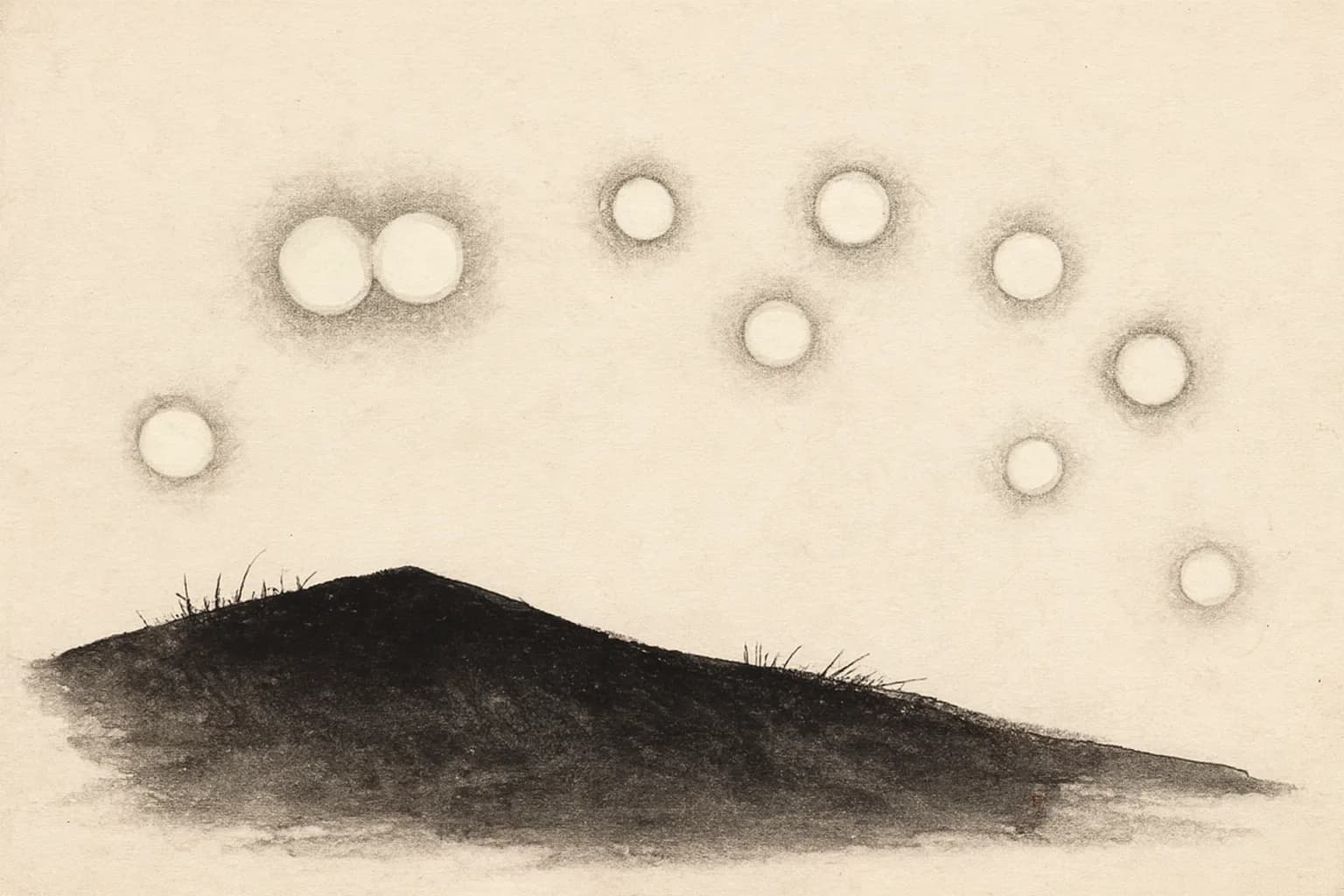
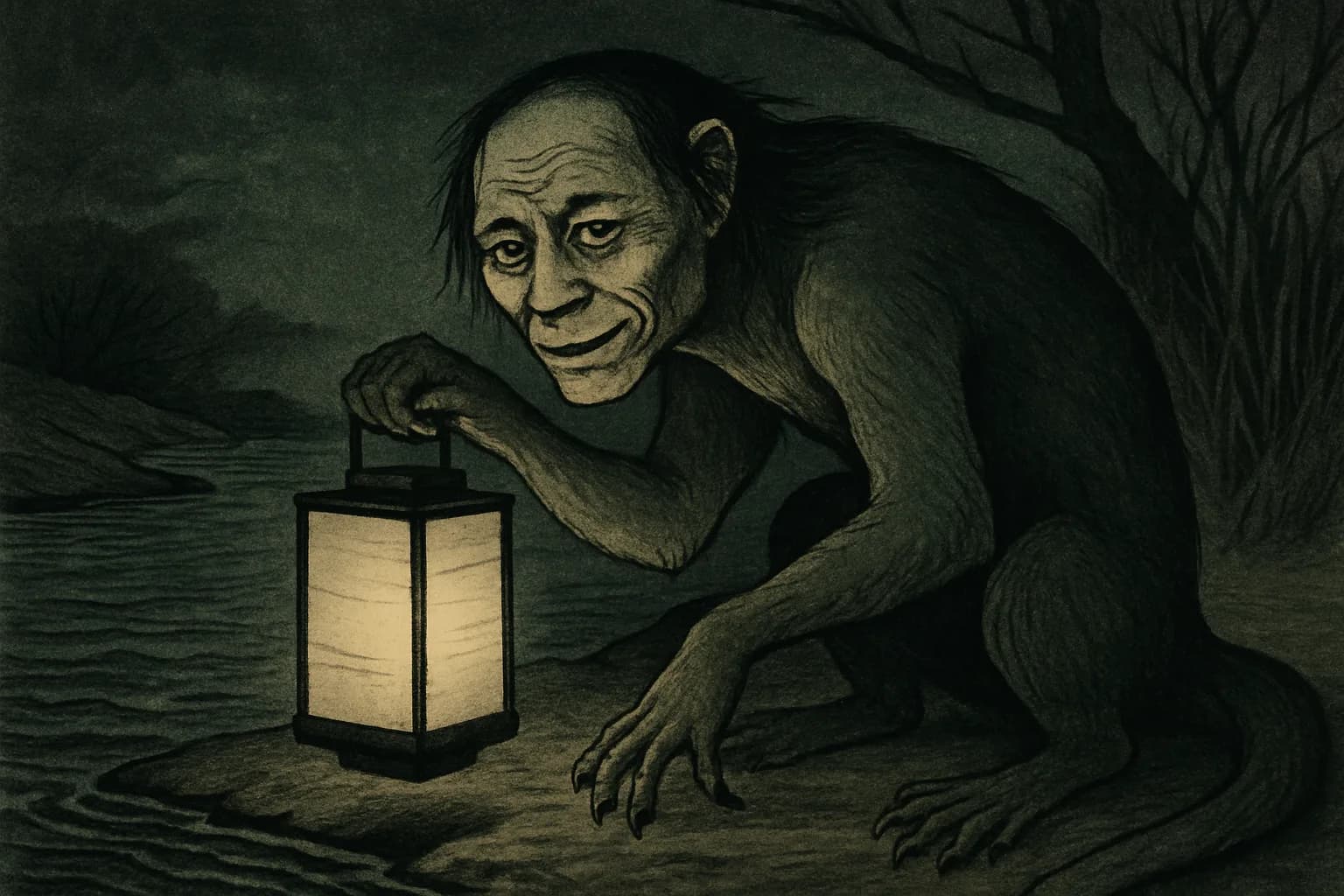
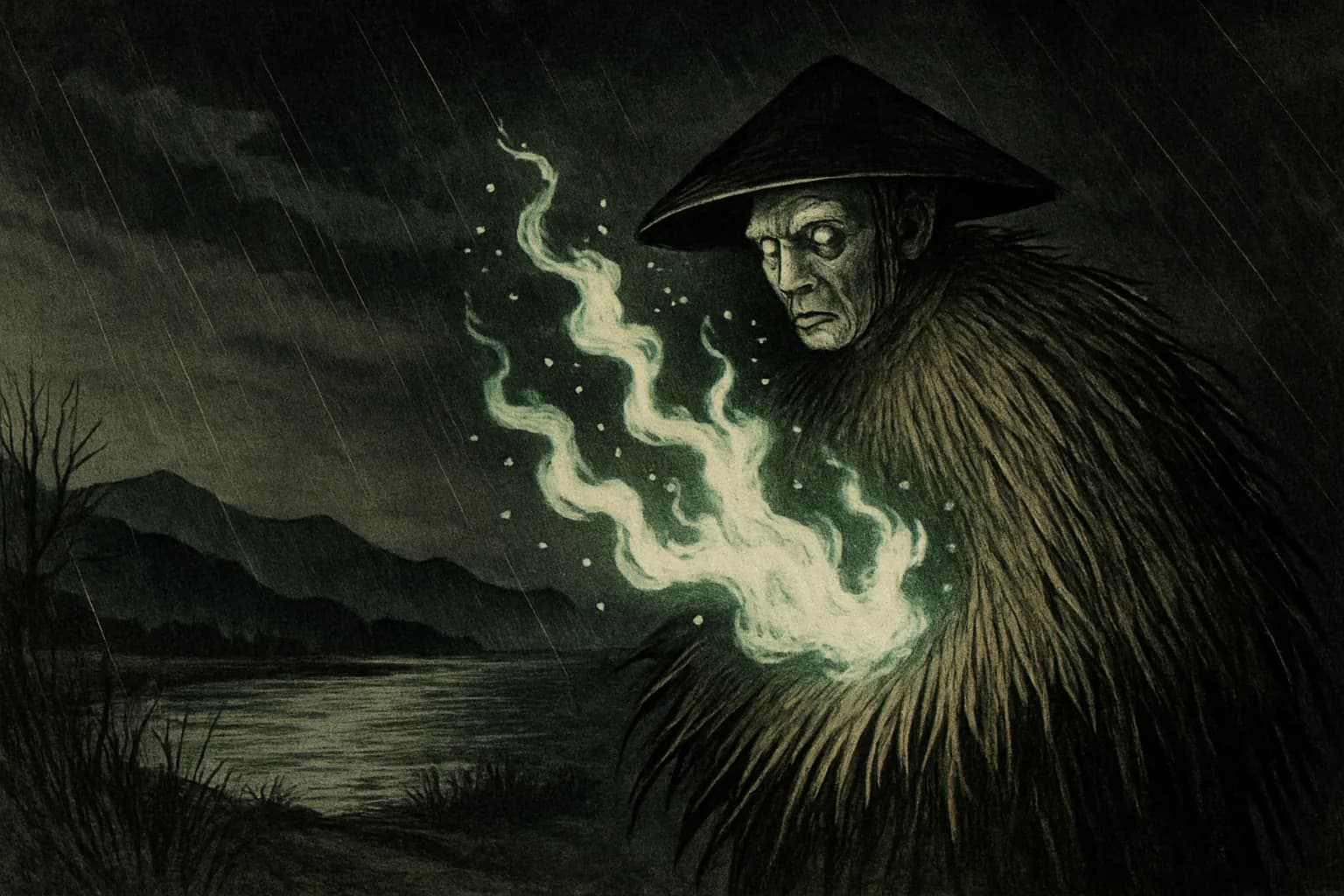
Kawauso is the clearest case. Lights over a river at night were sometimes called kawauso-bi, the otter's fire. The very same lights, elsewhere, were fox-fire. Same phenomenon, different animal, depending on who you asked.
Yamabiko is an echo in the mountains. Where no yamabiko tradition existed, the echo got pinned on foxes or tanuki instead.
Tengu takes walkers in circles all night. A walker who came home at dawn usually blamed a kitsune.
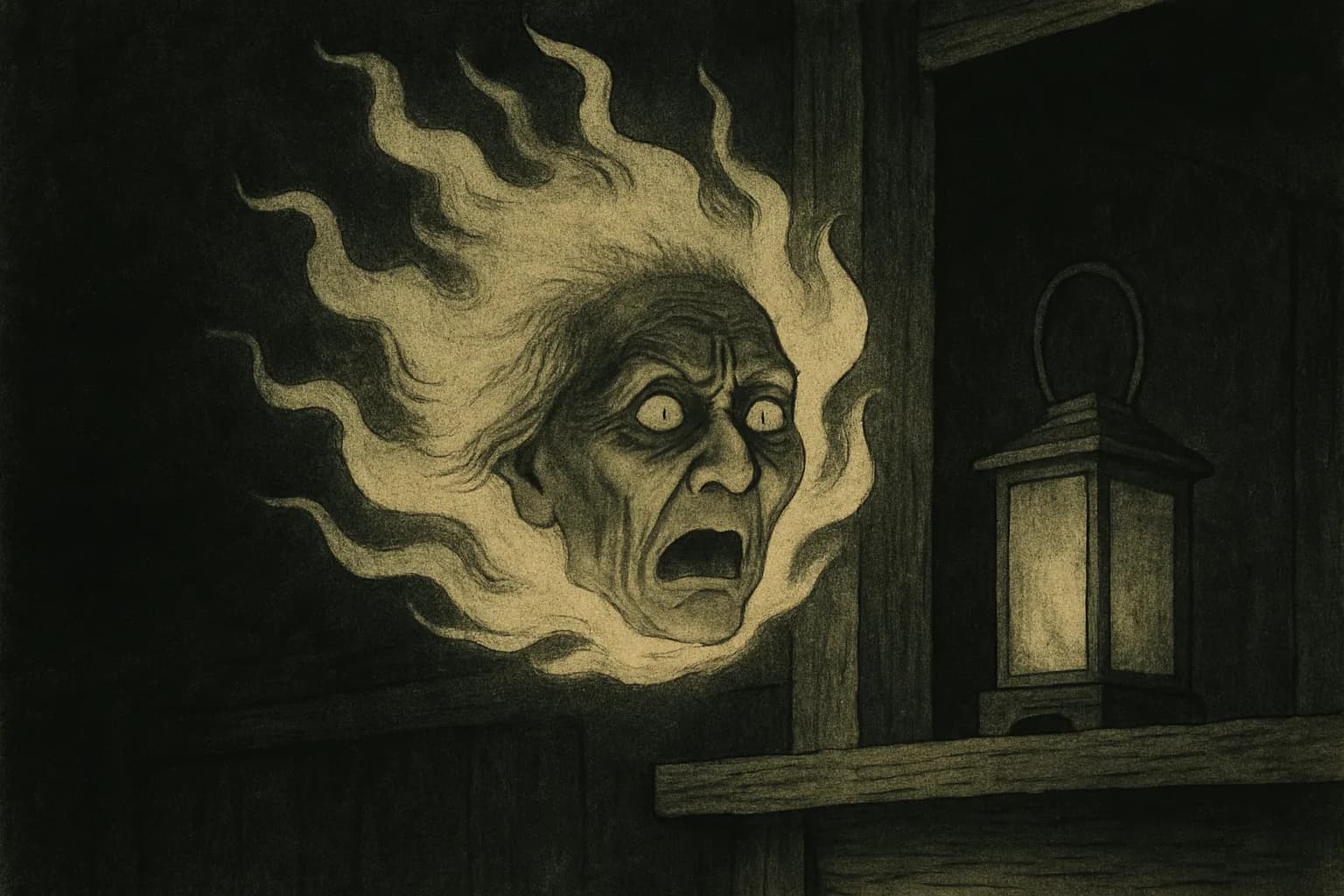
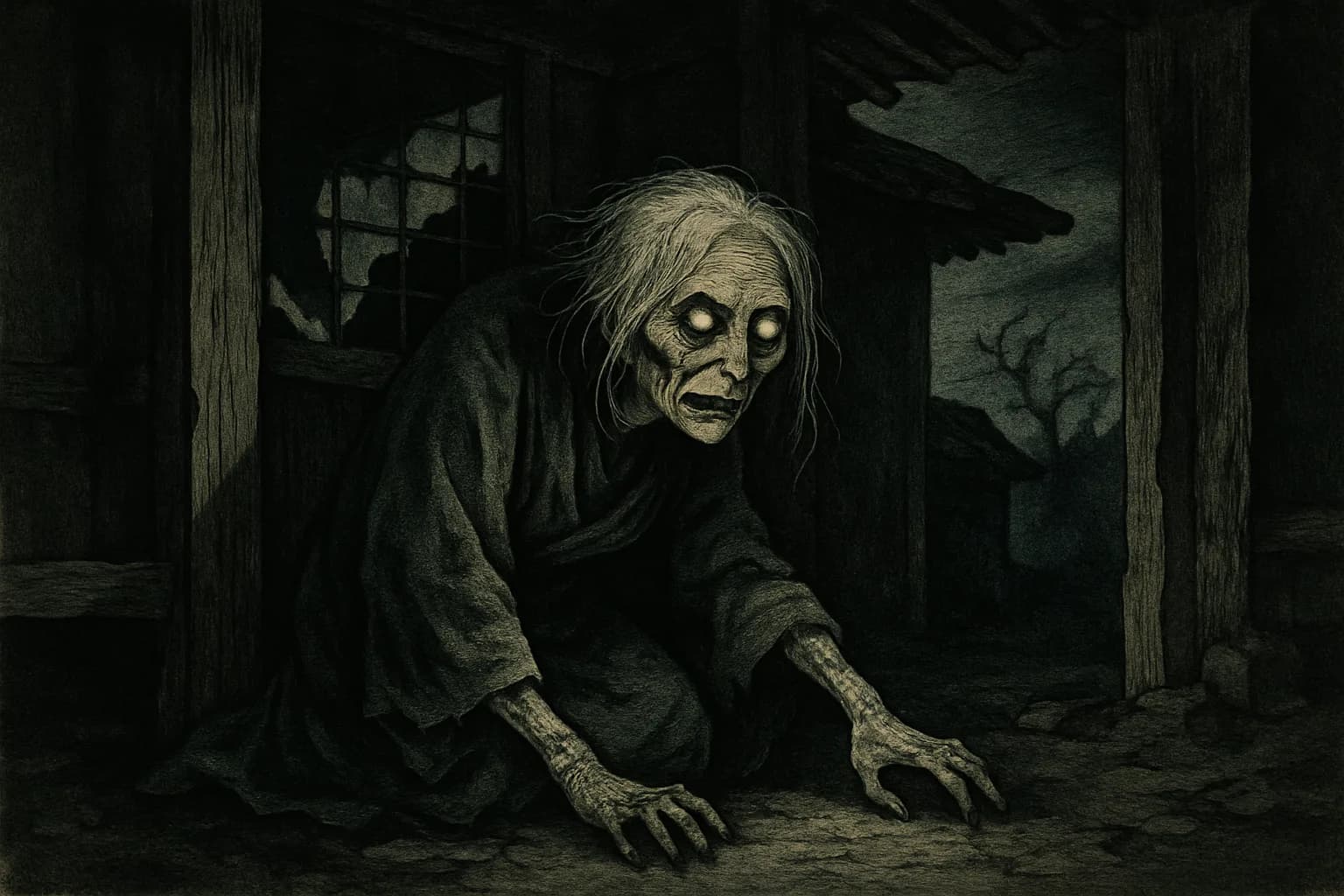
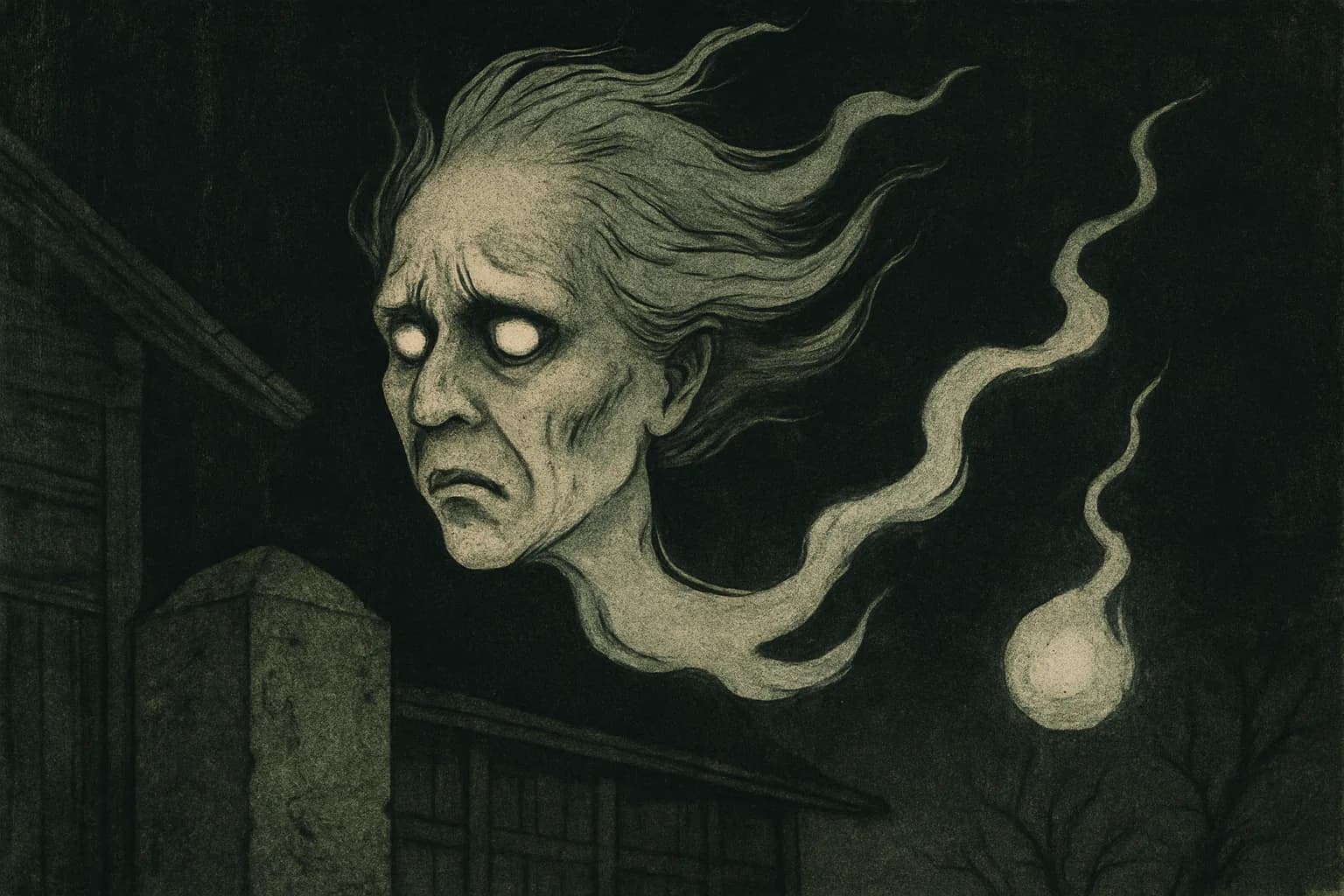
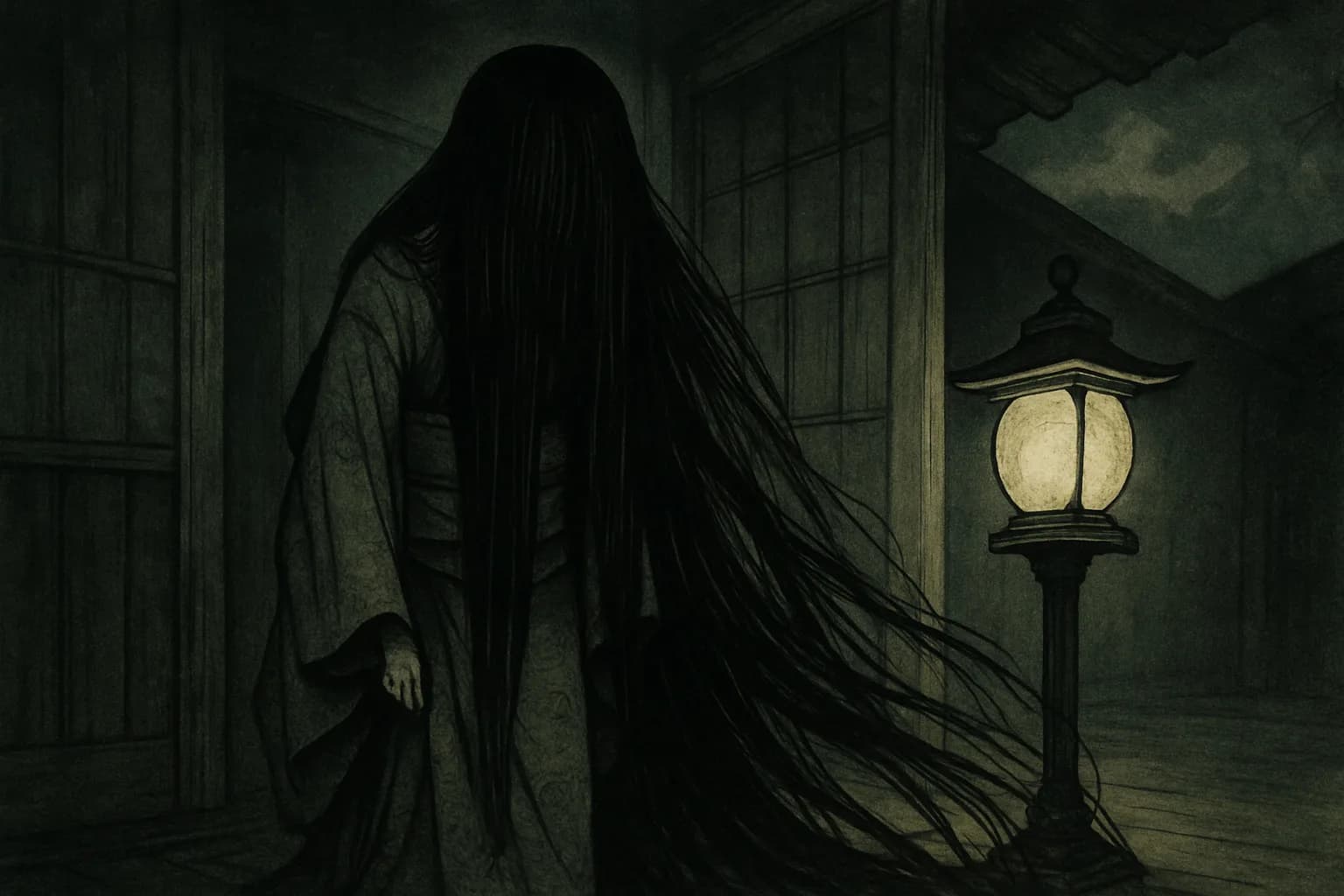
Ubagabi is a flame with an old woman's face, and our entry notes what makes it unusual: most drifting night-fires were blamed on nameless ghosts or on foxes. This one had a name.
Mikoshi-nyudo looks like a towering monk. Several regional accounts say he is not a monk at all — he is a tanuki, a fox or a weasel wearing the shape.
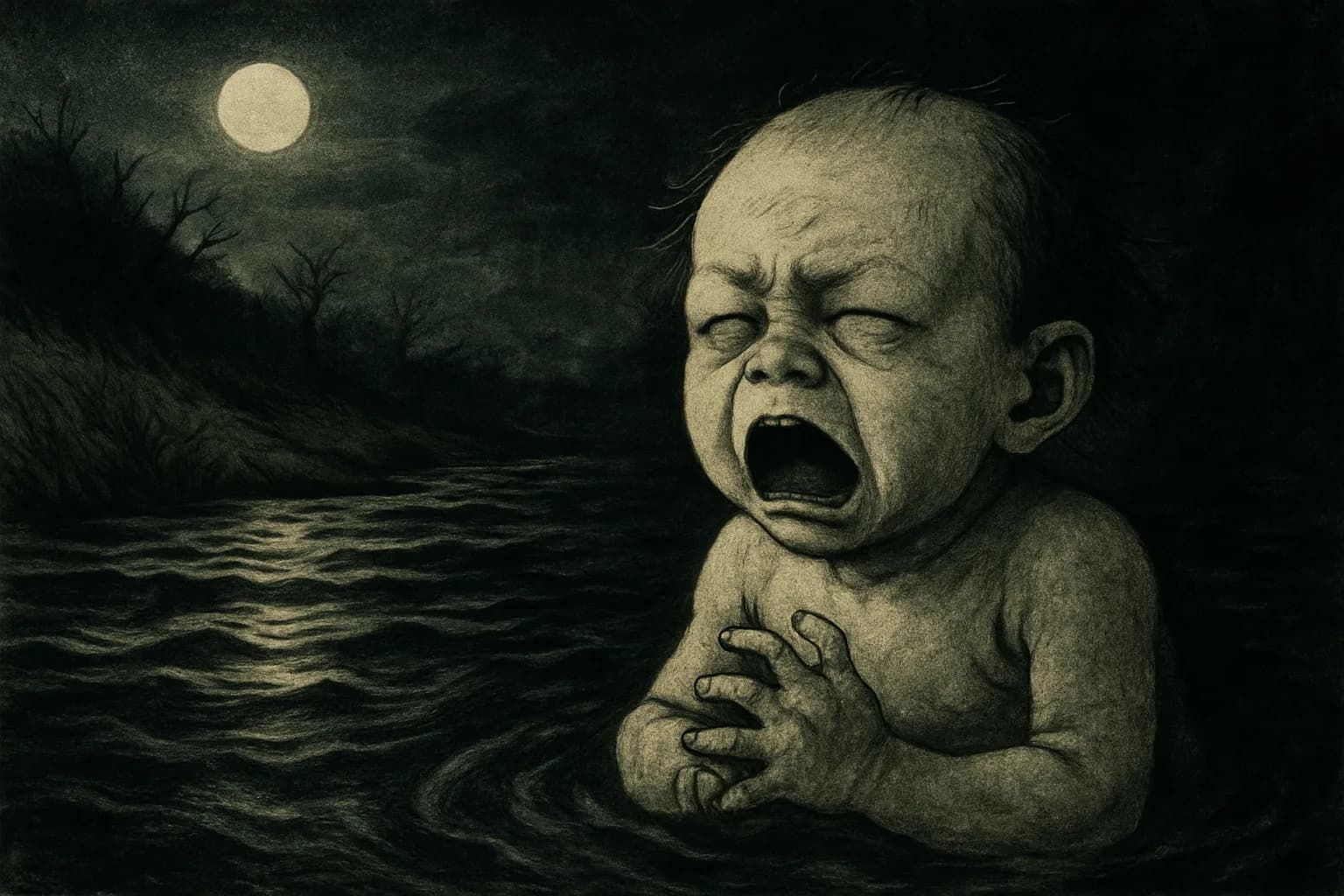
Kawaakago is a baby crying midstream. Night rivers make ambiguous noise anyway, our entry says, from birds and frogs and foxes.
The fox as a yardstick
Five more entries use the fox to say how small they are.
Kawauso "never became as famous as the kappa or the fox". Kokuri-baba "never crossed into the fame that the kappa or the fox spirit enjoy". Jakotsu-baba "never became a household yokai the way the kappa or the fox spirit did". Minobi has no anchoring legend "the way Ōji has its fox-fire procession". And tanuki, Japan's other great trickster, lives "forever in the shadow" of it.
Nobody measures a creature against a creature. You measure it against a standard.
Three entries are foxes. Twenty-one use the fox to explain, rank or classify something else. A light nobody can place. A path that loops. A monk who is too tall. A noise from the river.
Japan has boars, deer and bears, and it had wolves until 1905. Why did this one animal get the job?
Because the fox had an address in every village
The answer is not about foxes. It is about Inari.
Inari is the kami of rice, and Inari shrines are the most common kind in Japan. Fushimi Inari Taisha, the head shrine, puts the number plainly in its own FAQ: "There are said to be around 30,000."
The same FAQ corrects something English pages get wrong constantly. Foxes are the messengers of Inari. In the shrine's own words: "this does not mean that Inari Okami is a fox!"
That distinction is the mechanism. The fox was not a monster that became popular. It was staff. It had a shrine in nearly every village, a statue at the gate, and a standing relationship with the rice crop.
If an animal already has an office in your village, it is the animal you blame when something happens at night.
The Ōji fires were an instrument, not a horror
Here is how far that goes.
At Ōji, in what is now northern Tokyo, foxes were said to gather at a great enoki tree on New Year's Eve. The foxes of the eight Kantō provinces came in, changed their dress, and went to the shrine to receive their orders for the year.
On the way they lit fox-fires. And the farmers counted the fires to forecast the rice harvest.
Read that again. The famous ghost-light of Japanese folklore was being used as an agricultural forecast, by people standing in a field on New Year's Eve, doing arithmetic.
Hiroshige printed the scene in 1857, in One Hundred Famous Views of Edo. It is the only image in that entire series of a hundred views that shows something supernatural. The tree is still there.
What the count is, and is not
The twenty-four mentions are our own sentences, so this measures how the fox behaves in English-language yokai writing, not in a village. The count also runs on the 127 entries that have text; the other 200 in the ledger have a one-line description and cannot be read this way. What makes it worth something is that nobody set out to write about foxes: each entry was written from its own sources, about its own creature, and the fox kept arriving anyway.
So the fox is written up three times and mentioned twenty-four, because it was the only animal in Japan with thirty thousand addresses.
It was never the most frightening animal. It was the most available one.