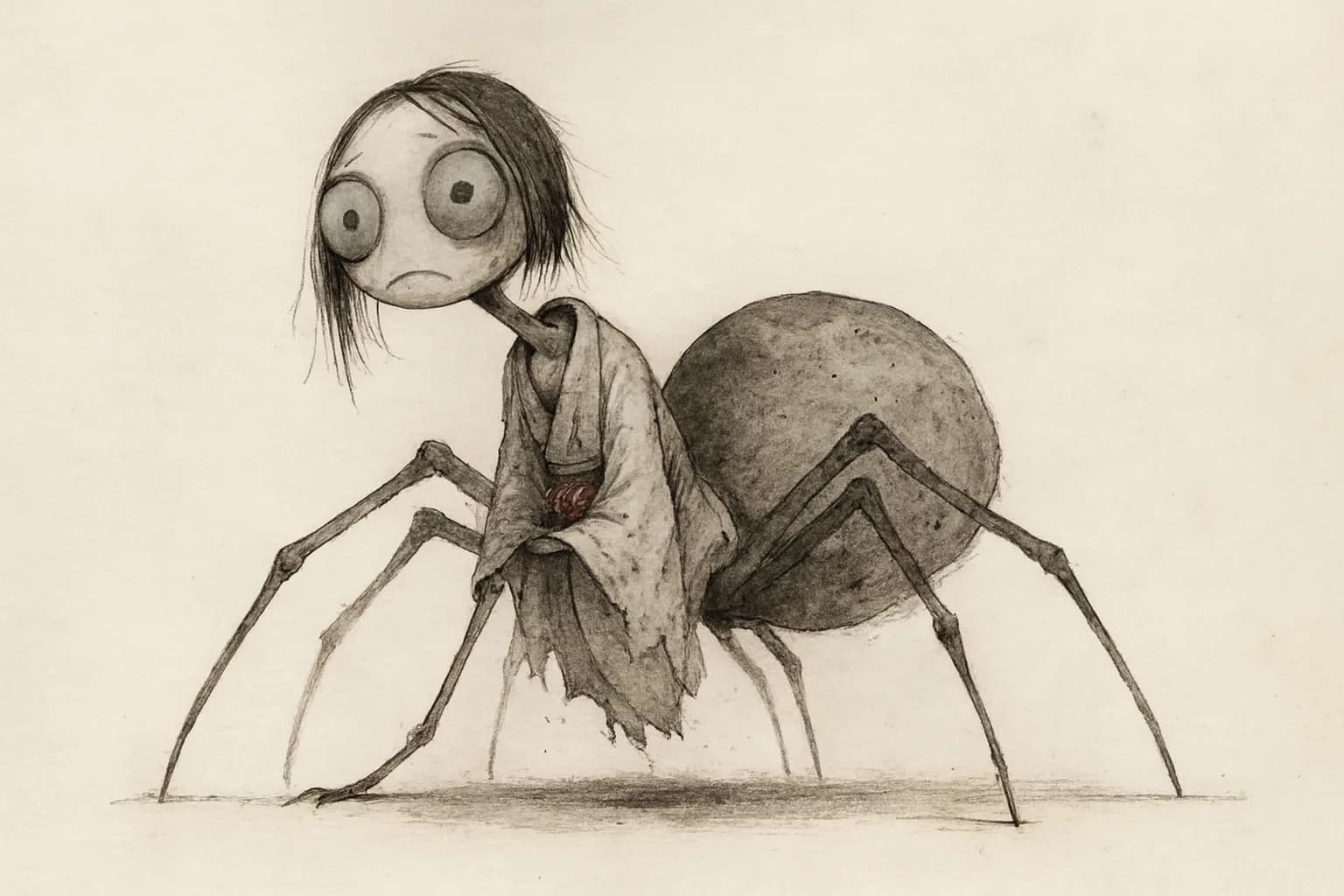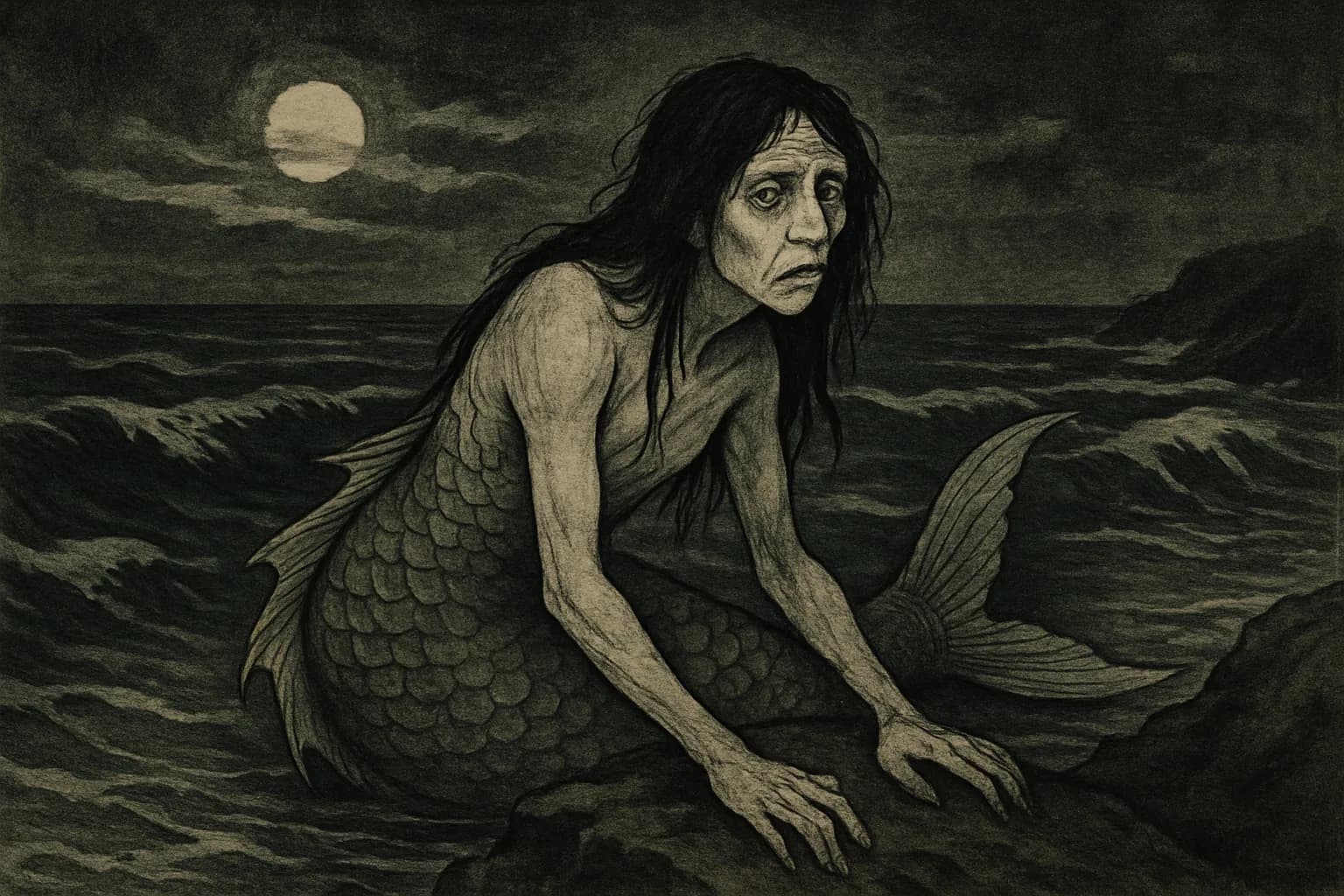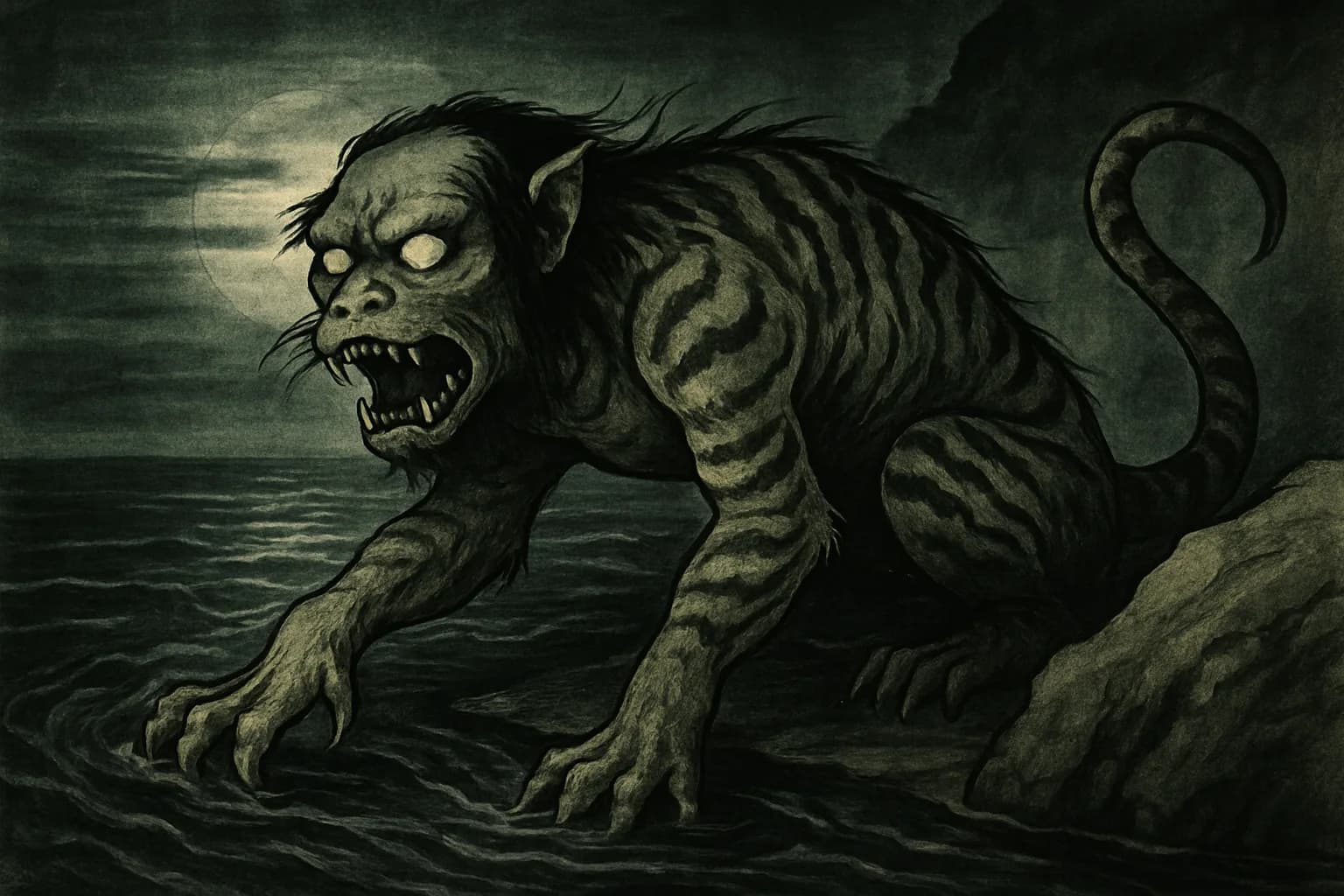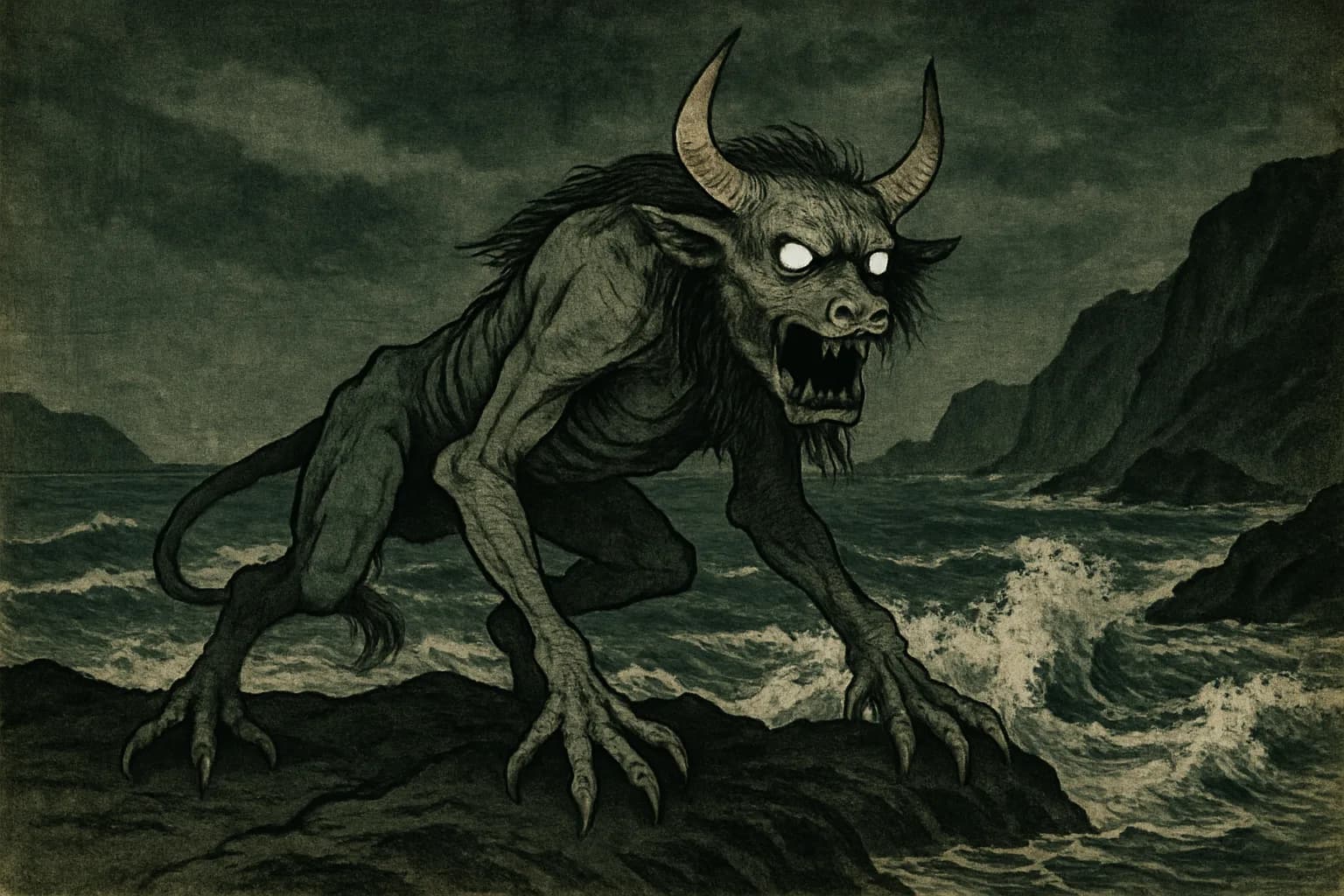
Off the coast of Kii, a crew of pirates spots a woman thrashing in the surf and hauls her aboard, pleased with themselves for the rescue. In the days that follow, the men start turning up mutilated, one after another, until the survivors understand what they actually pulled from the water. She wasn't drowning, and she wasn't a woman — she was a sazae-oni, a turban shell grown old enough to wear a human shape, and she is going to make them pay dearly to get back what she's taken from them.
What does it look like?
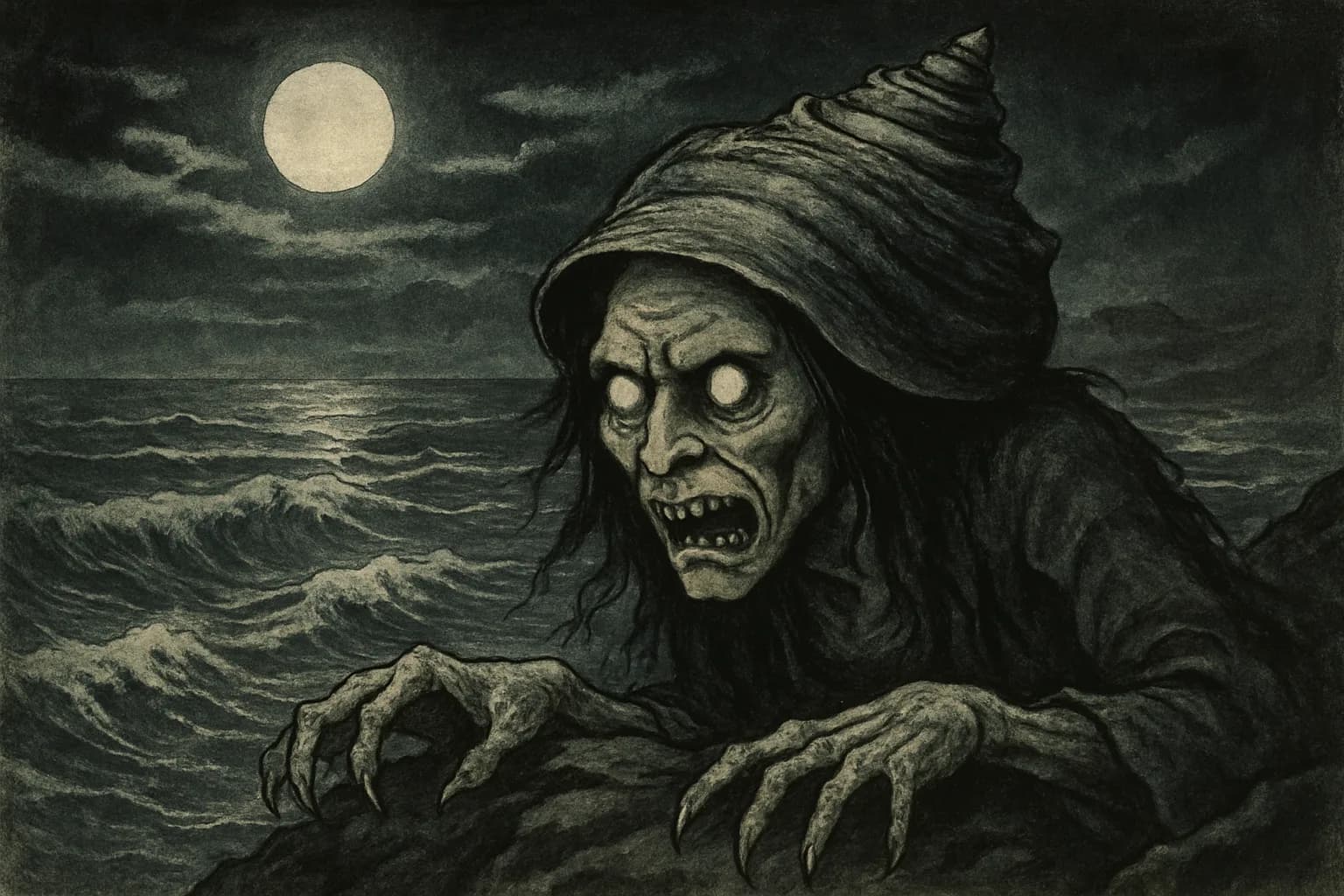
The base creature is ordinary: sazae, the turban shell still sold today at seaside grills and festival stalls. Folk belief held that a sazae which survives roughly thirty years gains the power to transform. Toriyama Sekien's 1784 print in his Gazu Hyakki Tsurezure Bukuro shows the creature mid-change — a spiraled, horned shell with a pair of human arms pushing out of the opening, eyes on stalks, strands of seaweed hanging where hair would be. In its finished, dangerous form the shell falls away entirely and it passes as an ordinary woman: a lone traveler on a coastal road, or a drowning figure calling for help from open water.
Sekien's gentler original
It's worth reading what Sekien actually wrote before the creature got a reputation. His entry treats the transformation less as a horror than as a curiosity, and he defends the very idea of it by quoting classical Chinese natural philosophy: "If a sparrow becomes a clam upon entering the sea, and a field-rat can transform into a quail, then in this unfathomable universe it is no impossible thing that a turban shell might become a demon." The line borrows a stock example from the Confucian Book of Rites (Liji), used for centuries to argue that one kind of creature turning into another is simply how the natural world works. In Sekien's own telling, the sazae-oni is close to harmless — it surfaces on moonlit nights and dances across the waves, nothing more.
The lure and the trap
The darker behavior comes from later, more circulated folklore rather than from Sekien's page. At sea, the sazae-oni is said to mimic the cries of a drowning person specifically to draw sailors close enough to grab — the rescue itself becomes the trap. On land, it takes the shape of a woman traveling alone, checks into an inn for the night, and by morning the innkeeper has vanished into her.
The pirates of Kii
The fullest version of the story, set on the Kii peninsula, is the one with a moral attached. A band of pirates pulls a "drowning woman" from the sea, the way any decent sailor would. She turns out to be a sazae-oni, and in payment for their trouble she visits each man in turn and takes his testicles — then sends word that she'll trade the men their own "golden balls" back, in exchange for the pirates' plundered treasure. It's a bawdy, blackly comic piece of Edo-period justice: men who make a habit of preying on women at sea meet something that preys on them the same way, and pays itself back with interest.
Where it comes from
Turban shells are genuinely long-lived and can survive stretches out of water, which is likely enough biological strangeness to seed a belief that a very old one holds something more than an ordinary animal. That logic — extreme age converting an ordinary creature into a spirit with a grudge or an appetite — recurs constantly in Japanese folklore, from foxes to cats to spiders that need four hundred years to become jorogumo. The Kii pirate tale, meanwhile, reads less like a nature myth and more like coastal communities settling a score on paper: the wokou and opportunist crews who worked the same waters as fishing villages were real and often feared, and a story where their exact crime gets returned to them by something they can't fight back against would have landed as satisfying, not just scary.
Sazae-oni today
The shell-and-arms design has stayed current mostly through television rather than reprints of Sekien: the sazae-oni has turned up across decades of the GeGeGe no Kitarō anime franchise, one yokai among hundreds cataloged there. Off screen, sazae itself never stopped being ordinary seafood — still hauled up along rocky coastlines nationwide and served whole in its own shell, grilled over charcoal at festival stalls, the same word doing double duty for dinner and demon depending on which century you're reading.