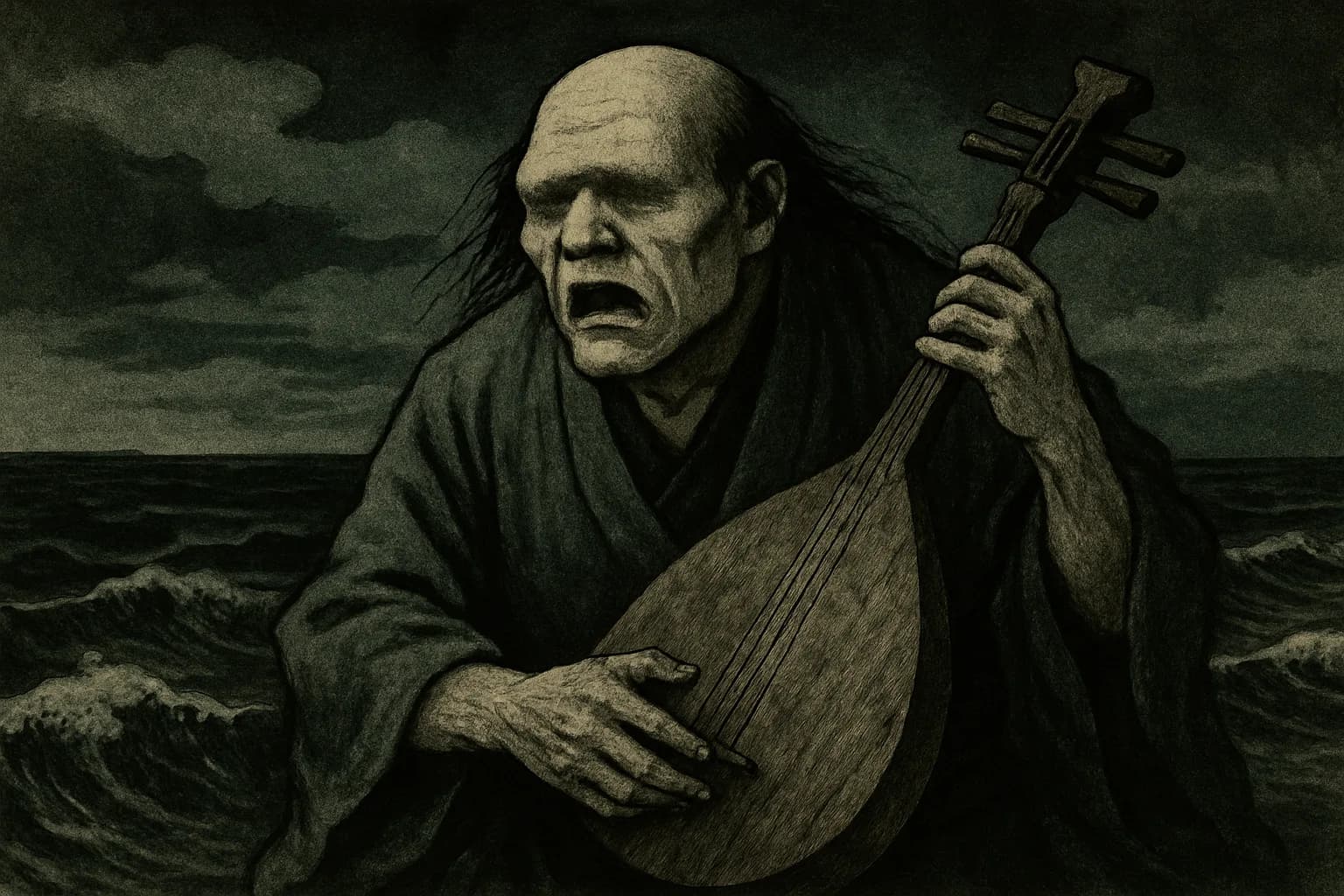
Sailors along the Japanese coast learned to fear a very specific kind of calm. Not a storm, not high wind — a flat, silent sea, the water gone glassy for no reason, right before something enormous breaks the surface. That is umibozu, and by the time you see it, the old advice goes, it is usually too late to do anything but hope.
What does it look like?
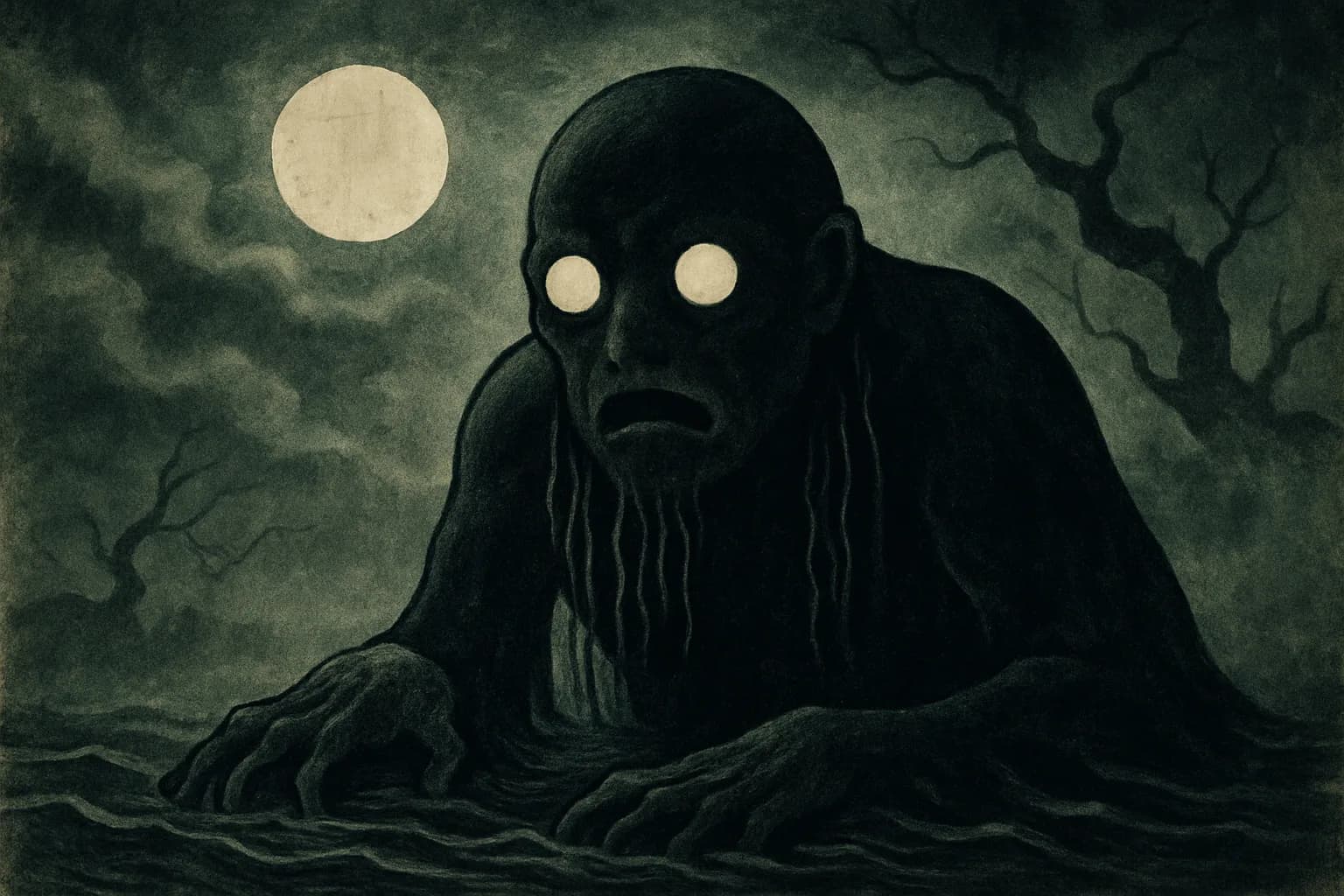
Accounts vary by port and by province, but the core image holds steady across centuries of retelling: a colossal black shape, smooth and hairless like a shaved monk's head — hence bozu, "monk" — looming out of the water with no clear arms, legs, or face. Some tellings give it huge, staring eyes; others describe nothing but a dark dome and a pair of shoulders, silent and featureless. Its size is always exaggerated in the telling: tall enough to blot out the moon, wide enough to rock a fishing boat just by surfacing beside it.
Unlike land-bound yokai with a fixed shape passed down in a single famous print, umibozu was, and still is, closer to a category of sighting than a single portrait. What every account agrees on is where it appears — open water, at night, when the sea has gone unnaturally quiet.
An omen written into the weather
Fishermen treated a sudden calm as the warning sign itself. The wind dies, the swell flattens, Once it appeared, crews had to stay silent and pretend not to see it. Asking "What is that?" could sink the ship. Some regions said it appeared to boats that sailed on forbidden days, like the last night of the month.
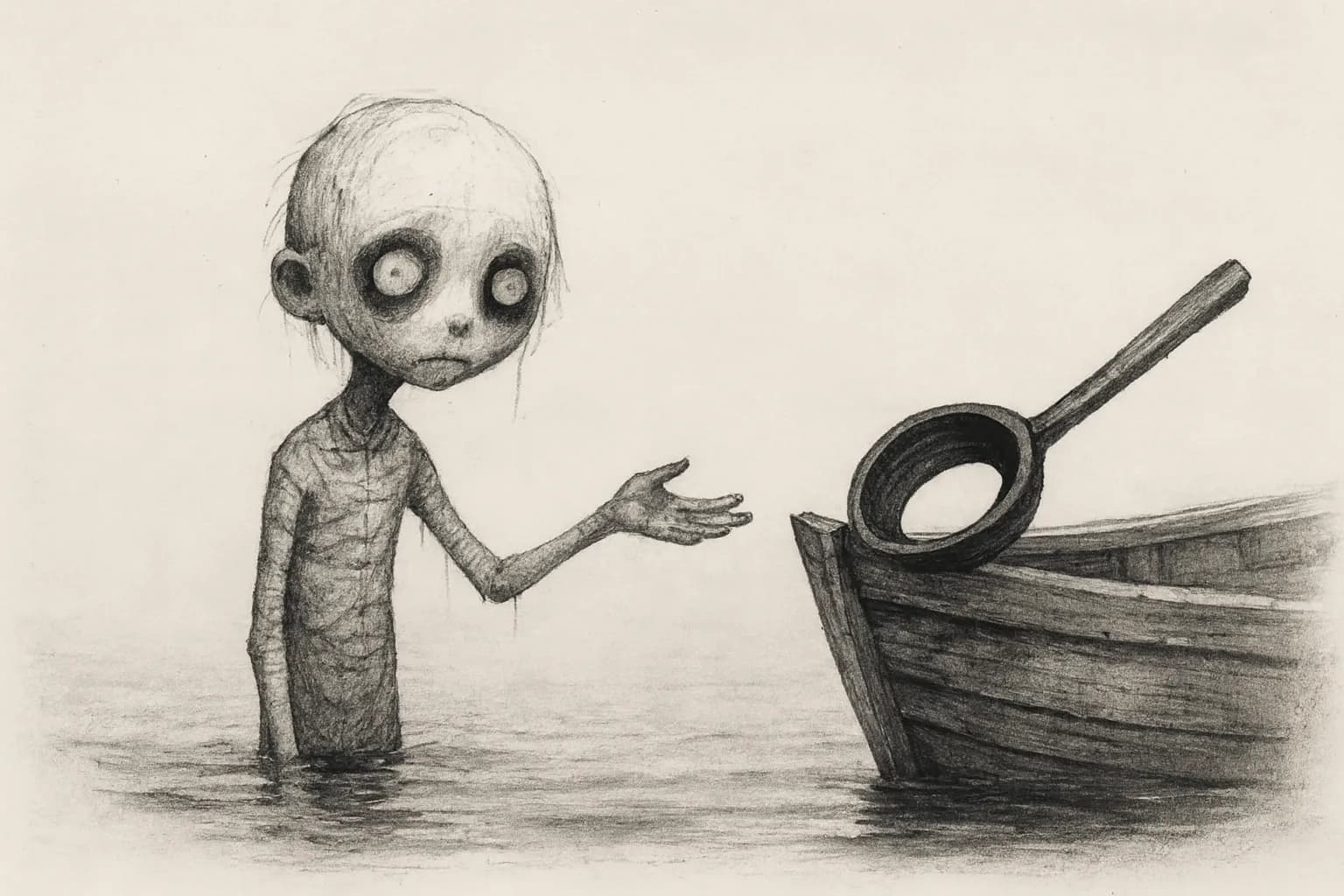
Once it rose, the danger was direct: it could capsize a boat simply by leaning against the hull, or by demanding something from the crew and punishing a wrong answer. In several coastal traditions umibozu asks for a ladle. A sailor who hands one over whole sees it used to bail seawater into the boat. The only defense in these stories is to pass along a ladle with no bottom — it can't be filled, so it can't be used against you.
A cousin in the same waters
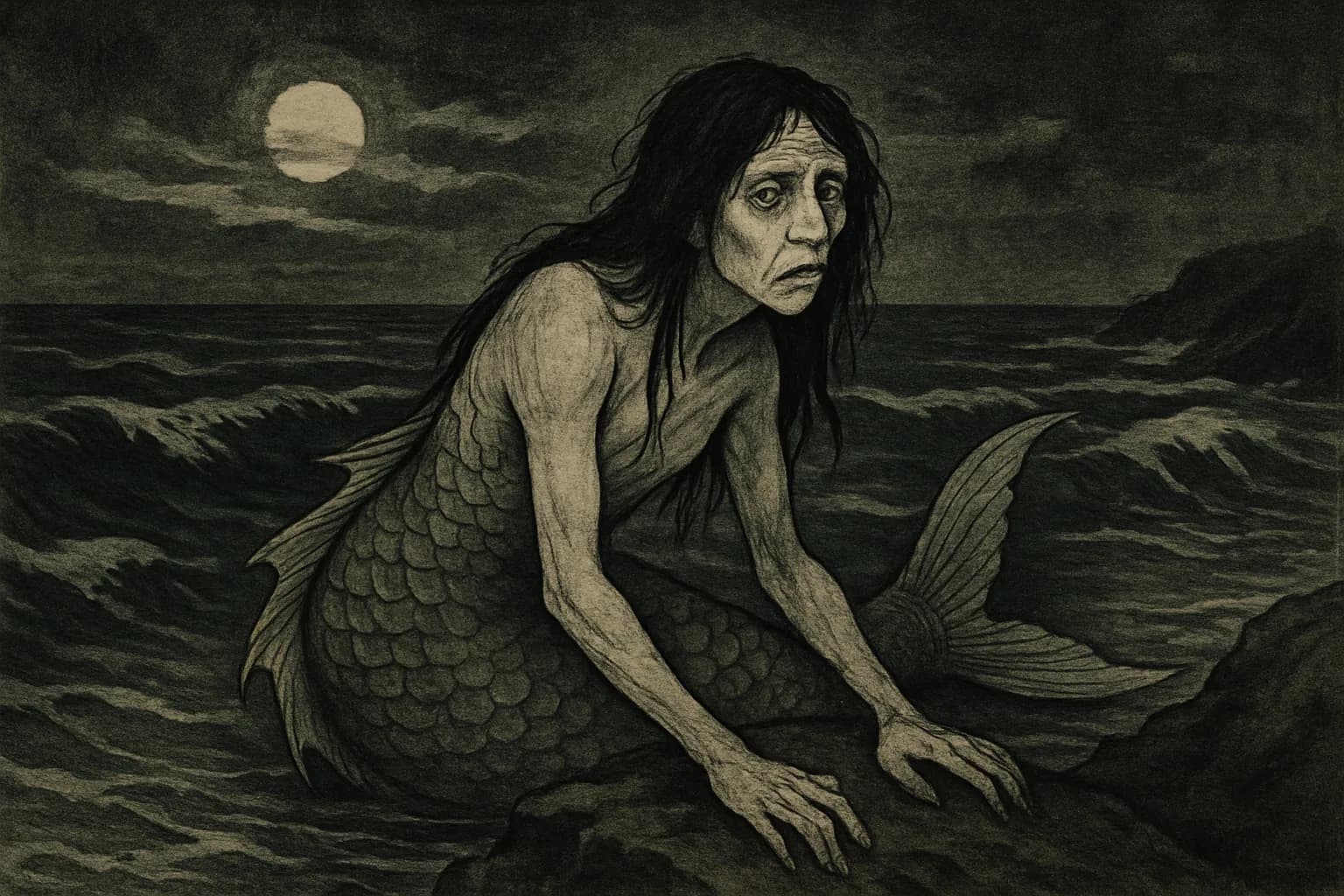
Umibozu is often mentioned in the same breath as funayurei, the ghosts of drowned sailors who also demand a ladle and bail seawater into any boat foolish enough to hand one over whole. In many places the two are told apart: funayurei are the drowned dead, while umibozu is a sea spirit in its own right. In other regions the two names overlap for the same thing.
Where it comes from
Folklorists generally read umibozu as the sea's own unpredictability given a shape sailors could talk about — a way to explain sudden swells, freak waves, or a boat lost on a night with no storm to blame. A creature that appears only when the water goes wrong fits a fisherman's actual experience of the ocean better than a fixed monster with a den or a lair. Edo-period kaidan (ghost story) collections and ukiyo-e artists recorded the belief without ever settling on one canonical look, which is part of why umibozu still reads as more atmosphere than character: it is dread given a silhouette.
Umibozu today
The sea monk still surfaces regularly in Japanese horror and fantasy, usually kept close to its folkloric role — a vast, wordless shape rising from still water — rather than redesigned into a mascot the way the kappa was. It appears as a boss-type threat in yokai-themed video games and as a recurring figure in anime anthologies of ghost stories, almost always retaining the two details that matter most: the unnatural calm before it rises, and the sheer, faceless scale of it once it does.