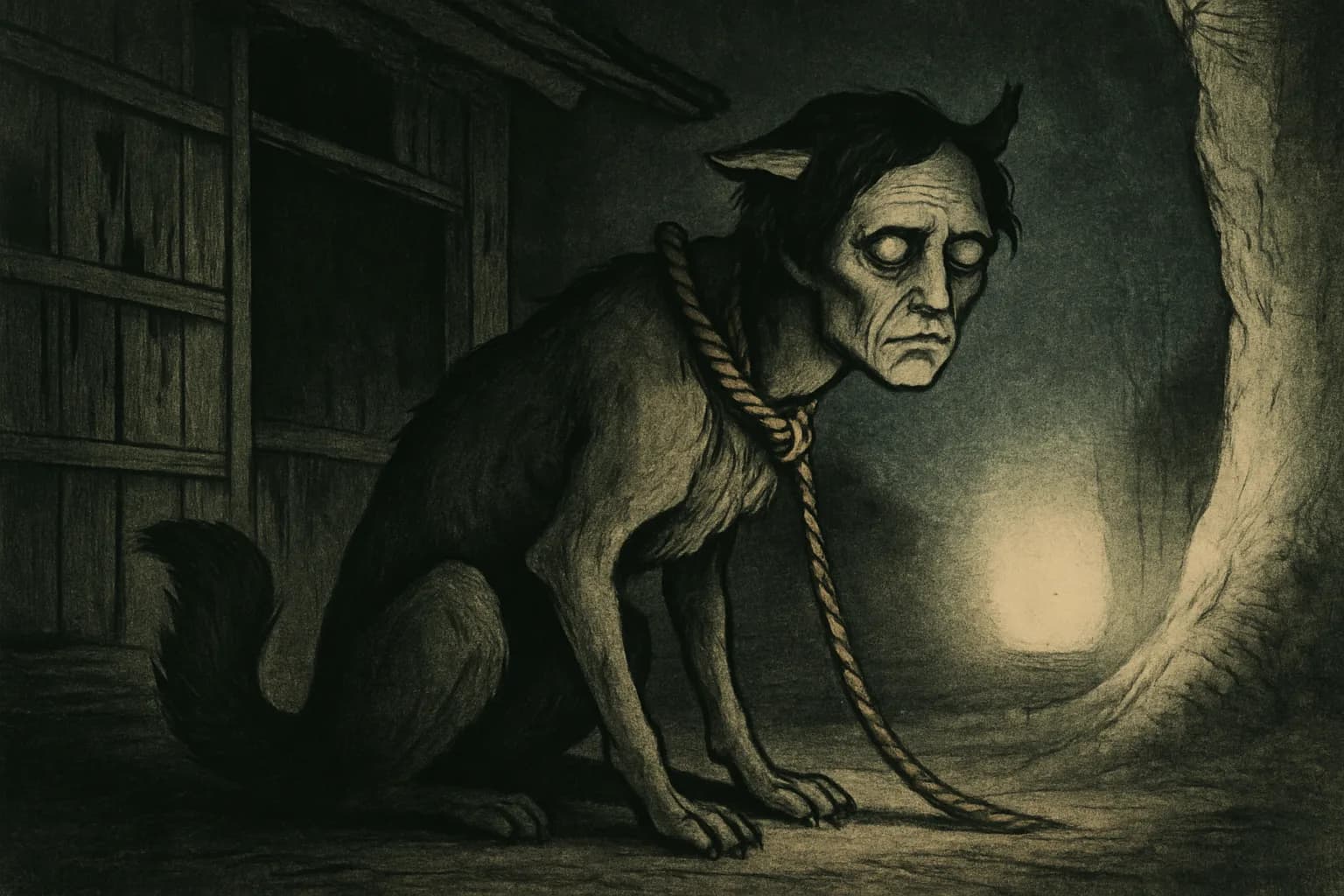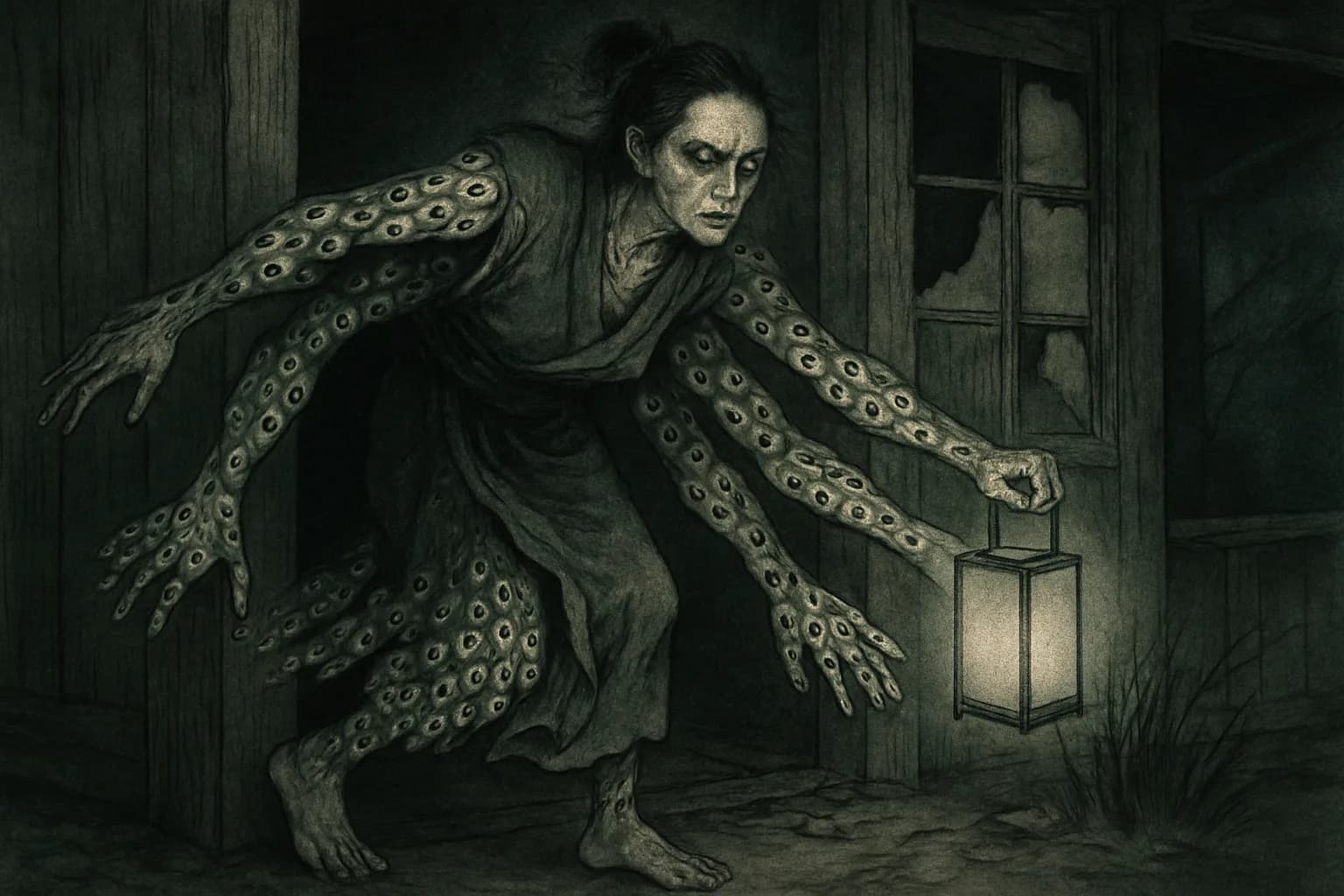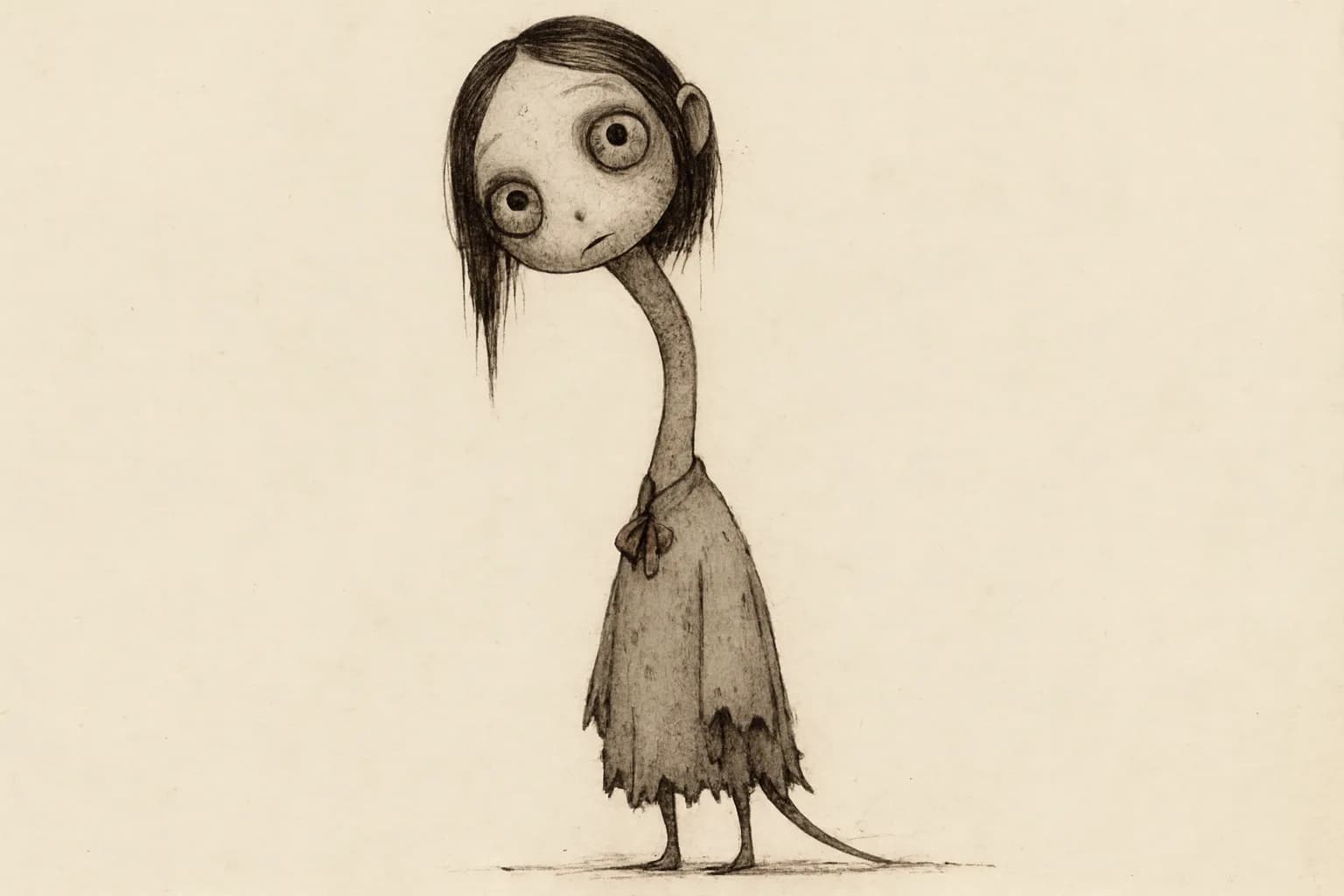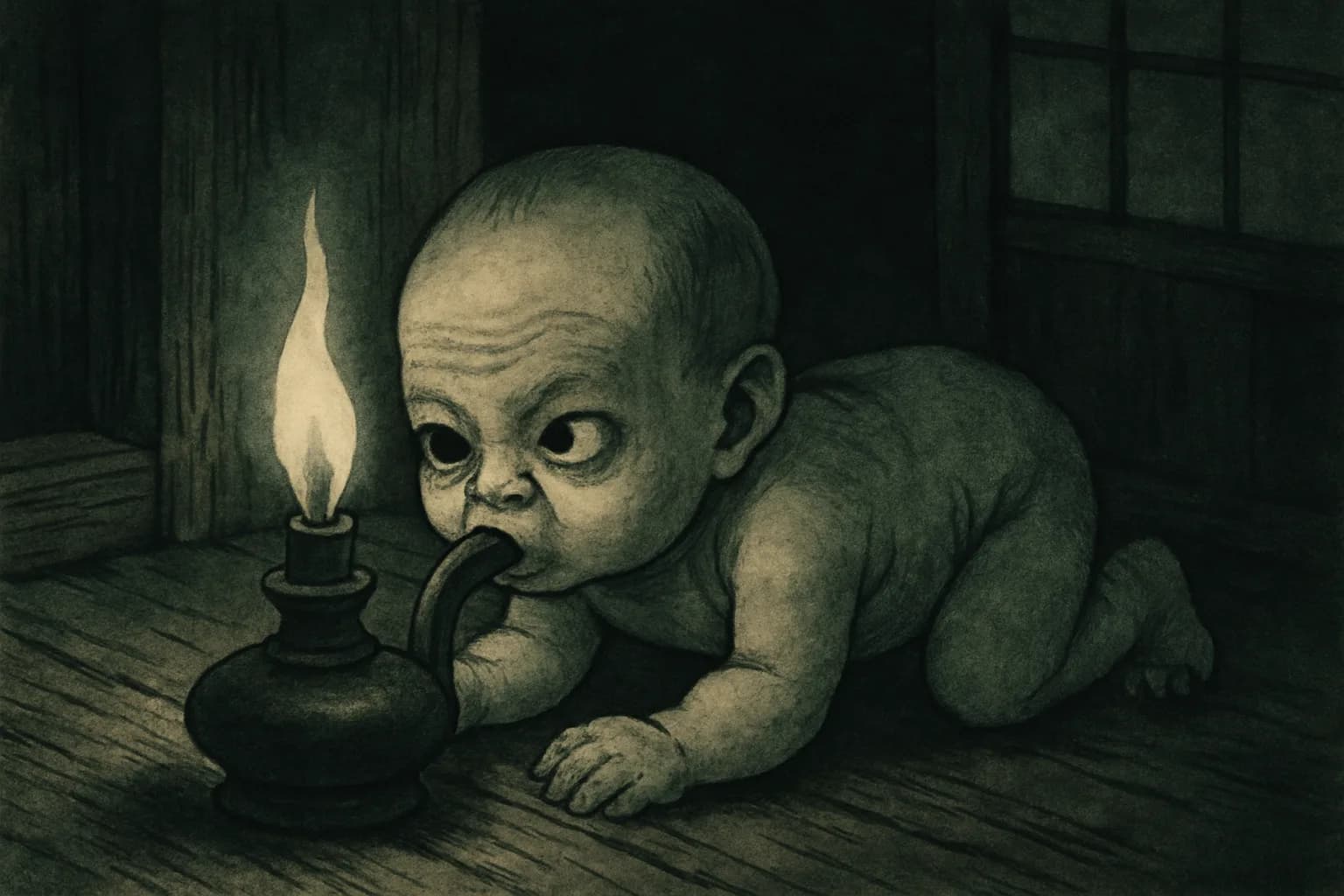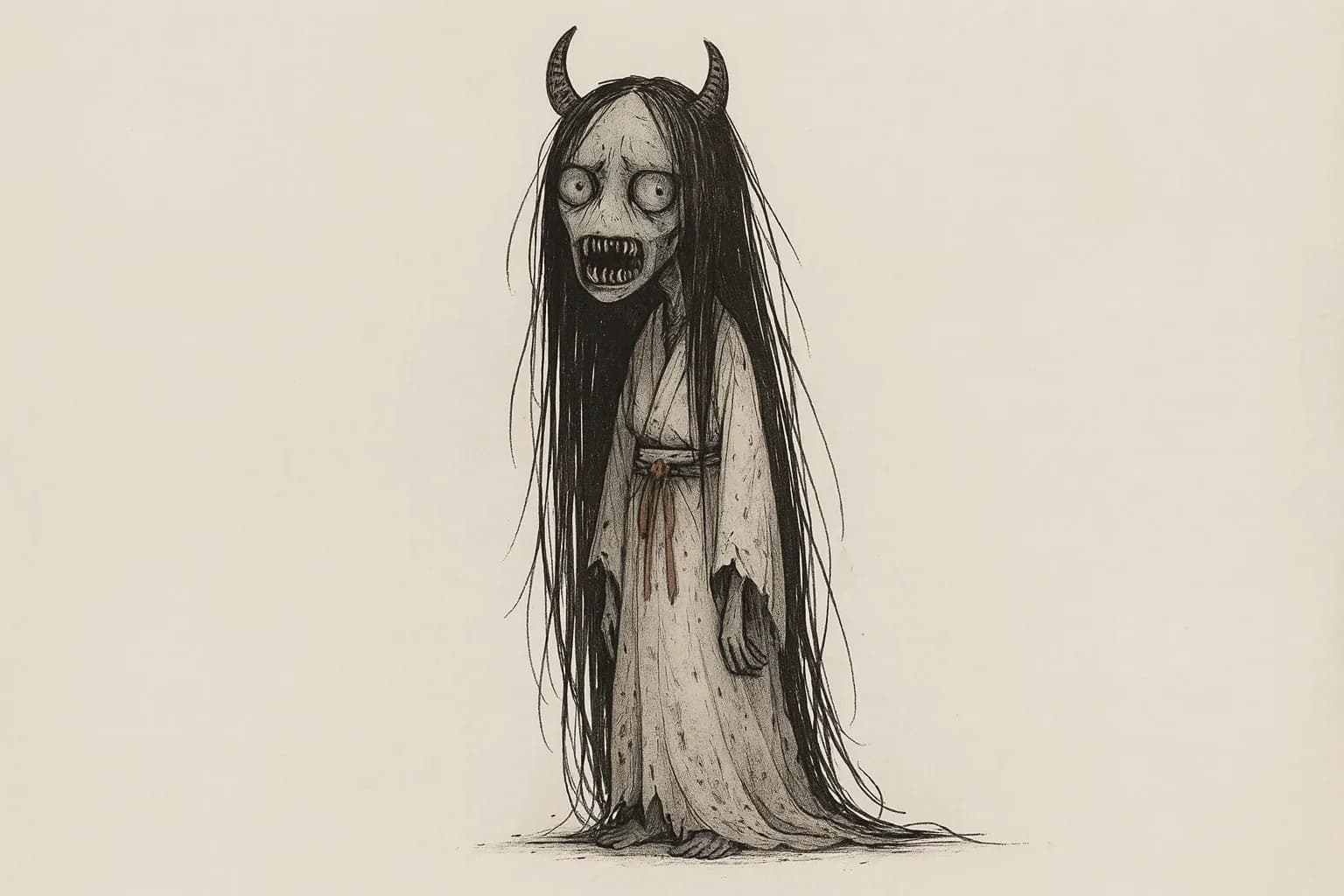
In the old villages of Izumo, a family's good luck needed no story. People just said the house kept a hitogitsune — a "person-fox," 人 (hito, person) plus 狐 (gitsune, fox). This was not a fox that lived in the wild. It was a fox that belonged to one house. It passed down the family line and worked for it in secret.
What does a hitogitsune look like?
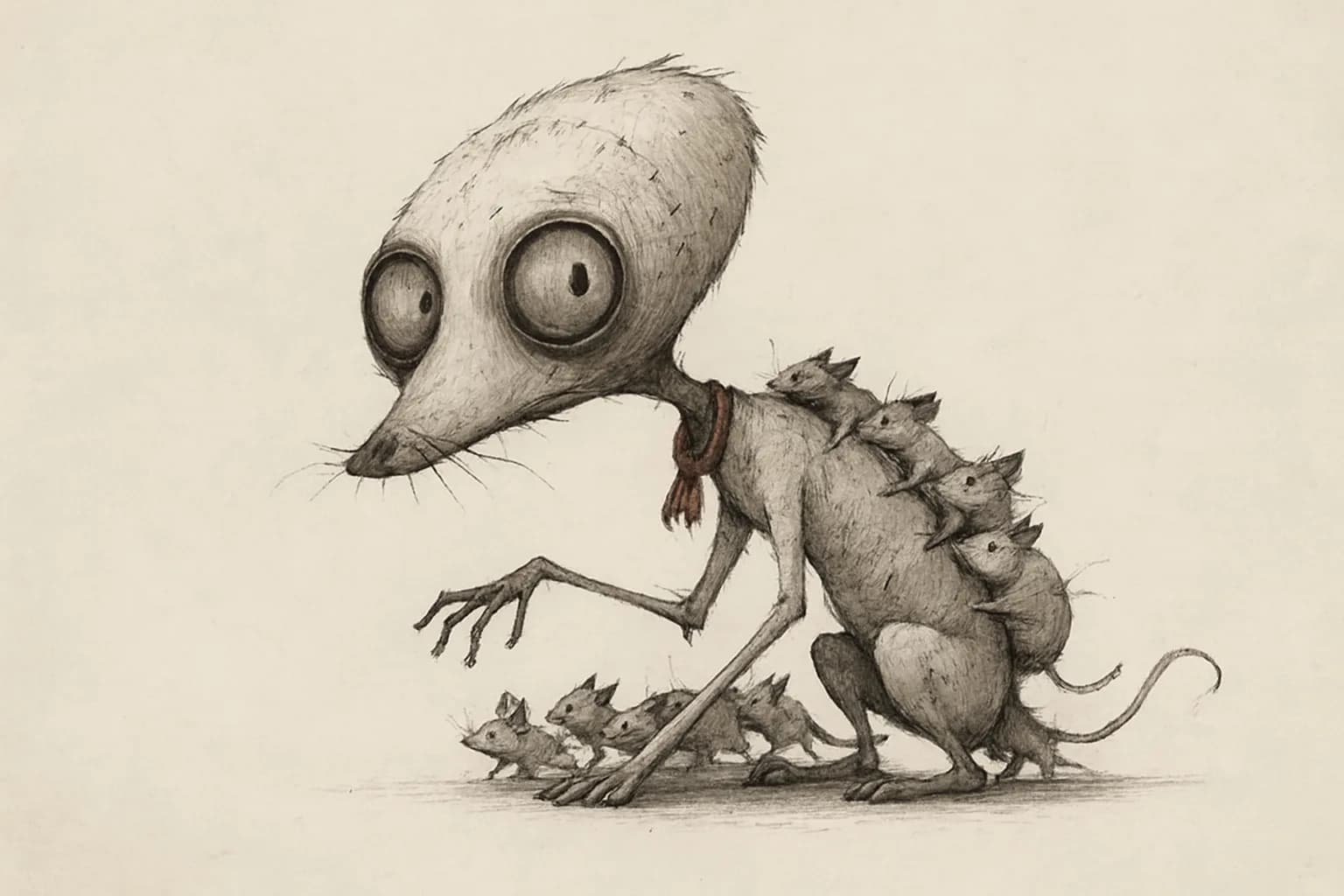
Almost nobody claimed to have seen one clearly. It was said to be smaller than a normal fox, closer to a weasel or a rat. It could not be seen, either — not by most people. Only two kinds of people could see it: the family that owned it, and whoever it had been sent to curse. It was said to move as a group, not as a lone animal. A whole troop lived unseen inside the walls of the house it served.
That hiding did real work in the old tales. A hitogitsune left no tracks to check and no den to find. The only proof anyone ever had was an effect: a harvest too good, or a sickness too strange.
A family keeps it, not a house
Village records used the term hitogitsune-mochi (人狐持ち), "fox-keeping families." The same 人狐 can also be read ninko, giving the name ninko-mochi. People believed it passed down through the women who married in. A bride from the wrong house could bring the fox with her into her new home. It brought two things at once. It gave its keepers sudden wealth. It also let them strike an enemy with sudden illness or madness — a kind of fox curse called kitsune-tsuki.
Wealth with no clear cause, and bad luck with no clear cause, were read as the same sign. Both pointed to a hitogitsune-mochi line living nearby.
Hirata Atsutane's study
The belief was not just village talk. In 1818 the scholar Hirata Atsutane wrote about it in Kokon Yōmi-kō (今昔妖魅考), a book on spirit-curse cases from across Japan. He treated hitogitsune-tsuki as real and worth study, not as a tall tale. He drew on an older local account, Izumo no Kuni Uchi Hitogitsune Monogatari. That gives the San'in tale something most local fox beliefs lack: a named, dated book, written while the belief was still alive.
Cousins in other regions
Izumo was not alone in this belief. Other regions had the same idea under other names. In the Kanto region, families were said to keep an osaki-gitsune, or osaki — a fox tied to the same pattern of wealth and blame. In the hills of Shinshu and Kai, the same kind of spirit was the kuda-gitsune (管狐), the "tube fox." It was said to be small enough to fit inside a hollow bamboo tube, and fortune-tellers often kept one. Scholars group all three — hitogitsune, osaki, and kuda-gitsune — under one term, tsukimono-suji, "spirit-owning lines." The dog-spirit inugami sits in the same group, a similar line passed down through a different animal.
The cost of marrying in
The village cost was real. Villages kept close, quiet track of which families were said to be hitogitsune-mochi. People avoided marrying into those families. They feared the fox line would come with the bride. A sudden run of bad luck next door was often blamed on a hitogitsune sent out of envy. A shugenja, a mountain holy man, might be called in to send a curse-fox back to the house it came from. A confession, real or not, could sometimes end the blame.
Where it comes from
Scholars of Japanese spirit-belief, Carmen Blacker among them, read hitogitsune as a way to explain why one farm family did better than its neighbors. Nobody had to say the word "cheating." A house that grew rich fast needed a story that did not point a finger. A fox nobody could see or catch did that job well. The fox is never punished the way a trickster kitsune often is. It just works, year after year, for whichever family holds it.
The writer Lafcadio Hearn lived in Matsue, in the heart of Izumo, in the early 1890s. He heard the belief firsthand from local people. He wrote about it in Glimpses of Unfamiliar Japan (1894). It gives the San'in tale a rare account from an outsider who lived among the people who held it.
Hitogitsune today
The old shame around fox-owning families has faded across the San'in region. Nobody takes the old blame seriously now. What is left is the record: Hirata Atsutane's 1818 study, Hearn's notes from Matsue, and the later scholars who mapped hitogitsune, osaki, and kuda-gitsune as one pattern across the country. In parts of rural Shimane, older people can still name which houses were once said to keep one. No one now expects to see the fox itself.