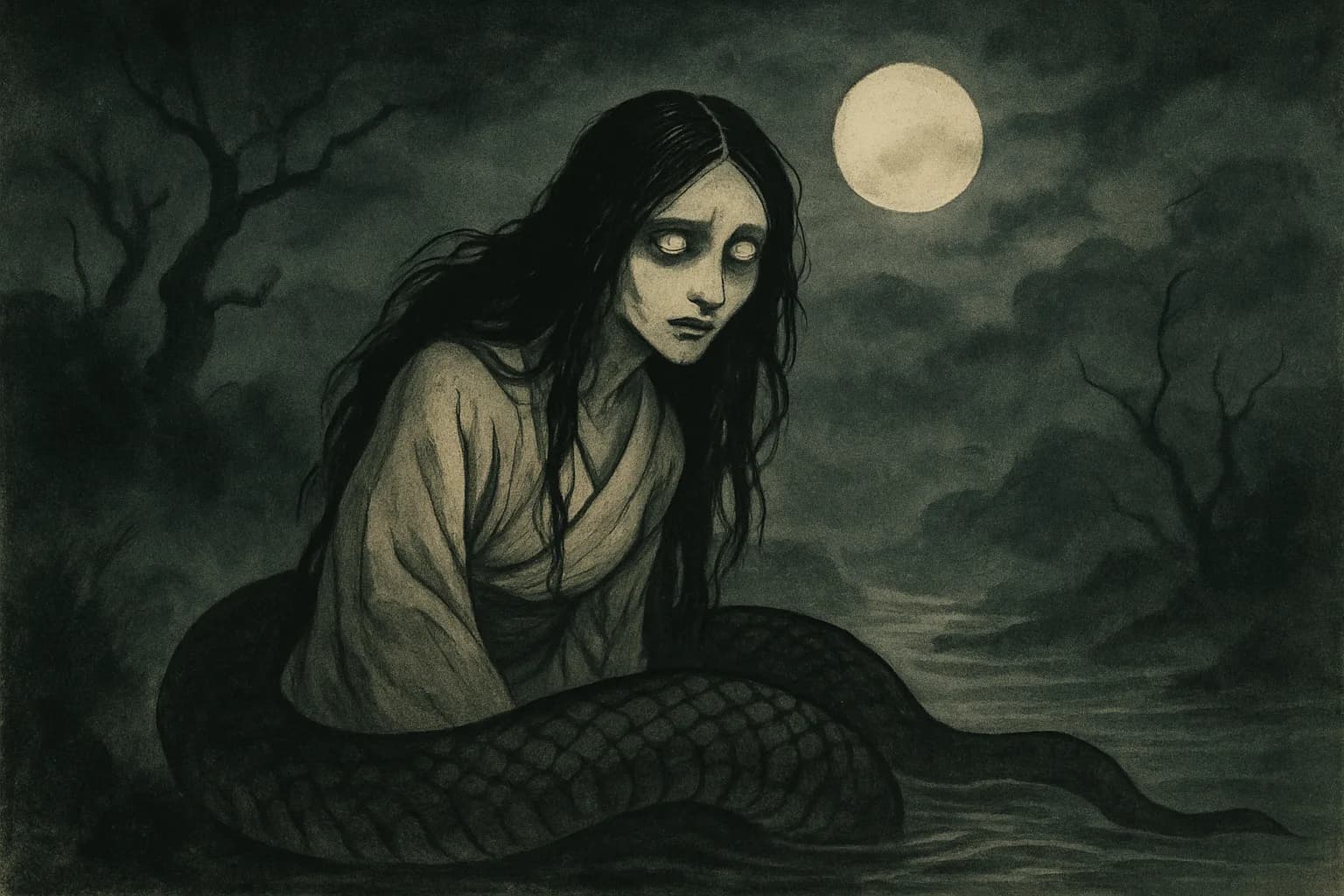
Some farmhouses in the old Chūgoku and Shikoku countryside kept a secret under the kitchen floor. It was a sealed earthenware jar. Inside it lived a small snake nobody but the family was meant to see. Neighbors called it a tōbyō, and they believed it explained why that one house never seemed to go hungry.
What does a tōbyō look like?
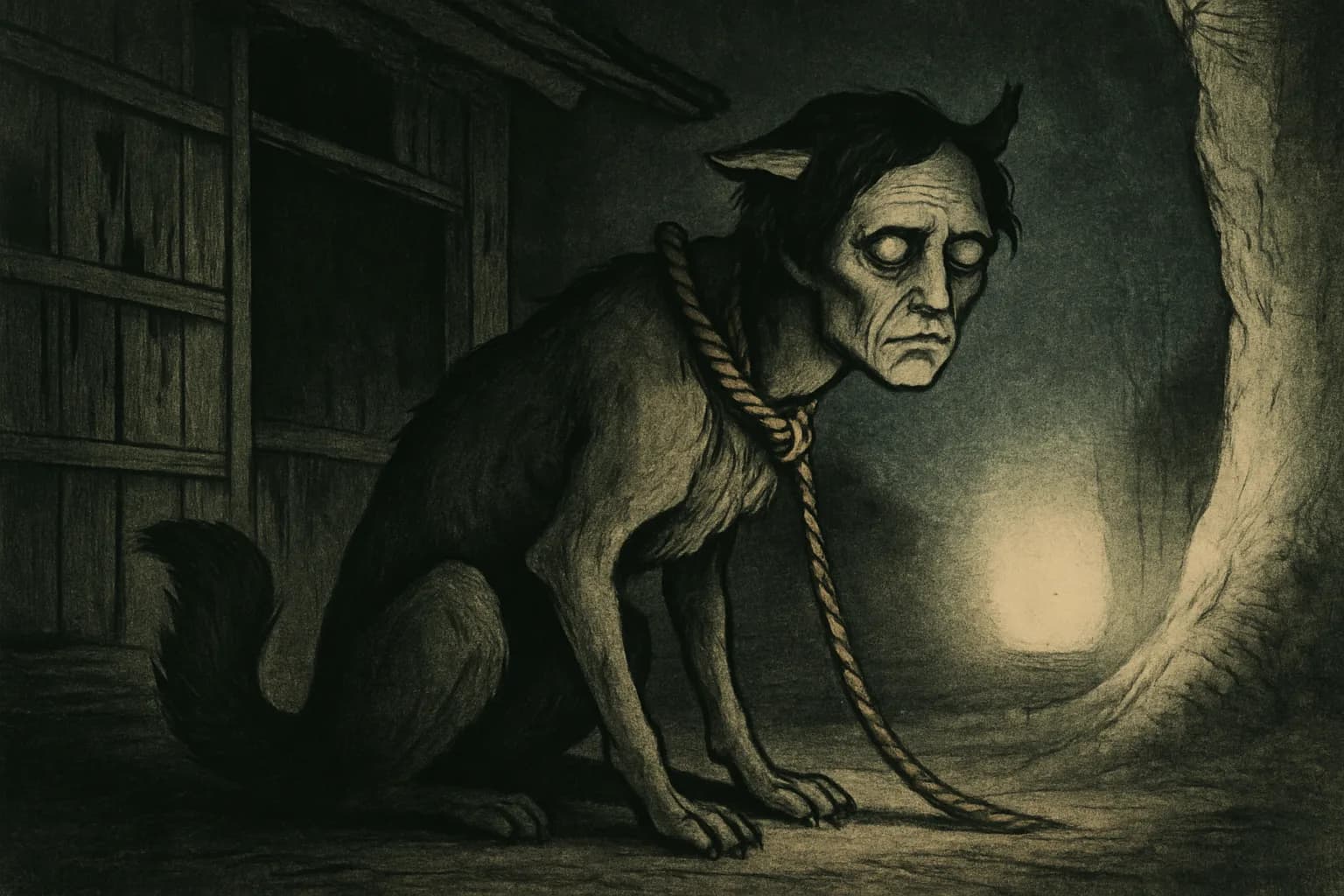
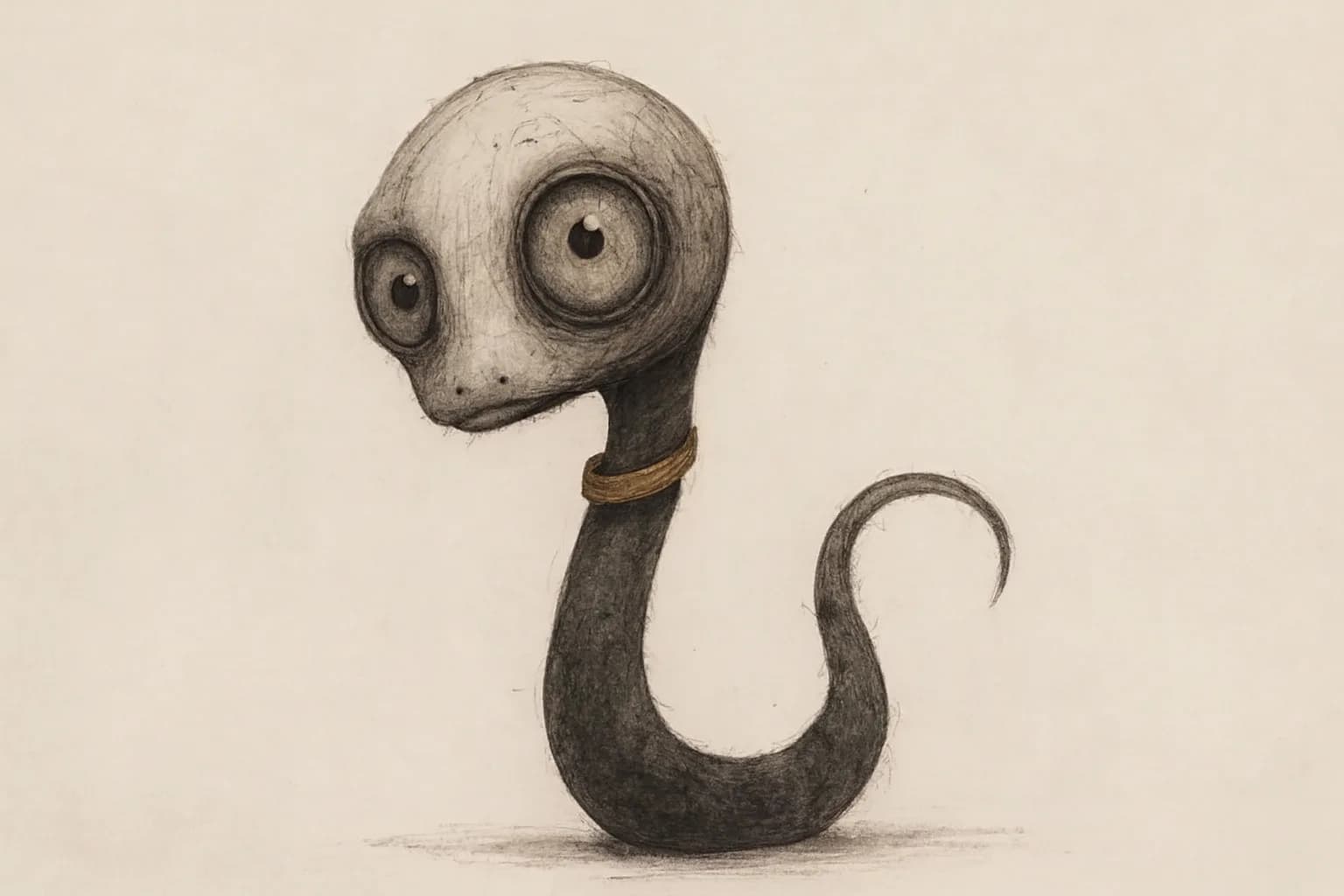
Accounts describe a thin snake, about 10 to 20 centimeters long. Its body is a dull, dark black, but it wears one bright mark. A ring of gold circles its neck. Some shrine traditions in Okayama tell it differently, as a white snake instead. In Tottori, the same belief takes an odd turn: the creature keeping the house is a small fox, not a snake at all, and is called tōbyō-gitsune.
Most tellings agree the tōbyō does not live alone. It moves in a group of exactly seventy-five. It can also vanish from sight whenever it likes, which is part of why almost no outsider ever claimed to have seen one directly.
A name that hides its own jar
The kanji written here, 蛇蠱, is a scholarly label. It combines 蛇 (ja, "snake") with 蠱 (ko), the character used for a curse worked by trapping small creatures together. Folklorists use this pairing to place tōbyō inside a much older East Asian tradition of curse-spirits raised in a sealed container.
That is not likely where the sound "tōbyō" itself came from, though. Local records also write the name as 当廟, a purely phonetic spelling with no meaning of its own, or as 土瓶神 (dobingami), "earthenware-pot god." Dobin is the everyday word for the squat clay jar used for tea and storage — the exact kind of vessel a tōbyō was kept in. The name most likely began as dobin and drifted, generation by generation, into tōbyō. The jar did not just hold the creature. It very probably named it.
Tōbyō-mochi: what a family keeps
A family believed to harbor one was called tōbyō-mochi, "tōbyō-keeping." In Shikoku, the jar was hidden above or below the kitchen floorboards, out of guests' sight, and the household fed it food and rice wine on occasion, the way it might feed a person.
Keeping a tōbyō cut both ways. It was said to bring the family money, steadily and without an obvious cause. But it could also be sent out against an enemy, and a person on the receiving end of that curse was said to suffer sharp, burning pain through every joint in the body. The same snake that fed a family could cripple a rival with a thought.
Yanagita Kunio's two curses
The folklorist Yanagita Kunio, working in the early twentieth century, sorted Japan's household-curse beliefs into two broad families. One ran through foxes, kitsune-tsuki. The other ran through snakes, hebi-tsuki, and tōbyō — along with its cousin names hebigami and Tonbo-kami — was his leading example of the snake branch. The fox side is far better known outside Japan today, but in Chūgoku and Shikoku, the snake in the jar was just as real to the people who feared it.
Getting free of one
Families across Japan who believed a spirit like this had attached itself to their house rarely turned to a doctor first. They called a shugenja, a mountain ascetic trained in exorcism, to pray the curse back out of a sick relative. A public confession sometimes helped too — a tōbyō-mochi family openly admitting what they kept, and promising to stop sending it out, could be enough to lift the suspicion of an entire village.
Where it comes from
Scholars who study these household-curse beliefs read tōbyō much the way they read inugami and hitogitsune elsewhere in Japan: as an explanation for uneven luck between close neighbors. A family that got rich too quickly needed a story that was not an open accusation of cheating. A snake nobody could see, sealed away under the floor, did that work quietly, for generations, without anyone having to name names.
Tōbyō today
The old suspicion has mostly faded. Villages no longer track which houses were once said to be tōbyō-mochi the way they did a century ago. What survives is the record: local folklore surveys from Kagawa, Okayama, and Tottori, gathered up in reference works like the 1977 Nihon Mukashibanashi Jiten, and the entries folklorists still file under Japan's database of strange traditions, kaii yōkai denshō. In Kagawa, some older residents can still say the name Tonbo-kami without needing it explained to them.