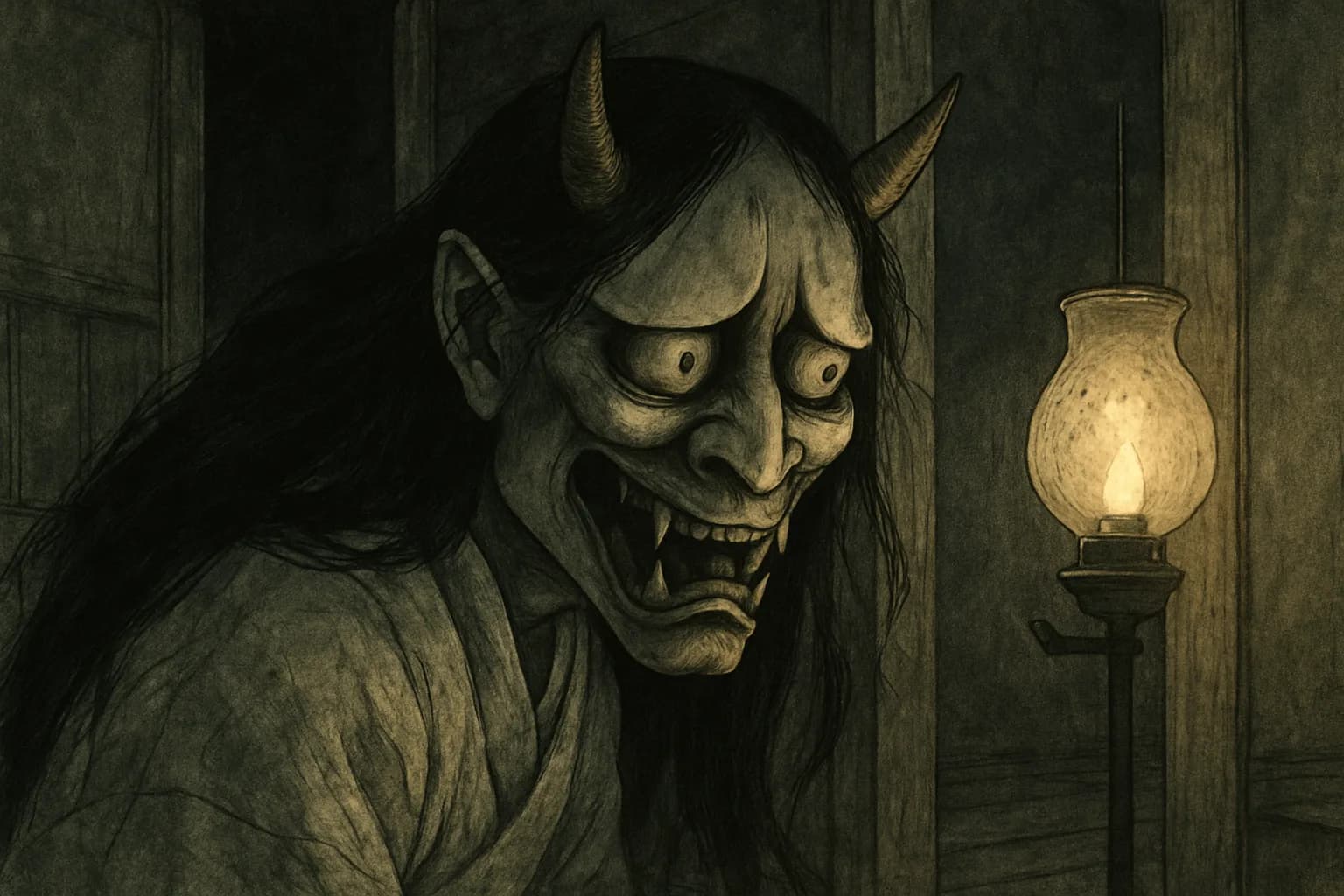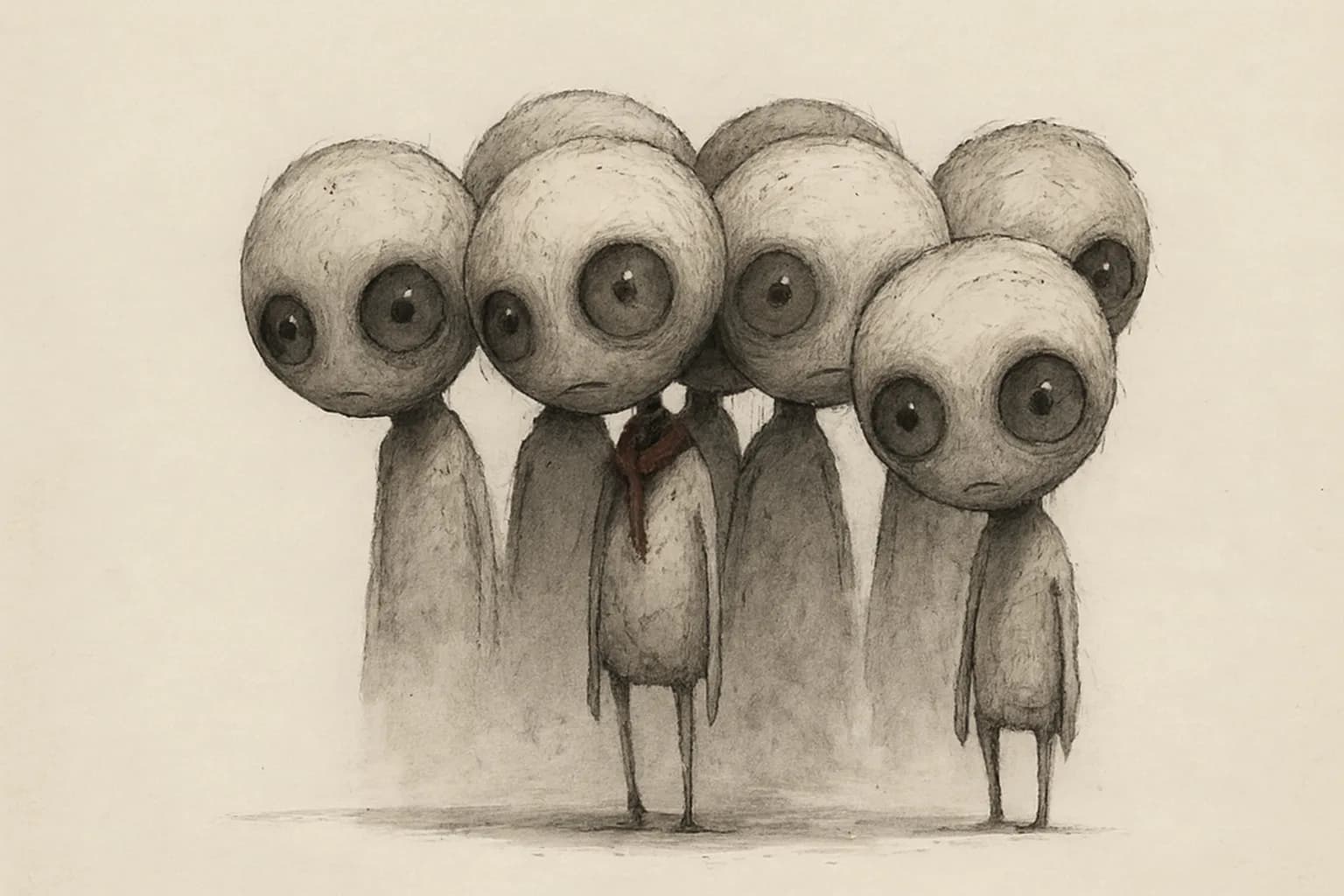
Walk a lonely road in Kōchi after dark, and old-timers will warn you about a group of exactly seven. They are the Shichinin Misaki, the Seven Misaki. A misaki (ミサキ) is an old word for a minor, dangerous spirit — something different from an ordinary yūrei, a ghost with its own private grudge. These seven share one grudge between them, and they move as a pack. Brush against them, and you may sicken or die within days. When that happens, your ghost fills the open spot. One of the original seven, finally done with its turn, moves on.
What does a Shichinin Misaki look like?
Most accounts give it no shape at all. People describe a sudden chill on a still night, or a gust that passes with no wind behind it. Some say the seven travel as pale, blurry shapes glimpsed at a crossroads or a riverbank. Others describe only lights, low and faint, crossing a field where nobody should be walking. Every version agrees on one thing: the count. However they appear, there are seven. Never six. Never eight.
A number that never grows
This single detail drives every Shichinin Misaki story. The group is bound to always total seven. When they cause a death, the new ghost fills the empty place, and one of the seven — having served an unseen term — is freed and passes on. The person who died becomes the replacement. The curse moves forward, from victim to victim, across generations. Nobody knows who the first seven were. Nobody knows how long any one of them has to serve before release. That not-knowing is most of the fear.
They are sometimes likened to the funayurei, drowned sailors who also hunt in a group and beg strangers for a ladle. But the funayurei stay at sea. The misaki walk inland roads, and their number is fixed in a way the funayurei's is not.
Encounters on the road
The Shichinin Misaki favor lonely spots: a crossroads after dusk, a mountain trail, a river crossing with no bridge. Old accounts from Shikoku and the Chūgoku region describe travelers struck by sudden fever right after passing such a place, with no other cause given. In some tellings the seven stay invisible, felt only as cold air or a wrongness in the silence. In others, a traveler sees pale figures walking in single file and knows at once what has crossed their path. A death soon after was taken as proof enough.
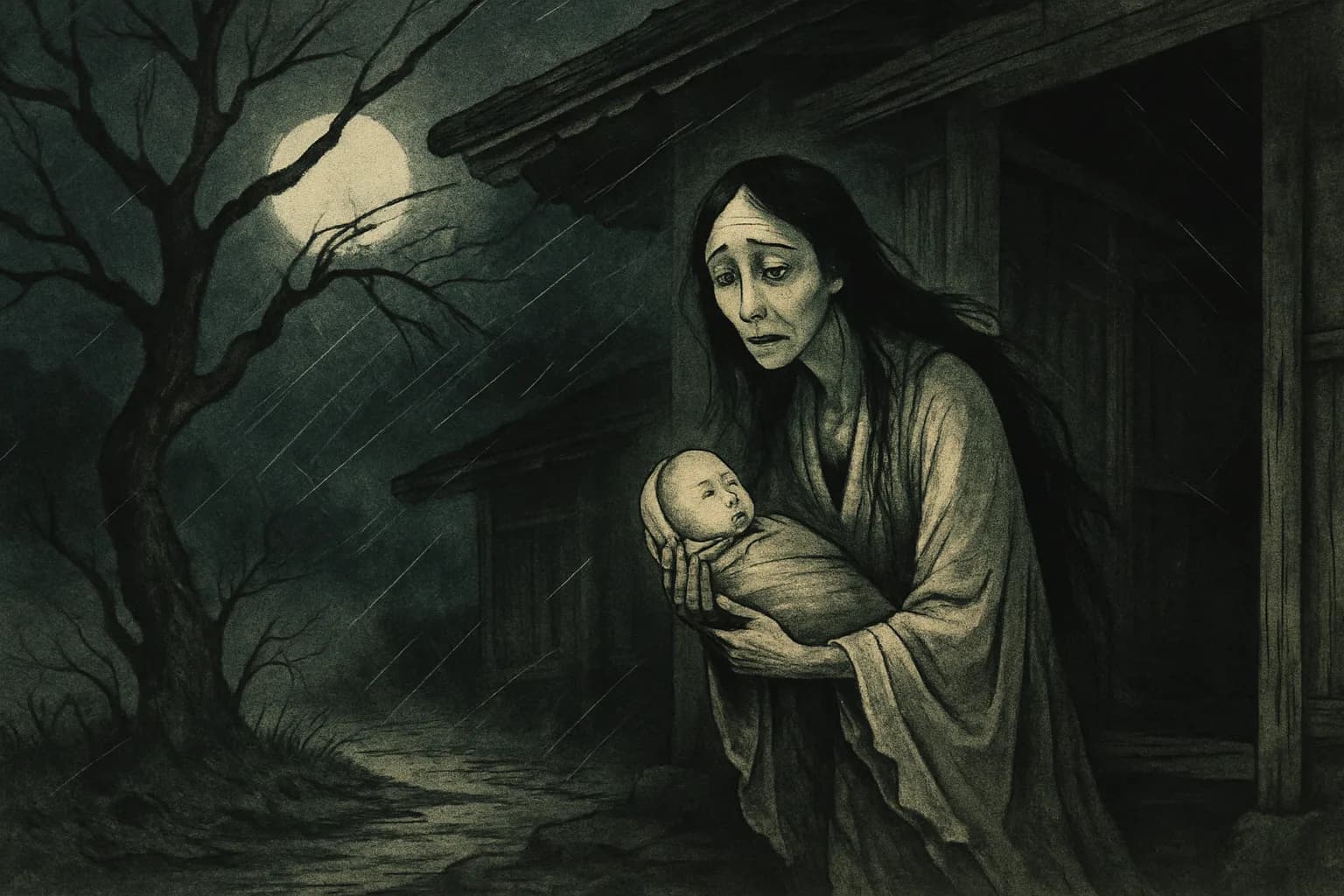
Unlike the ubume, a ghost tied to one woman's grief over a lost birth, the misaki carry no personal story. Nobody they kill was ever their enemy. The grudge is collective, worn by whoever happens to fill the group that year.
How villages kept them quiet
Communities in Kōchi did not only fear the Shichinin Misaki. They worked to calm them. Small roadside stones and shrines, often just called misaki-sama, went up at sites tied to a death. People left rice, water, or incense there. It's the same instinct behind goryō shinkō, Japan's practice of turning a dangerous spirit into a protector through worship. The clearest case of goryō belief is Sugawara no Michizane, a 9th-century scholar whose angry ghost was pacified until he became Tenjin, a god of learning, with shrines nationwide. The Shichinin Misaki got the same treatment on a village scale — smaller stones, no grand shrine, but the same bargain.
Where it comes from
The word misaki is generally read as o-saki, "the one who goes ahead." In its gentler sense, it names a minor spirit that serves or announces a major god. The Shichinin Misaki are its darker cousin: ordinary dead, not divine, bound by an unresolved grudge instead of service.
Kōchi folklore ties the legend's roots to retainers of the Chōsokabe clan who died in 1588, during the family's wars to unify Shikoku. The earliest written versions appear in two Edo-period collections, Rōho Kidan and Tōyō Inken Kidan, which recorded local ghost stories rather than invented them. Similar groups of seven wandering dead turn up elsewhere in western Japan, which suggests the belief traveled along old trade and pilgrim roads instead of staying fixed to one valley.
Shichinin Misaki today
The legend mostly stayed local rather than going national, the way the kappa or the tengu did. Roadside misaki stones still stand in parts of Kōchi, tended by nearby households out of habit as much as fear. Folklorists who collected Shikoku ghost stories in the 20th century recorded the belief largely unchanged from its Edo-period form: seven dead, one grudge, and a road better not walked alone after dark.