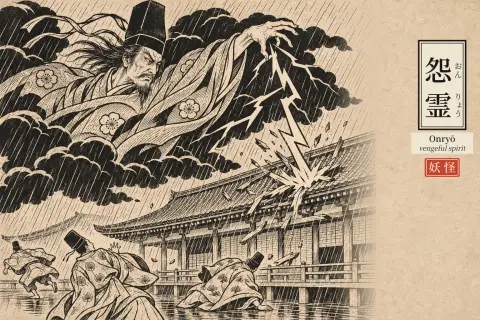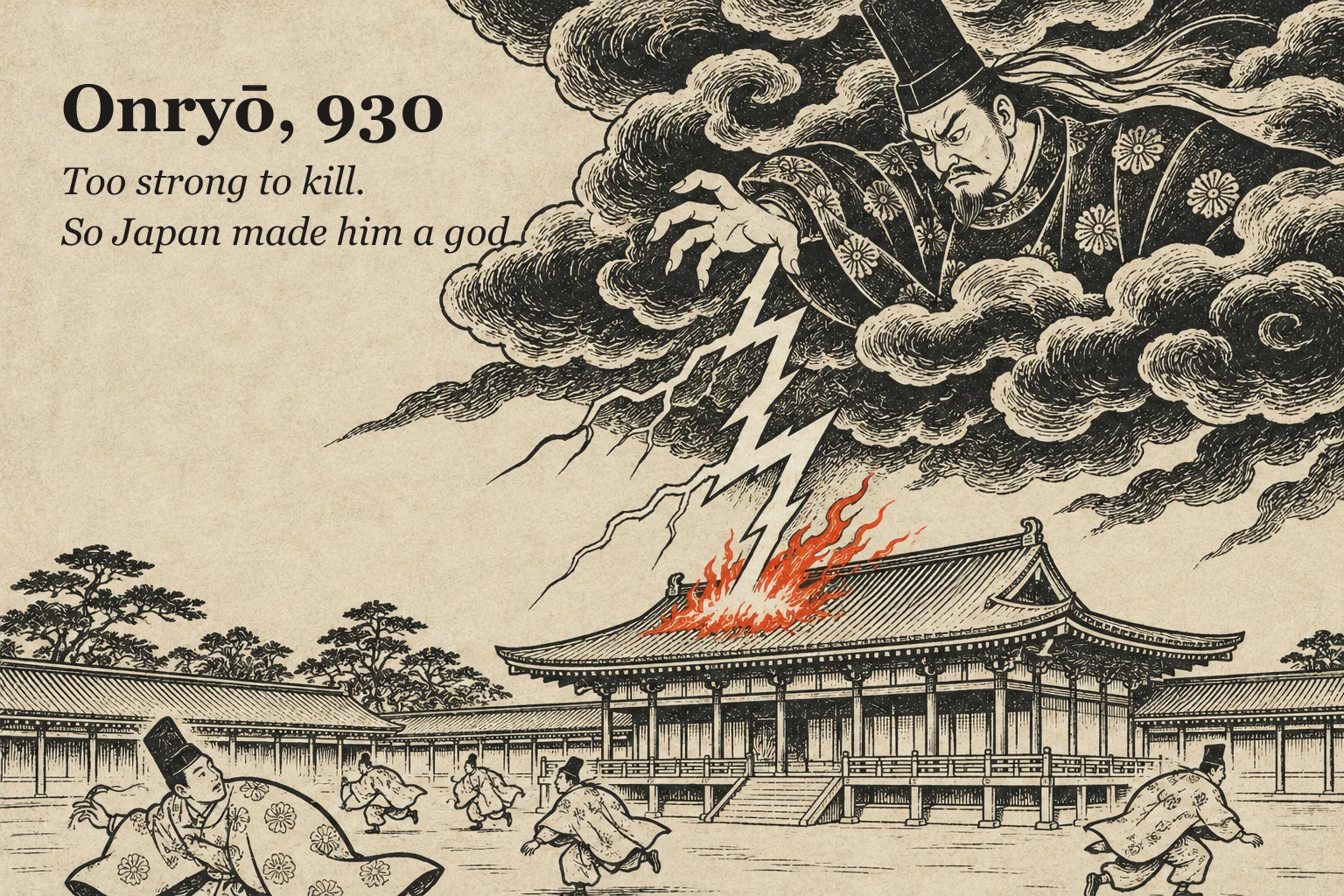
The strongest yokai is the onryō, the angry ghost that even death could not stop. Sugawara no Michizane died in exile in 903. Twenty-seven years later, lightning struck the imperial palace.
That is the pattern at the top of this list. The most feared yokai were not the ones that won fights. They were the ones that kept killing after death.
| Rank | Yokai | What it took to stop it | Recorded harm |
|---|---|---|---|
| 1 | Onryō | Death did not stop it. Worship did | Lightning killed courtiers in 930; an emperor died |
| 2 | Tamamo-no-mae | Death did not stop it. A monk split the stone | Made an emperor ill; killed as a stone for centuries |
| 3 | Tesso | Death did not stop it. A shrine did | A dead monk's rats ate a great temple's sutras |
| 4 | Shichinin-misaki | Death did not stop it. Prayers failed | Those who meet them burn with fever and die |
| 5 | Yamata-no-Orochi | A god in person | Ate seven daughters, one each year |
| 6 | Shuten-dōji | Six warriors and the gods' own sake | Carried off and killed people of the capital |
| 7 | Nue | A famous archer, after prayers failed | Made an emperor ill night after night |
| 8 | Akuro-ō | The emperor's strongest general, seven days | Raided villages and carried off women |
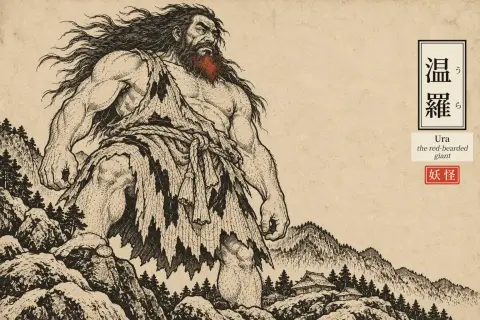
| 9 | Ura | A prince sent by the court | Raided farms; his cut-off head groaned for 13 years |
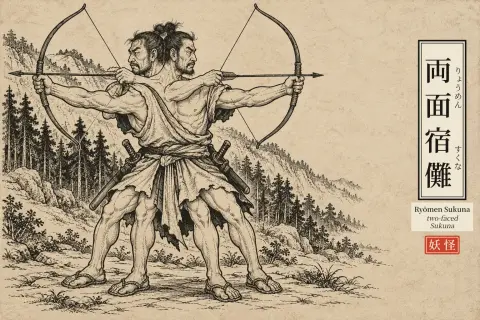
| 10 | Ryōmen-Sukuna | A general sent by the emperor | "Took a pleasure in plundering the people" |
We ranked by one question: what did it take to stop it? Yokai that kept killing after death rank first. Next come those where the record says a god stepped in. Last come those that needed the court's best fighter. Within each step, more recorded harm ranks higher. This is our count, not the only one.
Death did not stop them
1. Onryō
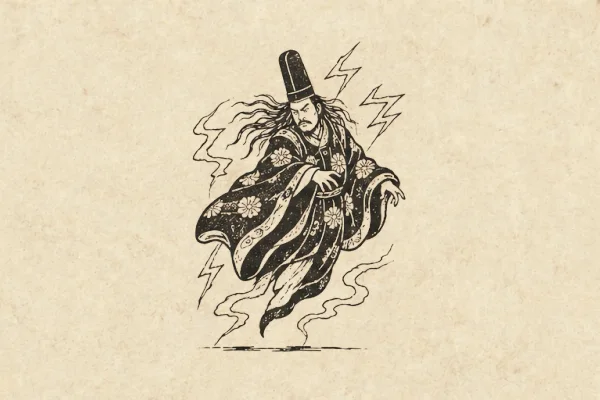
In 930, lightning struck a hall of the imperial palace and killed at least three people. Emperor Daigo died three months later. People blamed Michizane's onryō, now a thunder god. Other onryō followed him: the rebel Taira no Masakado, killed by an arrow in 940, and the exiled Emperor Sutoku. All three were killed or broken in life. Their anger was feared for centuries after.
2. Tamamo-no-mae
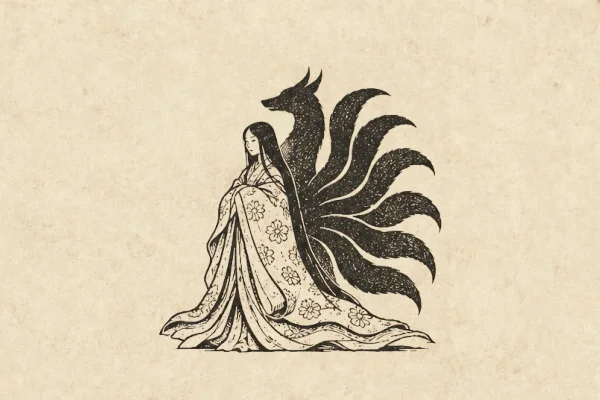
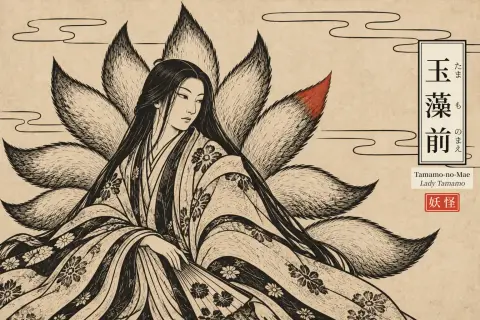
A beautiful court lady made the emperor gravely ill. A diviner found the truth: she was a fox. Two warriors killed her at Nasu. But Tamamo-no-mae became a stone that killed anything that came near it. A monk split it in 1385. Even so, in 1689 the poet Bashō saw bees and butterflies lying dead around it.
3. Tesso
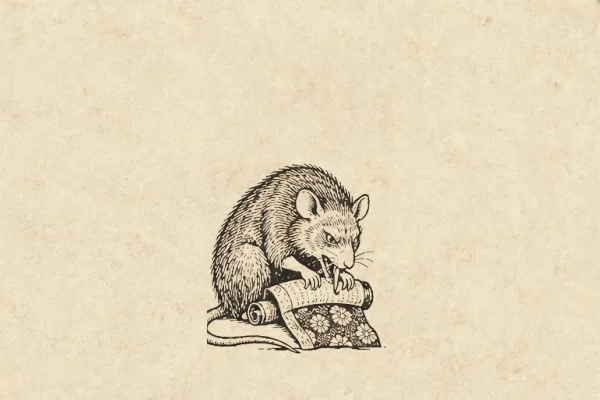
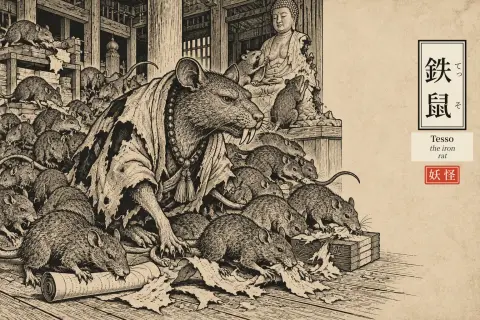
The monk Raigō starved himself to death in fury when an emperor broke a promise. His spirit became rats and attacked Enryaku-ji, the great temple on Mount Hiei. In the Taiheiki, 84,000 rats with stone bodies and iron teeth gnaw even the statues. The frightened temple built Tesso a small shrine.
4. Shichinin-misaki
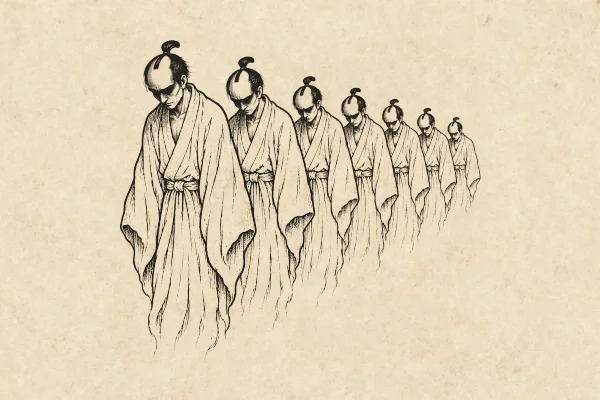
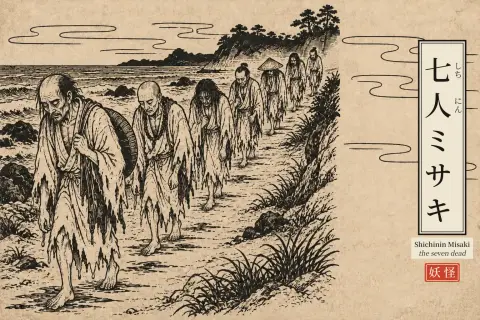
In Tosa, the warlord Chōsokabe Motochika ordered his nephew, Kira Chikazane, to kill himself. Seven of his men died with him. Their ghosts, the Shichinin-misaki, always travel as seven. Meet them, and you burn with fever and die. Memorial services did not help. Even today, some people blame accidents on Chikazane's curse. On our scariest yokai list, which asks whether you survive a meeting, they rank No. 1. Here they rank lower, because the onryō and Tamamo-no-mae harmed emperors.
It took a god
5. Yamata-no-Orochi
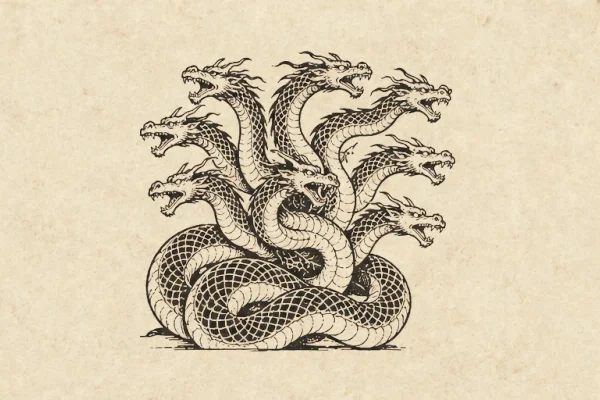
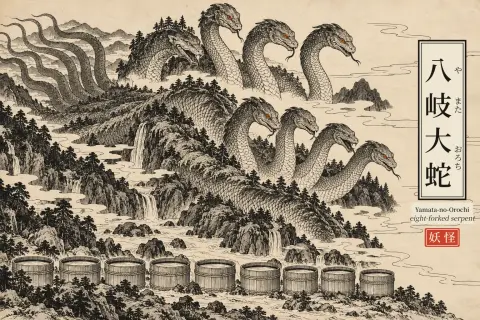
The eight-headed serpent came every year and ate one daughter of an old couple. Seven were gone. Then Susanoo, a god, filled eight tubs with strong sake. When Orochi fell asleep, he cut it to pieces. The Kojiki of 712 says the river ran red.
6. Shuten-dōji
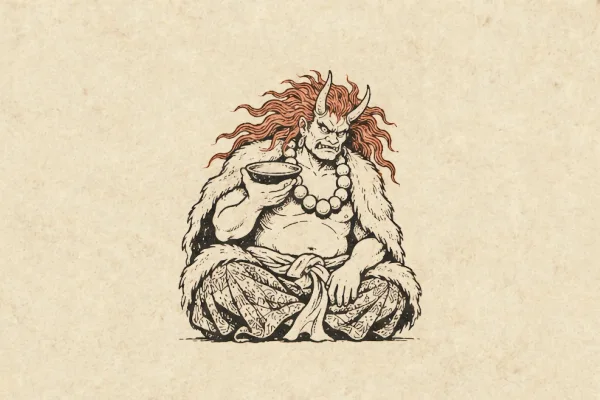
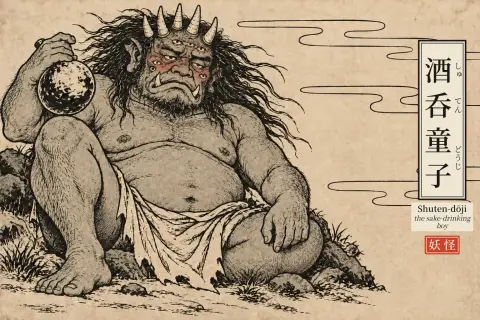
The oni king of Mount Ōe carried off and killed the people of the capital. The court sent the warrior Minamoto no Raikō. He and five companions dressed as mountain monks. On the way, gods in disguise gave them sake that poisons demons. They cut off Shuten-dōji's head. Even then, the head flew at Raikō and tried to bite him.
It took the court's best fighter
7. Nue
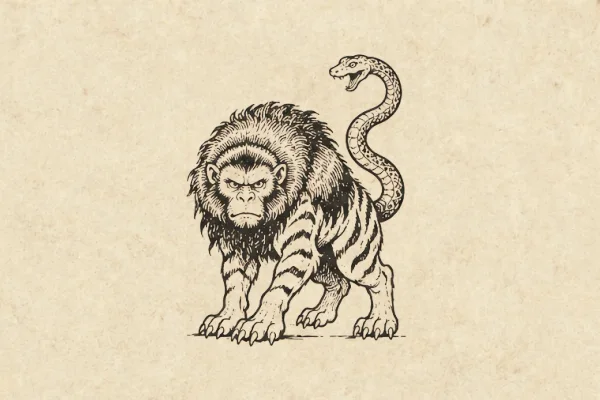
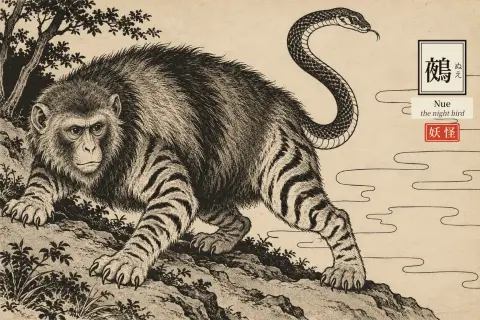
Night after night, a black cloud settled on the palace. Emperor Konoe fell ill. Prayers did nothing. The court called Minamoto no Yorimasa, a famous archer. His arrow brought down a beast with a monkey's face, a tanuki's body, a tiger's legs and a snake for a tail. That is the nue of the Heike Monogatari.
8. Akuro-ō
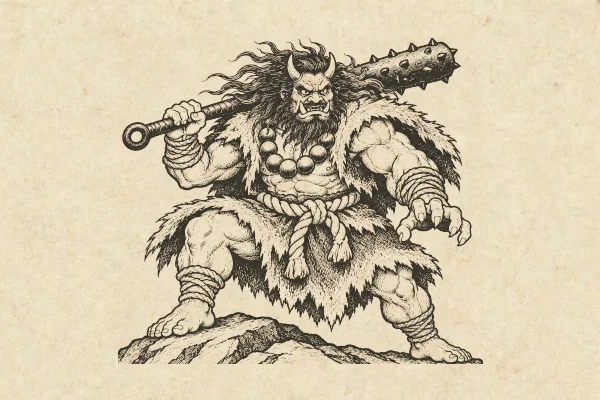
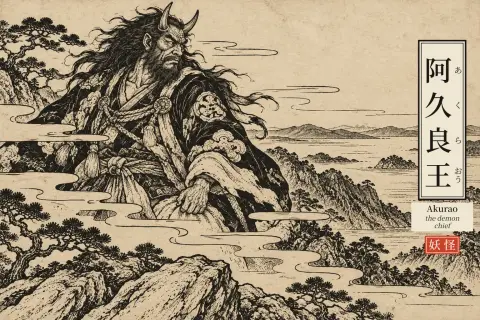
Akuro-ō ruled Mount Yuga in Okayama. He raided the villages below and carried off women. The emperor sent Sakanoue no Tamuramaro, the strongest warrior in the capital. When the fight stalled, the general called on the mountain's own god. The battle lasted seven days and seven nights.
9. Ura
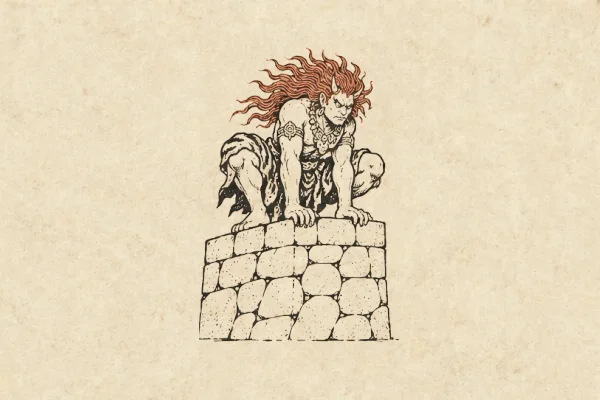
Ura ruled from a stone fortress in Kibi and raided the farms below. The court sent Prince Kibitsuhiko. Ura knocked his arrows from the air with rocks. Wounded, he became a pheasant, then a carp, but he was caught. A shrine record of 1583 says his cut-off head groaned for thirteen years.
10. Ryōmen-Sukuna
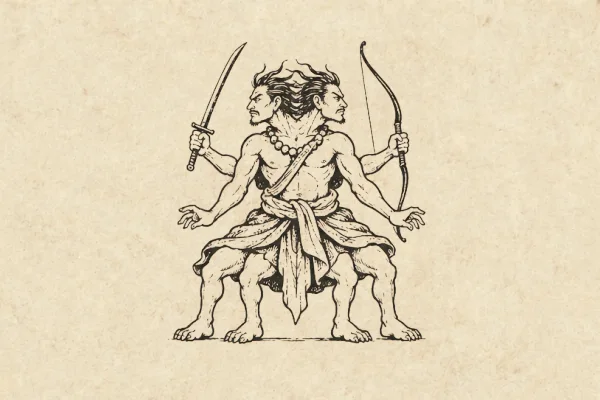
Fans of Jujutsu Kaisen know this name. The Nihon Shoki of 720 says Sukuna had two faces, four arms and four legs. He "took a pleasure in plundering the people," in one old translation, and ignored the emperor. So the emperor sent a general to kill him.
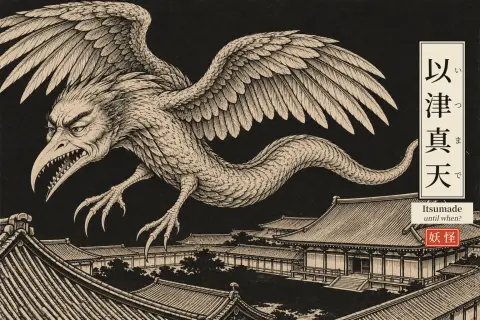
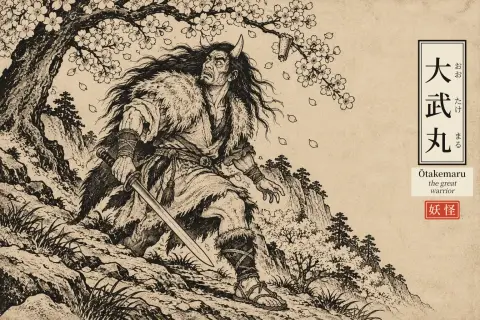
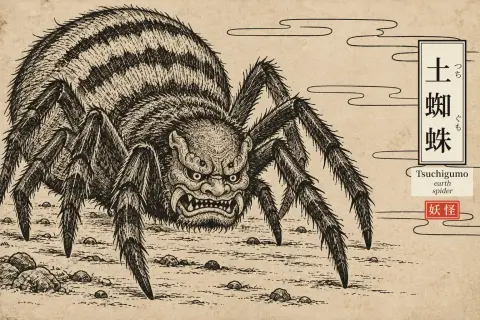
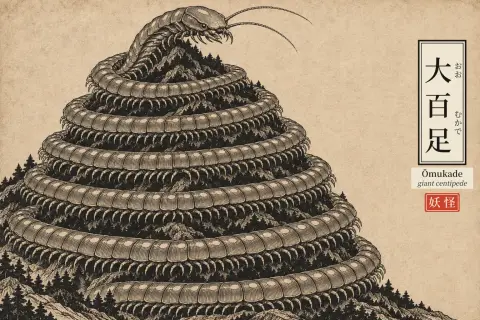
Next in line: Tsuchigumo, whose wound spilled 1,990 skulls, the itsumade of the plague year 1334, and the giant centipede Ōmukade. Ōtakemaru of Mount Iwate fought the same general as Akuro-ō, but no record lists his harm.
Why the dead ranked highest
Look at the top four again. Each one kept doing harm after death. A sword killed Shuten-dōji. No sword could kill an angry spirit.
So Japan did not fight these spirits. It calmed them. People enshrined them, gave them titles and prayed to them. This was not because the spirits were too strong to fight. It was because they had died angry. Michizane's rank was restored in 923. A shrine to him rose at Kitano in 947. Today he is Tenjin, the god of learning, and students pray to him before exams.
You may have heard of Japan's "three great yokai." The lists disagree. The folklorist Komatsu Kazuhiko suggests Shuten-dōji, Tamamo-no-mae and Ōtakemaru of the Suzuka Mountains. Other writers name the oni, the kappa and the tengu. Many websites swap in Emperor Sutoku, who is part of our No. 1.