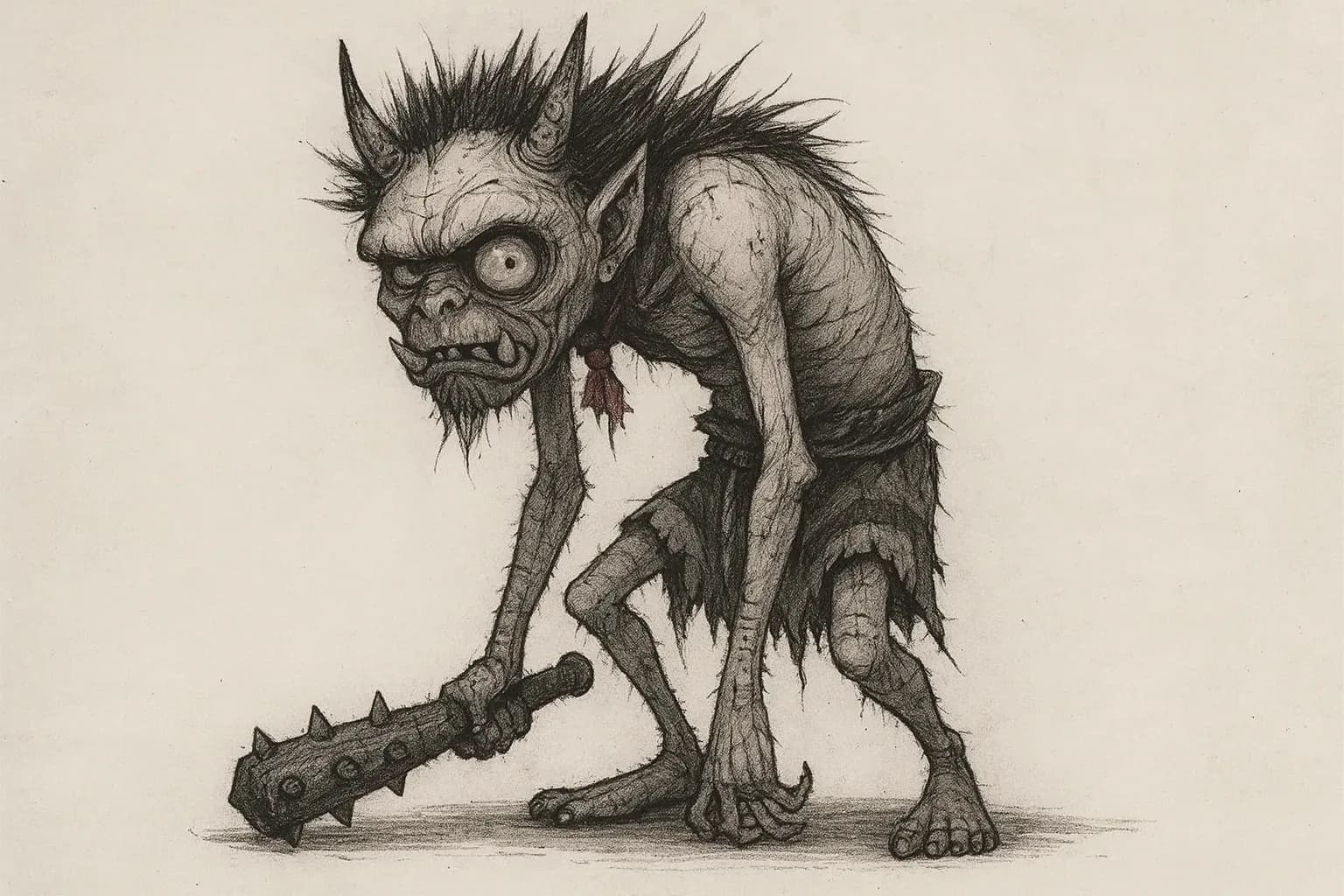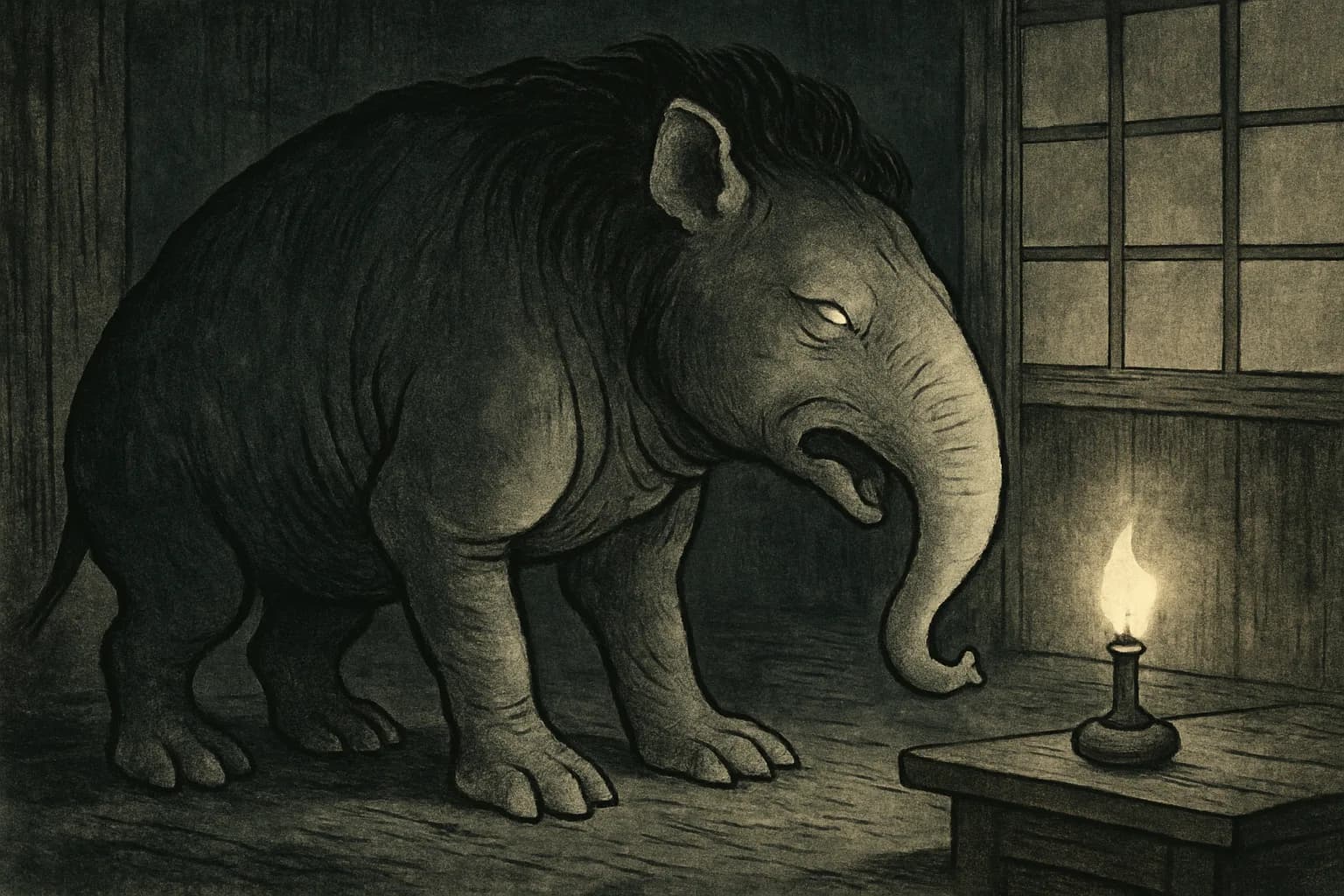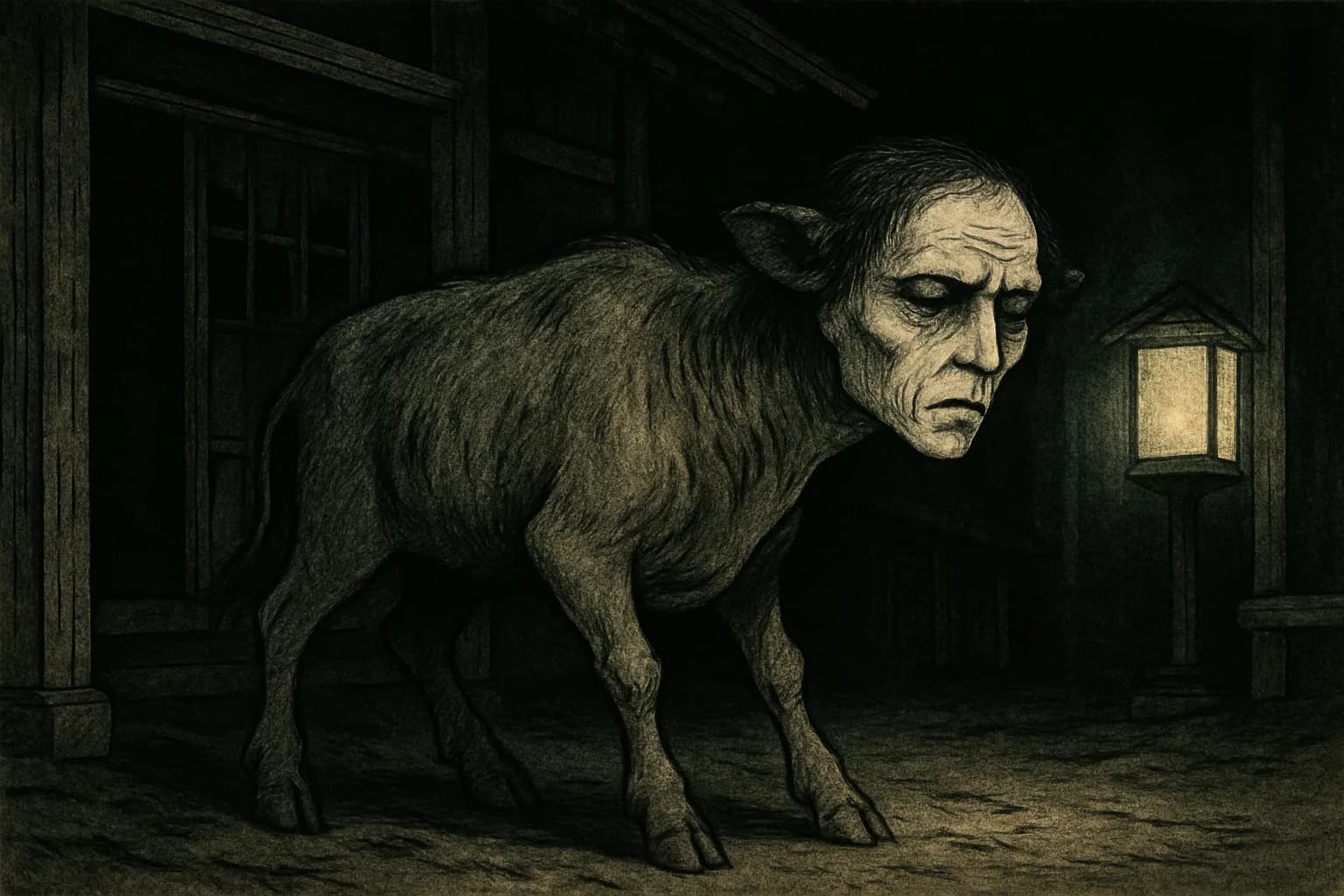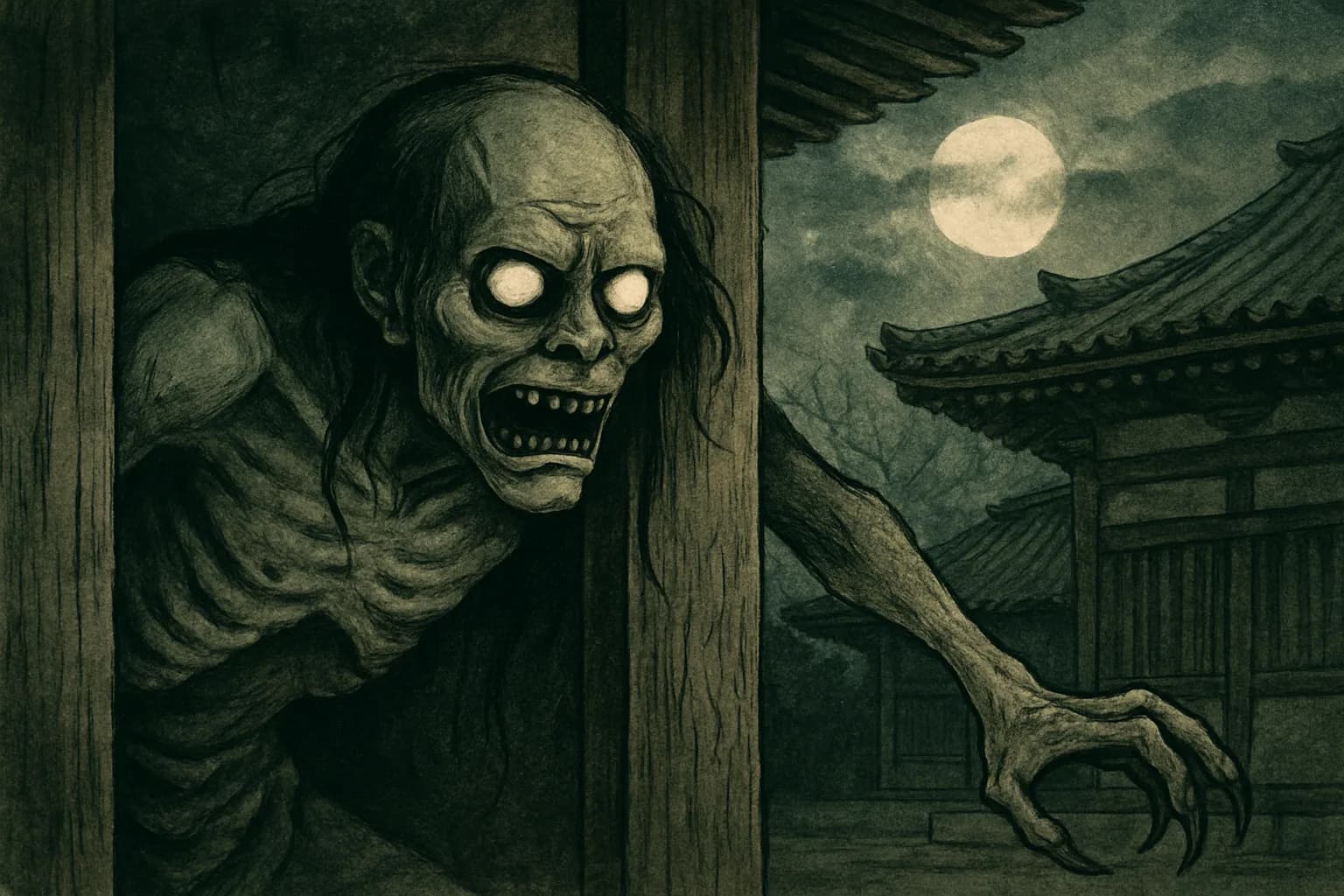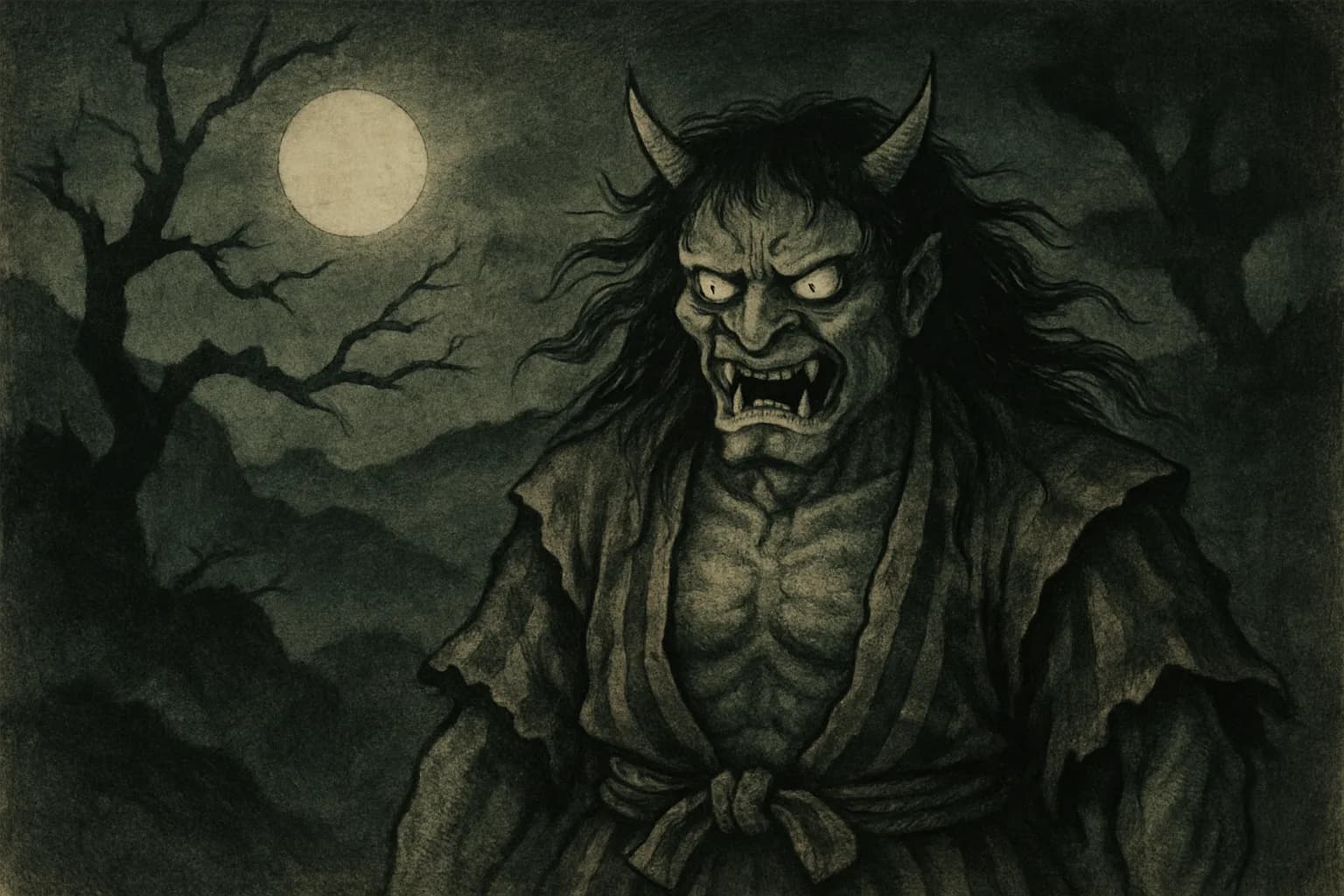
Every night, a black cloud settled over the emperor's sleeping quarters in Kyoto, and every night a cry rose out of it — thin, mournful, unplaceable. The emperor sickened from fear alone. Nobody in the palace could say what made the sound, only that it came from something no one had ever managed to see clearly. When it was finally shot out of the sky, the thing that hit the ground was assembled from parts of four different animals, and it still didn't have a name anyone could agree on. They called it nue (鵺), borrowing the word from a bird whose cry it was said to share.
What does it look like?
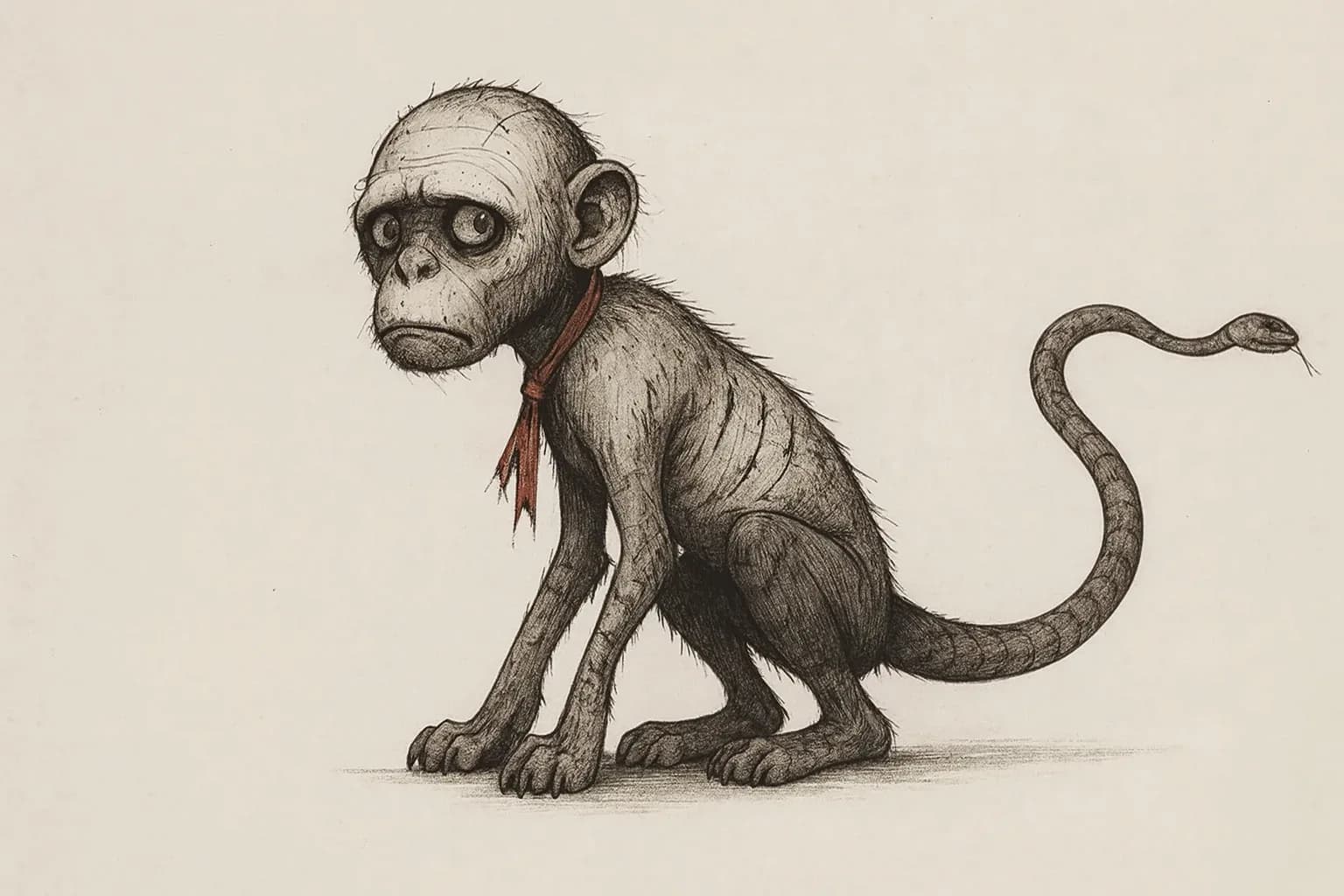
The Heike Monogatari, compiled in the early 13th century, describes the creature Yorimasa killed as having the head of a monkey, the body of a tanuki (a raccoon dog), the limbs of a tiger, and a snake for a tail. It's a composite built the way folk descriptions of unfamiliar things often are — not one animal misremembered, but several stitched together because no single one would do. Later artists ran with the idea. Toriyama Sekien's Konjaku Gazu Zoku Hyakki (1779) draws it as a churning, cloud-wrapped hybrid, half-formed and difficult to pin down even on the page, and Utagawa Kuniyoshi painted the more dramatic moment: Yorimasa's arrow finding its mark against the night sky over the palace roofs.
Its body changes from book to book
The Heike recipe is not the only one. The Genpei Jōsuiki, a longer retelling of the same wars, lists different parts. It gives a monkey's head, a tiger's back, a fox's tail and tanuki legs. Only the voice stays the same: the cry of the nue bird. Some texts skip the body entirely. Some pictures paint the body as a tiger, not a tanuki.
An Edo-period scholar, Asakawa Zen'an, offered a clever reading in the Zen'an Zuihitsu (1850). Asakawa matched the parts to the zodiac compass. The tiger sits in the northeast, the snake in the southeast, and the monkey in the southwest. In this reading, the nue was built from the corners of the city's compass. It is a theory, not a fact from the Heike. But it explains why such odd animals were chosen.
The bird behind the name
Before it meant "monster," nue was the old name for a real bird — the White's thrush (Zoothera dauma), still sometimes called nue-dori or tora-tsugumi today. It's a nocturnal, ground-feeding thrush with a long, quavering whistle that carries eerily at night, and Man'yōshū poets used its cry for sorrow and longing. By the Heian period, people heard it as a bad omen. When something unseen started crying over the palace at night, people reached for the sound they already associated with dread and named the source after it. The monster inherited its identity from the bird's voice, not the other way around.
Court records logged nue sightings for centuries
Yorimasa's monster was not the only one on record. Court chronicles and nobles' diaries log many nue events. Folklorist Fujisawa Morihiko collected them in a timeline of Japanese wonders (1971). Here are three entries from it:
- 905 — The Nihon Kiryaku says a nue cried in the sky. Offerings were sent to many shrines.
- 1333 — The Taiheiki says a nue cried above the Shishinden, the palace's main hall.
- 1416 — The Kanmon Nikki says one appeared at Kitano Shrine and was shot down. It had a cat's head, a chicken's body and huge glowing eyes.
Some of these entries may describe only the real bird crying. But people still treated each cry as a warning. Marukawa (丸川義広), an archaeologist at Kyoto's buried-heritage institute, noticed a pattern in the list. Sightings cluster in times of war and unrest.
The night the emperor fell ill
The core legend, set during the reign of Emperor Konoe in the mid-12th century, is a political story as much as a ghost story. Each night the black cloud rolled in from the direction of the Higashi-Sanjō forest and hung over the Seiryōden, the emperor's residence, and the cry beneath it left him too frightened to sleep. Court exorcisms and prayers did nothing. Eventually the court turned to a warrior rather than a priest: Minamoto no Yorimasa, a poet and bowman. There was a precedent: Minamoto no Yoshiie had once stopped a haunting for Emperor Horikawa with his bow.
Yorimasa took a single retainer, I no Hayata, to the veranda of the Southern Hall and waited for the cloud. When the cry sounded, he loosed a sharp-pointed arrow, fletched with copper-pheasant tail feathers, into the dark. Something fell. Hayata rushed forward and finished it with his sword, striking nine times before it stopped moving. When they lit a torch over the body, they found the monkey-tiger-tanuki-snake creature the chroniclers describe. The emperor recovered that same night.
After the arrow
Killing the thing turned out to be only half the job. A creature that ominous wasn't safely buried; the body was set adrift in a hollowed-out log boat and pushed out onto the current to be carried away from the capital entirely, the same method Japanese tradition used for other dangerous or inauspicious remains. Local legend along the coast of what is now Ashiya, in Hyōgo Prefecture, holds that the boat washed ashore there, and a mound known as Nue-zuka still marks the spot where the villagers are said to have given it a proper burial once it arrived. Yorimasa, for his trouble, was granted a sword named Shishiō ("King of Lions") from the emperor — a rare folkloric case of the monster-slayer's reward being recorded as precisely as the monster itself.
Several towns claim the grave
Ashiya is not the only place with a nue grave. The legend's river trip touched many shores, and towns kept their own versions.
- Ashiya, Hyōgo. The Nue-zuka stone stands near Hanshin Ashiya Station. The present stone was set up in 1917.
- Miyakojima, Osaka. The early Edo guidebook Ashiwake-bune says the body drifted down the Yodo River. Villagers buried it here. Osaka Prefecture restored this mound in 1870.
- Kyoto. The Genpei Jōsuiki says the nue was buried at Kiyomizu-dera instead. Near Nijō Castle, Nijō Park has the Nue-ike pond. Yorimasa is said to have washed his bloody arrow there.
- Lake Hamana, Shizuoka. Another tale says the body fell in pieces west of the lake. Place names there are said to mark where the head, body, wings and tail landed.
The Port of Osaka still uses the nue in its emblem. It was picked because of the grave legends along Osaka Bay.
Where it comes from
Read past the archery, the story fits a pattern common to Heike-era omens: an unexplained illness in the ruling house gets externalized as a monster, and the monster's death becomes a vehicle for elevating a specific warrior house at a specific moment in a very unstable court. The Genji and Heike clans were maneuvering hard for influence during Emperor Konoe's reign, and a commoner-adjacent warrior earning imperial favor by shooting down a nightmare is exactly the kind of story a rising military family would want remembered. The chimera itself, cobbled from four mismatched animals, reads as a compressed image of exactly what frightened Heian-era Kyoto: something that couldn't be classified, arriving from outside the systems — court ritual, Buddhist prayer, precedent — that were supposed to explain and control the world.
Nue in Japan today
The Noh playwright Zeami adapted the legend into the play Nue, giving the slain creature's restless spirit a voice of its own — it appears to a traveling priest and recounts its own death, lamenting that its body was shut in a hollow boat and cast adrift. The play is still performed today. The chimera's outline has also proven durable outside the stage: it shows up as a boss-tier demon in the long-running Shin Megami Tensei and Persona role-playing game series, rendered each time as some variation on the same monkey-tiger-snake anatomy the Heike scribes described eight centuries ago.
Quick answers
Is the nue a real animal? The name is. Nue was an old name for a real bird, today identified as the White's thrush. The monkey-tiger-snake beast is legend.
Does the kanji 鵺 mean "night bird"? It looks like 夜 (night) plus 鳥 (bird). But 夜 is there for its sound, not its meaning. The "night bird" reading still fits, because the thrush sings at night.
Did anyone catch a nue before Yorimasa? Yes, in one version. The Genpei Jōsuiki says Taira no Kiyomori caught a crying creature that flew over the palace under Emperor Sutoku. It turned out to be a rat-like animal, not a bird.
What does "like a nue" mean in Japanese? It describes a person or group that is hard to pin down. Like the beast, they seem to be several things at once.