Most lists of dangerous yokai are ranked by feel. A big monster goes high, and a small one goes low. This list uses a different rule. We ranked each creature by what the old accounts say it does to people.
There are three levels. At the top are yokai that kill or drown people. In the middle are yokai that take people or hurt them. At the bottom are yokai that only frighten or trick. Inside a level, a creature whose purpose is killing ranks above one that kills once, in one story.
Our ledger lists 327 yokai, and 43 of them live in or by water. Only 30 of those have a full article on this site, so we ranked from those 30. Some deadly ones, like the isonade, have no article yet. They are left out.
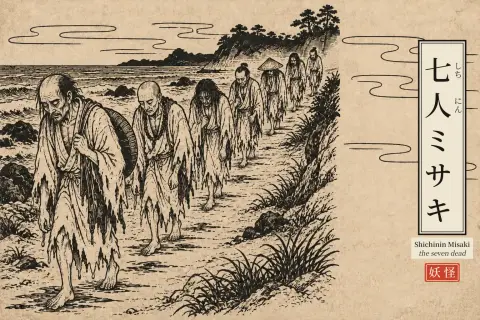
The most dangerous water yokai in the records is the Shichinin Misaki.
| Rank | Yokai | What the record says it does | Water |
|---|---|---|---|
| 1 | Shichinin Misaki | Kills one person at a time, forever | Sea and rivers |
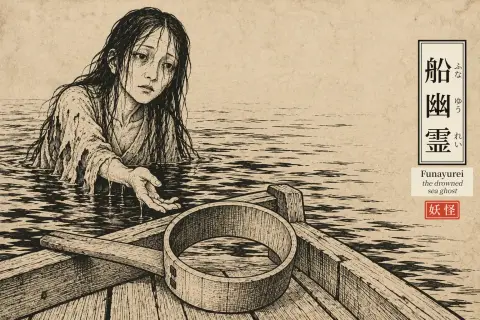
| 2 | Funayurei | Sinks boats to gain more drowned crew | Sea |
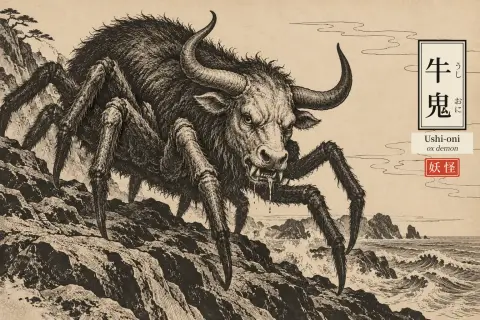
| 3 | Ushi-oni | Kills cattle and people | Coast, deep pools |
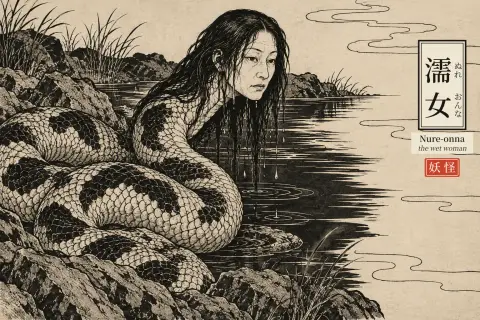
| 4 | Nure-onna | Traps people at the water's edge | Shore, rivers |
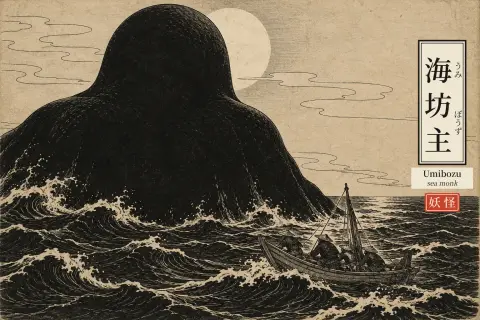
| 5 | Umibozu | Takes a passenger, sinks a boat | Open sea |
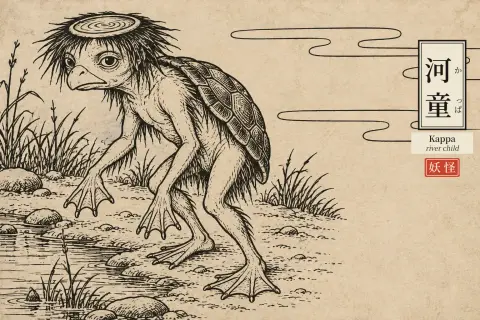
| 6 | Kappa | Pulls people and horses into water | Rivers, ponds |
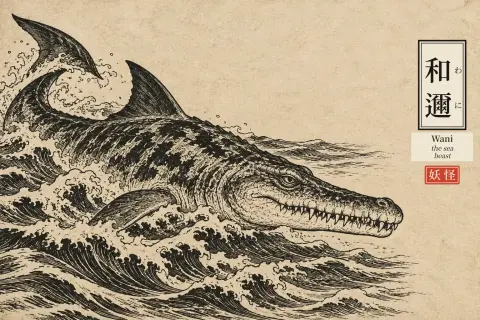
| 7 | Wani | Killed one girl in 674 | Sea |
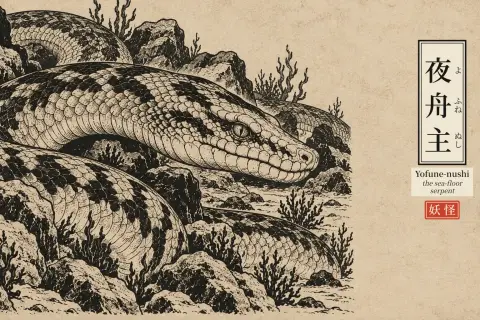
| 8 | Yofune-nushi | Takes one girl a year | Sea floor |
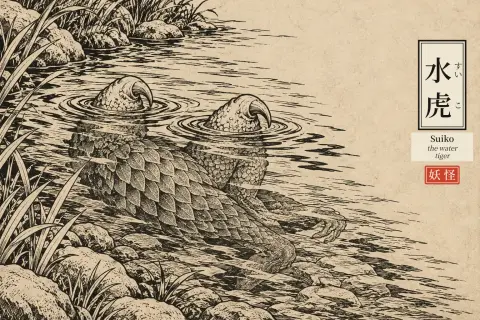
| 9 | Suiko | Bites children | Rivers |
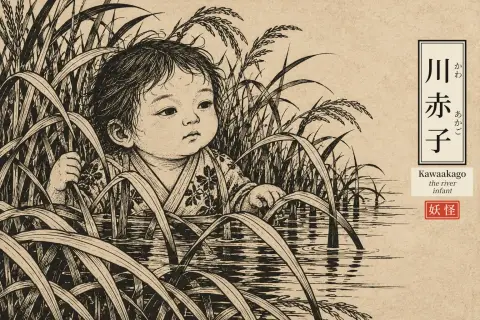
| 10 | Kawaakago | Nothing, in its oldest record | River reeds |
1. The Shichinin Misaki kill by rule, not by chance
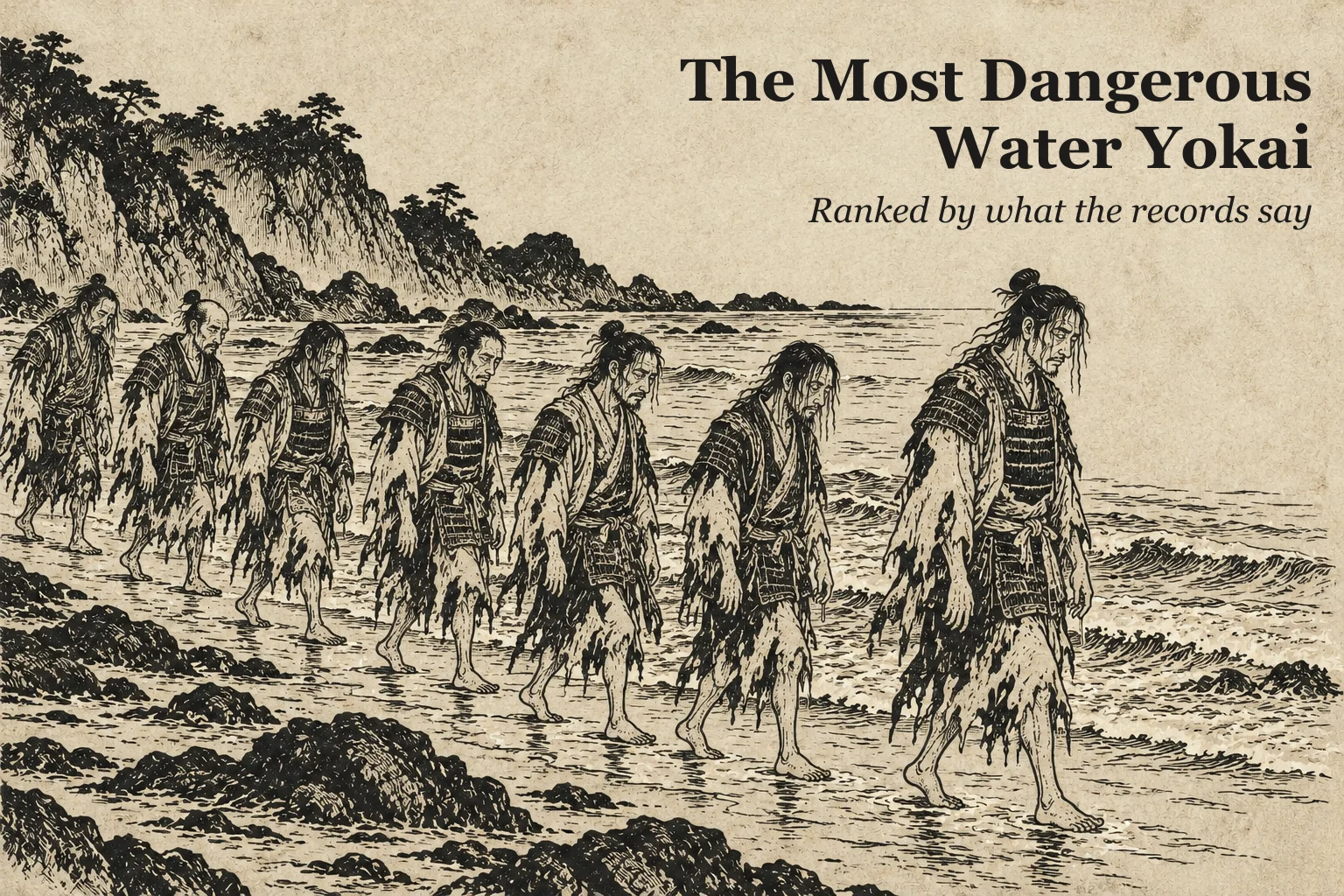
The story. In Tosa, today's Kōchi, Kira Chikazane was ordered to kill himself. Tradition dates this to 1588. Seven of his men died with him. Strange things then happened at their graves. Two Tosa books, Rōho Kidan and Shin'i Kaii Kidan, say people feared them as the Shichinin Misaki.
Why first. The seven walk mostly by the sea and rivers. Murakami Kenji's Yōkai Jiten (2000) says anyone who meets them gets a high fever and dies. Each death lets one ghost rest. The victim takes its place. So the group never shrinks, and it never stops.
Protection. In Tokuyama, Yamaguchi, people out after dark hid their thumbs inside their fists.
2. Funayurei want more drowned sailors
The story. On Uku Island in the Gotō chain, a voice from the sea asks a boat for a ladle. Hand it over, and the ghost scoops seawater into the boat until it sinks. The folklorist Sakurada Katsunori recorded this in 1932.
Why second. Funayurei are the drowned dead. They sink boats to gain more crew. One meeting can take a whole boat.
Protection. Give them a ladle with the bottom knocked out. Nothing stays in it, so the boat stays up.
3. The ushi-oni hunted a whole village
The story. A Kōchi folk tale tells of an ushi-oni, the ox demon. It killed a village's cattle. Then it killed the villagers who went to hunt it. A samurai named Chikamori Sakon finally shot it with one arrow. The tale appears in Nihon no Minwa, volume 35 (1979).
Why third. Many tellings across western Japan agree that it likes to kill people. Unlike a ghost, it attacks in body.
Protection. In Wakayama, just meeting it brings sickness. To save your life, you say things backwards: "Stones flow, leaves sink, oxen neigh, horses bark."
4. Nure-onna hands you a baby that turns to stone
The story. Fujisawa Morihiko's 1929 book tells a tale dated 1862. Timber workers on a river between Echigo and Aizu saw a woman washing her hair. The first men fled. Their friends went to look. Screams were heard, and the friends never came back.
Why fourth. On the Iwami coast of Shimane, nure-onna asks you to hold her baby. The baby turns into a heavy stone. Then the ushi-oni comes out of the sea and kills you. She is the trap, and it is the killer.
Protection. The Sōgō Nihon Minzoku Goi (1955) says to take the baby only while wearing gloves. When you run, throw away the baby and gloves together.
5. The umibozu took one woman from a ferry
The story. The Kii Zōdan Shū (1687) tells of a ferry from Ise in the Meiō era (1492–1501). A drummer brought his wife aboard, against the boatman's rule. A storm came. A black head rose from the sea. It was five or six times the size of a human head. The wife jumped into the water, and it took her. Then the storm stopped.
Why fifth. In this story, the umibozu takes one life, not a whole crew.
Protection. The Honchō Goen (1706) says to stay silent and act as if you see nothing. Ask "What is that?" and it sinks the ship.
6. The kappa drowns people, but it can be beaten
The story. In Tōno Monogatari (1910), a kappa at a pool in Tōno tried to pull a horse into the water. The horse pulled the kappa out instead. Villagers caught it. It promised to leave horses alone, and they let it go.
Why sixth. Kaibara Ekiken's Yamato Honzō (1709) says it drags people at the water's edge under and drowns them. But many kappa stories end like Tōno's, with a deal.
Protection. Bow to it. It bows back, spills the water from the dish on its head, and loses its strength. In Edo, some people floated cucumbers down the river to keep it happy.
7. The wani has the oldest killing on this list
The story. The Izumo no Kuni Fudoki (733) tells of Kataribe-no-Omi Imaro. His daughter met a wani at Himesaki cape and was killed. Imaro prayed to the sea gods and took his revenge on it.
Why seventh. This is a real death in a very old record. But it happens once, in one story. In Izumo, the word wani also meant shark, so this may be a real animal.
Protection. The gazetteer offers none. It records only the father's revenge.
8. Yofune-nushi took one girl every year
The story. Off the Oki Islands, a serpent on the sea floor was sent a young woman each year. A girl named Tokoyo took one victim's place. She dove with a dagger and killed it. Richard Gordon Smith told this in English in 1908. No Japanese source for it has been found.
Why eighth. Yofune-nushi takes people, but by a yearly deal, not by attack.
Protection. The islands paid the price to avoid its storms. Tokoyo ended the deal with a blade.
9. The suiko bites children who play with it
The story. The Chinese Xiangmian Ji (early 700s) describes the suiko, a scaled "water tiger." Children who play with it get bitten. Kaibara Ekiken's Yamato Honzō (1709) first compared it with the kappa. The Wakan Sansai Zue (1712) gave it its own entry.
Why ninth. It hurts people but does not kill them. The Chinese source says it turns violent only when disturbed.
Protection. Leave it alone. That is all the source suggests.
10. The kawaakago was harmless until the 20th century
The story. Toriyama Sekien drew the kawaakago in 1779. His note says only that a baby-shaped thing lives among the river weeds. Perhaps it is a kind of kappa.
Why last. Sekien gives it no victims at all. The tricky crying that pulls you into the river comes from Mizuki Shigeru's modern books.
Protection. Sekien lists none, because he lists no danger.
The killers wait where people must go
Look at where the top six strike. In their stories, they meet people at a ferry, a fishing boat, a shore path and a pool where horses drink. Those were places people had to go every day.
The protections fit that, too. Almost none of them is a weapon. They are manners: bow, stay quiet, keep gloves on, hide your thumbs. A rule you can follow at work is easier to pass on than a fight.
So the deadliest water yokai look less like monsters to defeat. They look like safety rules for jobs on the water.