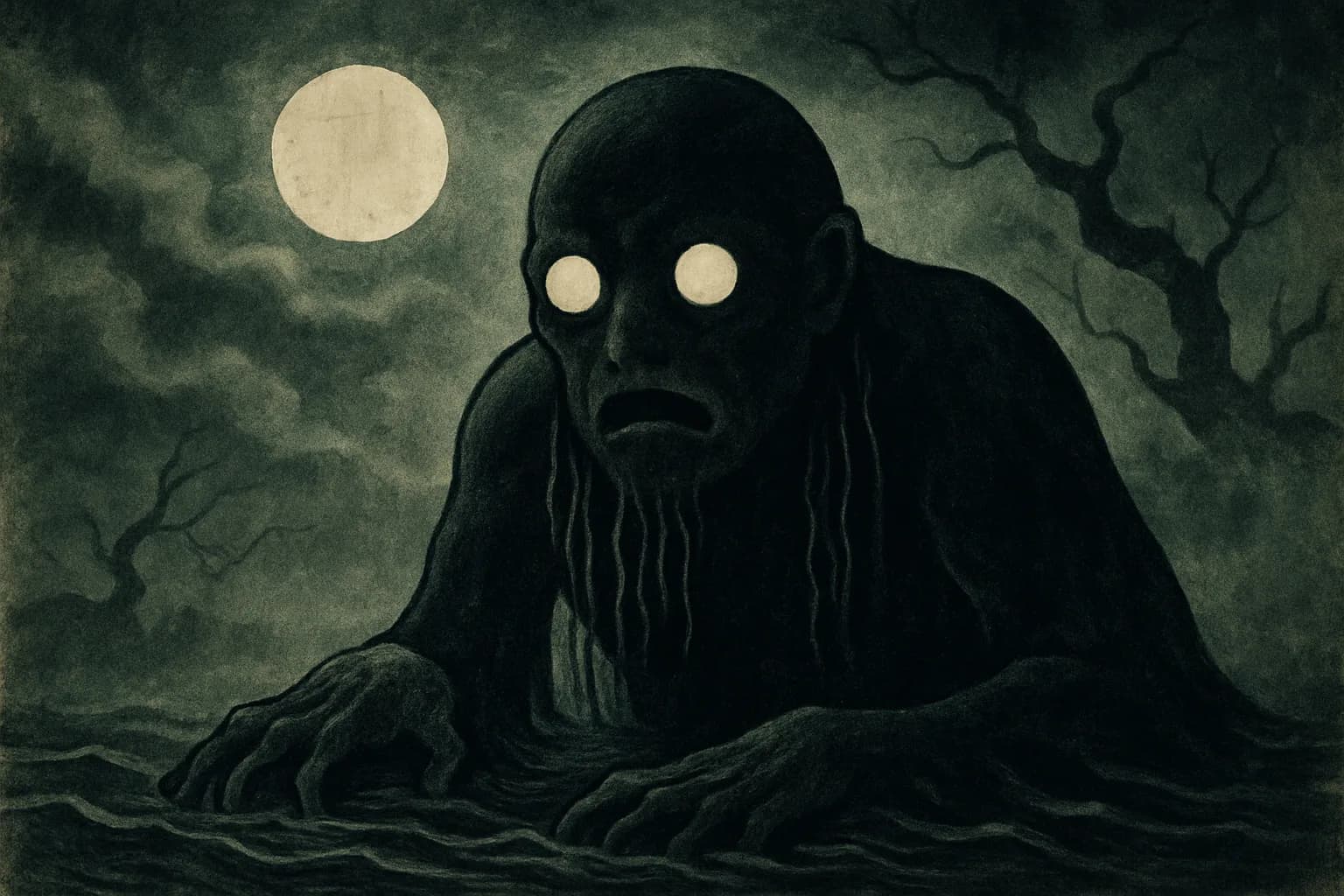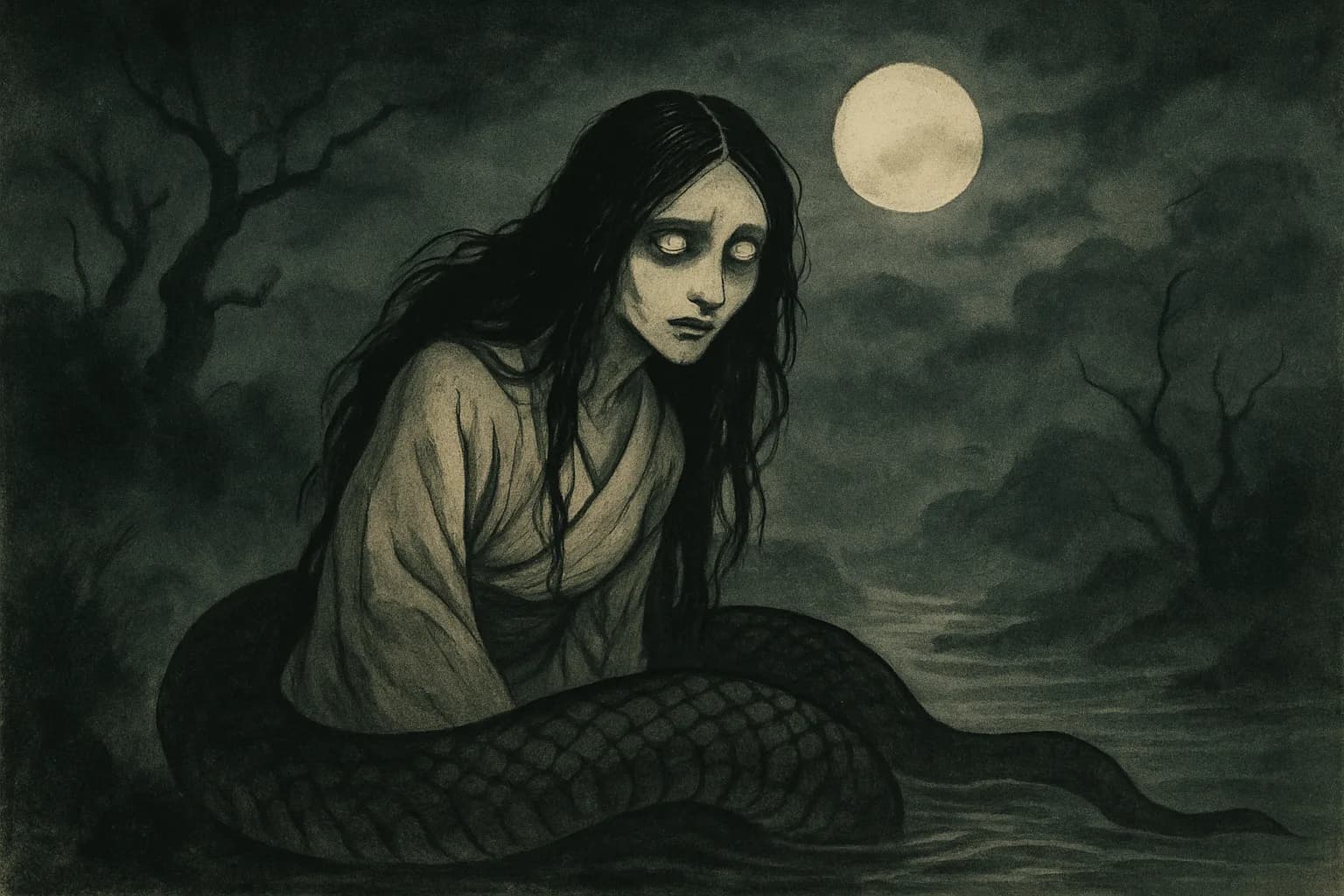
A hare stands on the shore of the Oki Islands, staring at the sea. On the far side sits Inaba, the coast it wants to reach. In between lies open water full of wani — a sea creature old enough to appear in Japan's first written histories, and strange enough that scholars still argue over what animal it actually was.
What does it look like?
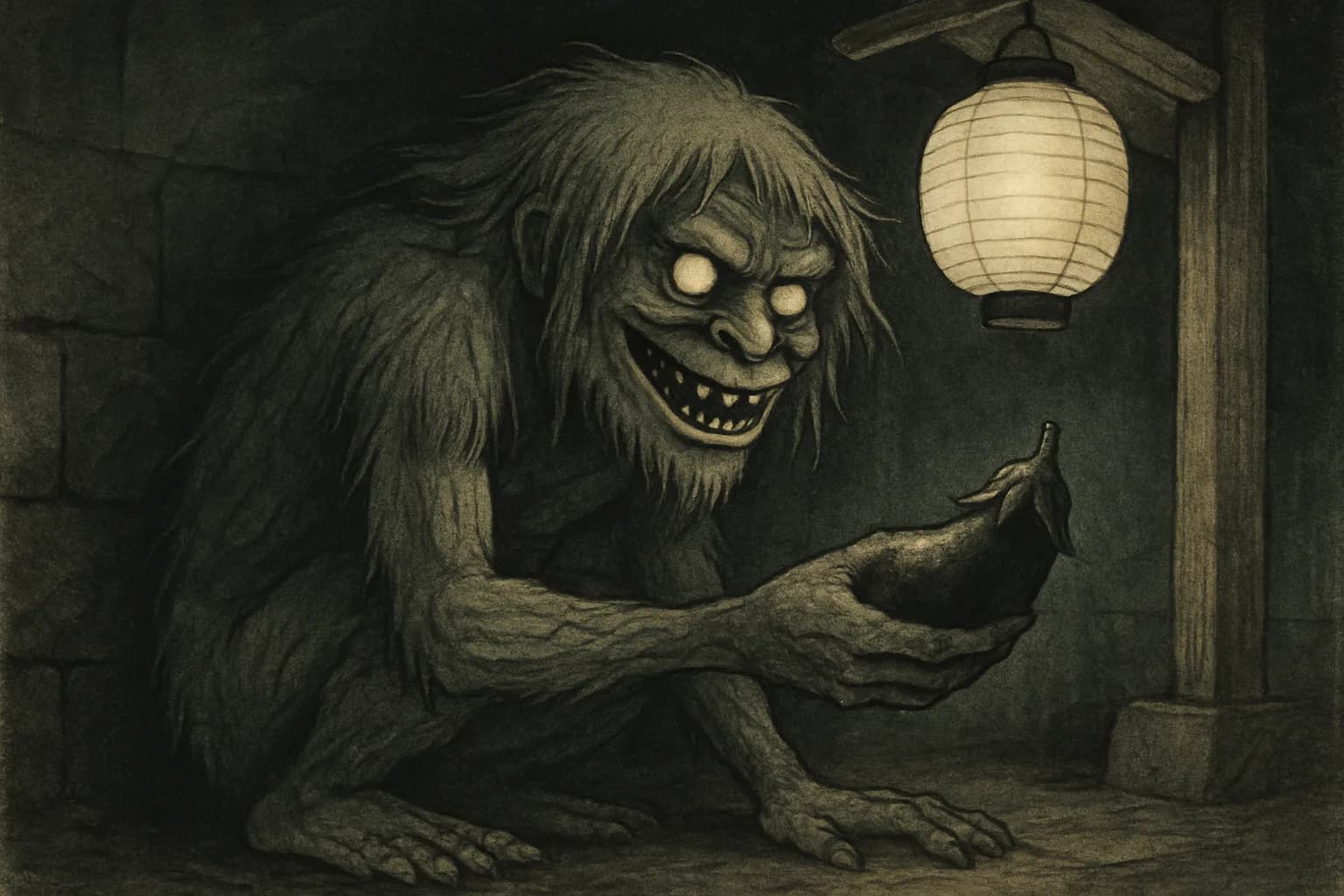
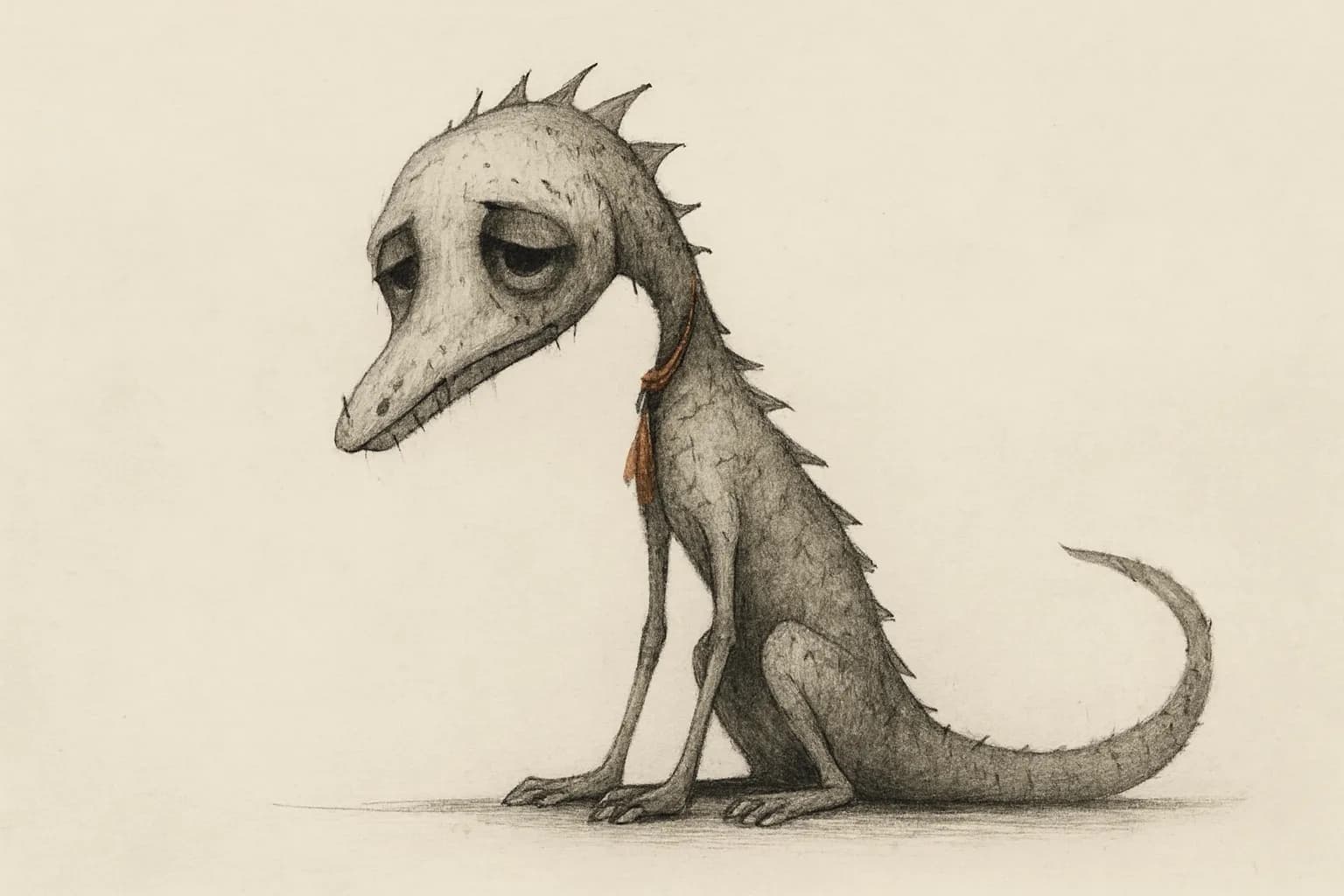
There is no single fixed picture of a wani. No famous Edo-period artist left behind a signature print of one, the way later yokai got. The Kojiki and Nihon Shoki describe it only in passing: a large sea creature with a long body and rows of teeth. That gap is exactly why the debate over its identity has never closed.
Modern Japanese uses the kanji 鰐 for "crocodile," and many readers assume the ancient wani was one too. But Japan has never had wild crocodiles. In the San'in region — the stretch of coast covering Tottori and Shimane — the word wani has long meant something else: shark. Local shops there still sell shark meat labeled wani, a usage that predates any Japanese contact with real crocodiles.
So a wani could be a crocodile, a shark, or something between the two, closer to a sea dragon. The old texts never settle it, and neither has scholarship since.
The trick on the beach at Inaba
The most famous wani story is the myth of the White Hare of Inaba, recorded in the Kojiki. A hare on the Oki Islands wants to cross to the mainland at Inaba. It cannot swim that far, so it tricks the wani instead.
The hare proposes a contest. Line up all the wani from Oki to Inaba, it says, so it can count whether hares or wani are more numerous. The wani agree and form a line across the strait. The hare hops from back to back, counting as it goes. Right before reaching land, it laughs and admits the counting was only a trick to get a free bridge.
The last wani in line bites the hare and strips off its fur. Bleeding and in pain, the hare meets a group of unkind gods. They tell it to bathe in seawater, which only makes the pain worse. Then a kinder god named Okuninushi arrives. He tells the hare to wash in fresh water and roll in the pollen of cattail reeds instead, and the hare heals. Grateful, it predicts that Okuninushi — not his crueler brothers — will win the hand of the princess they are all traveling to court.
The bride who turned into a wani
Wani surface again in an older, stranger episode: the story of Toyotama-hime, daughter of the sea god. She marries the hunter-prince Hoori and returns to land to give birth in a hut on the beach. Before going inside, she begs Hoori not to look at her.
He looks anyway. What he sees, the Kojiki says, is his wife's true form: an enormous wani, coiling and twisting as she labors. Some versions of the Nihon Shoki call the same creature a dragon instead. That swap is itself a clue to how closely the two ideas overlapped in ancient belief.
Ashamed at being seen, Toyotama-hime returns to the sea for good. She seals the path between the human world and her father's undersea palace behind her. The son she leaves behind grows up to father Japan's legendary first emperor, Jimmu. A shore-born, half-glimpsed sea monster ends up part of the imperial line's own origin story.
Where it comes from
Wani belongs to Japan's oldest layer of myth, not to the later Edo-period yokai tradition that produced creatures like the kappa or the kasa-obake. It shows up nearly a thousand years earlier, and its identity was never pinned down along the way.
One reading treats wani as an early Japanese memory of crocodiles. That memory would have come in through trade or travelers' tales from the Asian continent, long before the Kojiki was written down. Another reading is simpler: wani was always the ordinary word for shark on the San'in coast. Later generations, unfamiliar with real crocodiles, may simply have misread their own ancestors' stories. The kanji used to write it, 和邇, only spells out the sound — wa and ni. It carries no meaning of its own, so the word gives no hint either way.
Coastal fudoki, the regional gazetteers compiled in the early eighth century, record wani sightings from Izumo down to Hizen in Kyushu. They treat the creature as a genuine hazard of the sea, not as pure invention.
Wani in Japan today
The clearest living trace of the word is on the dinner table. In Tottori and Shimane, wani still means shark. Wani ryōri — shark dishes, often served raw or simmered — remains a regional specialty, especially around New Year celebrations. Shark meat travels well without refrigeration. That is likely why an inland, mountainous prefecture like Tottori ended up with a shark-eating tradition at all.
The Hare of Inaba itself has a public monument. A shrine called Hakuto Jinja sits on the coast near Tottori, marking the traditional site of the myth. A line of stones in the shallows there is said to be the backs of the wani.