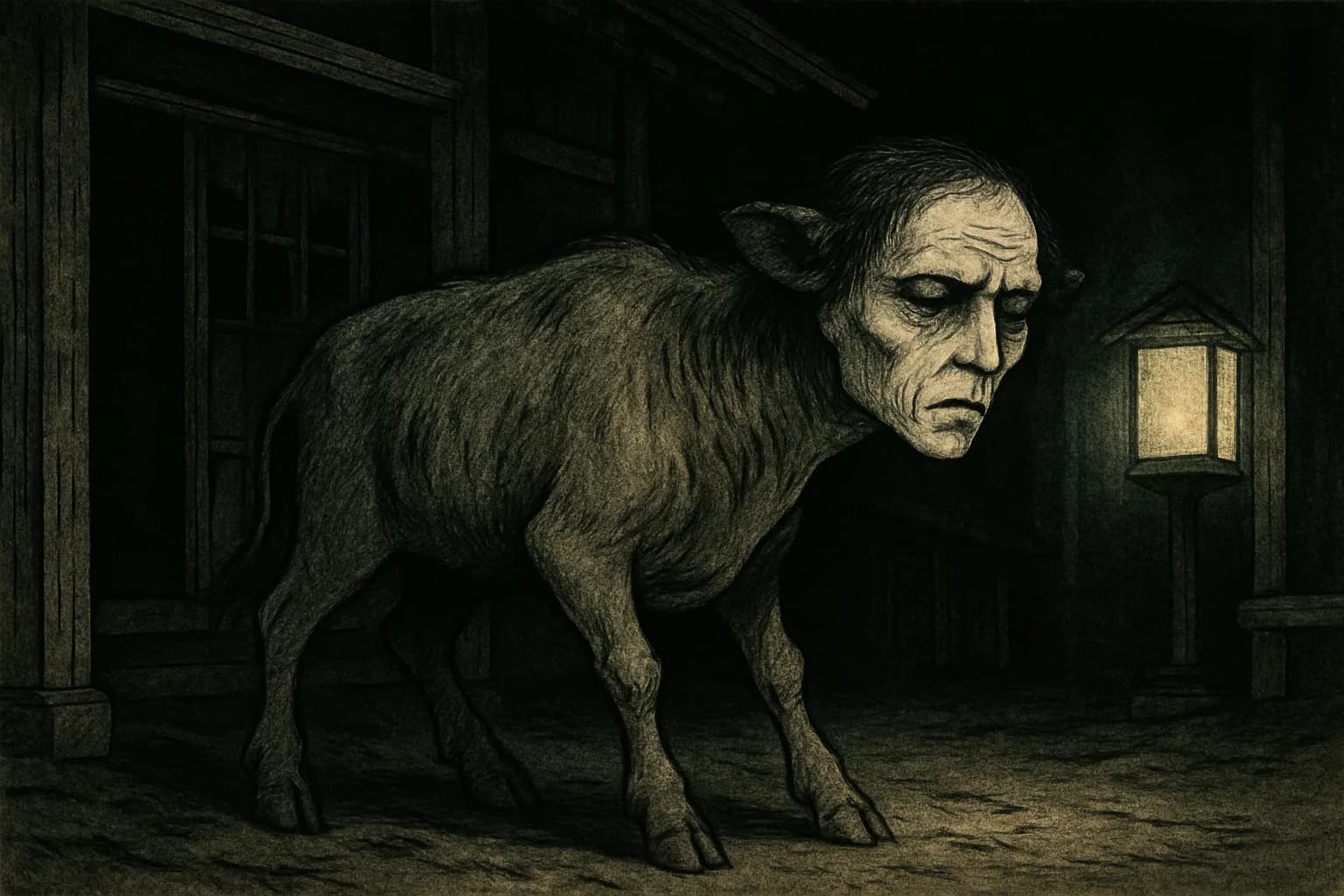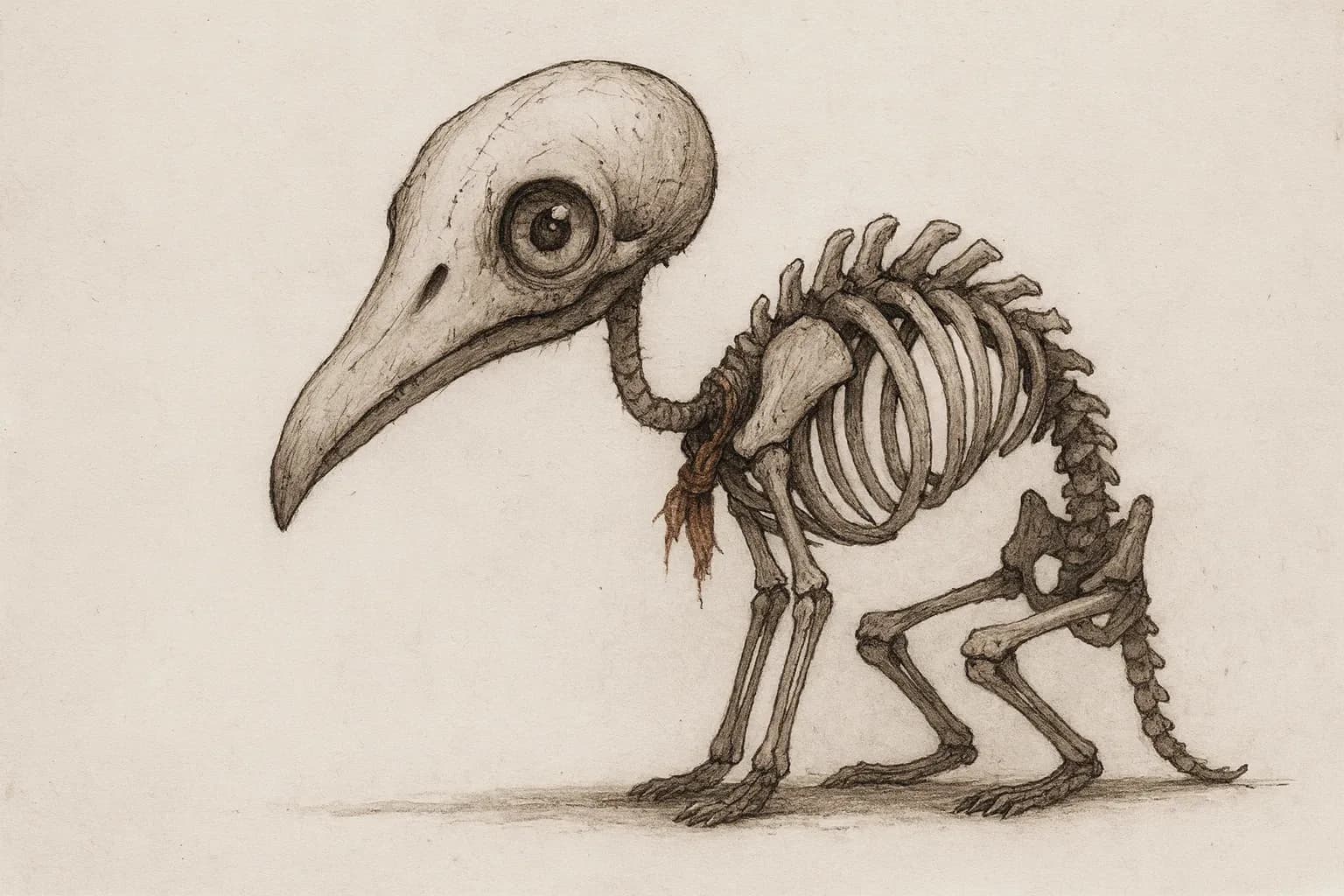
Off the coast of Shimane, in the rain, fishermen once watched for a whale that was already dead. It rose anyway — a skeleton trailing fish and birds nobody in the boat could name. They called it bake-kujira: 化 (bake, "transformed") and 鯨 (kujira, "whale"). Every account agrees on one thing. Seeing it meant nothing good would follow.
What does it look like?
Bake-kujira is a whale stripped down to bone. Witnesses describe a huge white ribcage and spine, moving through the water like a living whale. But it is hollow where the flesh should be. It surfaces at night, usually in rain or fog. Most sightings come from the Oki Islands and the San'in coast of Shimane.
The bones never travel alone. Strange fish circle the ribcage. Unfamiliar birds wheel overhead — creatures nobody in the fishing village recognized from any normal catch. Some tellings add ghostly crabs or insects crawling over the bones. The whale brings its own small, wrong world with it.
A sighting nobody wanted
A bake-kujira sighting was a warning, not a fight. Fishing communities read it as an omen: bad catches ahead, sickness, sometimes worse. Nobody in the old stories is killed outright by the whale itself. The harm arrives later, in the weeks after the sighting.
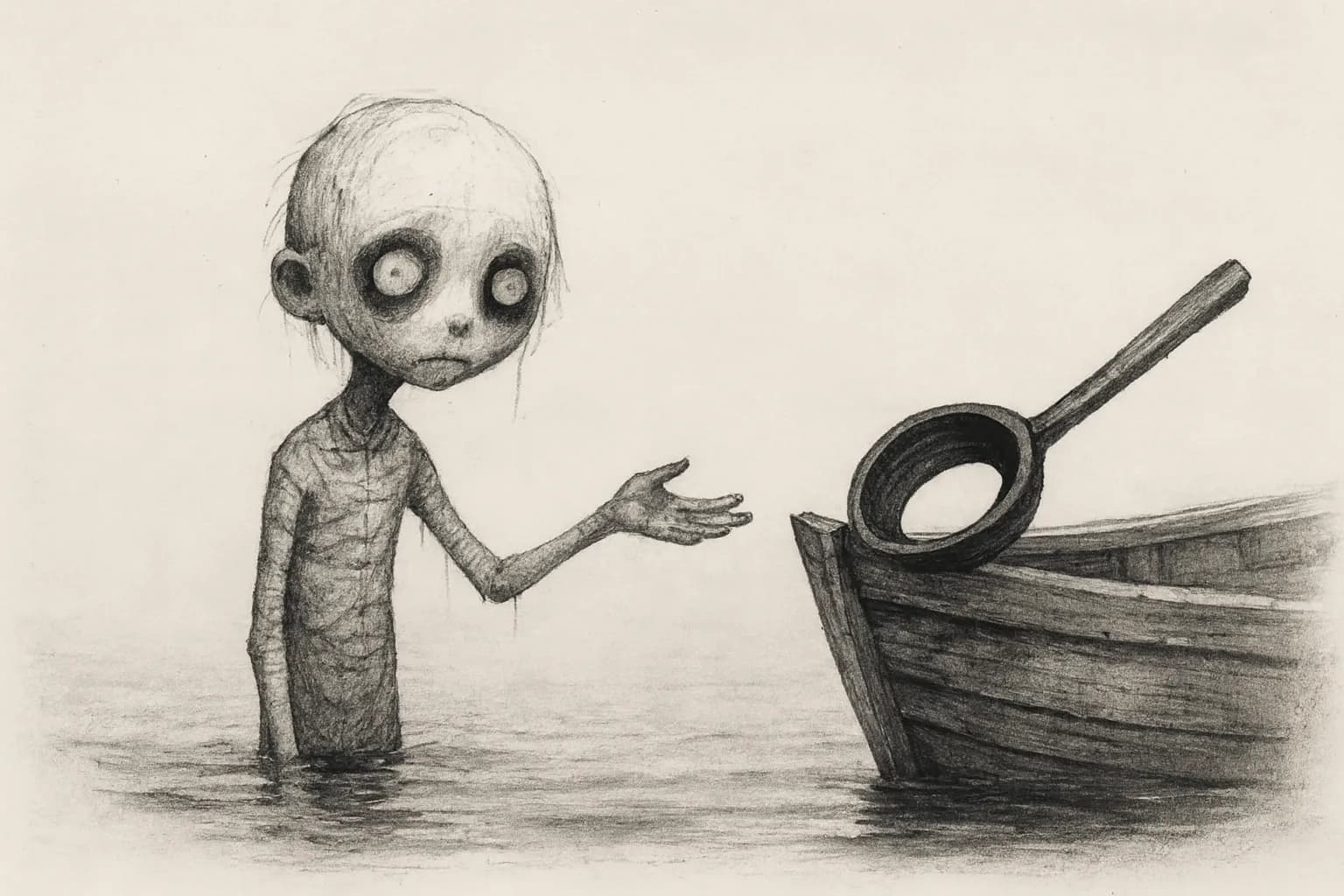
That sets bake-kujira apart from Japan's other sea monsters. Umibozu rises and capsizes a boat outright. Funayurei, ghost ships crewed by the drowned, demand a bucket and use it to sink you. Bake-kujira does neither. It surfaces, trails its strange companions past the boat, and sinks back under the water. The bad luck comes due afterward.
Do not raise a harpoon
The old accounts give one piece of clear advice: leave it alone. A fisherman who tried to harpoon a bake-kujira was asking for the misfortune the sighting already promised. There was nothing to gain from the attempt. The whale is bone, not meat, and every telling treats hunting it as an insult the sea would answer.
The safer move was to go quiet, let the boat drift, and wait for the shape to sink back into the dark water on its own.
Where it comes from
Bake-kujira has no single Edo-period print behind it, the way the kappa or the umibozu does. Its earliest source is Edo-period coastal folk belief itself, carried by fishing and whaling communities along the San'in coast rather than drawn by one named artist.
That origin matters. Whaling towns on the Japanese coast built kujira-zuka, or "whale mounds" — burial sites for the whales their crews killed. Some held funeral rites for them, the way a family holds rites for a person. A bake-kujira reads as the same debt given a shape: a whale's death does not end cleanly, and killing one this size asks to be answered for.
Bake-kujira today
Bake-kujira has never been redesigned into a mascot or a game boss the way many Edo-period yokai eventually were. It stays close to its original shape: a skeleton, a warning, and a handful of strange birds and fish trailing behind it. Regional folklore collections along the San'in coast still record it as local memory, tied to the waters off Shimane where fishermen first told the story.
The whale funerals it grew out of are not folklore. Some Japanese whaling communities still hold kuyō — memorial services — for the animals their industry killed. That practice is older than the ghost whale story, and it has outlived it too.